
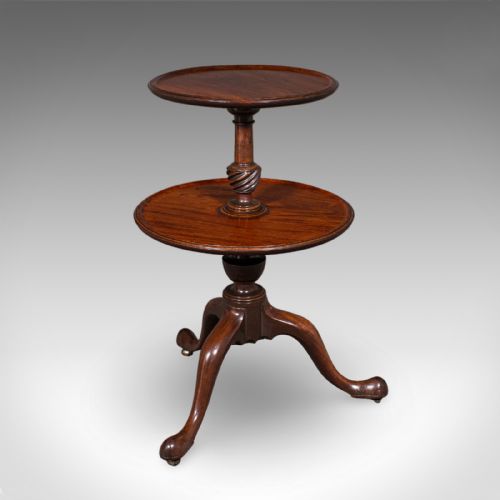


Georgian Mahogany Cake Stand
These georgian mahogany cake stand pieces are tiered serving tables and dumbwaiters that bring practical elegance and historic charm to any room.
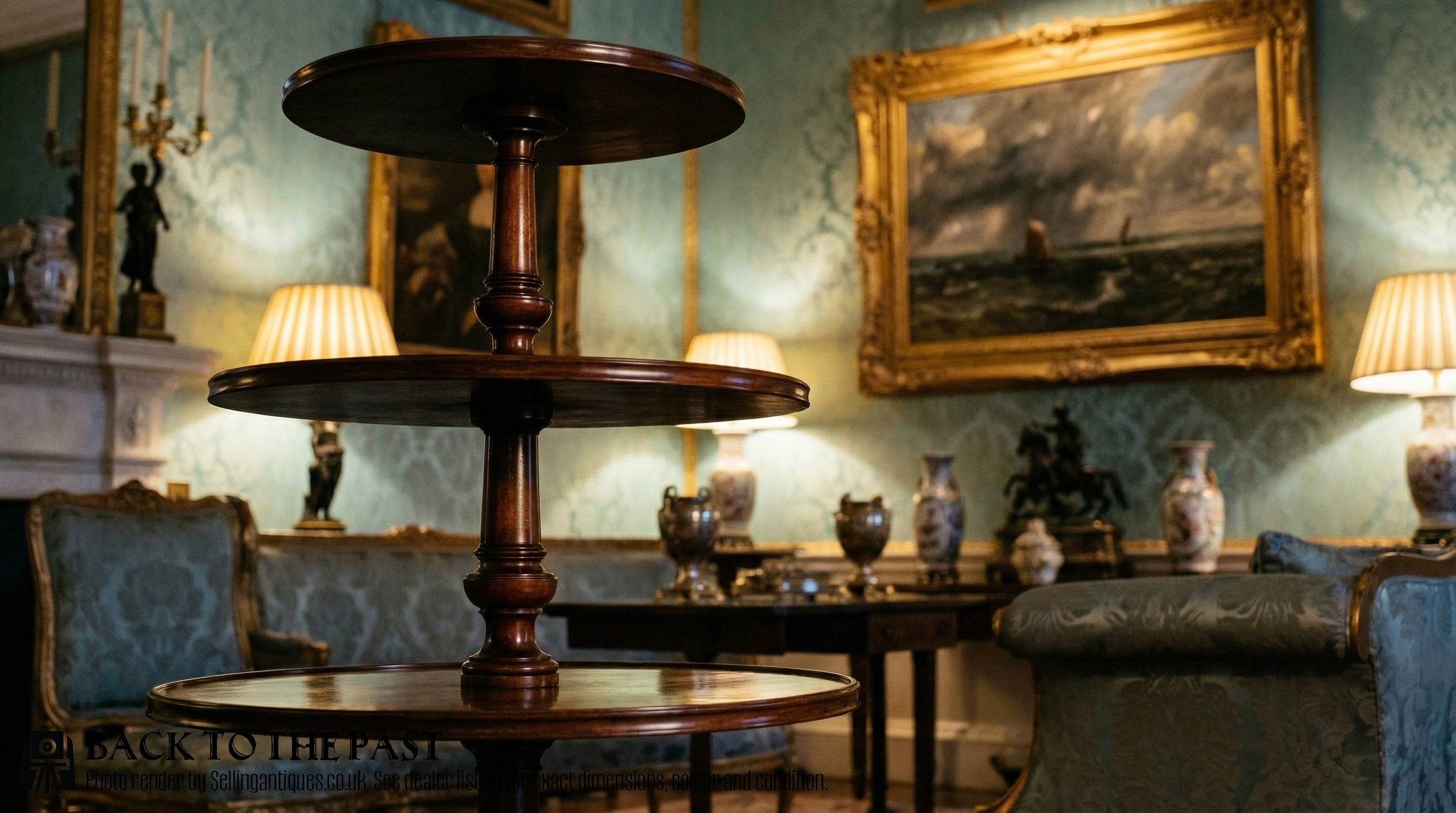
Georgian Mahogany Cake Stand
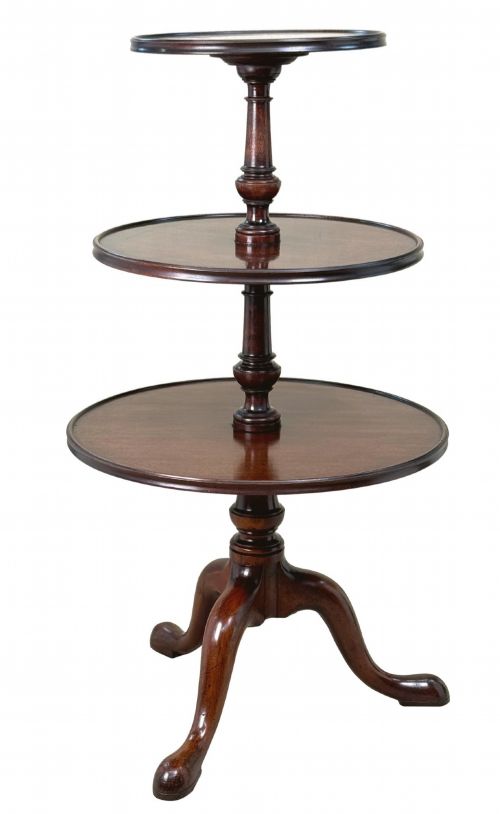
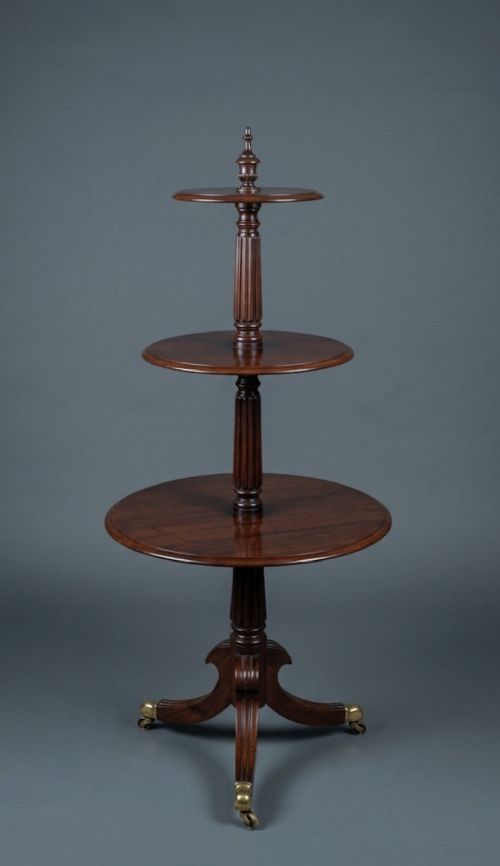
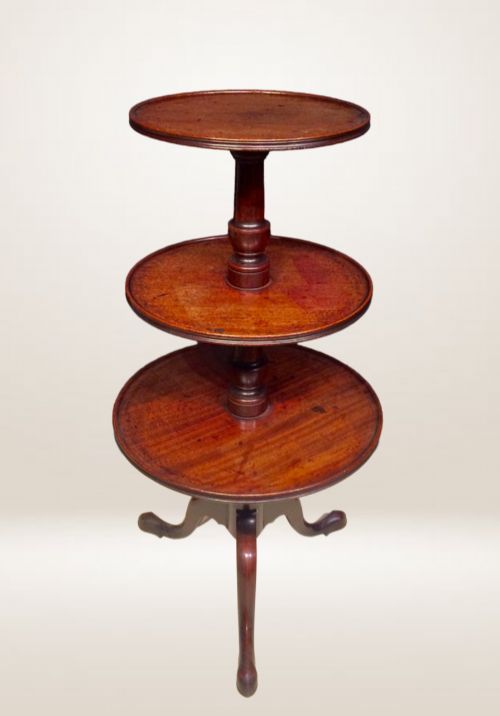
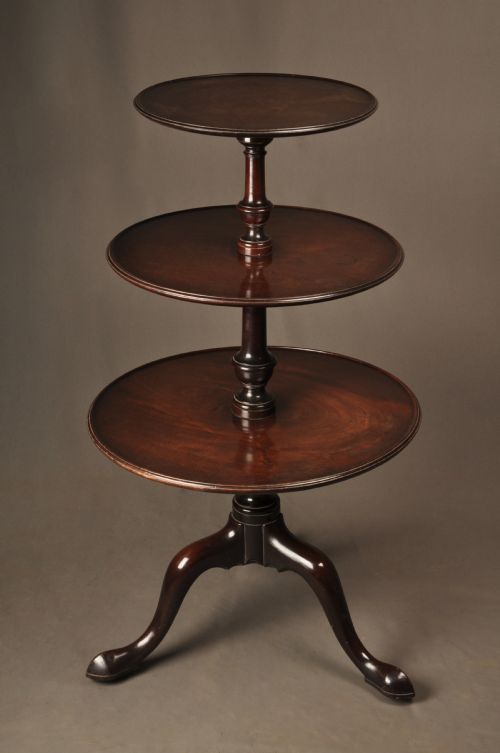
When you search for a georgian mahogany cake stand, you encounter tiered serving tables, dumbwaiters, and occasional tables designed for practical hospitality in historic interiors. The pieces on this page span the Georgian, Regency, and Victorian periods, with origins in the eighteenth and nineteenth centuries.
You are most likely to meet circular two-tier and three-tier mahogany dumbwaiters or revolving tray stands. These multi-level designs served as functional side tables and buffet servers for afternoon tea and dining rooms.
How they were made
Makers utilised solid mahogany to construct the tiered circular trays, supporting columns, and folding mechanisms of these serving stands. The timber selection provided the structural strength and rich grain required for multi-level revolving furniture.
Brass fittings and hardware frequently complemented the mahogany construction, appearing on revolving mechanisms and support columns. Joinery techniques varied from fixed tiered arrangements to folding frames and revolving trays.
The listings on this site span the Georgian, Regency, and Victorian periods, using solid mahogany and brass.
What varies in quality
The distinction between standard examples and the top of the range lies in the architectural proportions and the handling of the mahogany timber. Pieces exhibiting grander scale or balanced three-tier revolving tiered tables reflect superior cabinet-making standards.
The sophistication of the turning on the central column and the smooth operation of the revolving trays or folding actions determine the overall refinement of the piece.
Gillows
The Georgian Mahogany Cake Stand Glossary
- Dumbwaiter
- A multi-tiered piece of furniture with revolving circular trays used for serving food and tea without servants. These items became essential dining room accessories during the eighteenth century.
- Mahogany
- A durable, deep-toned tropical hardwood favoured for its rich grain and stability in fine cabinet-making. It forms the primary structural and visual material for these stands.
- Regency
- A design period spanning the early nineteenth century defined by classical restraint and elegance. Pieces from this era often show refined classical influences.
- Tiered table
- An occasional table featuring multiple stacked surfaces supported by a central pillar. This form maximises surface area while maintaining a compact footprint.
Georgian Mahogany Cake Stand: Frequently Asked Questions
What is a dumbwaiter?
A dumbwaiter is a multi-tiered freestanding table used in dining rooms and parlours to hold dishes, tea, and serving items.
These pieces feature two or three circular trays stacked on a central column, often designed to revolve for easy access.
How were these stands used?
These tables served primarily during meals and afternoon tea to hold food, drinks, and serving utensils without requiring constant attendance from staff.
They functioned as versatile side tables, buffet servers, and occasional display stands in principal rooms.
How do I style a tiered stand?
You can place a tiered mahogany stand beside seating areas or in corners to display decorative objects, books, or plants.
The vertical levels allow you to arrange items across different heights while keeping a minimal floor footprint.
How do I tell periods apart?
Georgian and George III pieces generally display robust eighteenth-century proportions with simple turned columns and solid mahogany construction.
Regency and later Victorian examples often incorporate more ornate classical details or folding mechanisms developed in the nineteenth century.