
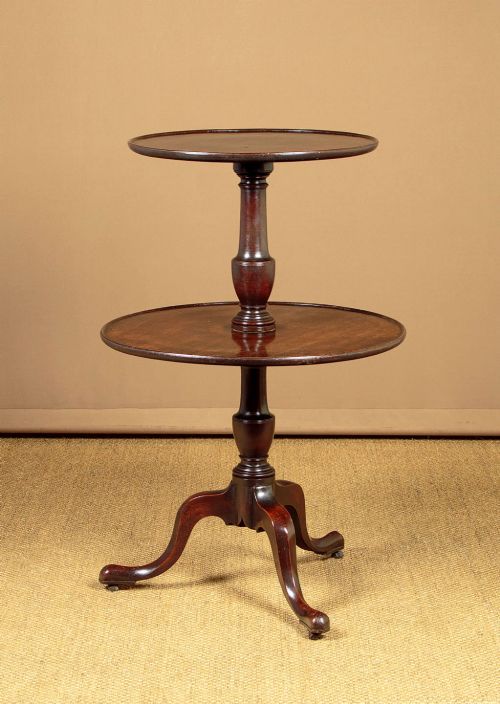
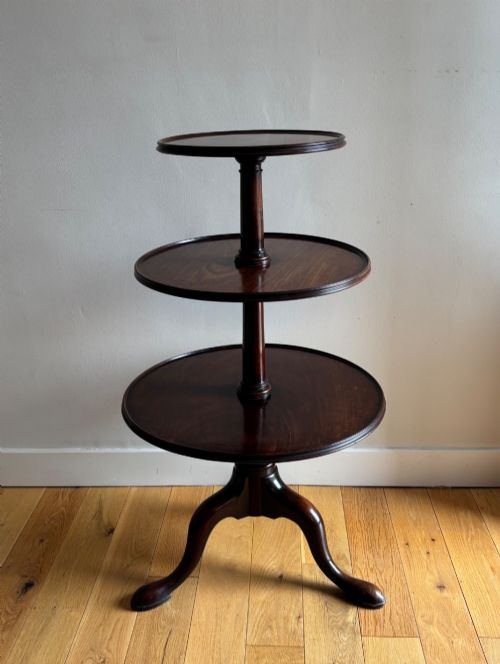
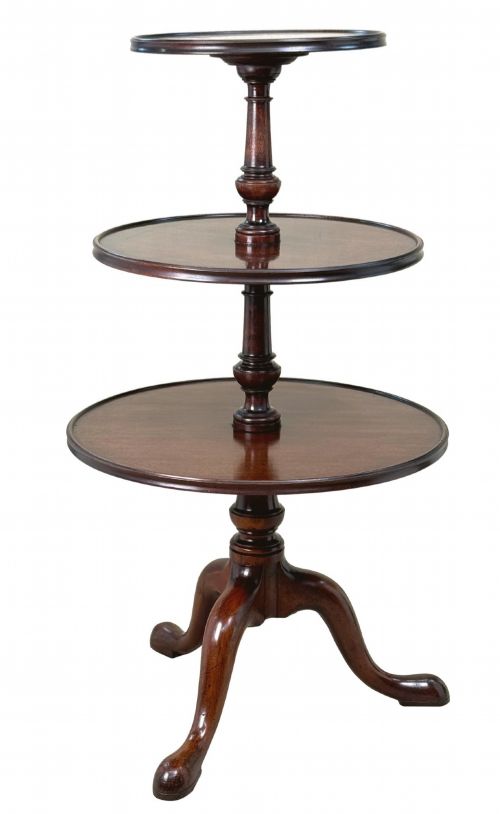
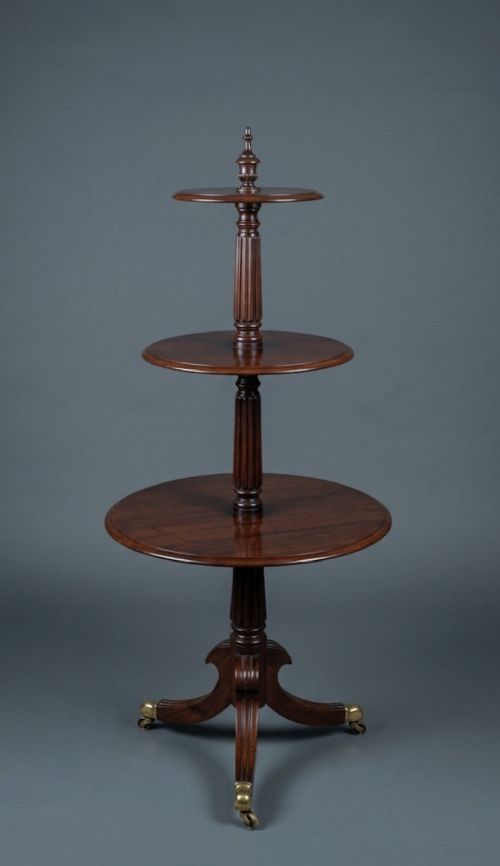

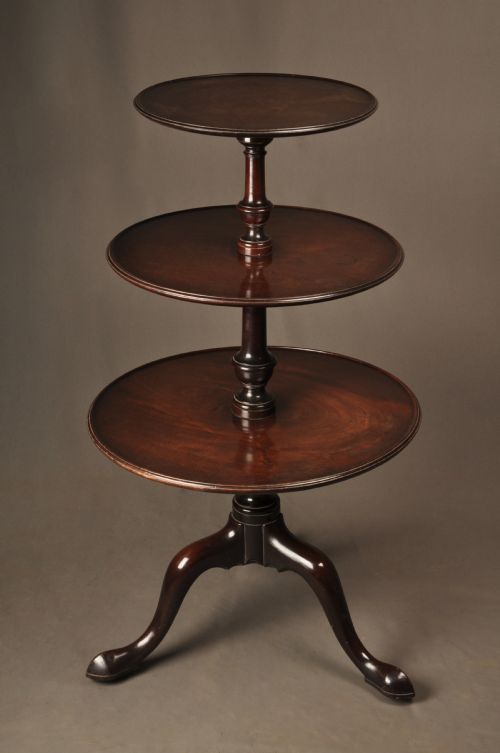
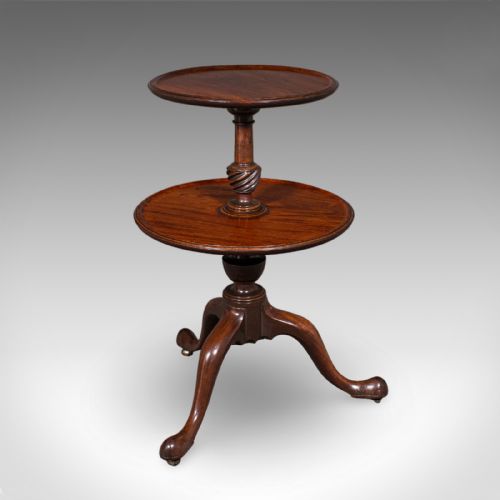


Georgian Tripod Serving Table
A georgian tripod serving table is a tiered mahogany stand designed for practical dining service.
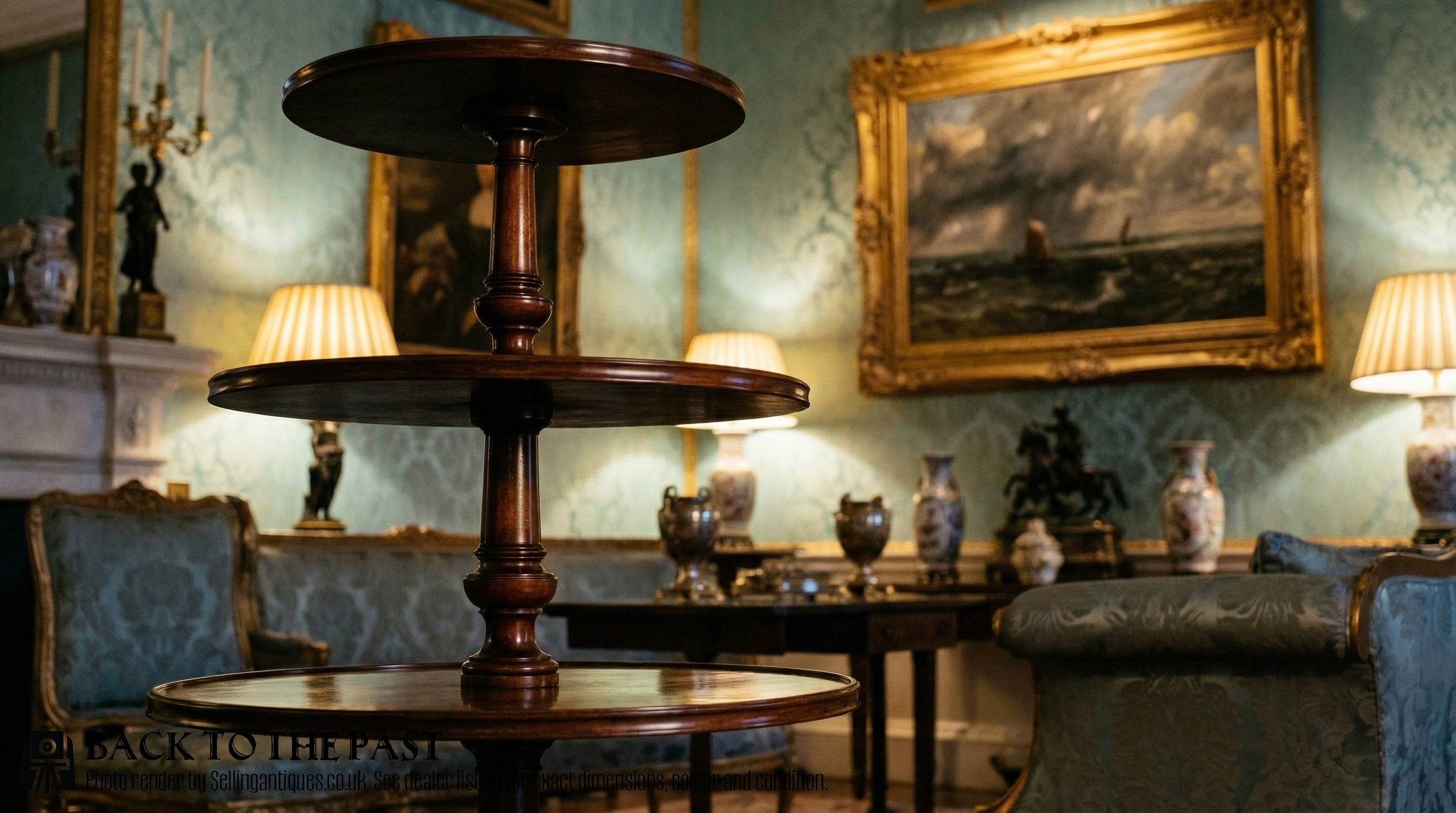
Georgian Tripod Serving Table
A georgian tripod serving table takes the form of a tiered dumb waiter, built to hold dishes and afternoon tea near the dining table without servant intervention. These pieces appear mostly from the eighteenth century and the regency period, spanning multiple tiers supported on a central pillar.
Most examples found on this page are circular mahogany tables, though rectangular drop-leaf and folding variations also occur. The tiered tables range from two-tier serving stands to larger three-tier structures with revolving tops or galleried edges.
Materials and construction
Solid mahogany forms the primary material for these serving stands, providing the necessary strength for stacked circular trays and central pillars. Brass components frequently appear as castors, hinges, or pivoting mechanisms on folding and revolving models.
Joinery techniques focus on stability, anchoring graduated tiers to a sturdy tripod base fitted with cabriole or sabre legs. The construction allows multiple shelves to rotate or fold down compactly while maintaining balance.
Listings feature solid mahogany alongside brass hardware across eighteenth and nineteenth-century periods.
Evaluating craftsmanship and proportion
Quality rests heavily on the timber selection, timber figuration, and the crispness of the turned column supporting the tiers. Superior examples show careful attention to the graduated proportions of the trays and the stability of the central tripod base.
The sophistication of the mechanical elements, such as smooth revolving tiers, drop-leaf folding sides, and original brass castors, separates standard serving stands from grander country house pieces.
Gillows
The Georgian Tripod Serving Table Glossary
- Dumb waiter
- A tiered serving table designed to hold food or drink without the need for attendants during a meal. These pieces typically feature stacked circular trays on a central pedestal.
- Tripod base
- A three-legged support structure providing stability for the central column of the table. These legs often terminate in brass castors.
- Drop-leaf
- A tabletop design incorporating hinged flaps that lower when not in use. This mechanism allows the serving stand to fold away compactly.
- Galleries
- Raised edges around the perimeter of a serving tray designed to prevent plates and glasses from sliding off. They are frequently carved directly from the solid mahogany or applied as pierced borders.
Georgian Tripod Serving Table: Frequently Asked Questions
What is a georgian tripod serving table used for?
A georgian tripod serving table served primarily as a movable sideboard beside the dining table. It held extra plates, glasses, and courses during meals.
In domestic settings, smaller versions also functioned as afternoon tea stands or accent tables within drawing rooms.
How do I tell an 18th century dumb waiter from a regency piece?
Eighteenth-century examples often display simpler George II or early George III turning on the central pillar and tripod legs. Cabinetmakers of this era favoured robust solid mahogany construction.
Regency pieces tend to introduce grander proportions, crisper reeded details, or more complex brass hardware. The transition into the nineteenth century brought refined circular trays and varied folding mechanisms.
Do all these tiered tables rotate?
Many tiered serving tables feature revolving trays mounted on a central pivot to make reaching dishes easier during a meal. However, stationary models and folding variants also exist within the period styles.
Revolving mechanisms vary from simple wooden turning pins to more intricate brass swivel mounts.
How do folding dumb waiters work?
Folding dumb waiters incorporate hinged drop-leaf sections or collapsible tier supports that allow the structure to flatten against the central column. This design saved floor space when the serving table was not in active use.
Brass hinges and folding brackets secure the trays firmly in the horizontal position when opened for service.