

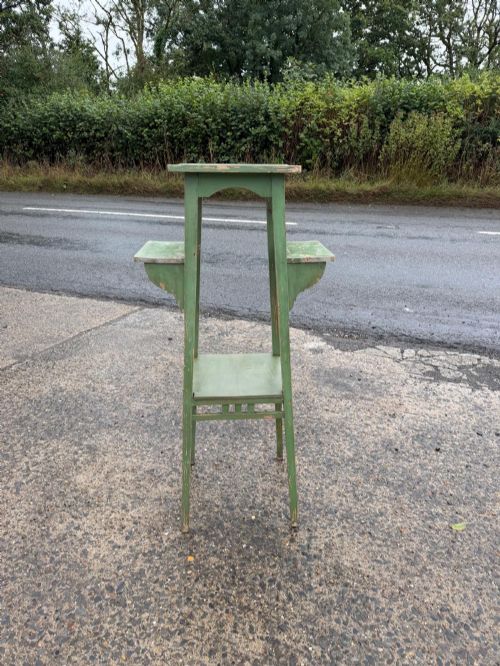
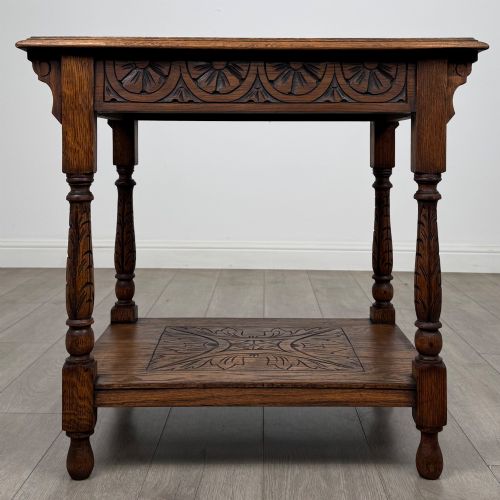
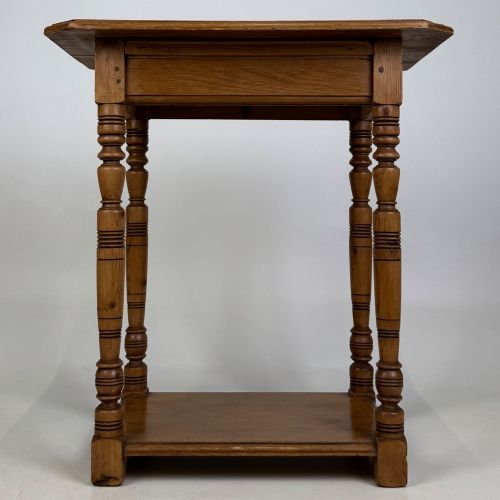
Wooden Tiered Stand
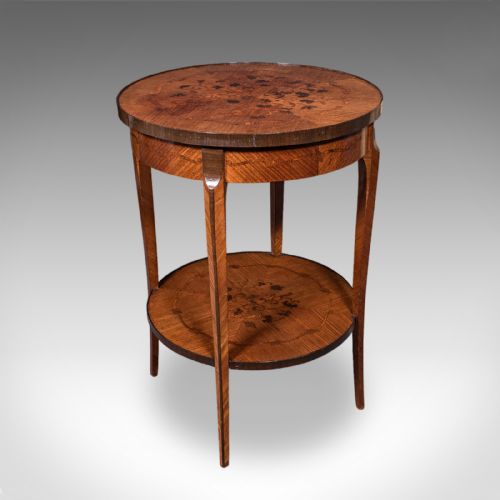
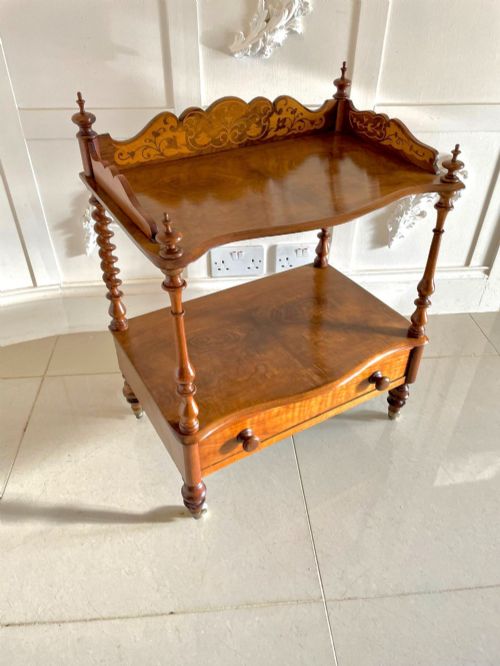
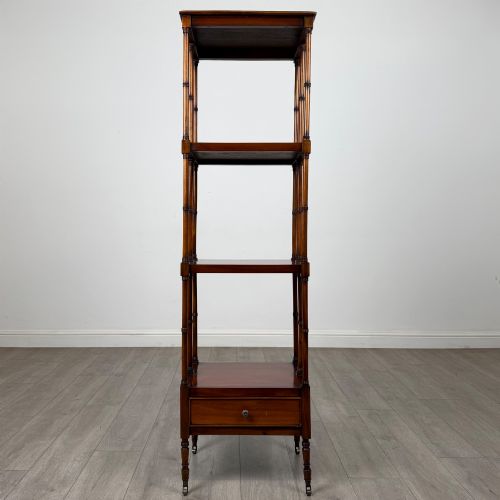
A wooden tiered stand offers multi-level surface space for displaying plants, books or lamps across periods from the Victorian era to the Edwardian decades.
Wooden Tiered Stand
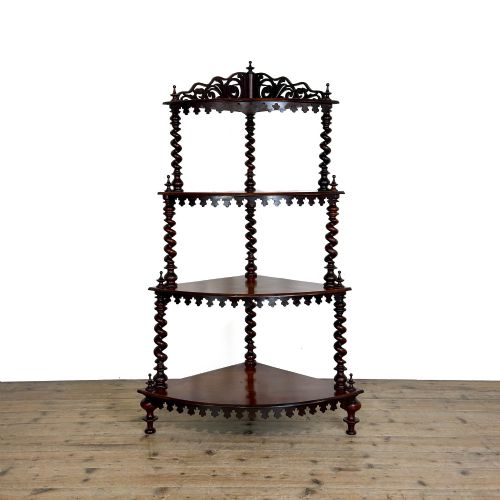
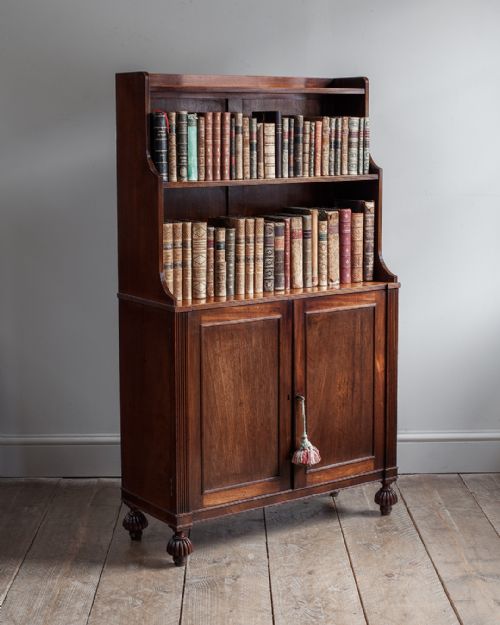
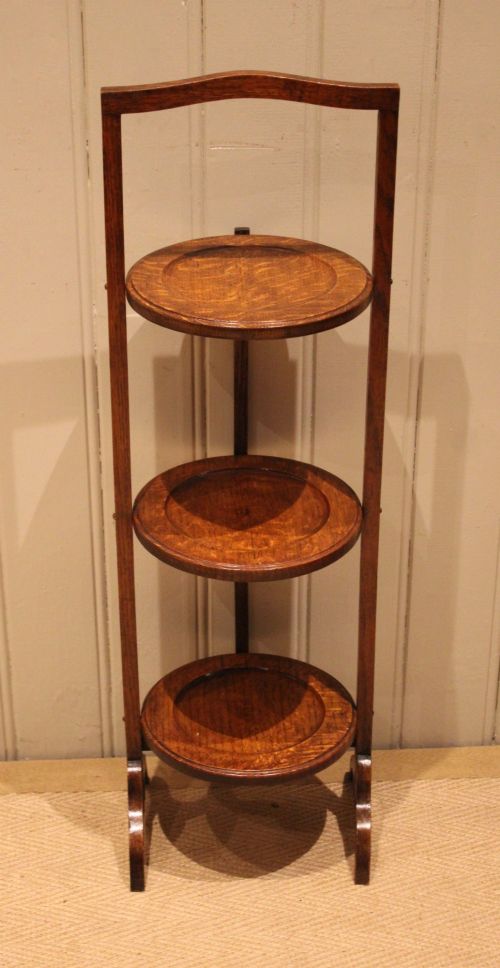
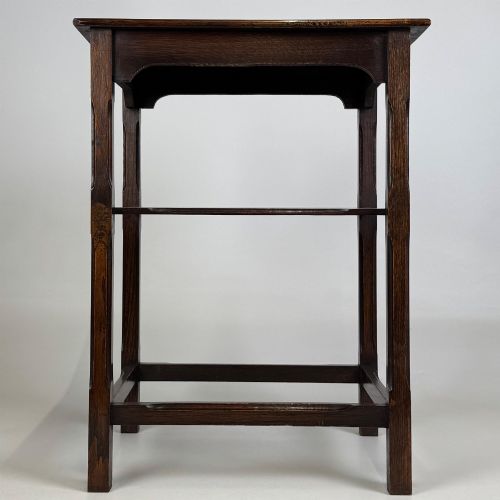
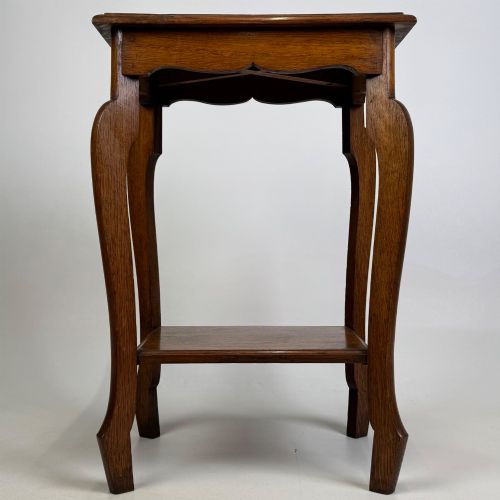
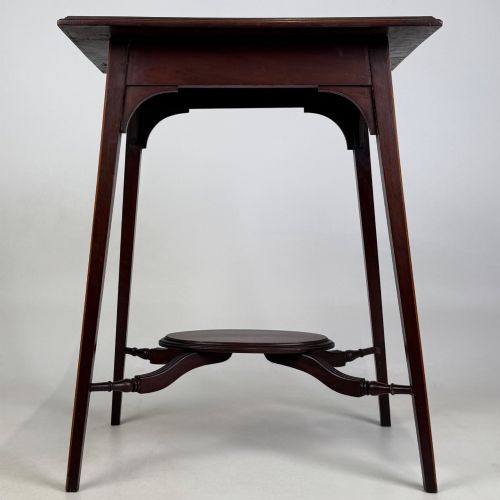
A wooden tiered stand provides stacked horizontal surfaces in forms such as whatnots, side tables, plant stands and bookshelves. These pieces serve to elevate objects within a room while taking up minimal floor space.
The pieces appearing on this page span the 19th century, the Victorian and Edwardian eras, and into the early 20th century. Buyers frequently encounter oak and mahogany examples from the Edwardian period alongside earlier Victorian walnut designs.
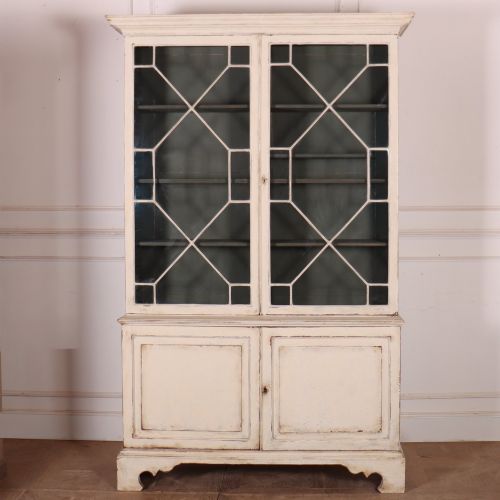
Forms range from simple cake stands and plant stands to elaborate corner whatnots, revolving bookcases and multi-tiered occasional tables. Each configuration reflects the domestic storage and display requirements of its period.
Materials and construction
Cabinet makers utilised dense hardwoods such as mahogany, oak, walnut and burr walnut for stability across multiple tiers. Boxwood stringing and brass details frequently accent these primary timbers.
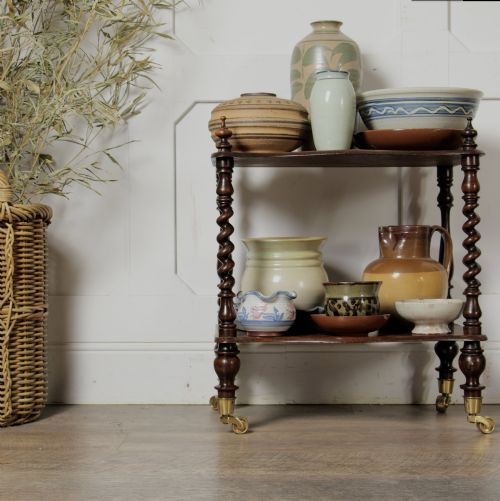
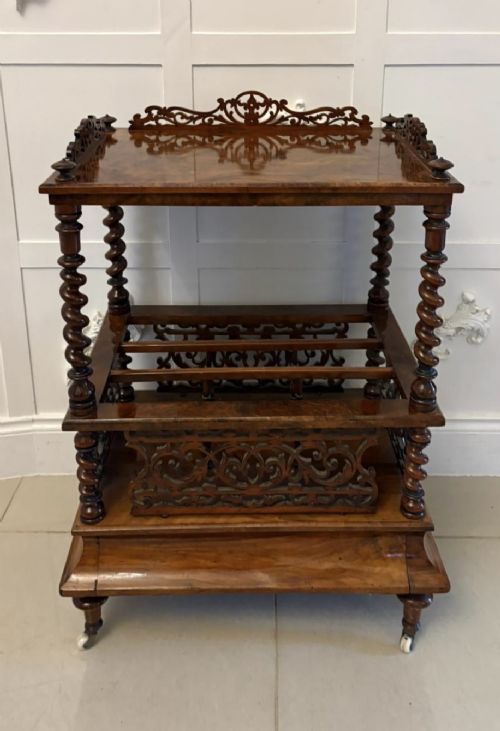
Construction techniques include turned barley twist legs, carved supports and pegged joints to bear weight across several levels. Painted finishes and original surface treatments appear on specific regional and period variants.
Object types span side tables, plant stands, cake stands, bookcases and multi-tiered whatnots.
Distinctions in quality
Superior examples demonstrate careful selection of timber grain, particularly in burr walnut and figured mahogany veneers used on table tops and shelves. Finer pieces incorporate refined turning, delicate inlay and balanced proportions between the tiers.
Lower quality or later utilitarian pieces rely on simpler construction without decorative banding or substantial timber thickness. The crispness of carved details and the structural integrity of the tier supports separate standard production from master craftsmanship.
Liberty of London·William Birch
The Wooden Tiered Stand Glossary
- Whatnot
- A set of open shelves used for displaying ornaments or books, developed in the 19th century. These pieces typically feature three or four tiers supported by slender columns.
- Torchere
- A tall wooden stand designed to hold a lamp or candle, often featuring a circular top. Edwardian examples frequently utilise carved mahogany with slender legs.
- Etagere
- A piece of furniture consisting of a number of open shelves for holding valuables, originating in France. Walnut and exotic woods are common in these tiered display items.
- Barley twist
- A type of furniture turning resembling a twisted rope, popular during the Victorian period. This technique adds texture to the vertical supports of stands and tables.
- Inlay
- A decorative technique where pieces of contrasting wood, such as boxwood, are inserted into the primary timber. This method defines borders and geometric panels on table tops.
Wooden Tiered Stand: Frequently Asked Questions
What rooms suit a wooden tiered stand?
These stands fit neatly into corners, beside armchairs, or along hallways where surface area is limited. Their vertical design allows for maximum display without cluttering the floor space.
Living rooms, bedrooms and studies all accommodate these pieces easily for holding books, lamps or small decorative items.
How do I care for antique wood?
Keep wooden furniture away from direct heat sources and sudden temperature changes to prevent the timber from warping or splitting. Regular dusting with a dry, soft cloth maintains the finish.
Apply a traditional beeswax polish occasionally to nourish the grain, avoiding silicone-based sprays that build up over time.
How do I date a tiered stand?
Examine the timber, construction joints and overall style to establish an approximate period. Victorian pieces often display heavier proportions and dark mahogany or walnut, while Edwardian stands tend to be lighter in build.
Tool marks on the underside or back of the shelves also provide clues regarding hand tools versus machine manufacturing.
Can these stands support heavy items?
Most tiered stands are built to hold lamps, books, plants or porcelain rather than heavy loads. The lower tiers generally offer more structural stability for slightly heavier objects.
Check the tightness of the vertical supports and leg joints before placing substantial weight on any single shelf.