




Georgian Mahogany Dessert Stand
A georgian mahogany dessert stand brings tiered elegance to the dining room, offering a practical surface for courses without cluttering the table.
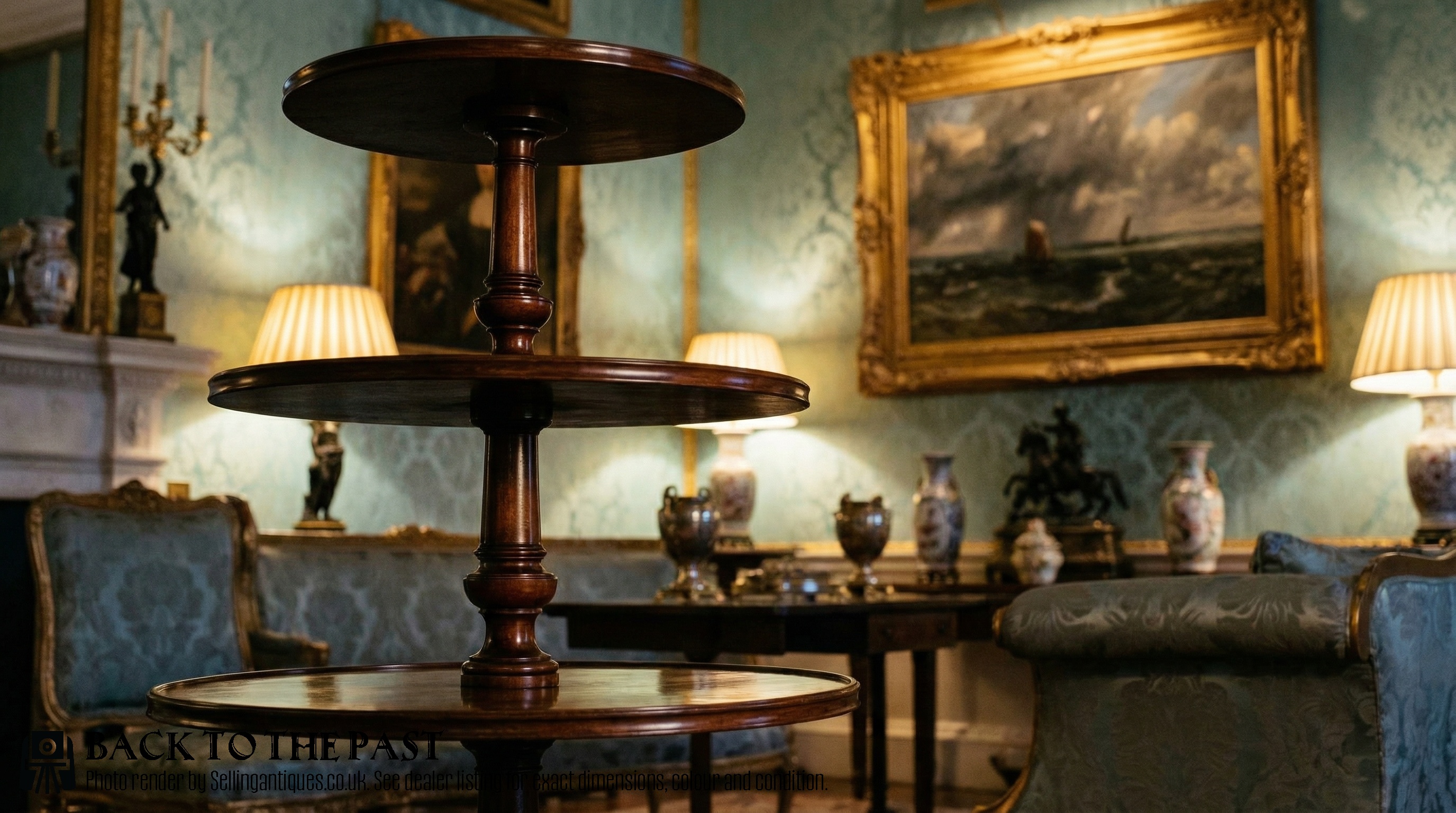
Georgian Mahogany Dessert Stand
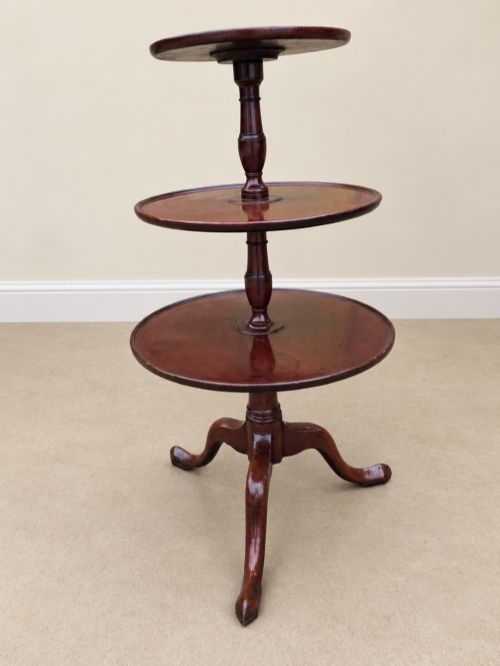
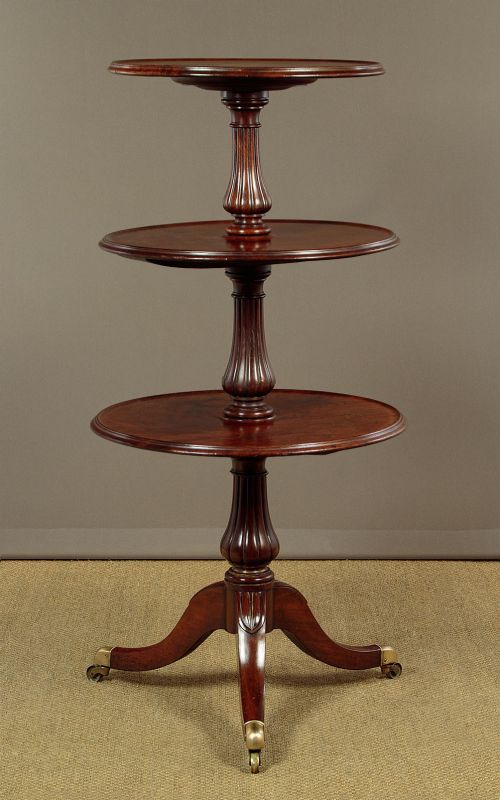
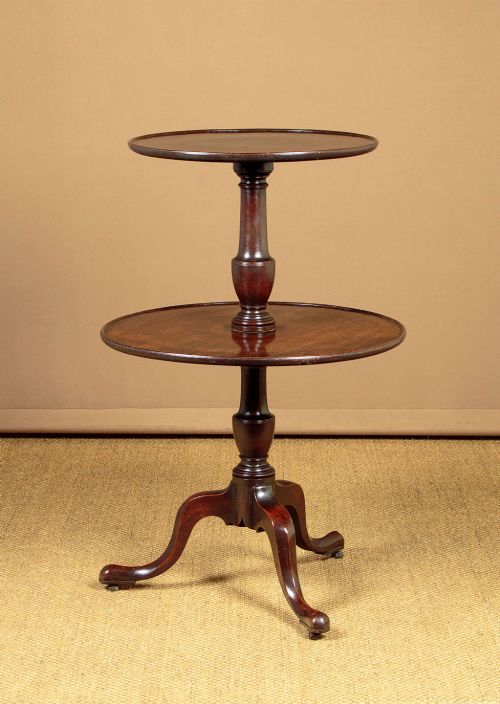
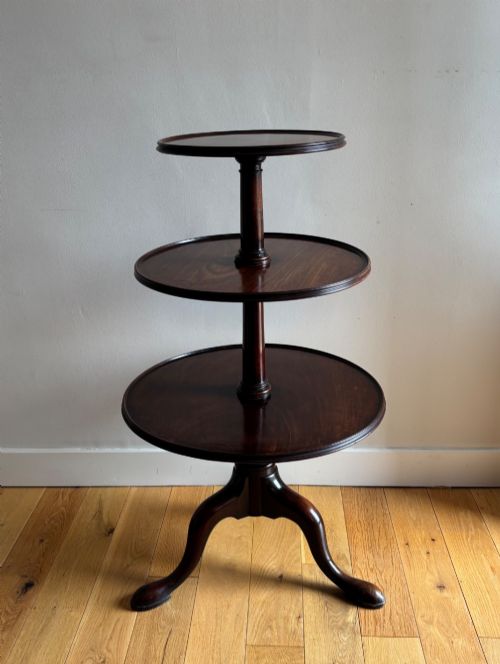
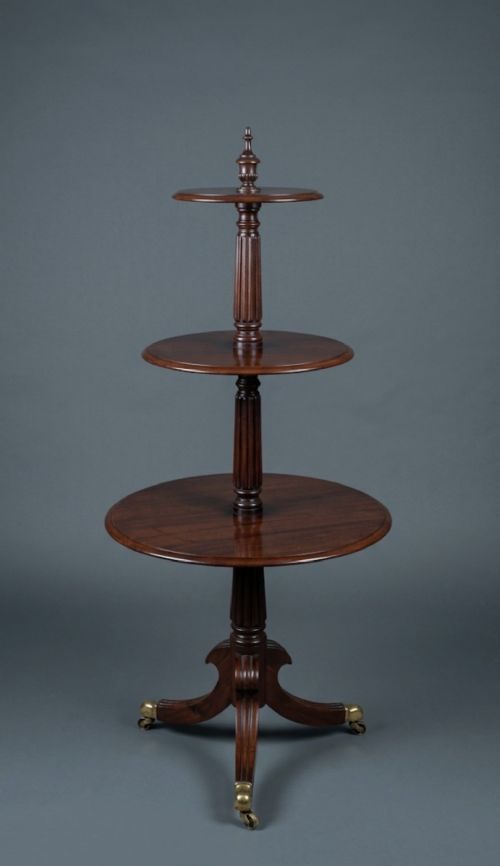
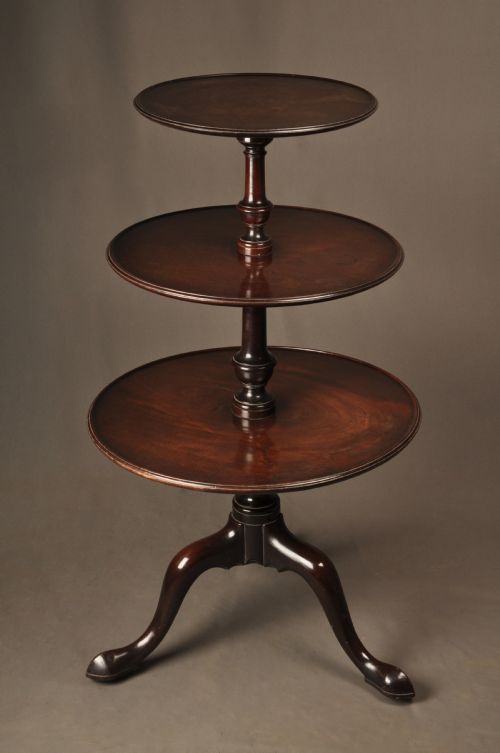
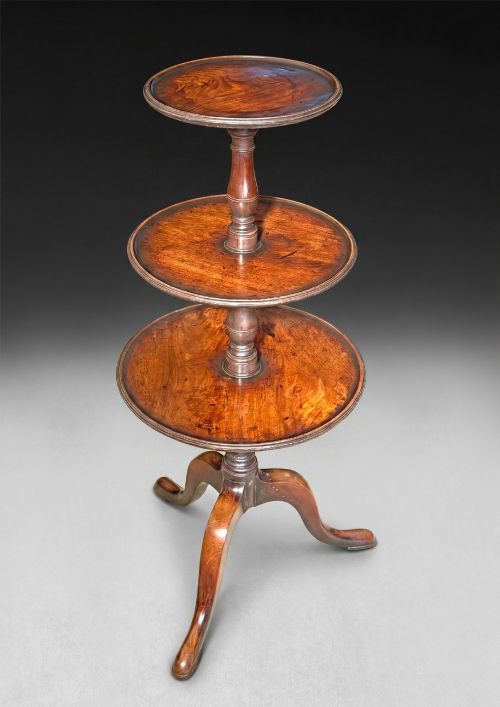
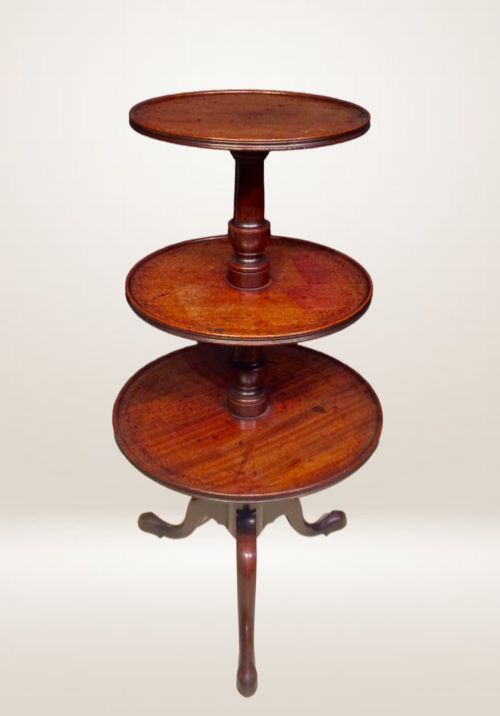
A georgian mahogany dessert stand primarily takes the form of a dumb waiter, designed to hold dishes and plates across multiple circular tiers. These tiered tables appear most frequently from the eighteenth century and the Regency period, often standing on a central pillar supported by tripod legs.
Makers produced these serving stands in two-tier and three-tier formats, sometimes incorporating folding mechanisms or raised galleried edges. While the primary function involved assisting with meals, many examples now serve as occasional tables within domestic spaces.
How they were made
Cabinetmakers utilised dense tropical mahogany for the structural tiers and central columns, often selecting timber with rich grain patterns. Brass fittings appeared on pivoting joints, casters, and folding hardware to support the movement of the tiers.
Construction relied on stable joinery to support the weight of multiple graduating circular trays. Finer examples integrated subtle inlay work or turned central pillars to add visual texture to the dense dark wood.
Georgian Mahogany Dessert Stand Retail Price Guide 2026
Typical asking prices for georgian mahogany dessert stand among the pieces listed under this phrase on Sellingantiques today, from the lower quarter to the upper quarter. They describe what is for sale here now, not the wider market.
Early diners trusted spinning trays to pass the port without spilling a drop.
What varies in quality
The sophistication of the turning on the central column and the choice of mahogany grain dictate the visual impact of the piece. Better examples display balanced proportions across their graduating tiers and robust tripod bases that anchor the structure firmly.
Refinements such as galleried edges to retain dishes, folding actions that operate smoothly, and original brass fittings elevate the standing of an individual stand. Simpler versions rely purely on plain graduated circular trays without decorative turned details.
Gillows
The Georgian Mahogany Dessert Stand Glossary
- Dumb waiter
- A tiered freestanding serving table used during meals to hold food and tableware without requiring a servant present. These pieces usually feature two or three circular trays mounted on a central pillar.
- Tiered table
- Furniture built with multiple stacked surfaces rising one above the other. In this category, the trays typically graduate in size from top to bottom.
- Tripod base
- A three-legged support structure radiating from a central column. This design provided stability for heavy wooden tiers on uneven dining room floors.
- Galleried edge
- A raised border around the perimeter of a tabletop or tray. This feature prevented plates and glassware from sliding off the rotating tiers.
- Revolving tier
- A tray mounted on a central pivot allowing the surface to spin independently. This mechanism enabled diners to reach different dishes easily.
Georgian Mahogany Dessert Stand: Frequently Asked Questions
What is a dumb waiter used for?
A dumb waiter served as a supplementary dining room stand for holding dessert courses, wine bottles, and spare plates. It allowed diners to help themselves during meals when servants left the room.
Over time, these tiered stands transitioned from active dining furniture to decorative occasional tables used to display objects in living spaces.
How do I tell a Georgian stand from a Victorian one?
Georgian and George III stands typically exhibit lighter proportions, finer turning on the central column, and timber with a deep, warm patina. They date from the eighteenth century up to the early nineteenth century.
Victorian and later nineteenth-century iterations often feature heavier timber sections, stockier turnings, and a denser finish. Examining the construction of the tripod base and the turning style helps clarify the period.
Are all these stands made of mahogany?
Mahogany is the primary timber recorded across these listings, valued for its strength and rich dark grain. Cabinetmakers relied on its stability to construct large circular tiers and supporting columns.
Some pieces incorporate brass for casters, hinges, and folding mechanisms, while subtle inlay work appears on select examples to accent the mahogany surfaces.
How do folding dumb waiters work?
Folding dumb waiters incorporate hinged brackets or pivoting tiers that allow the circular trays to drop flat against the central column. This clever mechanism saved valuable floor space when the serving stand was not in use.
Cabinetmakers engineered these joints in brass and hardwood so the tiers locked securely into a horizontal position when opened for service.