
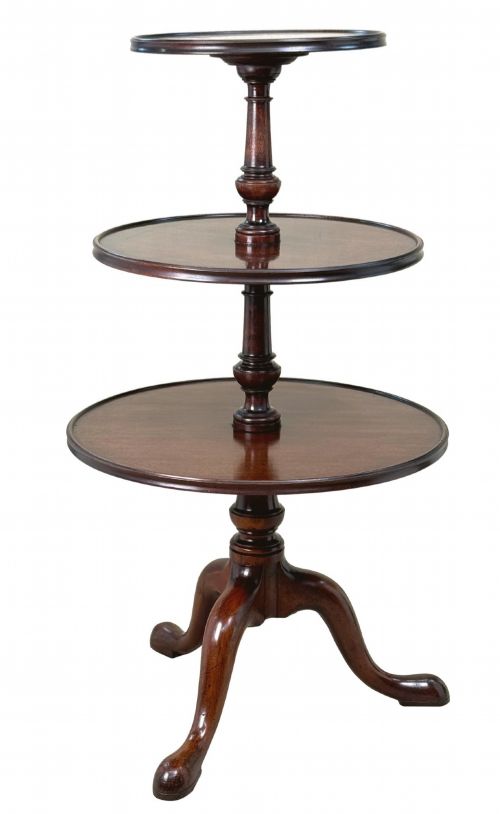
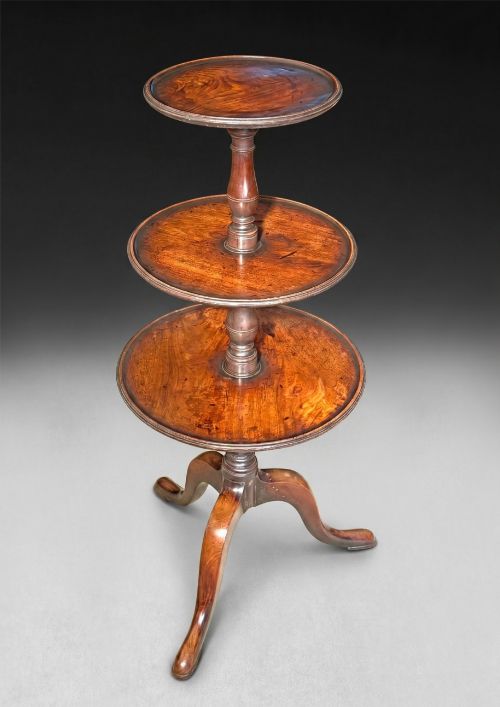
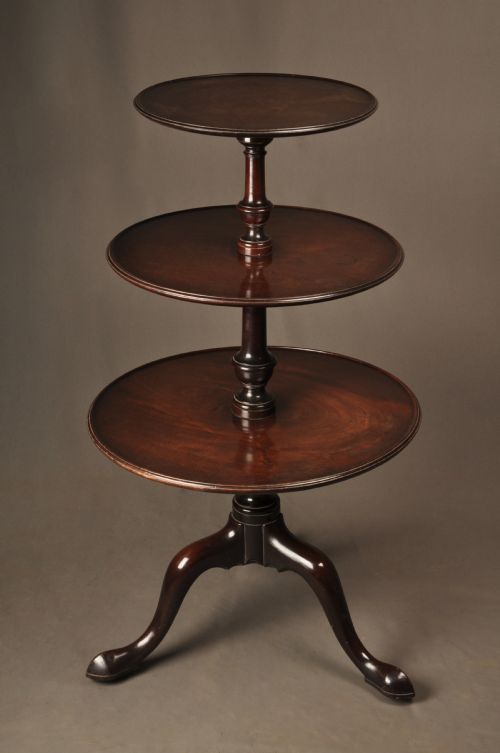


18th Century Mahogany Waiter
These pieces are an 18th century mahogany waiter, built to serve dining rooms and drawing rooms with revolving tiers or portable trays.
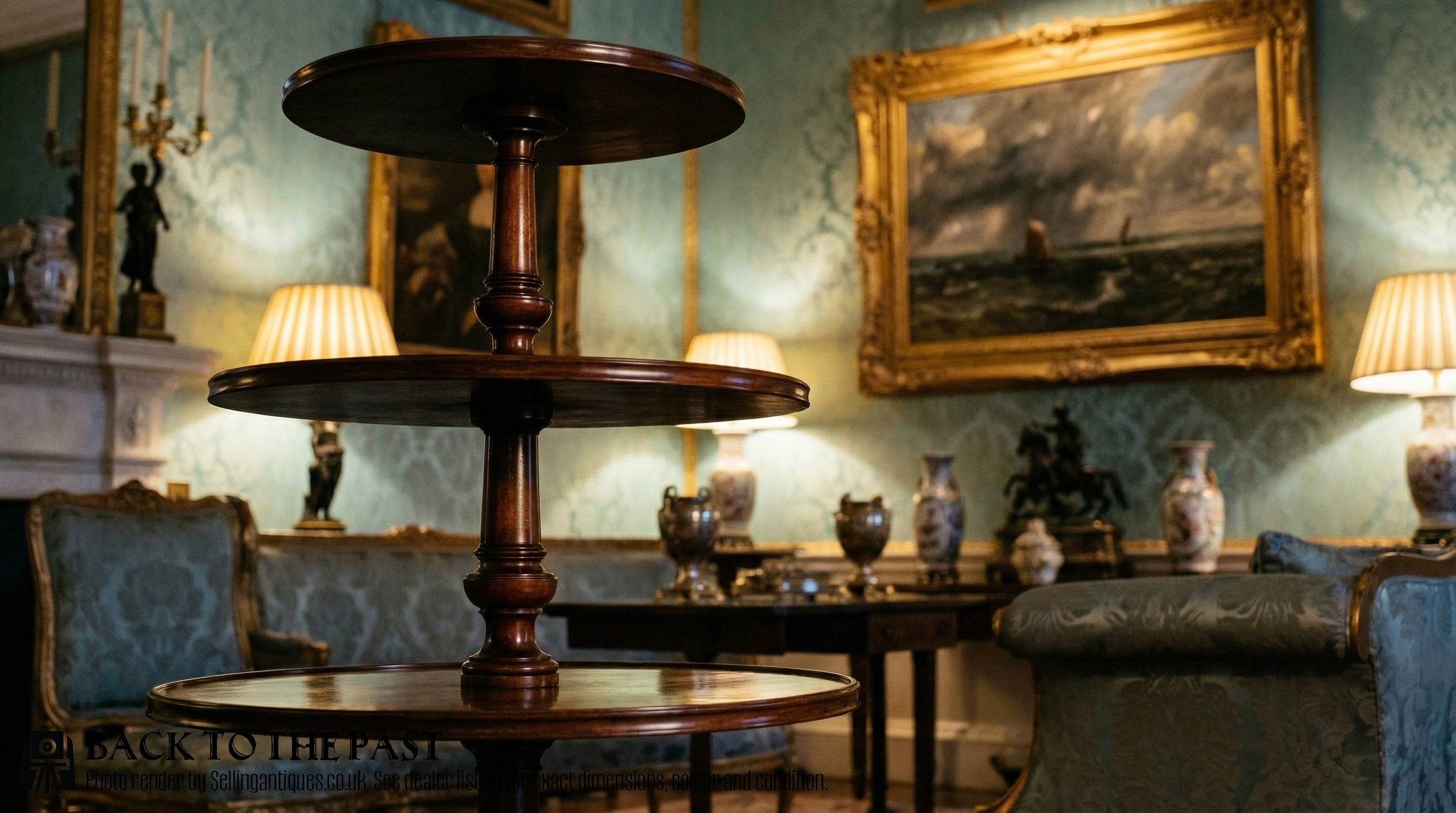
18th Century Mahogany Waiter
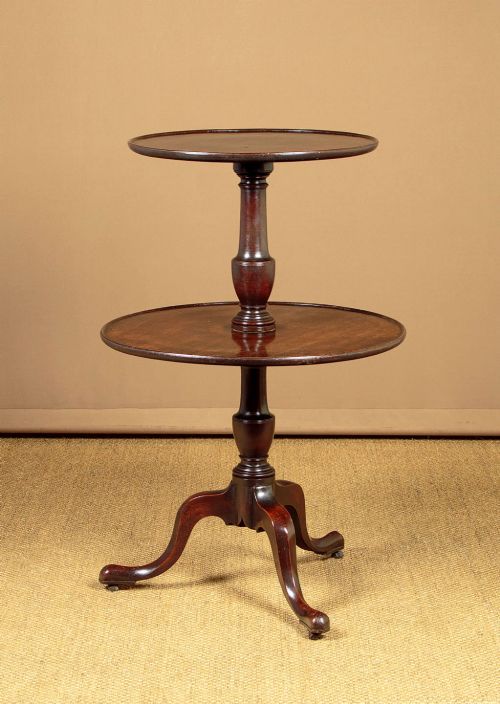
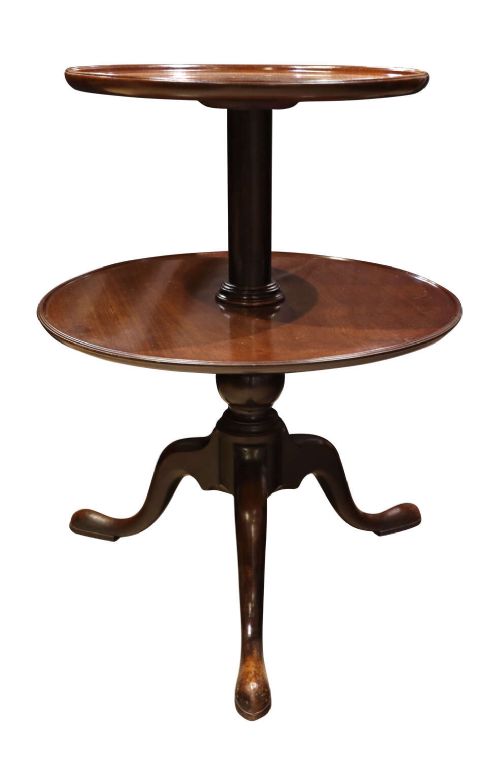
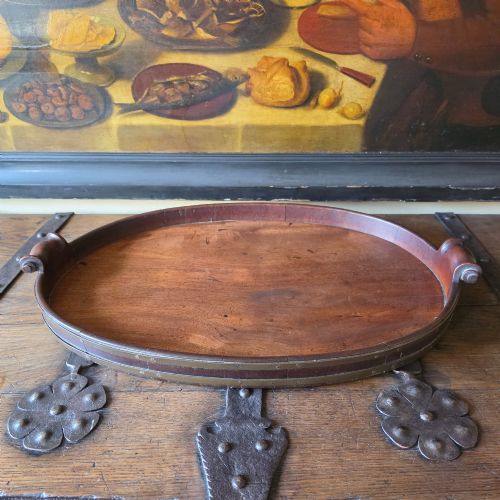
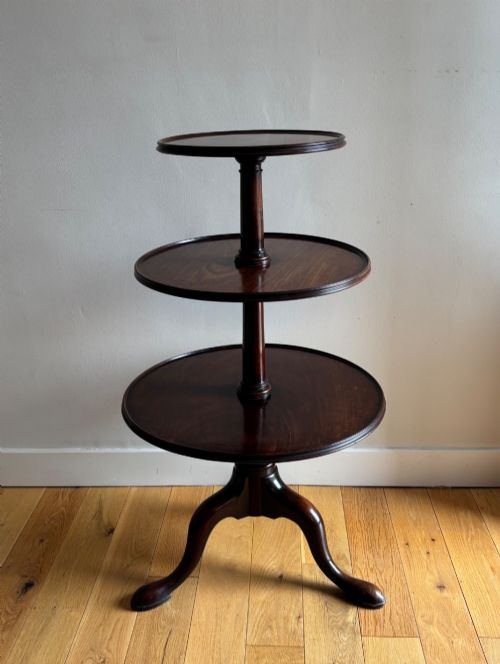
When searching for an 18th century mahogany waiter, buyers encounter multi-tiered revolving dumb waiters alongside portable serving trays from the Georgian and George III eras. These items served dining rooms by holding dishes, wine bottles, and glasses close to guests without requiring constant domestic staff attention.
The most common survival on this page is the two or three-tier tripod dumb waiter, often featuring graduated circular revolving trays supported by a central pillar. Occasional tables, card trays, and folding drop-leaf versions also appear regularly from the eighteenth century into the early nineteenth century.
Materials and Construction
Cabinet makers utilised solid mahogany and Cuban mahogany, sometimes enhanced with satinwood, boxwood, and brass hardware. Timber selection focused on dense, rich grains capable of holding fine turned profiles on central columns and tripod legs.
Tier edges frequently incorporated turned mouldings or galleries to secure glassware during rotation, while folding mechanisms and drop-leaves required precise hinge work and sturdy birdcage supports.
Listings feature mahogany, Cuban mahogany, brass, satinwood, and boxwood across George II, George III, and Sheraton periods.
Standards of Execution
Quality rests in the proportional balance of the graduated tiers and the stability of the tripod base. Superior examples display crisp turning on the central pillar and well-figured mahogany grain on the revolving trays.
The rotation mechanism dictates the grade of the piece, where smooth movement without wobble separates standard utility items from finer Georgian cabinet work.
The 18th Century Mahogany Waiter Glossary
- Dumb waiter
- A freestanding piece of dining room furniture with multiple rotating tiers mounted on a central pillar. It allowed diners to help themselves to courses and wine.
- Tripod table
- A small table or stand supported by three legs radiating from a central column. This construction provided stable footing on uneven floorboards.
- Cuban mahogany
- A dense, dark timber imported from the West Indies during the eighteenth century. Cabinet makers favoured it for its deep colour and durability.
- Galleried edge
- A raised border around the perimeter of a tray or table top. This feature prevented glasses and decanters from sliding off during use.
- Birdcage
- A framework beneath a table top that allows the surface to tilt and revolve. It connects the top to the central pillar using small wooden turnings.
18th Century Mahogany Waiter: Frequently Asked Questions
What is an 18th century mahogany waiter used for?
These pieces served as auxiliary serving stands in dining rooms during formal meals. Guests or hosts placed extra wine bottles, glasses, and dishes on the revolving tiers.
They reduced the need for servants to remain in the room throughout the entire meal, allowing private conversation among diners.
How do I tell a two-tier from a three-tier model?
Two-tier models feature a pair of circular trays mounted at different heights on the central column. They offer a lower profile and lighter weight for moving around a room.
Three-tier models include an additional upper tray, increasing capacity while demanding more vertical clearance and structural balance.
Can I use an 18th century waiter as a side table?
These items fit naturally beside seating in a drawing room or study to hold books and decorative objects. Their sturdy tripod bases and compact footprints suit modern living spaces.
Care should be taken with liquids to protect the antique polish and timber surfaces from water rings.
What does a folding mechanism indicate?
Folding mechanisms and drop-leaves on circular trays allowed servants to store the furniture flat against a wall when not in use. This practical feature saved valuable floor space in smaller Georgian townhouses.
Such examples demonstrate clever mechanical joinery alongside standard cabinet making.