


Tiered Dining Room Stand
A tiered dining room stand is a practical multi-level server designed for the dining room, combining utility with classic woodwork.
Tiered Dining Room Stand
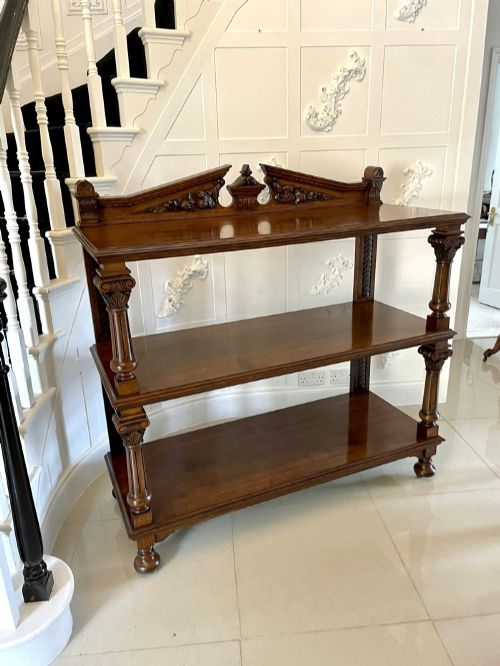
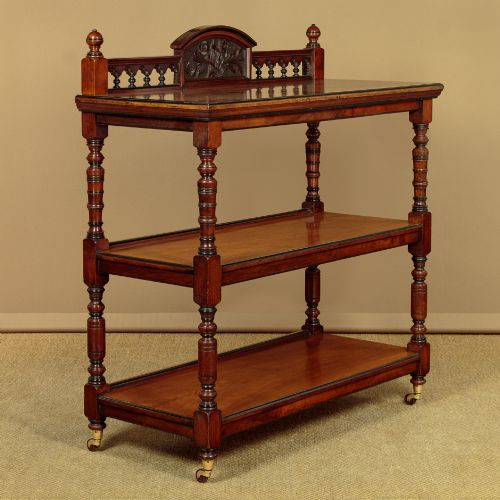
A tiered dining room stand encompasses traditional serving items such as dumb waiters, buffets, and serving tables. These pieces emerge predominantly from Georgian and 19th-century periods, including specific reigns like George III, William IV, and George IV.
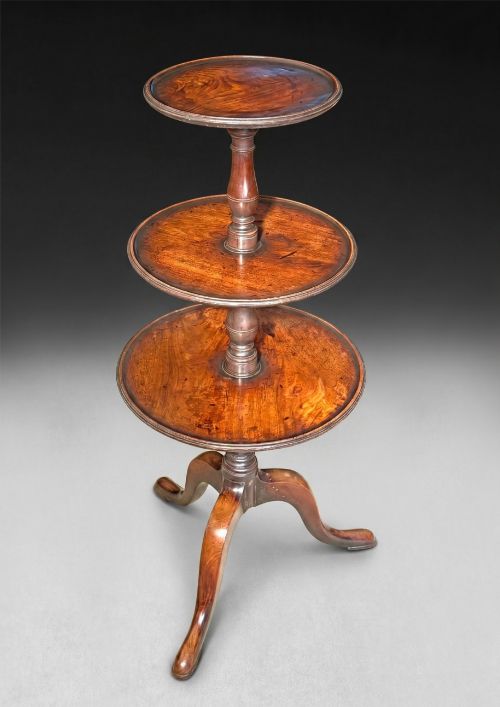
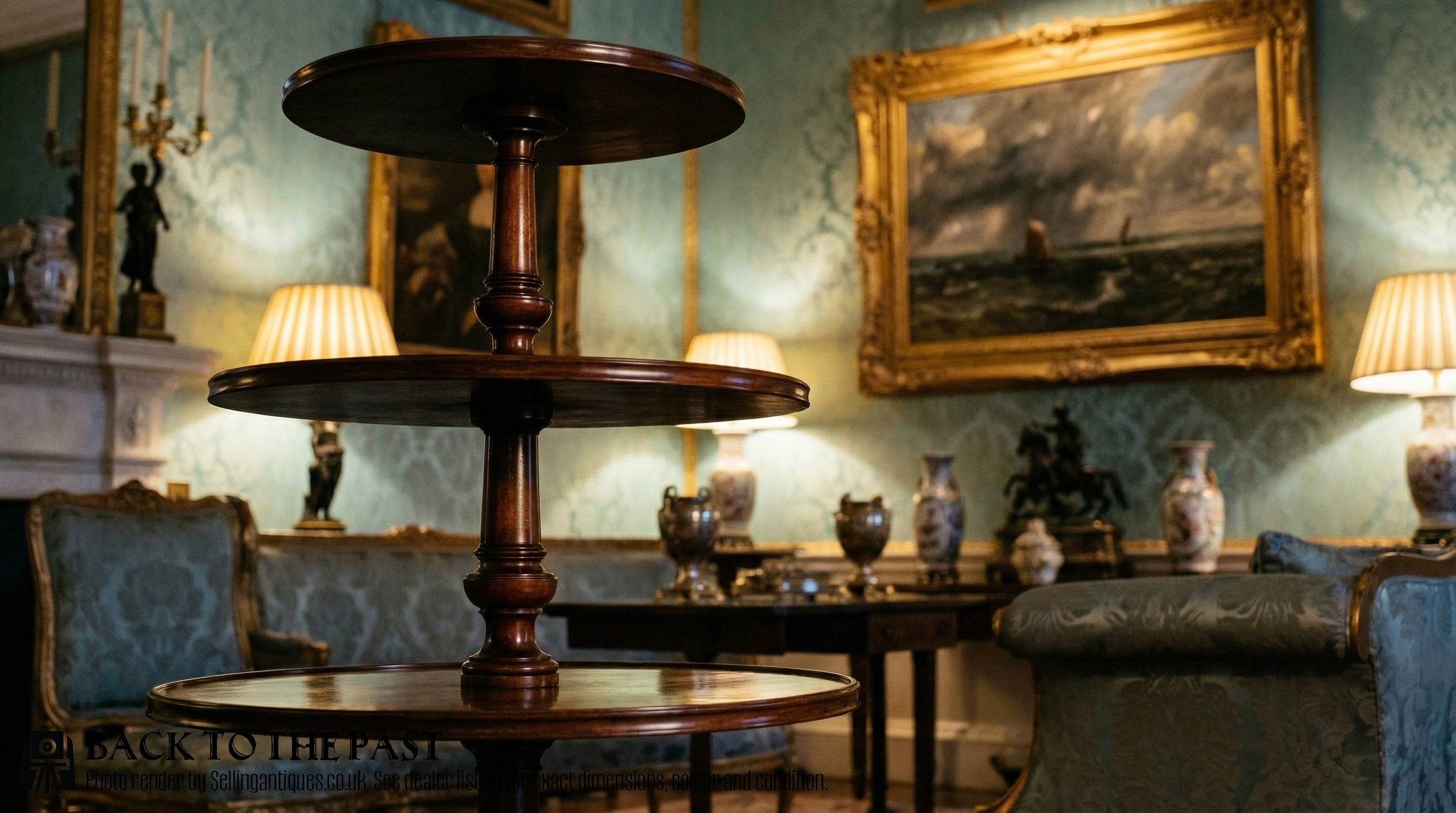
The most common format on this page is the multi-tier mahogany dumb waiter, often featuring three graduated revolving or fixed shelves. Oak, walnut, and pollard oak also appear alongside occasional tables and buffet forms.
Originating to assist with dining service when servants were absent from the room, these stands offer substantial display and holding space. Buyers encounter distinct styles ranging from formal Georgian designs to later Aesthetic Movement and Victorian interpretations.
How they were made
Cabinet makers utilised dense hardwoods including mahogany, oak, and walnut, frequently selecting figured veneers like pollard oak for decorative impact. Timber selection governed the structural integrity and visual weight of each tier.
Metal components such as brass fittings were incorporated to support pivoting tiers or castor wheels on the base. Joinery techniques ensured that columns and tripod or pillar bases could bear the weight of heavy ceramics and silver.
Materials documented across these serving stands include mahogany, oak, walnut, pollard oak, and brass.
What varies in quality
The sophistication of the timber figure and the grain matching across the tiers distinguish standard pieces from finer examples. Richness of colour and depth of the polished finish demonstrate the initial standard of workshop production.
The execution of turned columns, carved details, and the stability of the central pillar mechanism define mechanical and artistic merit. Original brass hardware and well-proportioned graduated shelves indicate superior craftsmanship.
The Tiered Dining Room Stand Glossary
- Dumb waiter
- A tiered stand used in dining rooms for holding dishes and silverware without requiring a servant. These pieces typically feature stacked circular shelves on a central column.
- Pollard oak
- Oak timber taken from pollarded trees, producing a distinctive clustered knot pattern in the grain. This decorative wood was favoured for its rich visual texture.
- Aesthetic Movement
- A late 19th-century design style emphasising visual beauty and artistic craftsmanship over heavy historicism. Pieces from this movement display refined lines and often utilise walnut.
- Regency
- A British design period spanning the early 19th century, characterised by classical restraint and architectural influences. Furniture from this era often incorporates robust mahogany and neat brass details.
Tiered Dining Room Stand: Frequently Asked Questions
What is a tiered dining room stand?
A tiered dining room stand is a multi-level piece of antique furniture designed to hold food, plates, and utensils during meals. They are most commonly represented by dumb waiters from the Georgian and Victorian eras.
These pieces typically feature two or three circular wooden shelves graduated in size, mounted on a central pillar with tripod feet.
How were dumb waiters used?
Historical dining habits required furniture that could hold supplementary courses and tableware near the dining table. Guests or hosts could access dishes independently without summoning attendants.
Lower tiers held heavier items while upper shelves accommodated smaller plates or glassware during formal meals.
How do I identify a George III stand?
George III pieces date from the late 18th to the early 19th century and are typically constructed from solid mahogany. They often display elegant turned central columns and finely proportioned tripod bases.
Makers from this period focused on classical balance, sturdy joinery, and graduated circular tiers without excessive ornamentation.
Where does pollard oak come from?
Pollard oak is derived from trees that were cut back near the trunk to encourage dense branch growth, resulting in highly figured timber. Cabinet makers prized this wood for its swirling grain patterns.
It appears on specific 19th-century stands to create a decorative surface on the tiers.