
Georgian Mahogany Bedroom Cupboard
A georgian mahogany bedroom cupboard provides substantial storage with the deep grain and rich colour characteristic of the period.
Georgian Mahogany Bedroom Cupboard
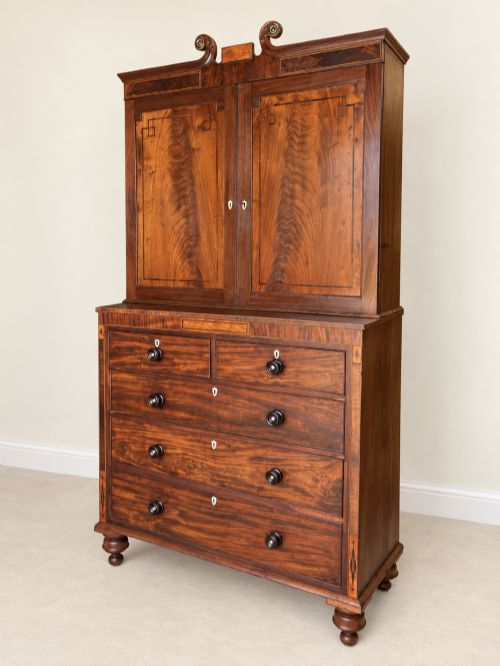
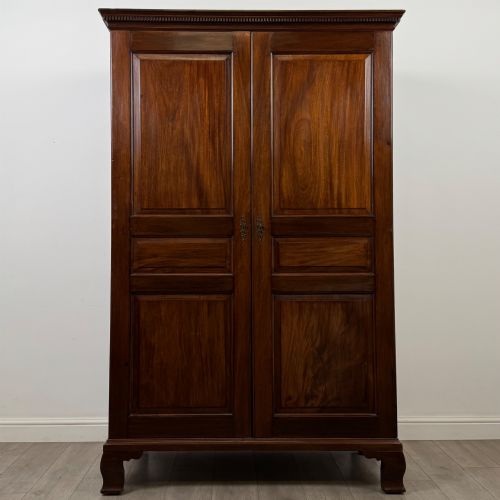
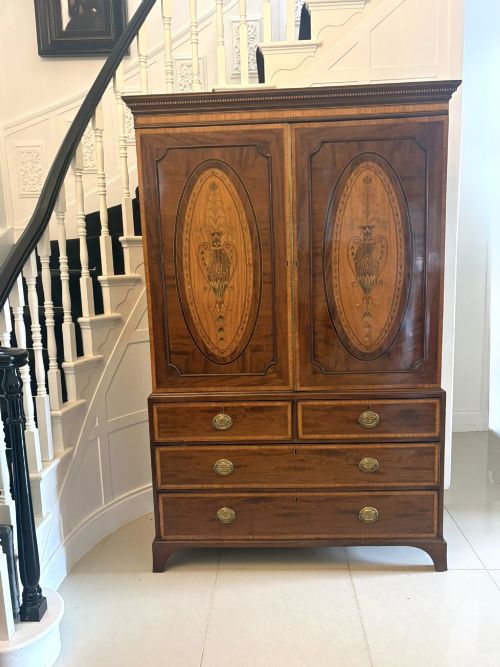
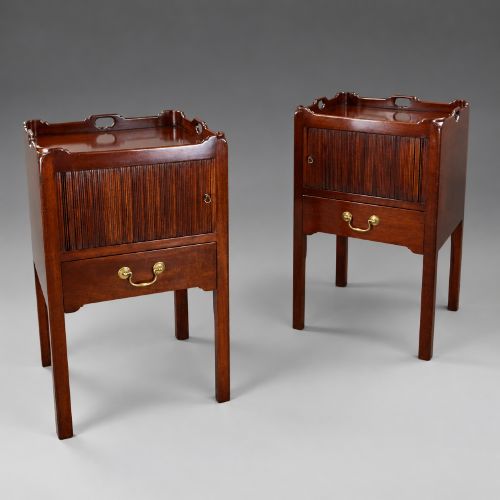
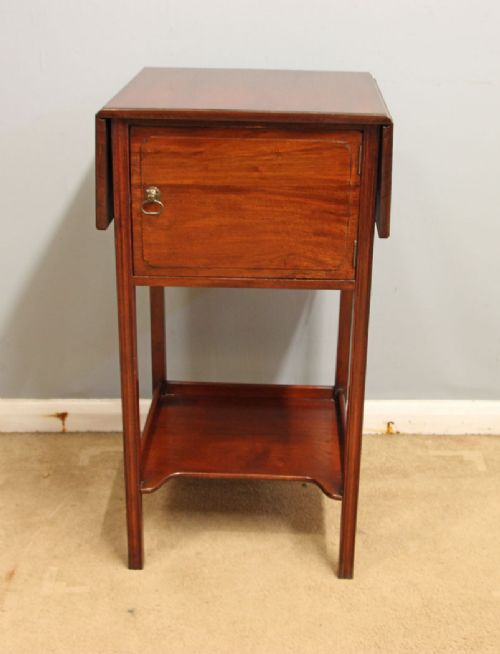
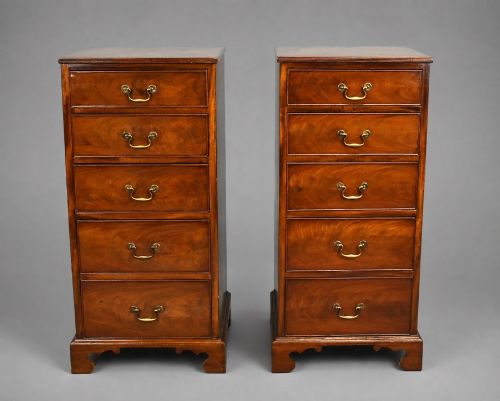
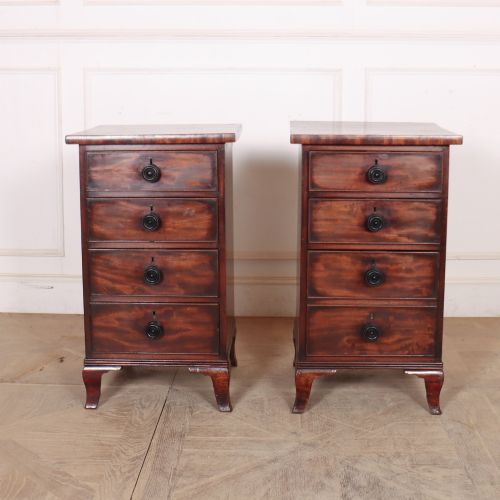
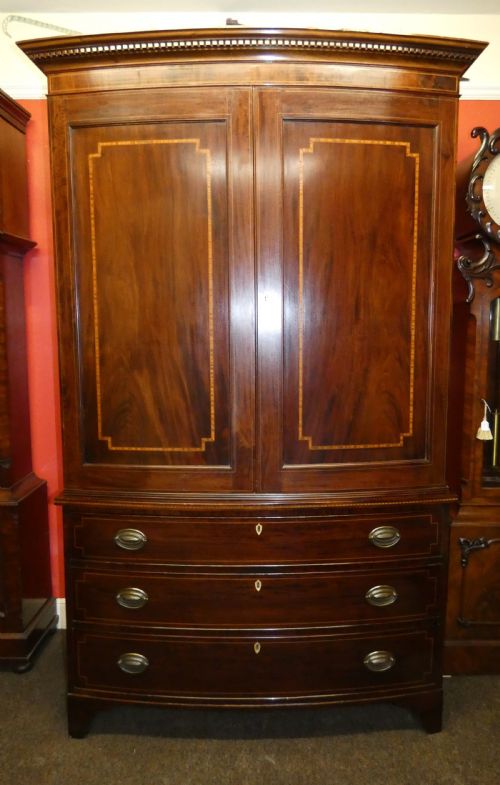
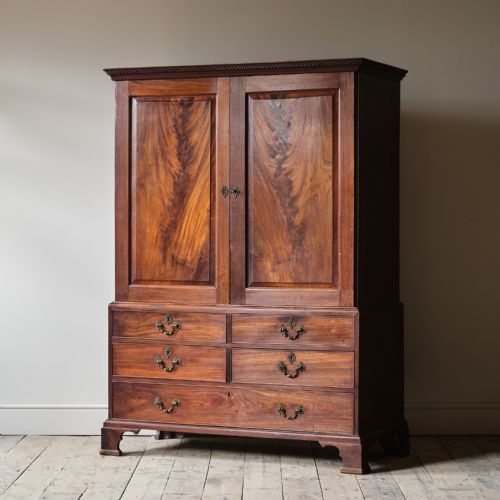
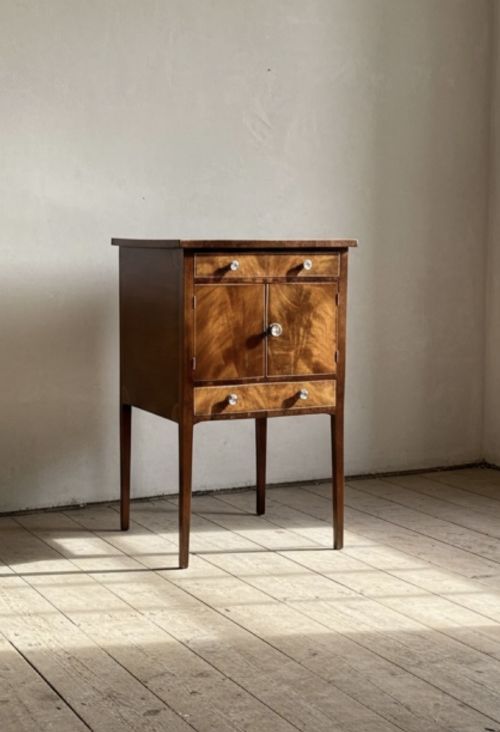
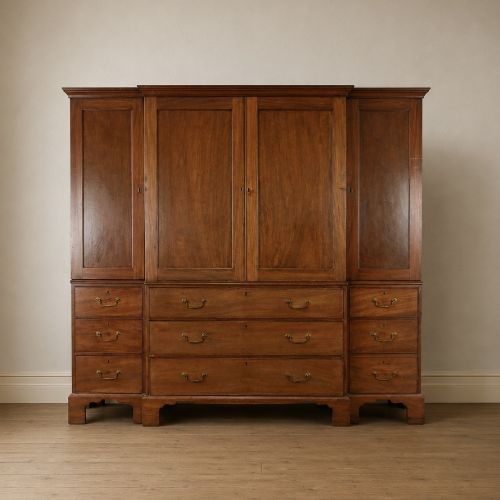
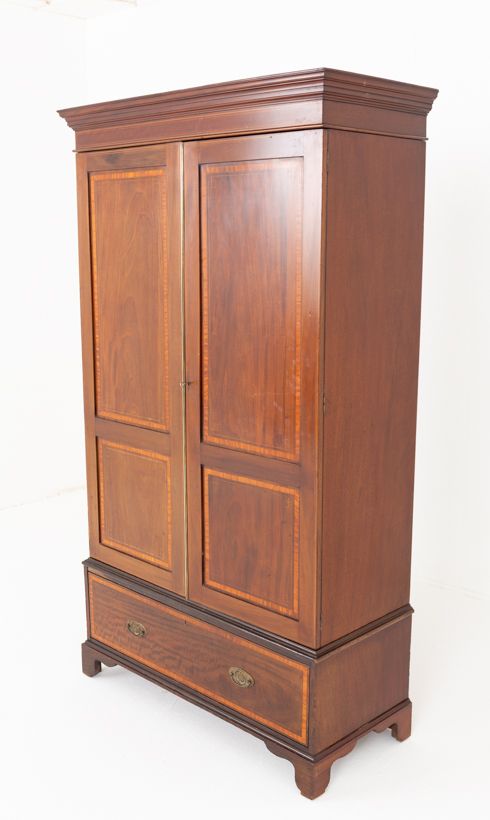
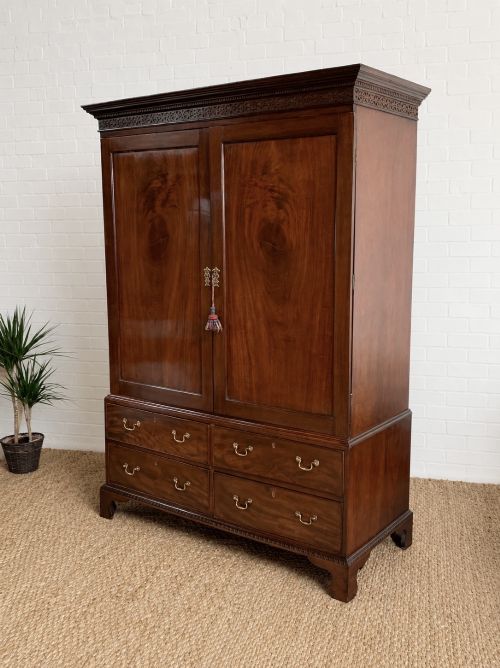
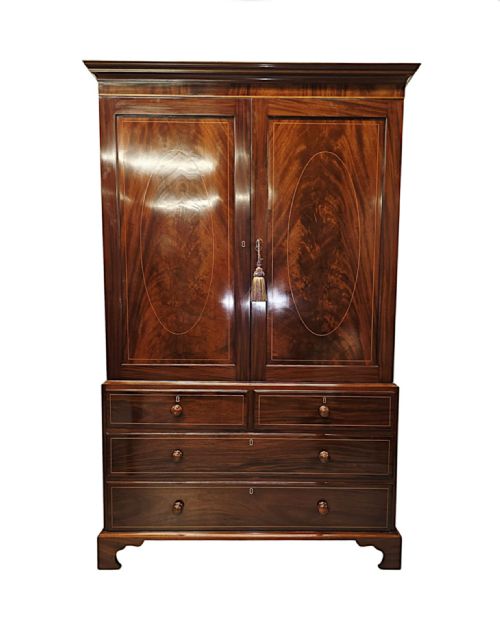
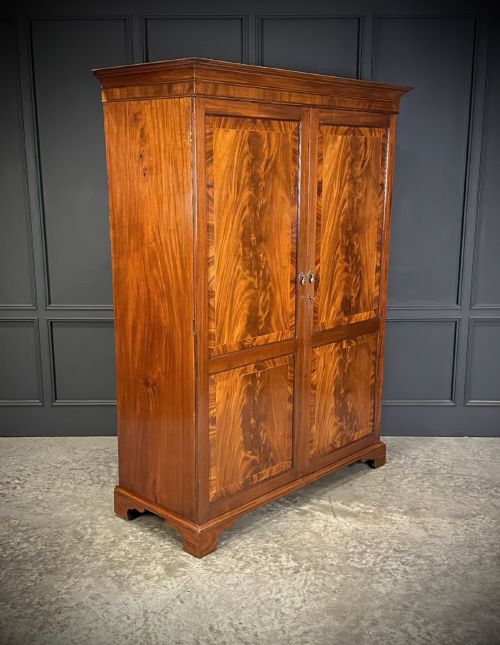
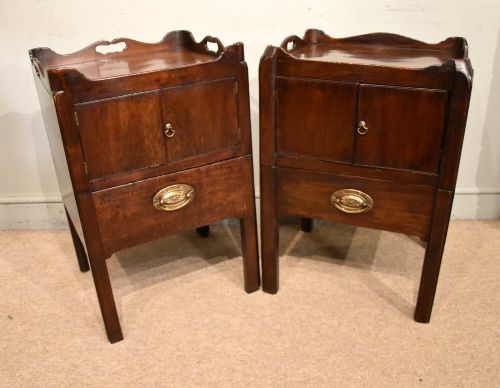
A georgian mahogany bedroom cupboard typically appears as a bedside cabinet, night table, or larger linen press and wardrobe designed for domestic storage. Pieces span the eighteenth century, the regency period, and later revival movements, capturing both compact bedside items and tall breakfront presses.
Bedside tables and pot cupboards form the smaller end of the scale, often featuring tray tops or enclosed doors. Larger linen presses combine upper sliding trays with lower drawer sections, whilst wardrobes and tallboys provide full hanging and folding capacity for the bedchamber.
Materials and Construction
Makers utilised solid mahogany and flame mahogany veneer laid over secondary woods such as oak, achieving distinct surface patterns through careful timber selection. Crossbanding in rosewood, satinwood, and stringing in boxwood or ebony provided linear contrast along panel edges and drawer fronts.
Cabinetmakers incorporated brass hardware including drop handles, key escutcheons, and hinges to secure doors and drawers. Internal construction relied on dovetailed drawer boxes and pegged joints, ensuring structural stability across large linen presses and small bedside tables alike.
Pot cupboards once kept night air out and chamber pots safely hidden behind dignified panelled doors.
Indicators of Quality
The refinement of carved ornament and inlay distinguishes higher grade examples, seen in crisp blind fretwork cornices, well-executed stringing, and balanced proportions. Figure selection in the mahogany veneer also plays a major role, with rich flame patterns indicating superior cabinet work.
Integrity of timber and retention of original brass fittings elevate a piece above standard utility items. Smooth operation of sliding linen trays, drawers, and cabinet doors demonstrates the precision applied during original construction.
Gillows
The Georgian Mahogany Bedroom Cupboard Glossary
- Linen Press
- A large two-part cabinet with upper sliding trays for storing folded textiles and lower drawers for additional garments. This form dominated eighteenth and nineteenth century bedchambers before fitted wardrobes became common.
- Pot Cupboard
- A small bedside cabinet designed originally to enclose a chamber pot. These practical pieces often feature a panelled door and sometimes incorporate a pull-out slide.
- Flame Mahogany
- A veneer cut from the fork of the mahogany tree where branches meet the trunk, producing a distinctive flickering flame pattern. Cabinetmakers used this timber on prominent drawer fronts and cupboard doors for decorative impact.
- Crossbanding
- A narrow strip of veneer laid perpendicularly to the surrounding grain along the border of a panel or drawer front. This technique frames the primary timber and adds visual depth to the piece.
- Blind Fretwork
- Carved ornamentation applied to a solid flat surface to simulate intricate openwork joinery. This decorative detail frequently appears along the cornices of finer linen presses.
Georgian Mahogany Bedroom Cupboard: Frequently Asked Questions
How do I use a bedside cabinet today?
Bedside cabinets and pot cupboards function effectively as lamp tables and discrete storage beside modern beds. Their enclosed doors conceal clutter while the top surface holds lighting and reading materials.
They also adapt well to small hallways or reception rooms as accent tables. The compact footprint makes them versatile additions to contemporary interiors.
How do I distinguish original period pieces from later revivals?
Original pieces from the eighteenth and early nineteenth centuries exhibit construction methods appropriate to the era, such as hand-cut dovetails and timber shrinkage consistent with age. Secondary woods like oak or pine inside drawer boxes provide further chronological clues.
Revival pieces from later periods often show uniform machine-cut joints and cleaner, less oxidised interior surfaces. Examining the drawer linings and backboards helps determine whether a piece belongs to the original georgian era or a later nineteenth or twentieth century revival.
What maintenance do mahogany cabinets require?
Mahogany requires minimal care, relying on occasional dusting with a dry cloth to maintain the finish. Avoiding direct sunlight and extreme humidity changes protects the timber and veneer from splitting.
Applying a traditional wax polish periodically nourishes the wood and preserves the depth of the grain. This simple routine keeps the surface stable and rich in colour.