


Vintage Inlaid Clothes Cupboard
A vintage inlaid clothes cupboard is a substantial storage piece that brings character and craftsmanship into a bedroom.
Vintage Inlaid Clothes Cupboard
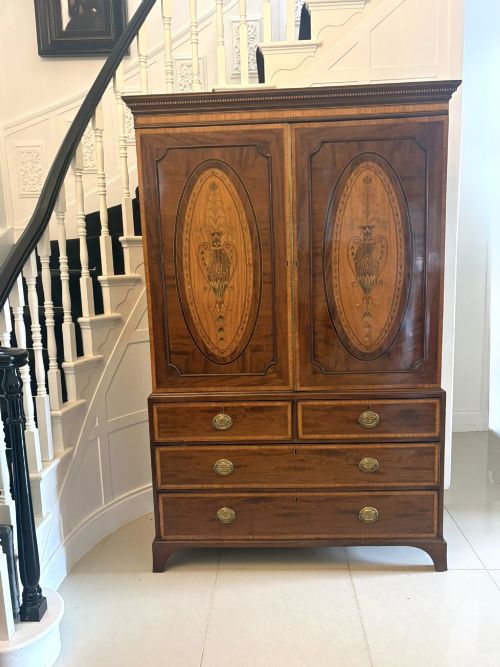
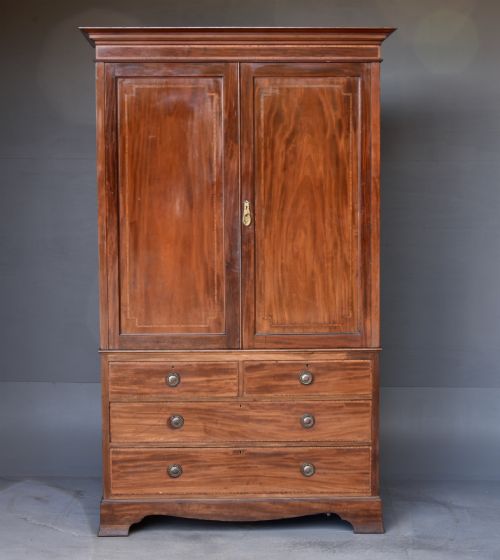
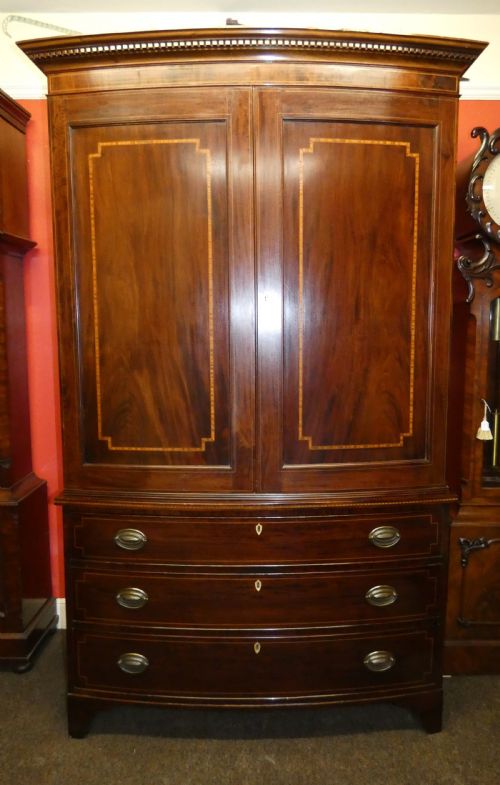
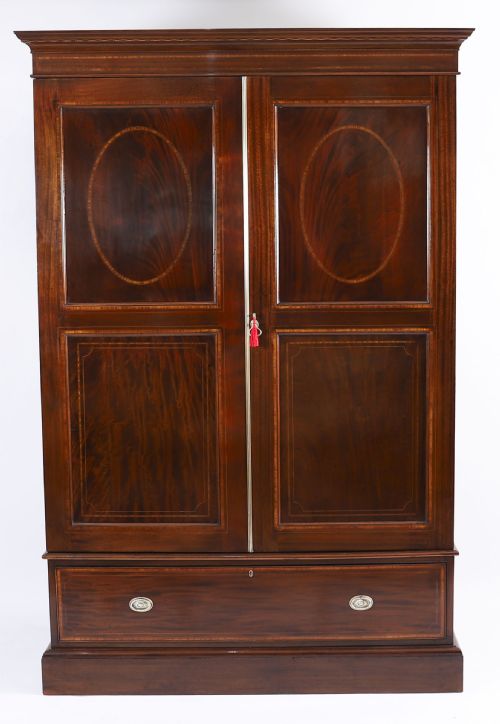
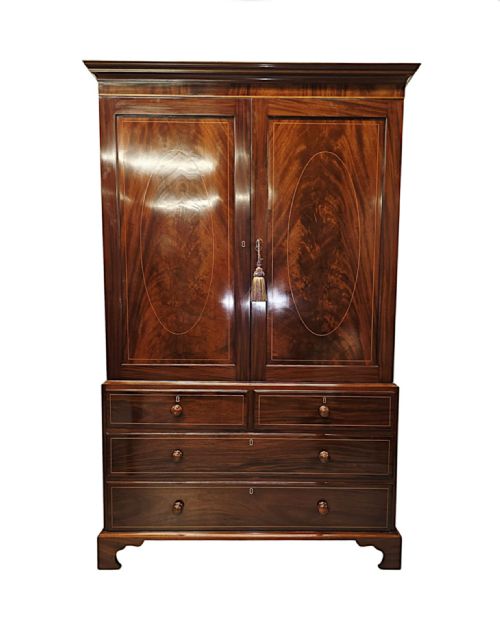
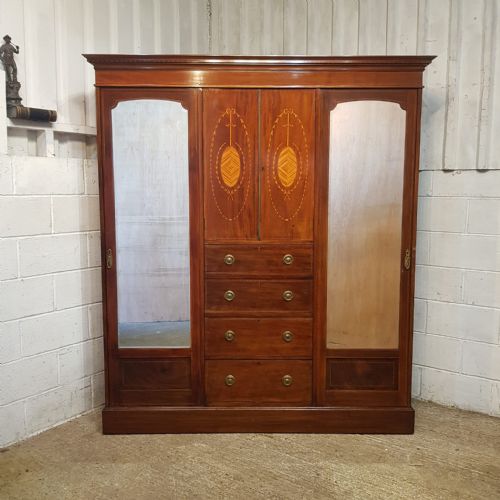
A vintage inlaid clothes cupboard encompasses linen presses, wardrobes, and armoires originating from periods spanning the eighteenth century through to the Edwardian era. These pieces provide deep internal storage through combinations of hanging space and sliding shelves, designed to house garments and domestic textiles.
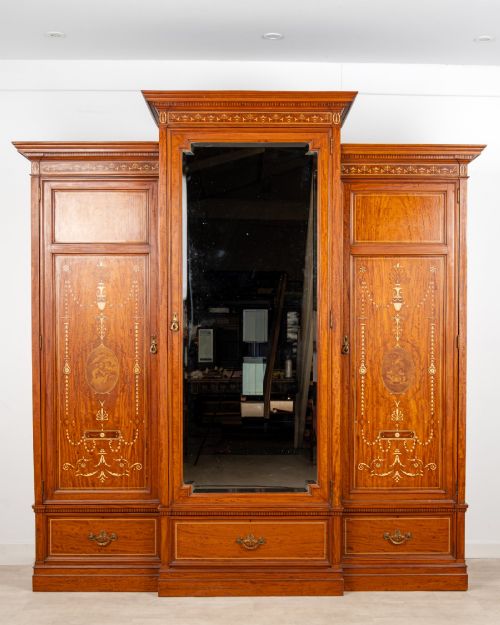
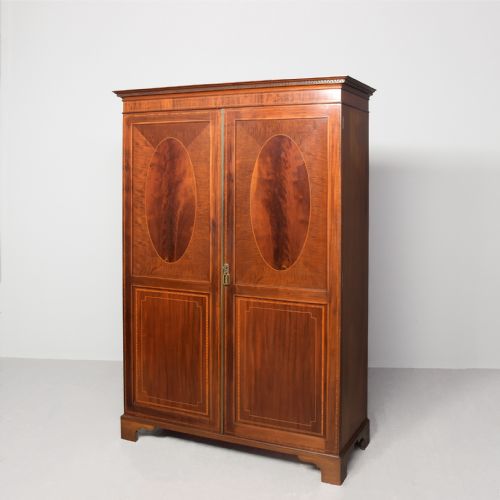
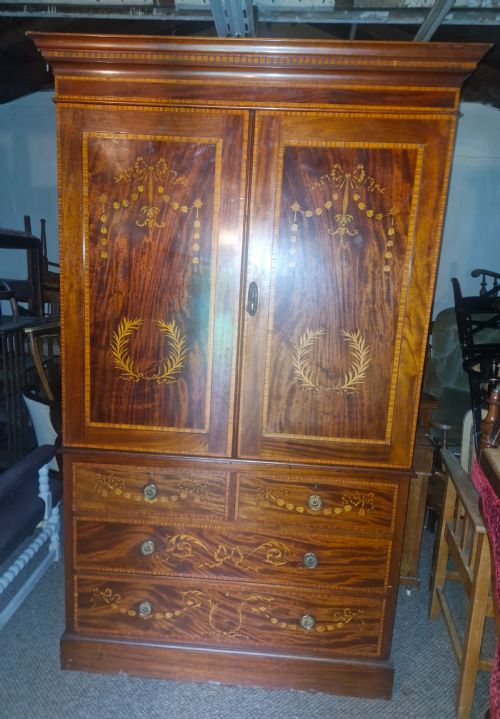
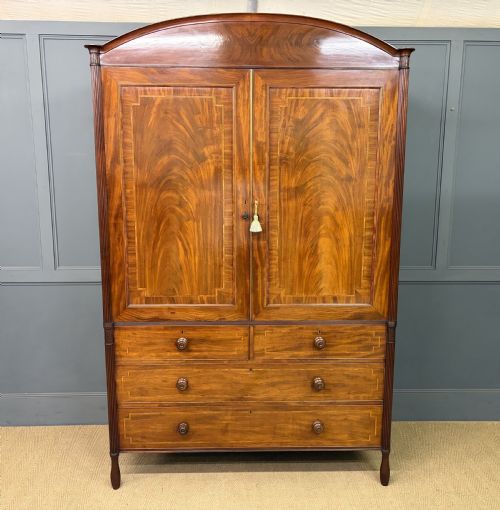
Mahogany and satinwood form the predominant body timber across the selection, paired with detailed contrasting stringing and boxwood inlay. Buyers will frequently encounter Edwardian triple wardrobes and Georgian linen presses featuring panelled doors and brass hardware.
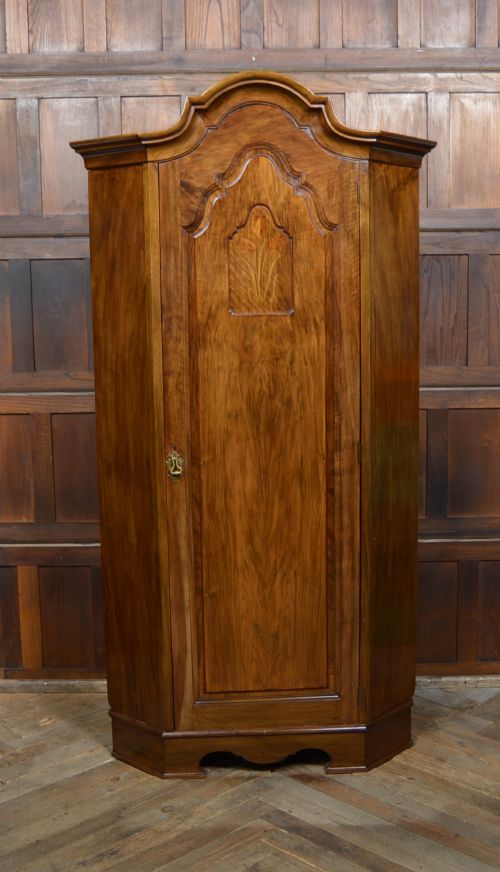
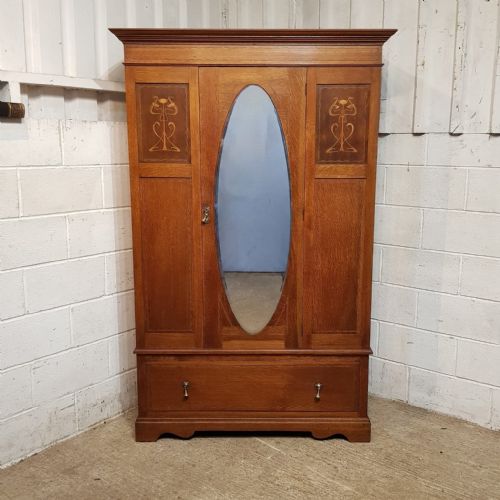
The regional and stylistic variations range from austere Arts and Crafts oak designs to curved Dutch marquetry and formal George III revival proportions. Each version reflects the domestic requirements of its original period, combining display presence with practical utility.
How they were made
Cabinet makers constructed these wardrobes and presses using solid timbers like mahogany, oak, and walnut, frequently applying flame mahogany veneer to large flat surfaces to create movement and depth. Internal elements often utilise secondary timbers for drawer linings and shelf construction.
Inlay work relied on precise hand-cutting of boxwood, satinwood, and darker woods inserted into recesses to form geometric borders or floral motifs. Brass handles, escutcheons, and hinges were cast and fitted by hand to secure heavy panelled doors.
Early cabinet makers occasionally concealed secret compartments behind the sliding trays of linen presses for storing private ledgers.
What varies in quality
The refinement of the timber selection and the precision of the boxwood inlay distinguish standard production from exceptional examples. Cabinet makers who matched veneer grains symmetrically across multiple doors achieved a visual harmony absent in lesser pieces.
Structural integrity depends on the thickness of the timbers used for internal sliding trays and the original fit of the brass hardware. Pieces retaining their fitted interior linen slides demonstrate a higher degree of original completeness.
maples & co·Druce & Co.·Waring & Gillow
The Vintage Inlaid Clothes Cupboard Glossary
- Linen press
- A tall piece of furniture featuring upper doors enclosing sliding trays for folded textiles above a base of wider drawers. These items served a primary role in historical households before fitted wardrobes became standard.
- Inlay
- A decorative technique where contrasting materials are inserted into recessed cavities on the wood surface to form patterns. Boxwood and satinwood represent the most common contrasting elements found in this collection.
- Flame mahogany
- A veneer cut from timber where the branch meets the trunk, producing a distinctive fire-like ripple pattern. Cabinet makers reserved this material for prominent door panels and drawer fronts.
- Marquetry
- An elaborate form of inlay assembling various wood veneers to create pictorial or scrolling designs. Dutch examples in the collection utilise this method extensively across curved door surfaces.
- Breakfront
- A piece of furniture where the central section projects forward from the flanking outer sections. This architectural arrangement creates depth and shadow on large triple wardrobes.
Vintage Inlaid Clothes Cupboard: Frequently Asked Questions
How do I care for the wood?
Maintain a stable room temperature away from direct heat sources to prevent the timber and veneer from splitting.
Apply a traditional beeswax polish sparingly to nourish the surface and preserve the natural sheen of the mahogany or satinwood.
Can these wardrobes be dismantled?
Many larger Edwardian and Georgian pieces were constructed to be taken apart for transport and installation in upper rooms.
Check the internal corners and cornice fixings for the original knock-down bolts or screw fittings before attempting disassembly.
What is the difference between a press and a wardrobe?
A linen press traditionally contains sliding wooden trays behind the upper doors for folded garments, sitting above a chest of drawers.
A standard wardrobe focuses primarily on vertical hanging space for coats and dresses, sometimes incorporating side compartments.
How do I identify an Edwardian piece?
Edwardian wardrobes often feature lighter satinwood timbers, extensive painted decorations, and large bevelled mirror doors.
These pieces typically display a lighter scale and brighter finish compared to the darker, heavier proportions of earlier nineteenth-century examples.