


Oval Inlay Mahogany Wardrobe
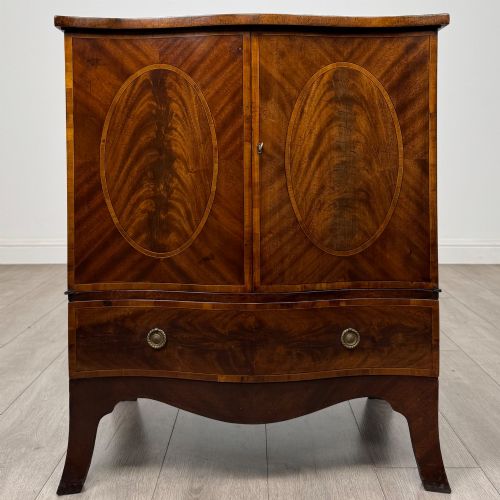
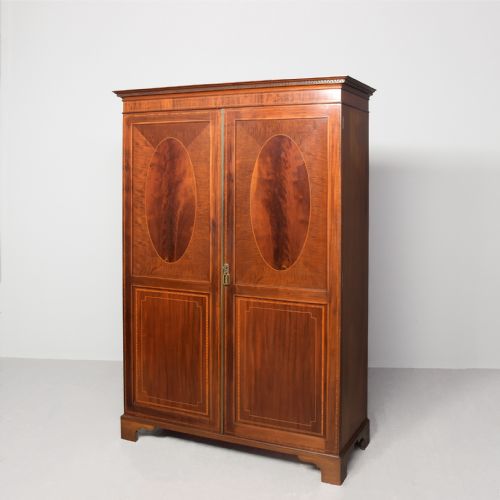
An oval inlay mahogany wardrobe offers generous storage paired with disciplined Georgian proportions and crisp satinwood contrast.
Oval Inlay Mahogany Wardrobe
When you search for an oval inlay mahogany wardrobe, you encounter large storage pieces from the Georgian, Regency and Edwardian eras. These large bedroom and hall pieces span eras from the eighteenth century through to the early twentieth century.
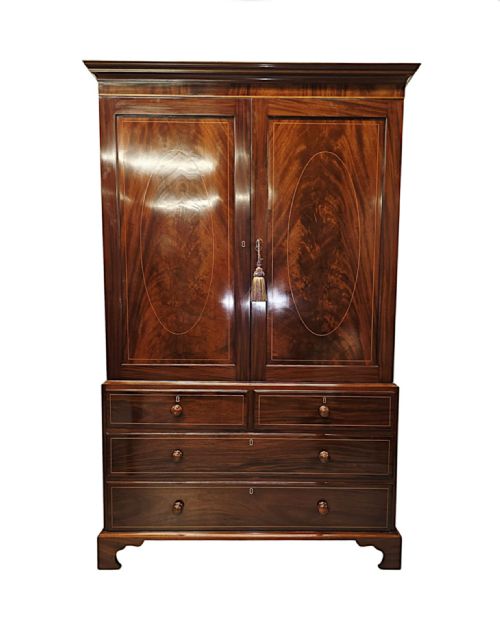
The format primarily manifests as linen presses, gentlemen's presses and full-height wardrobes. Most examples on this page date from the Georgian period, showcasing classical forms alongside Edwardian revivals.
Makers constructed these substantial pieces in mahogany, often employing flame mahogany veneers and satinwood bandings. The characteristic oval inlay provides a bright contrast against the dark timber ground.
Materials and construction methods
Cabinetmakers utilised solid mahogany and flame mahogany veneers over secondary timbers such as oak. They applied fine stringing in boxwood to delineate panels and drawer fronts.
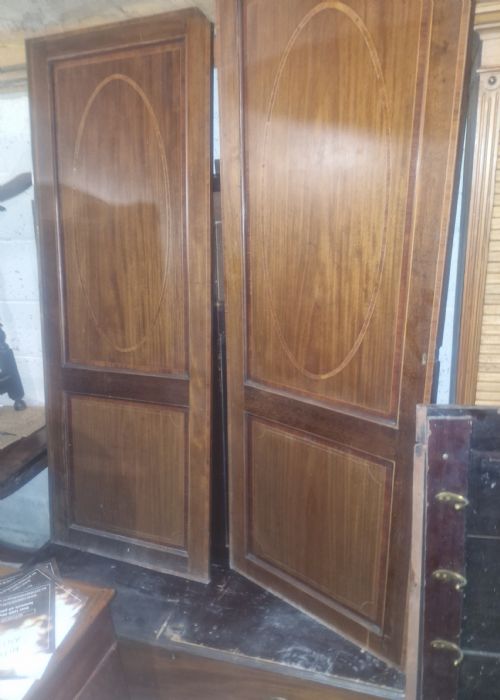
Inlay work incorporated satinwood and boxwood sections to form contrasting ovals and banding. Brass hardware, including drop handles and escutcheons, completed the functional elements of the facade.
Channel Island cabinetmakers occasionally added secret compartments behind classical swan-neck pediments to hide smuggling receipts.
Factors that determine quality
Quality rests upon the selection of timber figures, particularly the choice of flame mahogany veneers across the main doors and drawer fronts. Superior pieces demonstrate meticulous book-matching in the grain.
The precision of the boxwood and satinwood inlay marks the difference between standard cabinet work and exceptional execution. Crisp, tight mitres in the stringing and well-proportioned pediments elevate the status of a piece.
The Oval Inlay Mahogany Wardrobe Glossary
- Linen Press
- A tall two-part cabinet with upper sliding trays or shelves enclosed by doors, positioned above a chest of drawers base.
- Flame Mahogany
- A veneer cut from the fork of the mahogany tree, creating a distinctive rippled, flame-like pattern across the timber surface.
- Satinwood
- A durable, yellow-toned timber utilised extensively for contrasting stringing and oval decorative inlays.
- Pediment
- The decorative architectural crown surmounting the upper cornice of a wardrobe or linen press.
- Stringing
- Thin, narrow lines of contrasting wood inlaid flush into the surface to create geometric borders and panels.
Oval Inlay Mahogany Wardrobe: Frequently Asked Questions
How do I date a mahogany wardrobe?
Examine the timber species, secondary woods, and construction methods used inside the drawers and carcass. Earlier eighteenth-century examples feature hand-cut dovetails and distinct Georgian proportions.
Later nineteenth-century and Edwardian pieces often display machine-sawn elements, lighter mahogany shades, and revival styling details that signal a later date of manufacture.
What is the difference between a wardrobe and a linen press?
A traditional wardrobe provides vertical hanging space behind tall doors for garments on hangers. A linen press contains internal sliding trays or shelves in the upper section for folded textiles.
Many historic linen presses were later converted to hanging wardrobes by removing the internal trays to suit modern clothing requirements.
How should I care for antique mahogany furniture?
Keep mahogany furniture away from direct sunlight and strong heat sources to prevent the veneers from drying out and lifting. Maintain a stable indoor humidity level in the room.
Apply a traditional beeswax polish sparingly and buff with a soft cloth to nourish the timber grain without building up heavy wax layers.
Will a large Georgian wardrobe fit in a modern bedroom?
These pieces possess substantial heights and depths, often featuring removable upper pediments or modular two-part construction to assist with transport. Measure your ceiling height and stair clearance carefully before delivery.
Consider the swing clearance required for heavy panelled doors and ensure your chosen wall space can accommodate the physical footprint.