
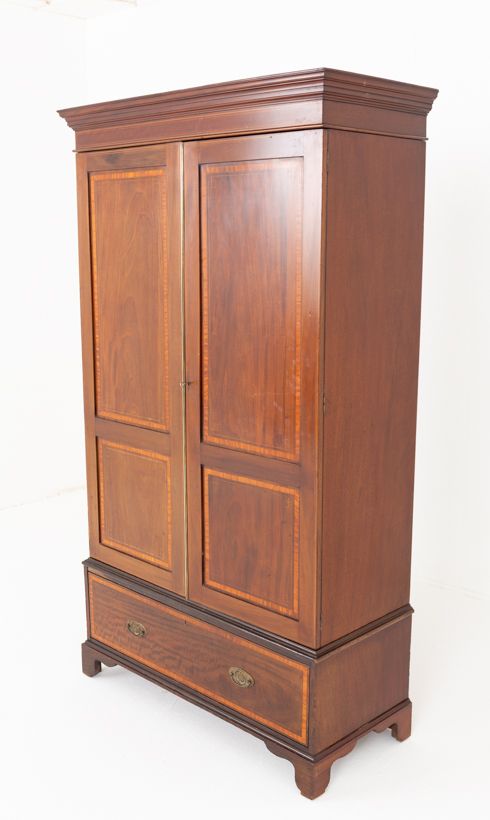
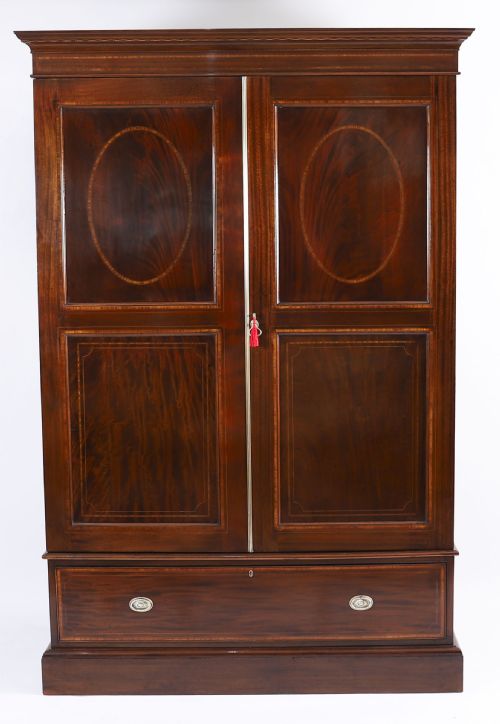
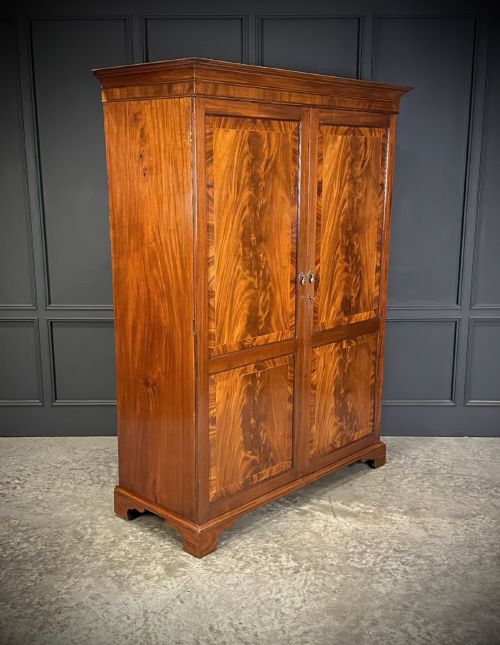
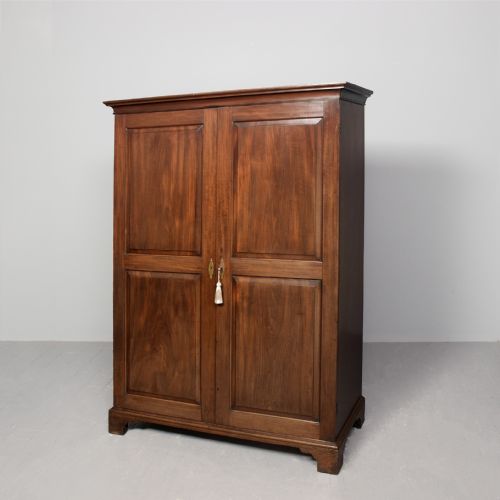
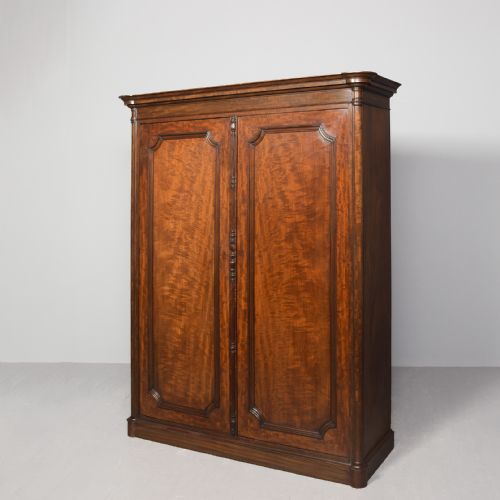
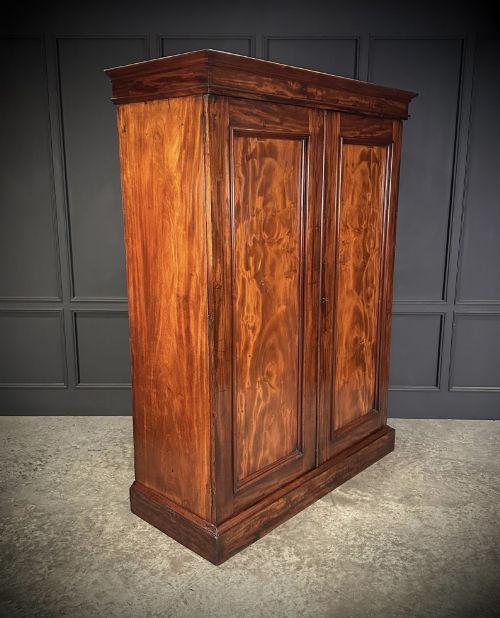
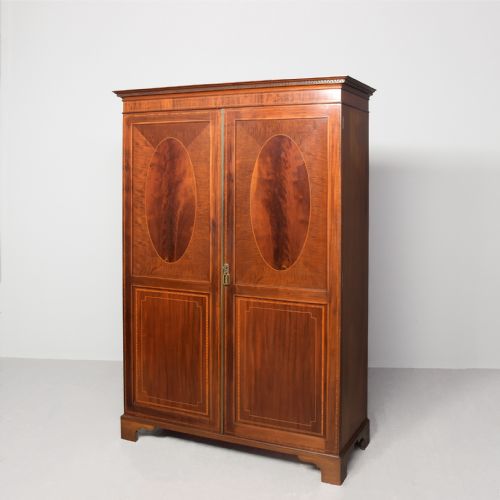
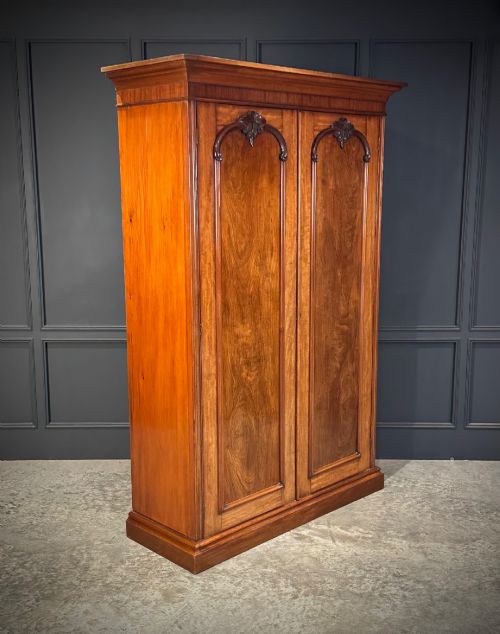
Double Door Mahogany Wardrobe
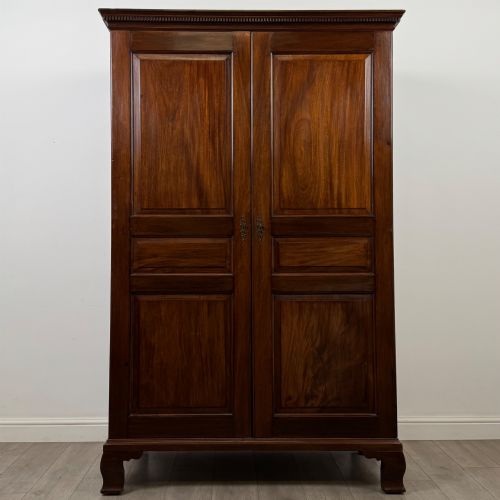
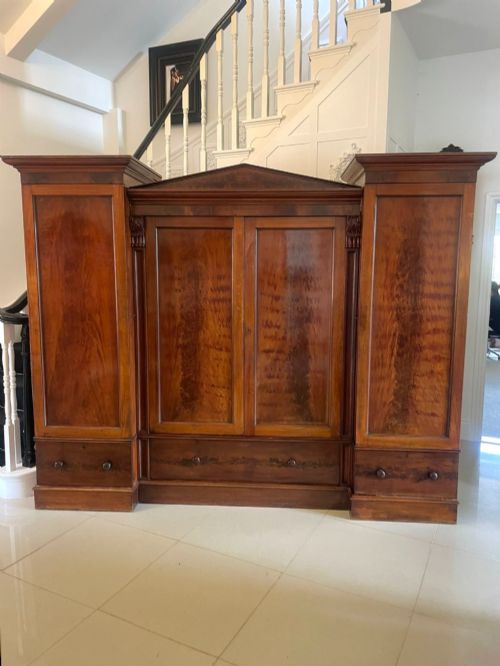
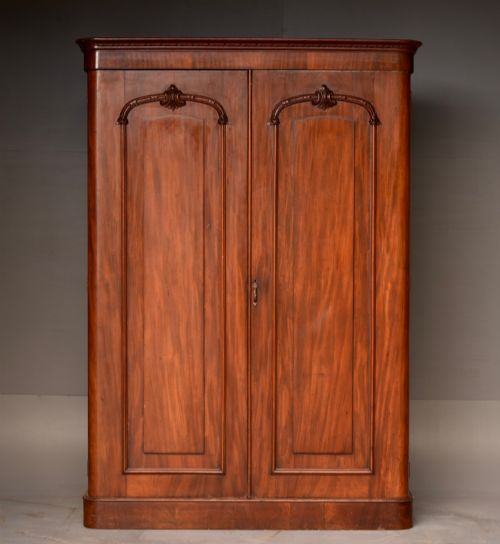
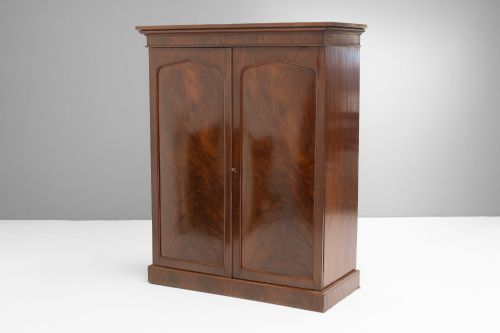
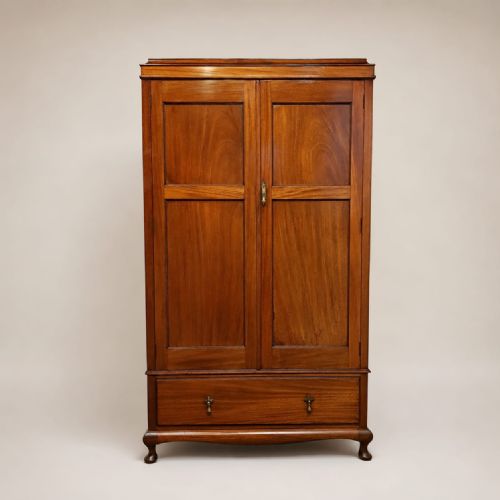
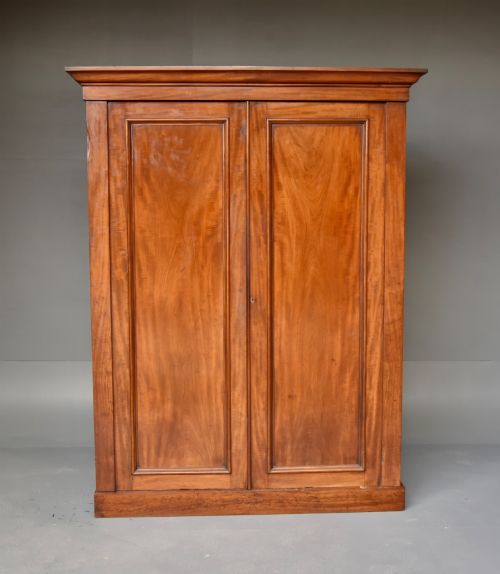
A double door mahogany wardrobe offers generous storage while bringing rich timber grain and period presence into a bedroom.
Double Door Mahogany Wardrobe
A double door mahogany wardrobe is a substantial piece of bedroom furniture designed for hanging garments and storing linens, with examples spanning from the Georgian era through to the Edwardian period. The core of this selection comprises Victorian and Georgian pieces alongside Edwardian iterations and revival styles.
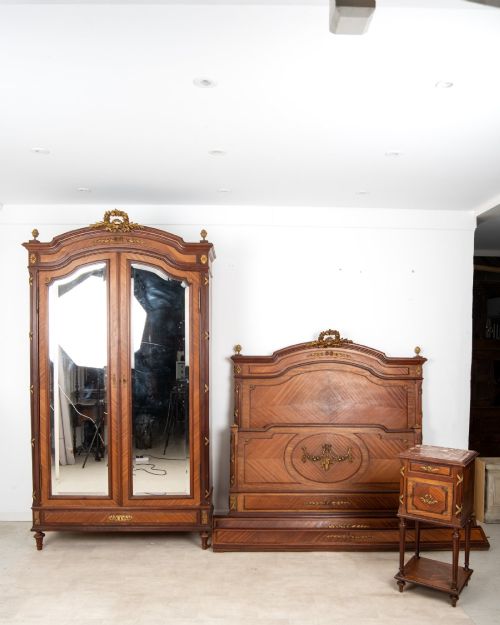
Buyers encounter various formats within this grouping, including traditional linen presses with sliding trays above drawers, full-height hanging cupboards, and mirrored double door wardrobe variants. These pieces originate from English workshops as well as regional centres like Scotland and the Channel Islands.
The fundamental configuration relies on twin doors opening to reveal hanging space or internal shelving, occasionally accompanied by associated drawer sections in the base. Such furniture reflects the shifting domestic storage needs of households across the eighteenth, nineteenth, and early twentieth centuries.
Materials and construction methods
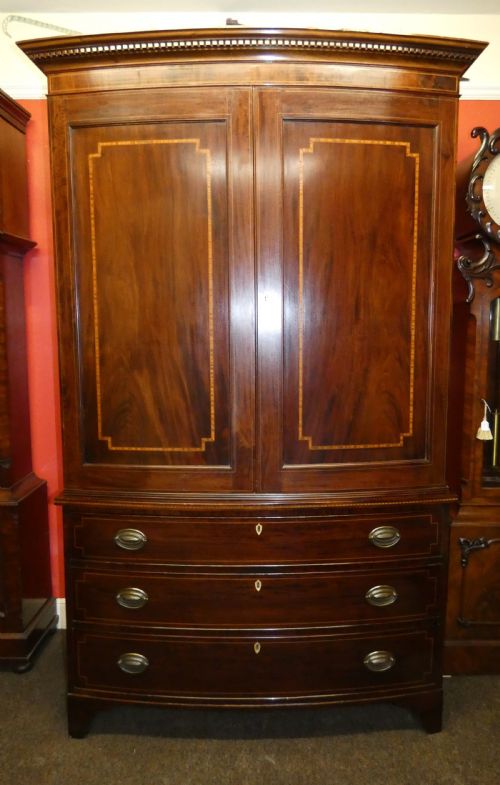
Makers utilised solid mahogany and flame mahogany veneers applied over secondary timbers such as oak, creating deep figuration across large panel surfaces. Cabinetmakers selected timbers for their rich colour and grain patterns, often enhancing facades with contrasting satinwood or boxwood inlay.
Structural integrity relied on traditional joinery methods, whilst decorative detailing incorporated hand-carved elements, brass hardware, and specialised glass panels. Surface finishes were built up using traditional polishing techniques to highlight the natural depth of the mahogany timber.
Factors determining quality
Quality in a double door mahogany wardrobe rests upon the selection of timber veneers and the precision of the cabinetmaker's joinery. Superior examples display symmetrical flame mahogany figuring across the doors and thoughtful integration of decorative inlay or brass mounts.
The refinement of internal configuration and proportion also separates standard production from exceptional pieces. Master workshops achieved cleaner lines, sturdier internal framing, and more harmonious proportions across the facade.
S & H Jewell·Howard & Son's
The Double Door Mahogany Wardrobe Glossary
- Flame mahogany
- A veneer cut from timber where the grain creates a distinctive flame-like pattern. This decorative figuring was highly prized by cabinetmakers for prominent door panels.
- Linen press
- A tall piece of furniture featuring upper sliding trays for storing folded textiles above a chest of lower drawers. Many later examples were adapted into standard hanging wardrobes.
- Inlay
- A technique where contrasting woods such as satinwood or boxwood are inserted into recesses in the primary mahogany surface to create geometric or floral motifs.
- Compactum
- A fitted wardrobe that combines hanging space, drawers, and shelving within a single multi-functional unit. These pieces offer diverse interior storage compartments.
- Biedermeier
- A Central European style dating from the nineteenth century characterised by utilitarian comfort and clean lines that emphasise the natural beauty of mahogany wood.
Double Door Mahogany Wardrobe: Frequently Asked Questions
How do I date a mahogany wardrobe?
Dating relies on observing construction characteristics, timber choice, and stylistic details such as cornices, feet, and handle types. Georgian pieces generally display simpler internal layouts and hand-cut dovetails, whilst Victorian and Edwardian examples often incorporate mirrors or factory-made hardware.
Changes in proportion and decorative revivals also help narrow down the decade of production. Comparing the secondary woods inside the carcass provides further clues to the period of manufacture.
Will a double door wardrobe dismantle for moving?
Many period wardrobes are built using modular construction where the cornice, base, and sides separate from the main backboards. This knock-down design allowed large pieces of furniture to be transported up staircases and into historic bedrooms.
Buyers should inspect the specific construction to confirm whether flat-pack assembly was utilised by the original maker. Careful handling of heavy mahogany sections is necessary during any relocation.
What is the difference between a wardrobe and a linen press?
A traditional linen press contains sliding interior trays designed for flat textiles rather than a full-height hanging rail for garments. Over time, many presses were converted into wardrobes by removing the internal trays to accommodate modern clothes hangers.
Wardrobes from the outset were constructed primarily for hanging attire behind full-length doors. Both forms utilise similar exterior mahogany cabinetry despite their distinct interior layouts.
How should I care for antique mahogany furniture?
Maintaining antique mahogany involves keeping the timber away from direct heat sources and sudden humidity changes to prevent veneer cracking. Regular dusting with a soft, dry cloth preserves the polish without building up waxy residues.
Occasional application of appropriate furniture wax helps nourish the wood and maintain its natural lustre. Avoiding harsh chemical cleaners protects the historic finish developed over centuries.