


Georgian Lacquered Tall Clock
A georgian lacquered tall clock brings painted chinoiserie and steady brass movements into a room, offering both decorative depth and historic timekeeping.
Georgian Lacquered Tall Clock
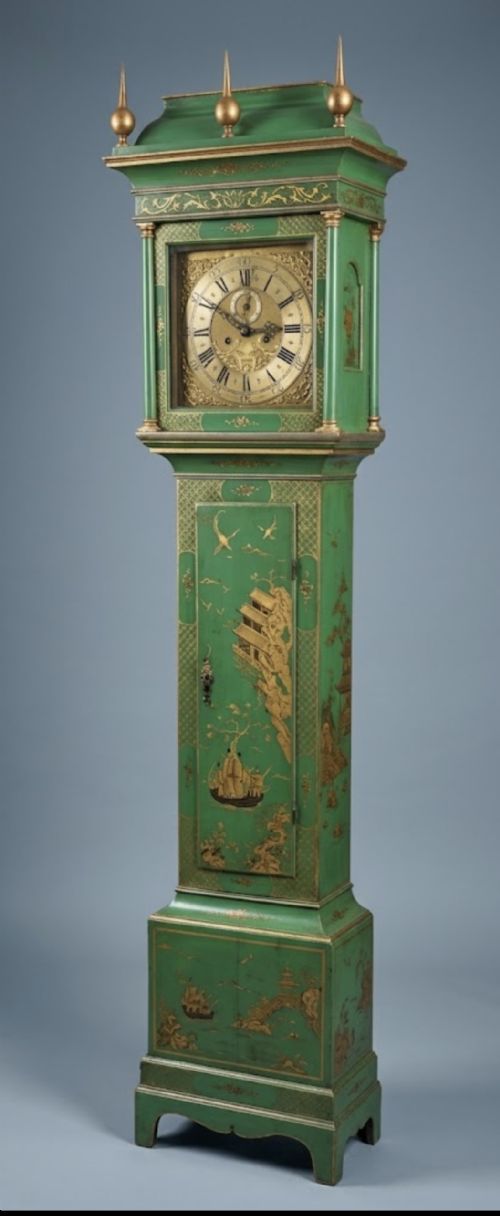
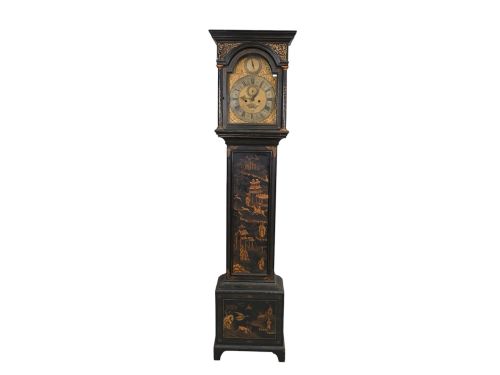
When you search for a georgian lacquered tall clock, you encounter longcase timepieces decorated with orientalist motifs across wood surfaces. These tall clocks stand upright, housing brass clockwork behind glass doors within slim wooden cases.
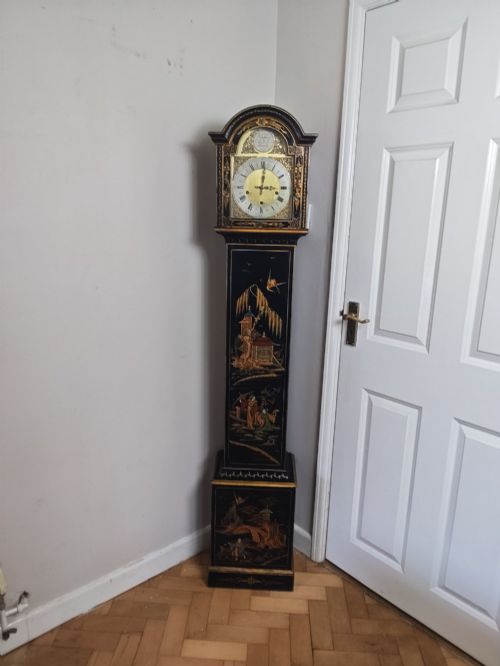
The pieces appearing on this page span the georgian period alongside later interpretations such as a 1930 grandmother clock. 18th century examples display traditional proportions, while variants include smaller grandmother clocks and musical or automaton movements.
Makers such as John Fielder of Alton, William Kipling London, Thomas Utting of Yarmouth, and Gardner of London signed notable longcase examples. Their work anchors the historical range from early georgian pieces through george iii designs.
Materials and construction
The structural carcass relies on wood, prepared to receive layers of lacquer, japanned finishes, or gold leaf decoration. Artisans applied pigmented varnishes to build up the glossy surface before painting figurative chinoiserie scenes.
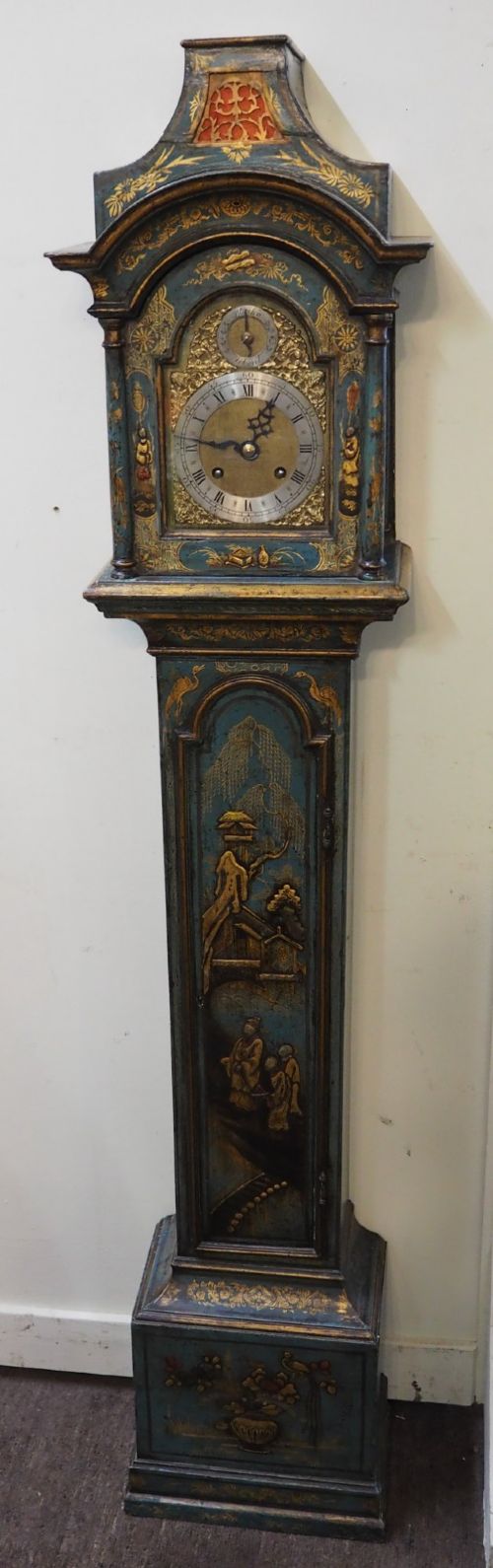
Brass movements inside drive the timekeeping, often paired with glass panes in the dial door to protect the face. Gilt highlights accentuate the raised figures and landscapes rendered across the lacquered wood panels.
Listings feature materials spanning wood, brass, glass, lacquer, gilt, and gold leaf.
Quality and execution
The depth and preservation of the lacquer finish distinguish finer examples from simpler ones. Rich blue or green lacquered surfaces with detailed gold leaf work demonstrate superior artistic execution.
John Fielder of Alton·William Kipling London·Thomas Utting of Yarmouth·Gardner of London
The Georgian Lacquered Tall Clock Glossary
- Chinoiserie
- European decorative style reflecting Chinese artistic traditions. It appears in the painted landscapes and figures adorning these tall clock cases.
- Japanned wood
- European imitation of East Asian lacquerwork using heat-cured varnishes. This technique creates the hard, glossy finish seen on many 18th century longcase clocks.
- Longcase clock
- Weight-driven pendulum clock housed in a tall wooden case. Often referred to as grandfather or grandmother clocks depending on their height.
- Automaton
- Moving mechanical part within a clock face that animates scenes as the mechanism runs. These add an extra layer of complexity to the timekeeper.
Georgian Lacquered Tall Clock: Frequently Asked Questions
How do I care for a lacquered clock?
Keep the tall clock away from direct sunlight and dramatic temperature shifts to protect the delicate lacquer and gold leaf surface.
Dust the wooden case gently with a dry microfibre cloth and have a professional horologist service the brass movement periodically.
Where should I place a tall clock?
Position the piece against a solid interior wall in a room with stable humidity. Avoid exterior walls that experience temperature fluctuations.
Ensure the floor is level so the pendulum swings evenly and the brass movement keeps accurate time.
What is a grandmother clock?
A grandmother clock is a smaller version of the traditional longcase or grandfather clock. These scaled-down timepieces originated later, including examples from the 20th century.
They share the same lacquered chinoiserie aesthetic but fit more easily into rooms with lower ceilings.
How do I identify a georgian period piece?
Examine the construction methods, materials, and stylistic markers of the wooden case. Georgian items typically feature hand-painted chinoiserie and brass dial signatures from 18th century makers.
Compare the movement type and decorative details against known regional horology of the georgian era.