
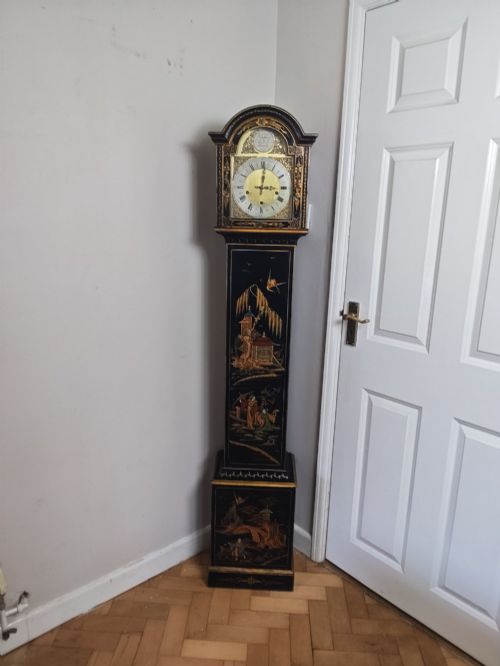
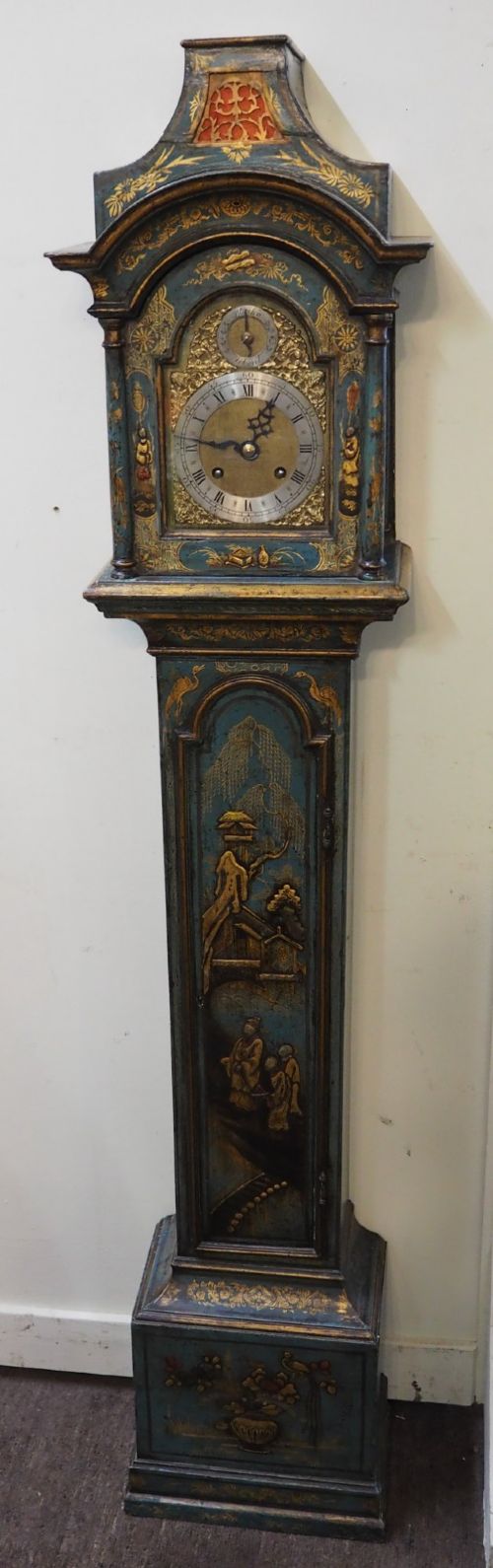
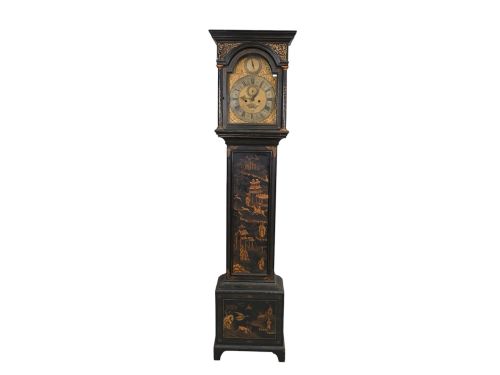


Gilt Chinoiserie Longcase Clock
A gilt chinoiserie longcase clock brings striking painted decoration and tall architectural presence to a room.
Gilt Chinoiserie Longcase Clock
When you search for a gilt chinoiserie longcase clock, you encounter tall timepieces decorated in the European interpretation of East Asian design. These objects combine tall timber cases with intricate surface decoration, ranging in scale from full grandfather clocks down to smaller grandmother clock formats.
The examples available here stretch across several distinct periods, running from early Georgian and mid-eighteenth-century pieces up through revival examples from the nineteen-twenties and nineteen-thirties. You will meet both eight-day movements and musical or automaton variations housed within these decorated wooden enclosures.
Originating from makers working in London, Reading, Edinburgh, and beyond, these longcase clocks serve as both functional timekeepers and significant decorative furniture. The visual weight of the case and the complexity of the lacquerwork define the character of each individual piece.
Materials and construction methods
The foundation of these pieces relies on timber frameworks prepared to receive layers of lacquer, often finished in shades of green, blue, or dark ground colours. Artisans applied gold leaf and gilt decoration over these surfaces to render raised pictorial scenes of figures, pavilions, and landscapes.
Some clocks feature mechanical automata that bring painted figures to life while the dial tells the time.
Distinguishing quality across the range
The standard of the pictorial decoration dictates much of the visual success of the piece, with finer examples displaying deeply raised gilt work and deliberate composition across the door and trunk. Simpler interpretations rely on flatter painted motifs with less complex figurative detail.
The integration between the movement and the case also influences the standing of the clock, as does the preservation of the original lacquered surfaces through the centuries. Maker attribution, such as signed dials from known Georgian horologists, adds further historical weight to the object.
William Kipling London·Wise of Reading·Gardner of London·Robert Berry
The Gilt Chinoiserie Longcase Clock Glossary
- Japanned Wood
- European wood furniture finished with varnishes and painted decorations imitating East Asian lacquerware. This technique creates the glossy, durable surface typical of chinoiserie decoration.
- Grandmother Clock
- A smaller version of the traditional longcase clock, typically produced in later periods such as the twentieth century. It maintains the architectural proportions of a grandfather clock in a reduced scale.
- Automaton Clock
- A timekeeper featuring mechanical moving figures or animated scenes incorporated into the dial or arch. These mechanical additions operate in time with the clock's striking mechanism.
- Longcase Clock
- A weight-driven pendulum clock enclosed in a tall wooden case designed to stand directly on the floor. It is commonly referred to as a grandfather clock.
- Chinoiserie Revival
- A renewed interest in European decorative arts inspired by Chinese and East Asian design aesthetics, prevalent during periods like the early twentieth century.
Gilt Chinoiserie Longcase Clock: Frequently Asked Questions
What is a chinoiserie longcase clock?
A chinoiserie longcase clock is a tall floor-standing timekeeper decorated with European interpretations of East Asian motifs, typically rendered in lacquer and gold leaf.
These pieces combine functional horology with elaborate decorative cabinetry, serving as focal points within domestic interiors.
How do grandfather and grandmother clocks differ?
Grandfather clocks are the standard full-size longcase clocks, while grandmother clocks are scaled-down versions produced in smaller proportions.
Both types utilise weight-driven movements and tall protective wooden cases, but grandmother clocks suit more modest ceiling heights or room dimensions.
What periods do these clocks come from?
The pieces available span from the early eighteenth century during the Georgian era through to twentieth-century revival pieces made around nineteen-twenty and nineteen-thirty.
Earlier examples reflect original Georgian craftsmanship, while later examples demonstrate twentieth-century revivals of traditional lacquering techniques.
How should I care for a lacquered clock?
Lacquered and gilt surfaces require stable indoor humidity and protection from direct sunlight to prevent timber movement and fading of the painted decoration.
Regular professional servicing of the mechanical movement ensures the clock continues to keep accurate time safely.