

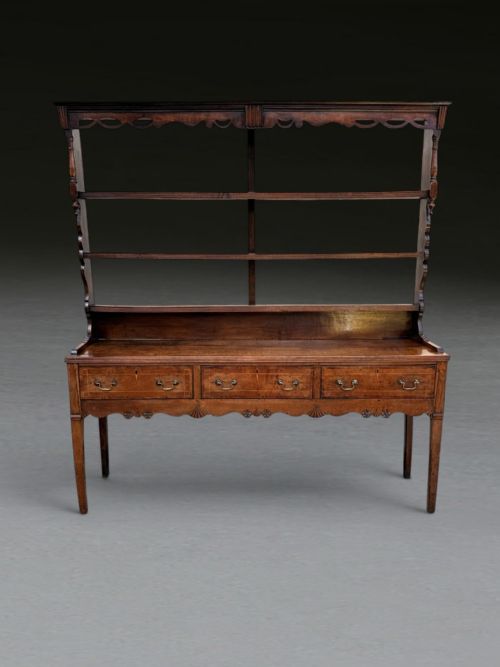
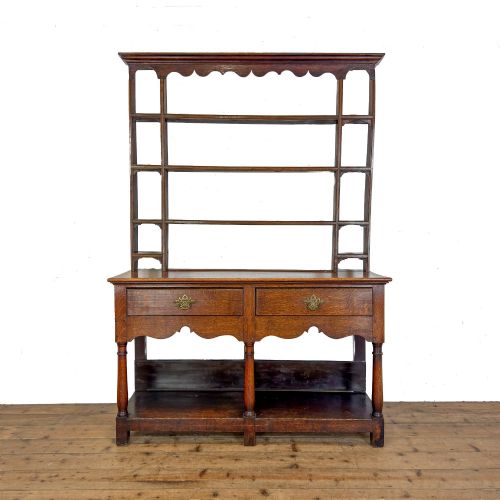
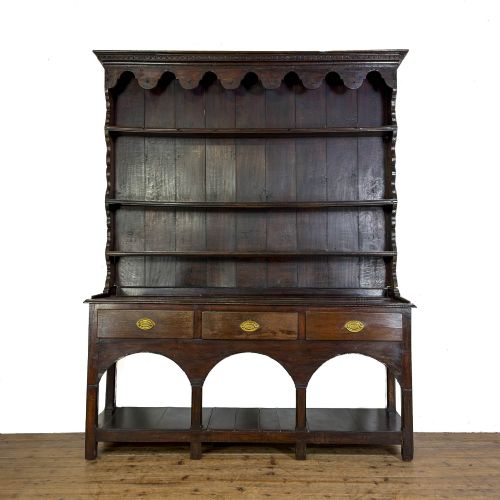
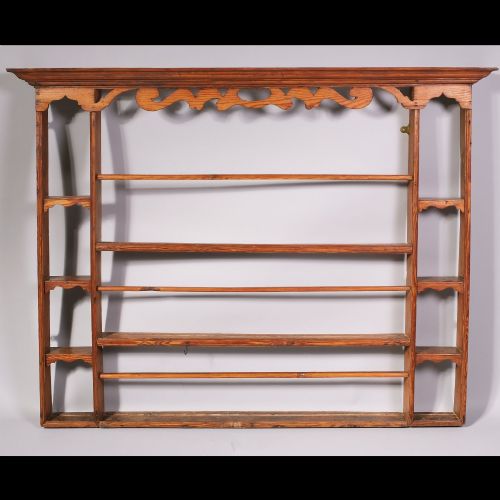
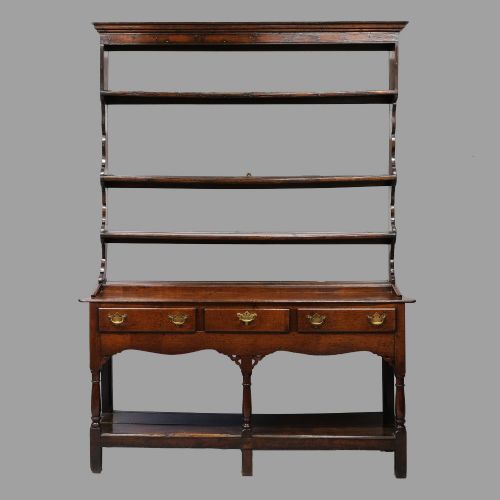
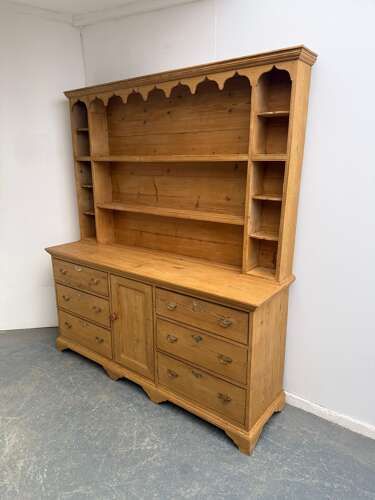
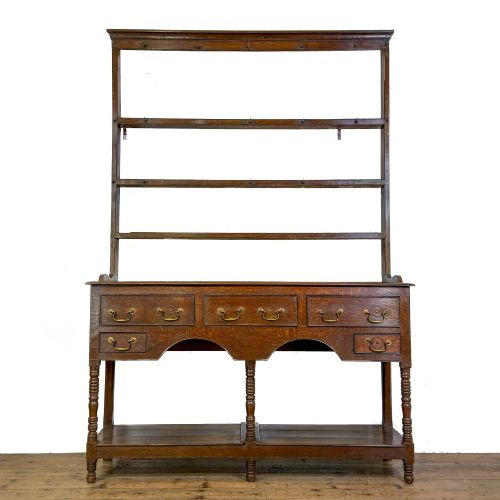
Georgian Kitchen Plate Rack
A georgian kitchen plate rack brings honest timber utility to the wall, holding household earthenware with the simple authority of country domestic life.
Georgian Kitchen Plate Rack
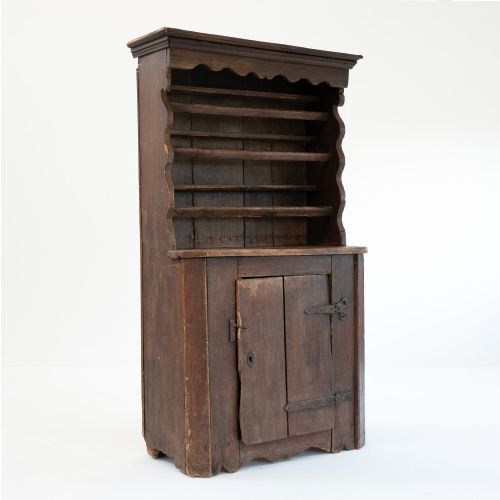
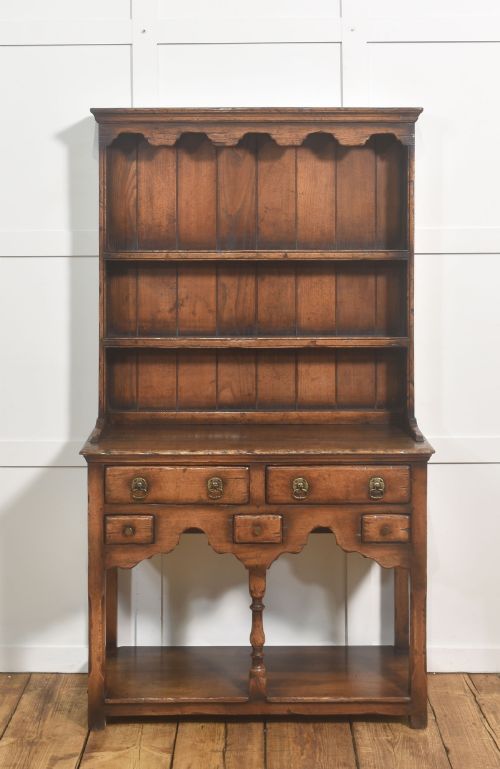
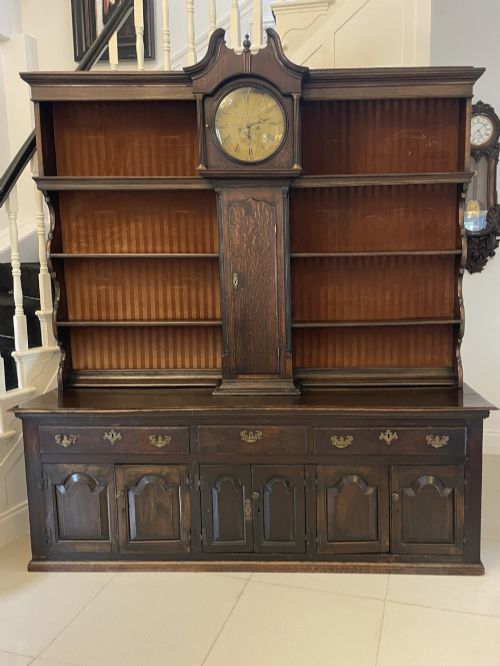
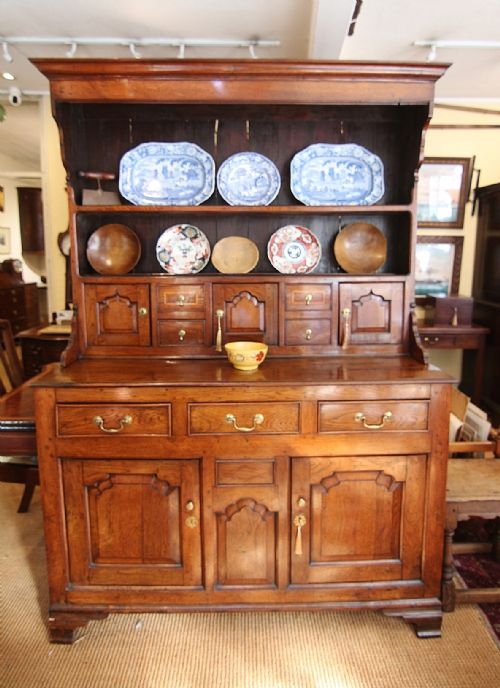
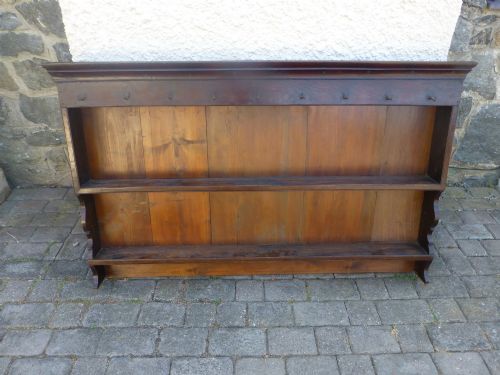
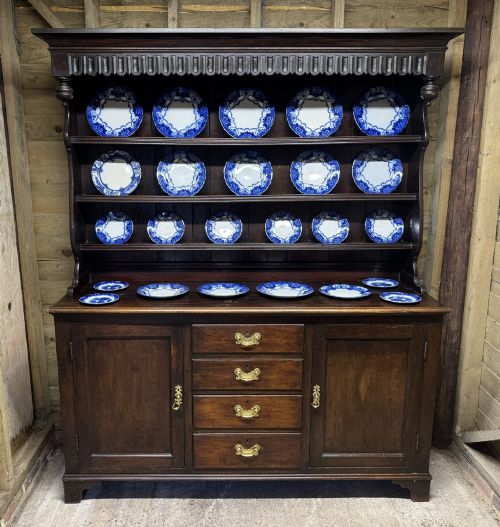
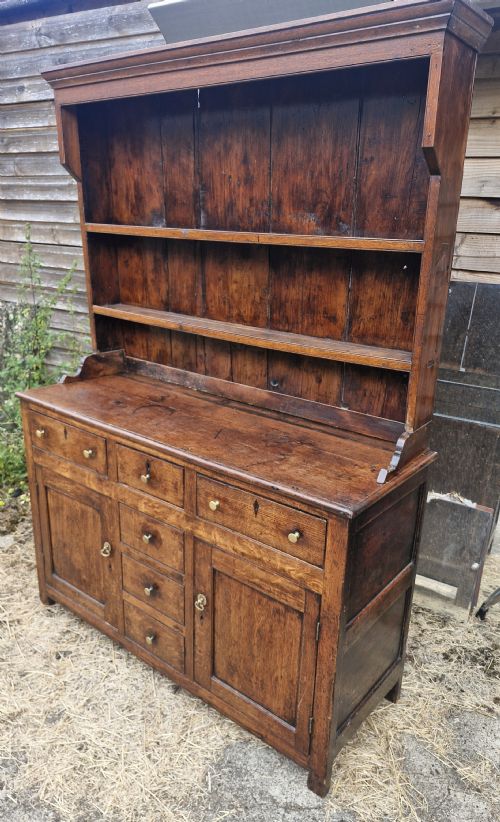
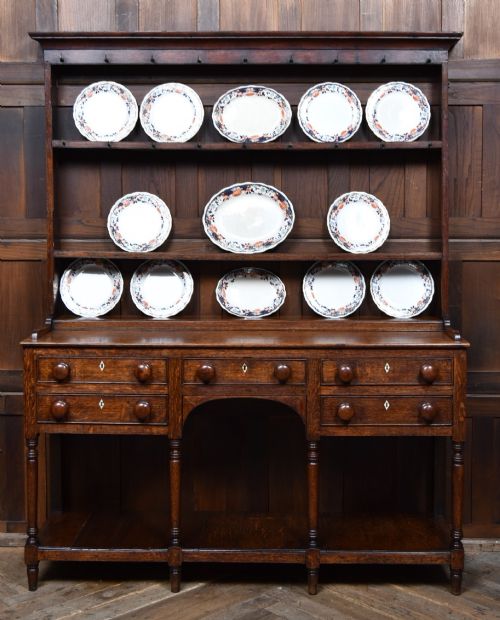
When you search for a georgian kitchen plate rack, you encounter wall-mounted shelves or the upper shelving tiers integrated into large country dressers. These pieces originate primarily from the eighteenth and nineteenth centuries, spanning Georgian and Victorian periods, often identified with regional English and Welsh vernacular workshops.
The versions most common on this page appear as open-backed wooden frameworks designed to display delftware and plates safely in domestic kitchens. They range from modest cottage hanging racks to substantial plate racks paired with potboard dresser bases.
How they were made
Carpenters constructed these racks predominantly using solid oak, alongside regional pine for backing boards and occasional mahogany or wrought iron details. Timber selection relied on local availability, giving country pieces their characteristic dense grain and hardy structure.
Construction techniques involved traditional joinery, utilising pegged joints, rebated shelves, and open-backed board construction to support heavy earthenware plates without warping. Surfaces often display the marks of hand-planing and centuries of waxing rather than industrial processing.
Materials recorded across current pieces include durable oak, pine, brass, wrought iron, and occasional bone handles, reflecting authentic vernacular workshop practices.
What varies in quality
Quality rests in the integrity of the timber and the retention of original structural surfaces, distinguishing honest country vernacular items from heavily restored examples. Pieces featuring untouched patination, original potboards, and integrated rack configurations command greater respect among collectors.
Proportion and regional character also define the upper tier of the range, where balanced shelving heights and clean provincial lines reflect purposeful vernacular design. The presence of original hooks, shaped friezes, and authentic pegging elevates a piece far above utilitarian replacements.
The Georgian Kitchen Plate Rack Glossary
- Delft
- Tin-glazed earthenware commonly displayed on kitchen plate racks during the eighteenth century. These plates provided the colourful domestic tableware that these hanging shelves were built to showcase.
- Potboard
- A lower open shelf built into the base of a dresser beneath the main counter surface. Originally utilised for storing heavy pots and pans in country kitchens.
- Breakfront
- A piece of furniture featuring a central section that projects forward from the flanking sides. This layout adds architectural depth to larger dresser bases.
- Frieze
- The horizontal band situated directly beneath the top cornice of a rack or dresser. Country makers often shaped or pegged this section for subtle visual detail.
Georgian Kitchen Plate Rack: Frequently Asked Questions
How were these racks used originally?
Households used these racks to drain and display ceramic plates, platters, and bowls after washing. The grooved shelves held plates at a safe angle so water could run off onto scrubbed wooden kitchen tables below.
Over time, they evolved into decorative display furniture as well as working kitchen storage. Their open shelves kept frequently used tableware within easy reach of cooks and servants.
Are these racks wall mounted or part of a dresser?
They appear in both configurations across historical listings. Many survive as standalone wall-hanging plate racks, while others form the upper tier of a two-part Welsh or country dresser.
Standalone hanging racks fix directly to kitchen walls using internal structural battens. Dresser-integrated racks slot onto matching potboard or drawer bases to form a single tall ensemble.
How do I tell an 18th century rack from a later one?
Eighteenth-century examples typically show hand-sawn timber marks, rosehead nails, and pegged oak joinery characteristic of early provincial workshops. The timber grain displays deep patination accumulated through generations of wax polishing and kitchen use.
Later nineteenth-century and twentieth-century reproductions often feature machine-cut boards, standardised screws, or pine timbers lacking the dense weight of early Georgian oak. Examining the backboards and joining methods usually reveals the true age of the piece.
How do I live with a wooden plate rack?
Living with a plate rack involves securing it firmly to solid wall studs, as antique oak and pine assemblies carry considerable weight when loaded with ceramics. Ensure the wall fixings match the load capacity before placing heavy earthenware on the shelves.
Maintain the wood by applying traditional beeswax periodically to nourish the dry historical surface. Avoid placing them in direct sunlight or near intense kitchen heat sources to prevent timber splitting.