
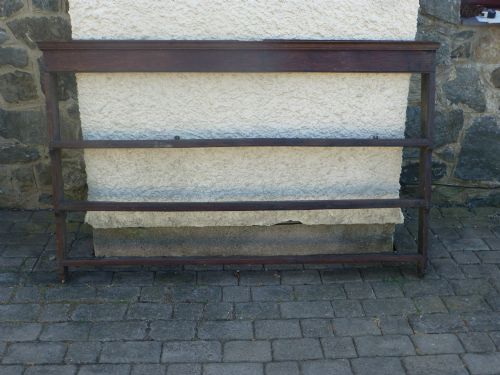
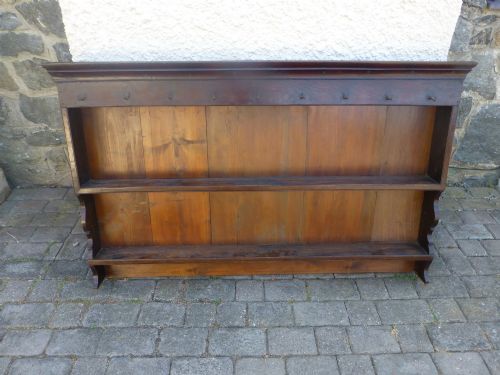
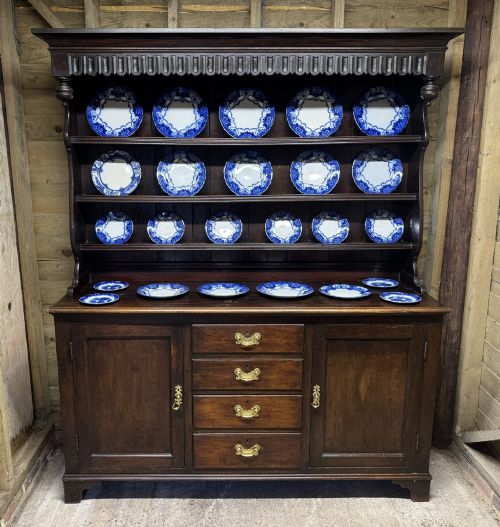
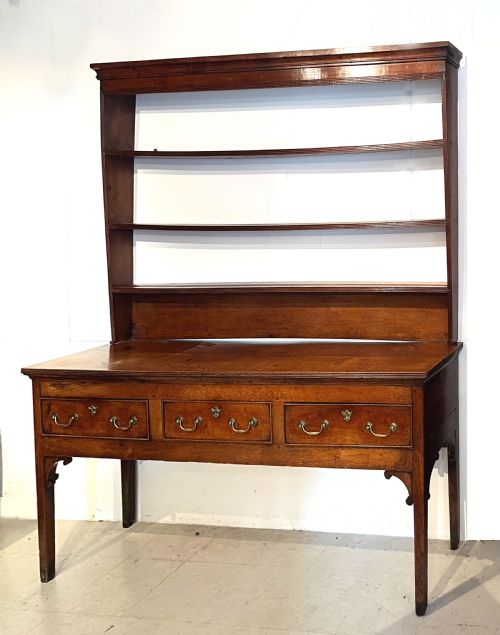
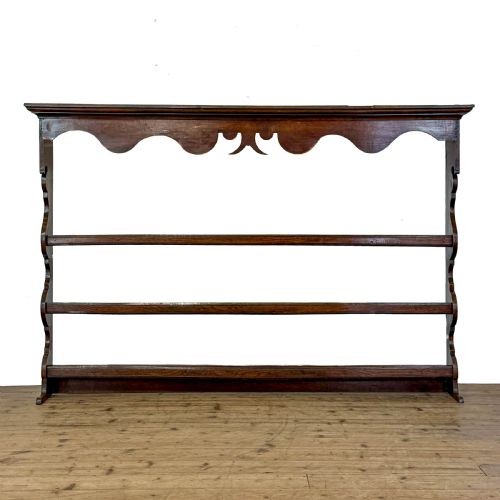
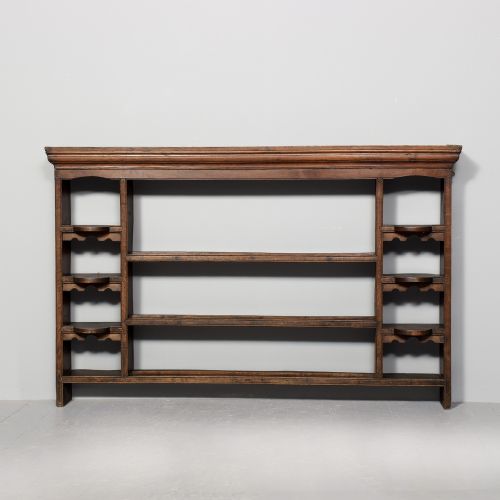


Brown Wooden Plate Shelves
Brown wooden plate shelves hold everyday crockery securely while bringing the warm tones of period timber straight into a traditional kitchen.
Brown Wooden Plate Shelves
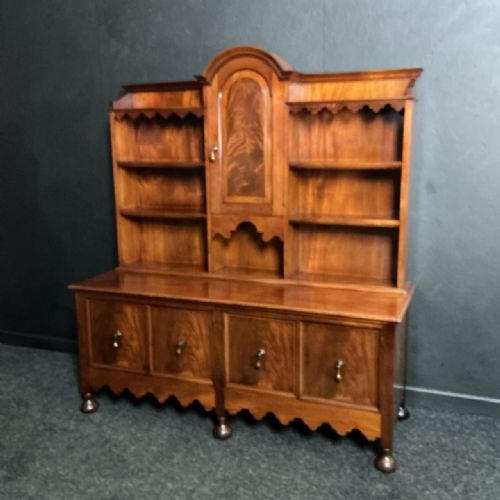
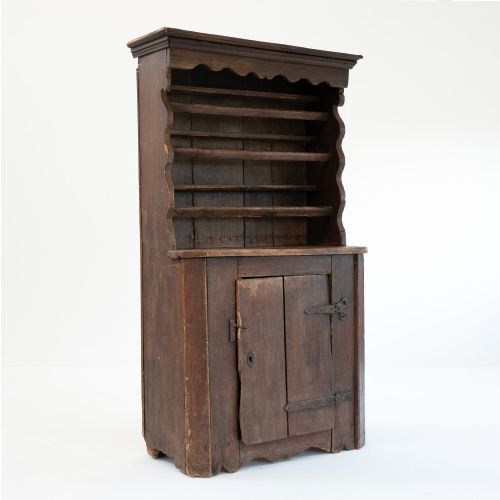
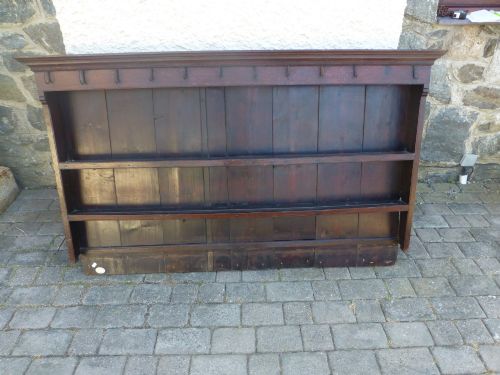
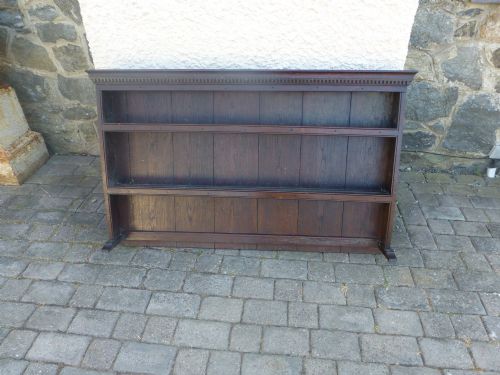
Brown wooden plate shelves encompass wall-mounted hanging racks, dresser racks, and complete kitchen dressers designed to display and store ceramics. Buyers searching for brown wooden plate shelves most frequently encounter wall-mounted oak and pine racks originating from the eighteenth and nineteenth centuries.
The selections span distinct regional traditions, including English country pieces, Irish examples, and Welsh formats. Many items present themselves as separate upper racks that originally sat atop lower base cupboards, while others function as dedicated wall-hanging units.
Period influences range from vernacular Georgian country designs to refined Edwardian interpretations and Arts and Crafts wall hanging shelves. These structures often feature grooved display ledges and vertical slats to keep plates upright and visible.
Materials and construction methods
Makers relied heavily on solid oak, pine, and mahogany, often utilising secondary woods like cherry or walnut within the same piece. Workshops constructed these functional items using traditional joinery, incorporating pegged joints and hand-cut boards rather than modern fasteners.
Surface treatments vary from polished flame mahogany and waxed oak to early painted finishes and marquetry details. Structural hardware typically includes brass hooks, iron brackets, or wrought iron hanging fixtures designed to support the weight of heavy ceramic plates.
Listings feature oak, pine, mahogany, and walnut timbers, spanning the Georgian, Edwardian, and Arts and Crafts periods.
Indicators of quality and character
Quality rests upon the integrity of the timber selection, the subtlety of mouldings, and the preservation of original surfaces over centuries of domestic use. Pieces featuring refined details like Corinthian columns or intricate marquetry sit at the upper end of the scale compared to plain utility boards.
The preservation of original hanging points, backboards, and mounting systems defines a superior survival. Proportion, timber figure, and the natural patination acquired through decades in a kitchen environment distinguish exceptional examples from simpler regional furniture.
The Brown Wooden Plate Shelves Glossary
- Delft rack
- A wall-mounted wooden shelf specifically designed with wooden guard rails or grooves to display tin-glazed earthenware plates safely. These fixtures became central to kitchen organisation in eighteenth-century homes.
- Dresser rack
- The upper shelving portion of a traditional kitchen dresser that lifts off or hangs separately on the wall above a base cabinet. They provide open display space for crockery.
- Marquetry
- The decorative craft of applying thin veneers of different wood types to a structural surface to create pictorial patterns. This technique appears on finer nineteenth-century examples.
- Corinthian columns
- Classical architectural upright supports featuring ornate carved capitals adorned with acanthus leaves. They occasionally frame the sides of substantial eighteenth-century racks.
- Flame mahogany
- A distinctive wood grain pattern featuring rippling, flame-like figures produced by cutting through the branch junctions of the tree. It provides a highly decorative surface on formal examples.
Brown Wooden Plate Shelves: Frequently Asked Questions
How do I hang a heavy wooden plate shelf?
These racks carry substantial weight once loaded with ceramic plates, requiring secure fixings directly into wall studs or solid masonry. Use sturdy steel brackets or screws through the internal framework rather than relying on decorative surface hooks alone.
Professional installation is strongly advised for larger eighteenth-century oak structures to prevent wall displacement. Distribute plate weight evenly across the shelves to maintain stability.
Can these shelves support modern heavy dinner plates?
Period shelves were built for earthenware, pewter, and everyday utilitarian ceramics rather than heavy modern stoneware. Check the depth of the plate groove and the height between shelves to ensure contemporary oversized dinnerware fits comfortably.
Avoid overloading upper tiers with exceptionally heavy items if the mounting backboards show signs of timber fatigue. Lighter decorative plates and bowls suit these antique ledges best.
How can I date an old plate rack?
Examine the saw marks on the timber, the type of joinery used, and the composition of any backboards or hanging loops. Hand-sawn boards and pegged mortise and tenon joints point towards eighteenth-century Georgian origins.
Later nineteenth-century and Edwardian pieces often display machine-cut timber and standardised hardware fixings. Regional vernacular styles also provide clues regarding the likely decade of manufacture.