
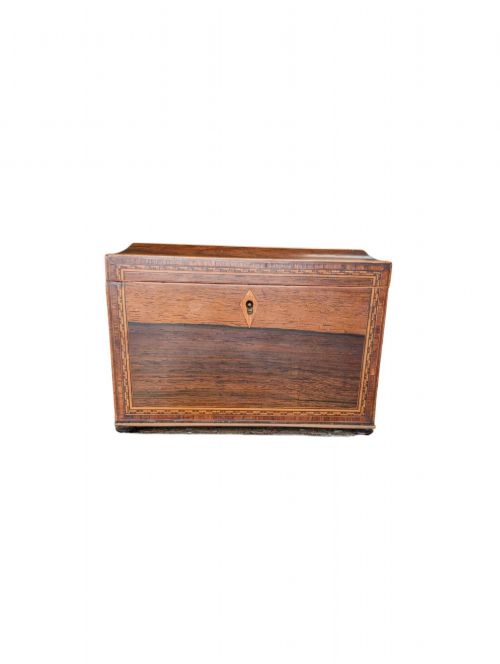
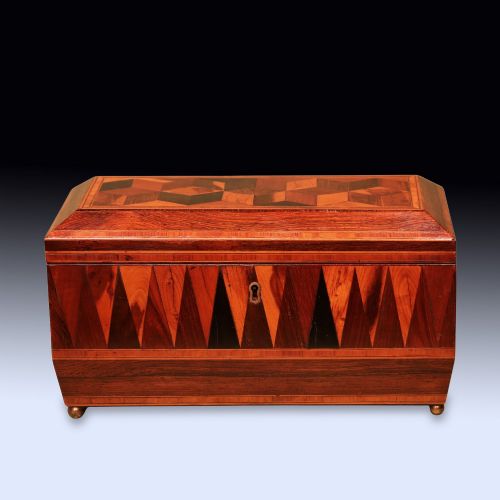


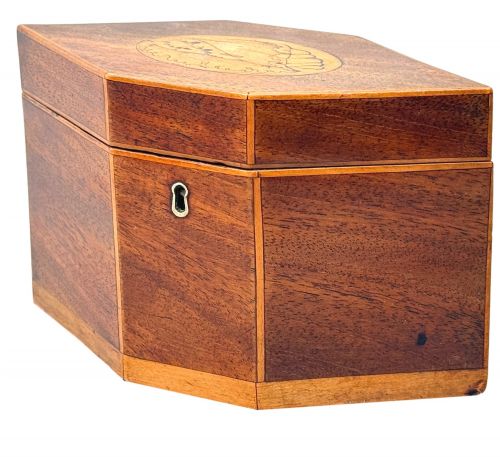


Georgian Inlaid Tea Box
A georgian inlaid tea box is a timber vessel crafted to store dry leaves, bringing tactile elegance and period detail to a room.
Georgian Inlaid Tea Box
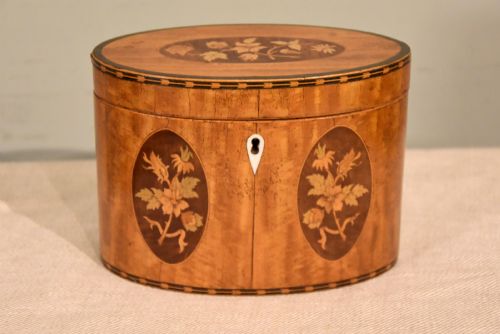
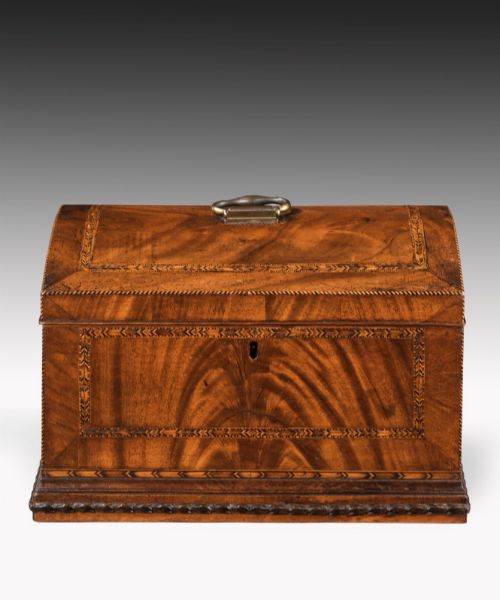
A georgian inlaid tea box generally takes the form of an oval, rectangle, hexagon, octagon or sarcophagus shape designed to sit upon a table or sideboard. These vessels date primarily from the eighteenth and nineteenth centuries, spanning the Georgian, Regency and Victorian periods.
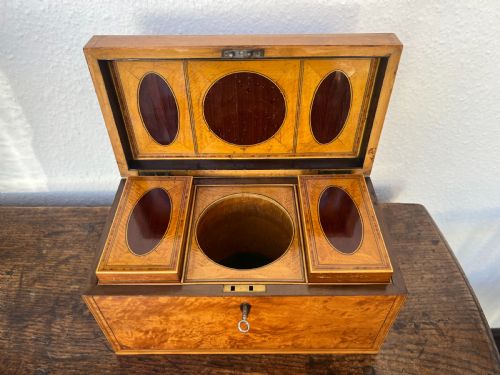
The objects appear as tea caddies, teapoys, and decorative boxes, frequently retaining interior compartments or fitted elements intended for dry leaves. Buyers meet pieces shaped from mahogany, satinwood, rosewood and harewood, often accented with contrasting wood veneers.
The origin sits within British cabinetmaking traditions of the Georgian and Regency eras, where domestic hospitality demanded secure storage for expensive imported tea leaves. Surviving examples demonstrate considerable variety in geometric proportion and surface ornamentation.
Materials and Technique
Cabinetmakers constructed these vessels using dense hardwoods such as mahogany, rosewood and satinwood, frequently applying finer timbers like boxwood, ebony and harewood for decorative contrast. Surfaces received meticulous polishing to highlight the natural grain of the primary wood.
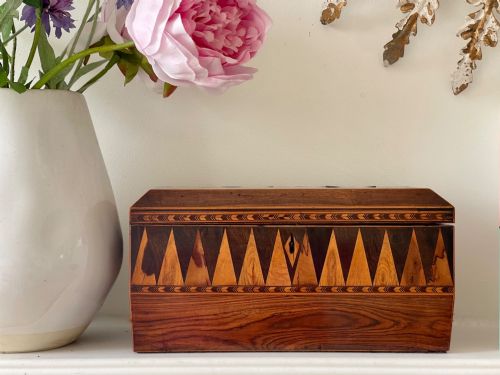
Inlay techniques including parquetry, marquetry and stringing created geometric patterns, floral motifs, shell designs and star bursts across the lids and panels. Specialised work like Tunbridge ware introduced intricate mosaic banding built from tiny wood blocks.
Internal compartments often featured fitted lids and bone or ivory knobs, whilst exterior hardware utilised cast brass handles, escutcheons and working locks to secure the contents.
The listings show tea caddies utilising satinwood, mahogany, rosewood and harewood, frequently decorated with boxwood stringing and shell inlays.
Craftsmanship and Proportion
Quality rests upon the precision of the cabinetwork, visible in the tightness of the mitre joints and the alignment of the timber grain across the lid and sides. Superior examples display thoughtful selection of figured veneers, such as burr yew or highly patterned satinwood.
The complexity and execution of the inlay separate standard boxes from exceptional ones, with hand-cut shell, butterfly or floral motifs demonstrating high artisan skill. The survival of original fitted interiors, working locks, and interior lids further elevates a piece.
Proportion and architectural balance dictate visual success, where mouldings, brass lion mask handles, and feet complement the primary box form without visual crowding.
The Georgian Inlaid Tea Box Glossary
- Teapoy
- A small stand or large caddy designed to hold tea, often raised on a central pillar with legs.
- Sarcophagus form
- A box shape featuring a domed or sloping lid reminiscent of an ancient stone coffin, popular during the Regency period.
- Parquetry
- A geometric mosaic of wood pieces used for surface decoration, creating patterns such as cubes or chequers.
- Marquetry
- The art of applying pieces of veneer to a structure to form decorative patterns, pictorial designs or floral scenes.
- Stringing
- Thin inlay lines of contrasting wood used to outline panels, drawers or edges on cabinet furniture.
- Tunbridge ware
- Woodworking characterised by tiny mosaic tiles formed from naturally coloured woods, creating intricate geometric or pictorial bands.
Georgian Inlaid Tea Box: Frequently Asked Questions
What were georgian inlaid tea boxes used for?
These vessels served to store precious tea leaves safely under lock and key in wealthy households, protecting the expensive commodity from dampness and theft.
Tea was a luxury item in the eighteenth century, requiring secure storage inside specialised caddies that often included internal mixing bowls and lidded canisters.
How do I tell a Georgian caddy from a Regency one?
Georgian pieces often favour lighter satinwood veneers with delicate shell or star inlays and rectangular, oval or octagonal shapes. Regency examples frequently adopt sarcophagus forms in dark rosewood with bold brass inlay and lion mask ring handles.
Cabinetmaking styles shifted from the restrained neoclassical lines of the late eighteenth century to bolder, heavier classical revival forms in the early nineteenth century.
How should I clean a wooden tea caddy?
Dust the exterior gently with a dry, soft cloth to prevent accumulation in the crevices of the inlay and around brass mounts. Avoid modern polishes and water, utilising micro-crystalline wax very sparingly only when the timber appears dry.
Protect the antique finish by keeping the box away from direct sunlight and strong fluctuations in household humidity.
Are the interiors usually original?
Many surviving pieces retain their original divided wooden compartments, foil linings or small interior lids with tiny knobs. Some examples have lost internal mixing bowls or canisters over the centuries as the functional use of the boxes changed.