

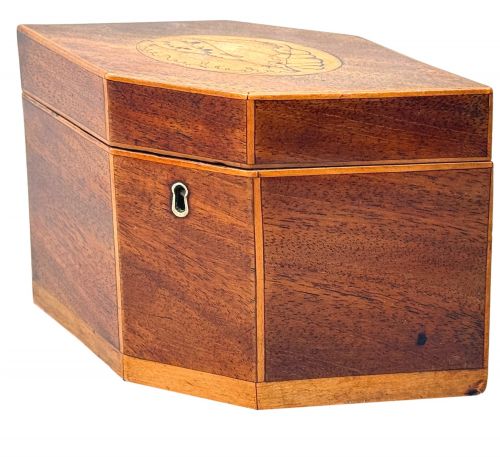


Shell Marquetry Caddy
These shell marquetry caddy pieces combine timber and marine motifs, offering collectors an elegant storage container for precious tea leaves.
Shell Marquetry Caddy
When you search for shell marquetry caddy, you are looking at decorative containers designed to safeguard valuable tea leaves during past centuries. These items generally take the form of lidded boxes or occasionally small tables housing storage compartments.
The versions you are most likely to meet on this page span the Georgian, Regency, and Victorian eras, alongside Edwardian and French Napoleon III or Restoration interpretations. Woods such as satinwood, mahogany, and rosewood form the primary bodies, accented by intricate shell inlays or tortoiseshell veneers.
Forms range from hexagonal tea caddies to larger decorative boxes and occasional tables featuring specialised internal canisters and sugar dishes. Each piece reflects the refined domestic habits of earlier households where tea was stored under lock and key.
How they were made
Cabinetmakers constructed these pieces using dense hardwoods like mahogany and satinwood as a stable foundation for delicate decorative veneers. Craftsmen applied painstaking wood inlay techniques, setting contrasting light and dark timbers alongside shell elements into the primary surface.
Tortoiseshell and bone found use alongside traditional brass fittings to construct elaborate exterior panels and secure interior compartments. Artisans shaped these materials with hand tools, fitting keys and hinges precisely to maintain the structural integrity of each box.
Shell Marquetry Caddy Retail Price Guide 2026
Typical asking prices for shell marquetry caddy among the pieces listed under this phrase on Sellingantiques today, from the lower quarter to the upper quarter. They describe what is for sale here now, not the wider market.
Some caddies include hidden compartments that required knowing a secret tilt or slide to reveal the tea stash.
What varies in quality
The standard of a piece rests heavily on the precision of its marquetry and the choice of primary timber, such as highly figured satinwood or rich rosewood. Sharpness in the execution of shell inlays and the survival of original inner cannisters elevate certain items above simpler alternatives.
Proportion and the preservation of period brassware or working keys distinguish superior examples from heavily altered counterparts. Subtle details in the joinery and the harmonious grain matching across the lid and sides indicate the maker's original level of care.
The Shell Marquetry Caddy Glossary
- Marquetry
- The art of applying pieces of veneer to a structure to form decorative patterns and pictures. This technique defines the visual surface of many eighteenth and nineteenth-century boxes.
- Caddy
- A small container or box used for holding tea. These objects typically featured internal divisions to separate different varieties of leaf.
- Satinwood
- A lustrous timber native to India and Ceylon, prized for its golden sheen and smooth texture. Cabinetmakers utilised it extensively during the Georgian and Regency periods.
- Tortoiseshell
- The mottled brown and yellow shell of certain sea turtles, used as a decorative veneer on luxury boxes. Its warm translucence added depth to period designs.
- Buhl
- An alternative spelling for Boulle, referring to brass and tortoiseshell marquetry. This ornate decorative style appears on select continental boxes.
Shell Marquetry Caddy: Frequently Asked Questions
What is a shell marquetry caddy?
A shell marquetry caddy is a period box designed for storing tea, embellished with intricate inlay work incorporating shell motifs.
These items date predominantly from the Georgian and Victorian eras, reflecting the high value once placed on imported tea.
How were these caddies used?
Wealthy households used these containers to keep dry tea leaves secure from moisture and pilfering. The mistress of the house typically held the key to the box.
Internal compartments inside the caddy separated different grades of tea, and some examples included a central bowl for sugar.
How do I date a mahogany caddy?
Dating relies on examining the construction methods, timber choice, and prevailing style of the period, such as Sheraton Revival or George III.
Earlier eighteenth-century pieces often feature heavier solid timber construction, whereas later nineteenth-century examples might employ refined veneers.
Are tortoiseshell and shell marquetry the same?
No, tortoiseshell refers to the mottled shell material used as an overall veneer, whereas shell marquetry involves shaped pieces of shell inlaid into wood.
Both materials indicate luxury items produced for prosperous households during the Georgian and Regency periods.
How do I care for antique wood boxes?
Antique wood boxes require stable room conditions away from direct sunlight and extreme humidity changes to protect the delicate veneers.
Applying occasional appropriate wax preserves the polish of woods like satinwood, rosewood, and mahogany without harming the older finish.