



Wooden Caddy Brass Handle
A wooden caddy brass handle is a tactile box designed for storing dried leaf, held securely by metal mounts for moving from room to room.
Wooden Caddy Brass Handle
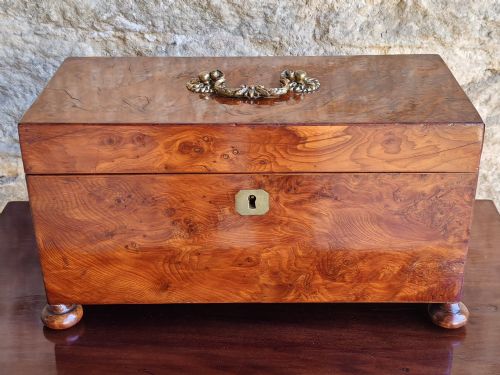
A wooden caddy brass handle is typically a mahogany, burr walnut, yew wood, or laburnum storage chest from the Georgian, Regency, or nineteenth century periods, designed to keep loose leaves secure under lock.
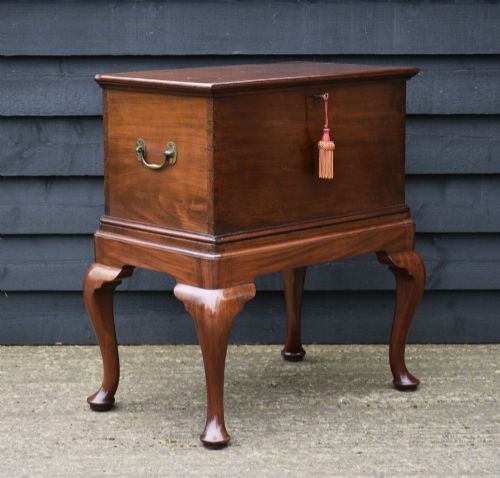
Most examples take the form of tea caddies, bottle carriers, and cellarettes, featuring fitted interiors for multiple canisters alongside compartments for dry ingredients.
The brass handle allows a domestic servant or host to lift the heavy timber box onto a parlour table when guests arrive for afternoon infusion.
Construction and Materials
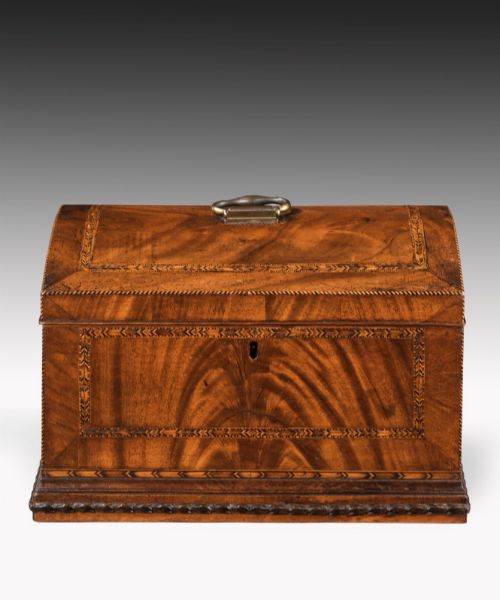
Cabinet makers constructed these boxes using dense hardwoods such as mahogany, walnut, and yew, often enhancing flat surfaces with figured veneers, boxwood stringing, or penwork decoration.
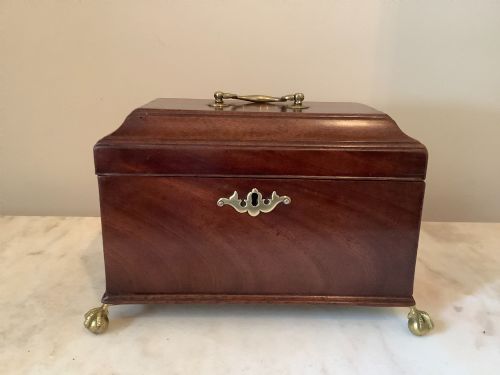
Cast brass handles, lion masks, and escutcheons were fitted to the exterior to provide secure grip and structural reinforcement for everyday use.
Internal compartments frequently incorporated secondary timbers, glass canisters, or metal containers to keep dry leaves fresh and separated.
Some boxes include secret drawers requiring hidden spring catches to release, keeping private notes safe beneath the tea.
Markers of Quality
Superior items display tightly figured timber grains and precise parquetry or stringing, whereas simpler containers rely on plain boards.
The weight and crispness of the cast brass handles and lock plates distinguish high workshops from ordinary production.
Original internal fittings, such as matching glass or metal canisters and functioning locks with keys, elevate an example above altered pieces.
Mappin and Webb·Watson London
The Wooden Caddy Brass Handle Glossary
- Caddy
- A small box or chest designed for holding loose tea leaves. The word derives from catty, the Chinese unit of weight.
- Cellarette
- A large freestanding or table-standing box used for cooling and storing wine bottles. These containers often mirror the timber and handle design of smaller chests.
- Escutcheon
- A protective brass plate surrounding a keyhole. It prevents the timber from splitting around the lock.
- Sarcophagus
- A box shape featuring a domed or sloping lid with flared sides, popular during the Regency period. Many tea caddies and wine coolers adopted this classical silhouette.
Wooden Caddy Brass Handle: Frequently Asked Questions
What did people store inside a wooden caddy?
These boxes held precious dried leaves brought from distant trade routes. Owners kept black and green varieties separate behind locked lids to protect valuable household stores.
Servants prepared the dry leaf in the parlour using the compartments and internal canisters provided within the timber structure.
Why do these boxes have brass handles?
Solid mahogany and walnut chests weigh considerably when filled with timber partitions and metal canisters. The handles allowed safe transport between storage rooms and entertaining spaces.
Cabinet makers cast these mounts in brass to match key escutcheons and foot brackets, combining utility with decorative contrast.
How do I date a Georgian tea caddy?
Cabinet shapes shifted from straight-sided eighteenth-century chests to curved sarcophagus silhouettes during the Regency era. Timber choice also indicates age, with burr walnut and mahogany prevailing in earlier pieces.
Examine the construction of interior compartments and the style of the brass hardware to narrow down the decade of production.
Are all these containers meant for tea?
While most survive as tea chests, makers also configured similar timber boxes to hold wine bottles, cutlery, or penwork implements. Larger variants served as bottle carriers and cellarettes for dining rooms.
Internal partitions and metal liners usually reveal the original intended contents of each specific box.