

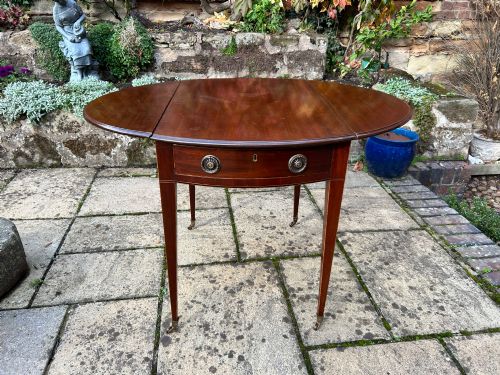
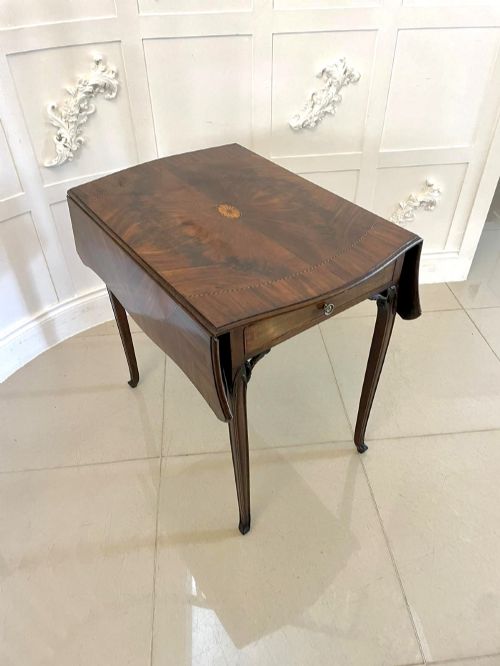
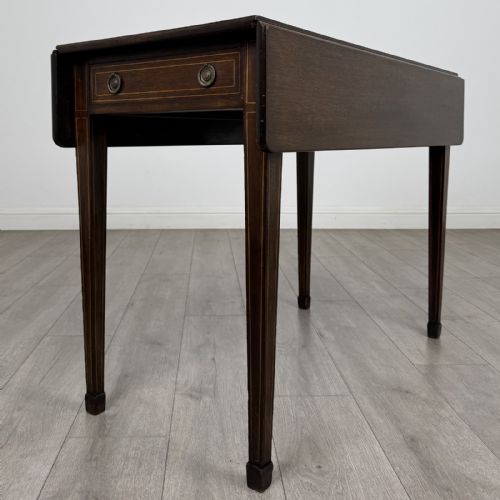
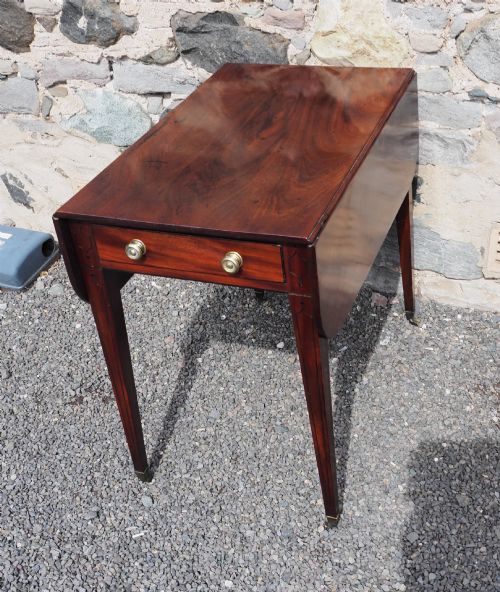
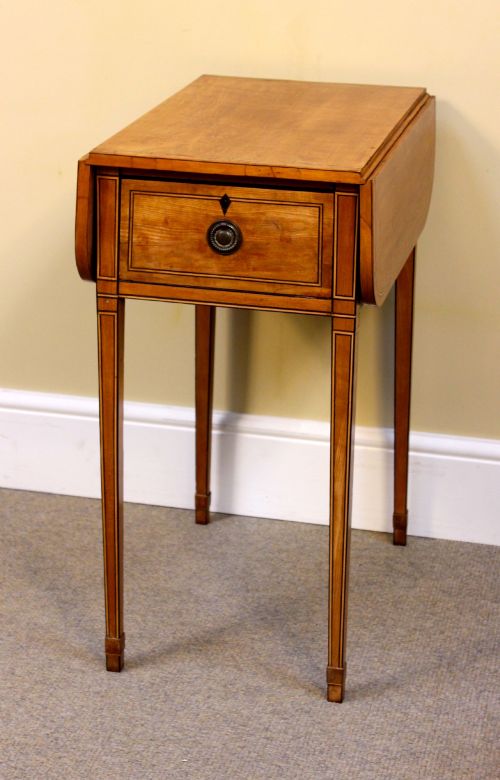

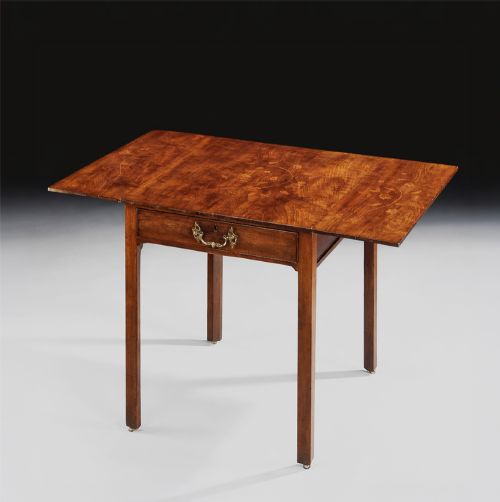
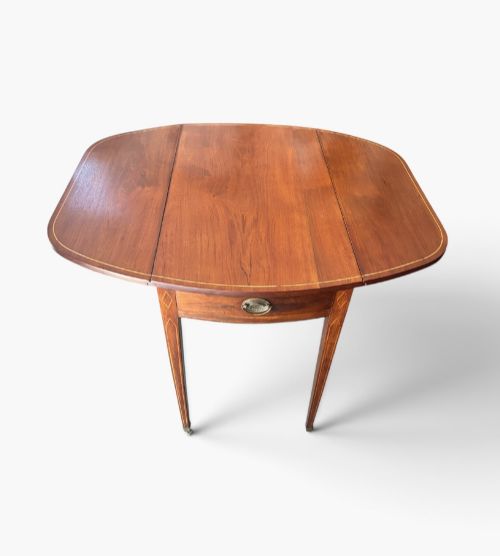
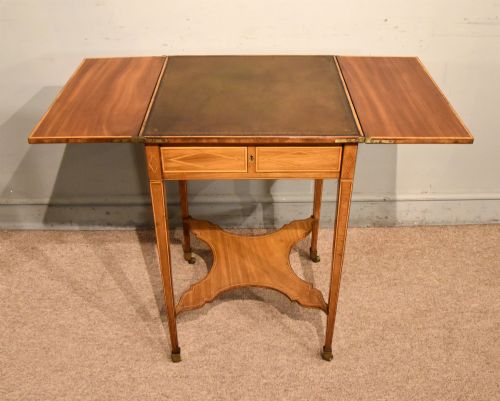

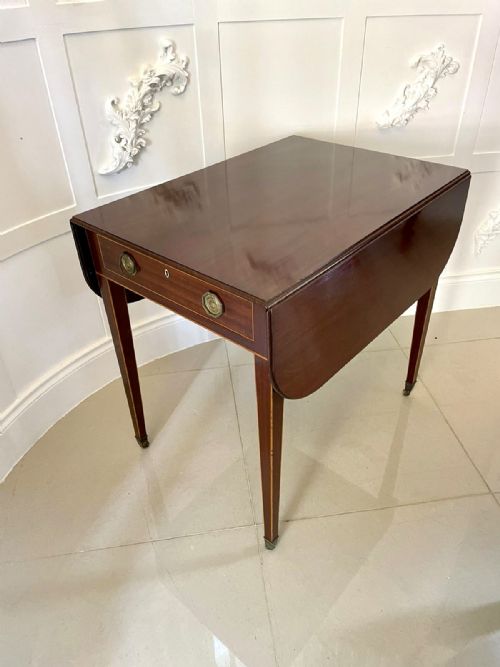
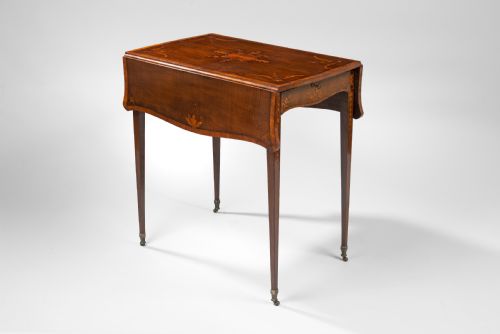
Georgian Inlaid Pembroke Table
A georgian inlaid pembroke table brings drop-leaf versatility and crisp stringing into a room, offering a compact surface that expands when needed.
Georgian Inlaid Pembroke Table
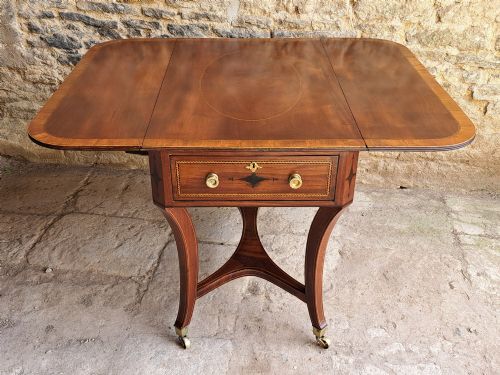
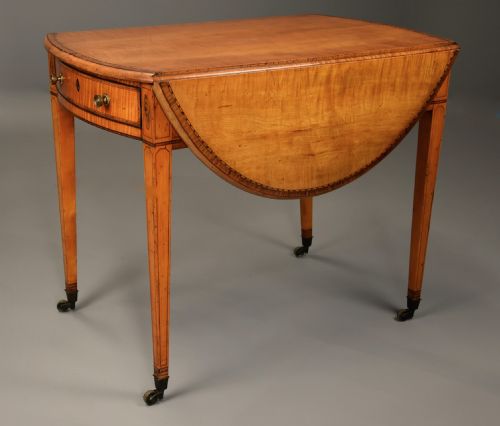
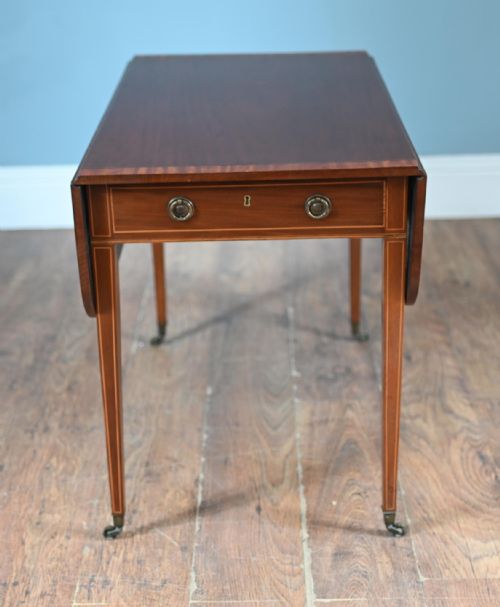
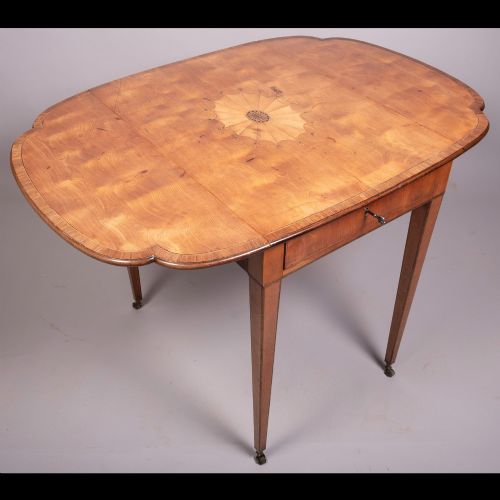
A georgian inlaid pembroke table is a drop-leaf occasional table defined by hinged flaps on either side and typically a single drawer, appearing frequently in mahogany or satinwood across the eighteenth and early nineteenth centuries. These pieces function as versatile surface space in reception rooms, designed to sit neatly against a wall until pulled out for tea or writing.
The selections span from George III examples through the Regency period and into Edwardian revivals, taking rectangular and oval forms. Many pieces incorporate specialised internal fittings, operating as sewing tables, games tables or writing desks alongside standard side tables.
Materials and Technique
Cabinetmakers constructed these tables primarily in solid mahogany and satinwood, often utilising rosewood, harewood, kingwood and fiddleback sycamore for contrasting surfaces. Panels and borders receive intricate decoration through boxwood inlay, stringing and marquetry.
Drop-leaf mechanisms rely on hinged wooden flaps supported by pivoting wooden brackets known as rule joints or fly brackets. Brass hardware frequently appears on casters, drawer pulls and swing handles.
Georgian Inlaid Pembroke Table Retail Price Guide 2026
Typical asking prices for georgian inlaid pembroke table among the pieces listed under this phrase on Sellingantiques today, from the lower quarter to the upper quarter. They describe what is for sale here now, not the wider market.
Certain compact work tables served as sewing stations, housing hidden compartments for pins and threads while families gathered for evening tasks.
Evaluating Quality
Quality rests upon the crispness of the boxwood or satinwood inlay and the selection of timber veneers, where highly figured mahogany or dense fiddleback sycamore elevates a piece. The integration of the drop-leaf hinges and the alignment of the frieze drawer demonstrate the joiner's precision.
Proportion and structural integrity distinguish finer examples from standard production. A balanced underframe with well-turned legs and original brass casters indicates superior workshop origin.
The Georgian Inlaid Pembroke Table Glossary
- Pembroke table
- A small drop-leaf table with hinged flaps on two opposing sides, developed during the eighteenth century for breakfast, tea or light writing.
- Stringing
- A thin, linear inlay of a contrasting wood, such as boxwood, used to outline drawers, legs and tabletop borders.
- Marquetry
- Decorative veneer work forming pictorial or geometric patterns using various woods, often seen on Sheraton period pieces.
- Drop flap
- A hinged leaf attached to the main tabletop that lowers to save space or raises to extend the surface area.
- Rule joint
- A rounded moulding joint on a drop-leaf table that conceals the hinge and prevents gaps from forming when the leaf is raised.
Georgian Inlaid Pembroke Table: Frequently Asked Questions
What is a pembroke table used for?
Originally designed for breakfast, tea or writing, these tables served as adaptable furniture that could expand with drop leaves when guests arrived.
Today, they function well as lamp tables, small desk surfaces or decorative side tables in sitting rooms and hallways.
How do I date a georgian table?
Dating relies on timber choice, leg styling, and inlay motifs, moving from eighteenth-century George III mahogany straight legs to Regency rosewood pedestal bases and nineteenth-century details.
Construction methods inside the drawer lining and the type of secondary woods used underneath also help determine the exact period.
Are drop leaves sturdy enough for daily use?
The hinged fly brackets swing out to support the flaps firmly, making the extended surface stable for everyday items like lamps and books.
Care should be taken not to apply heavy downward pressure on the unsupported outer edges of the dropped leaves.
How do I care for satinwood and mahogany?
Keep antique wood furniture away from direct sunlight and heat sources to prevent the veneers and delicate boxwood stringing from drying out or splitting.
Apply a traditional wax polish occasionally and buff gently with a soft cloth to maintain the natural sheen of the patina.