



Georgian Inlaid Mirror
A georgian inlaid mirror brings warmth and intricate detail into a room through rich timbers and delicate contrasting woods.
Georgian Inlaid Mirror
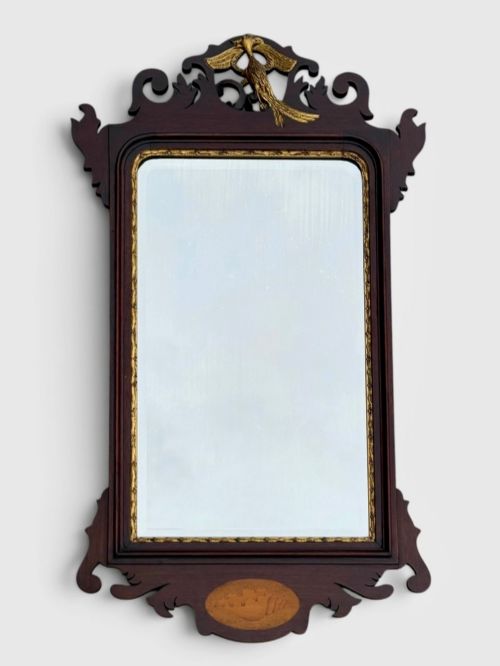
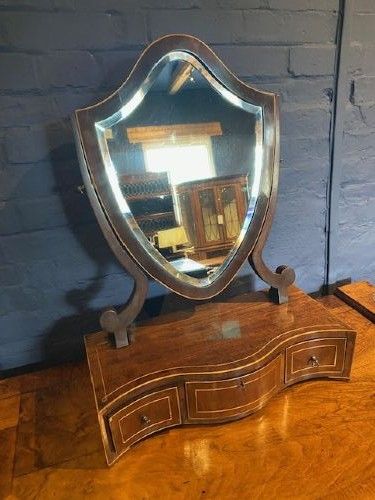
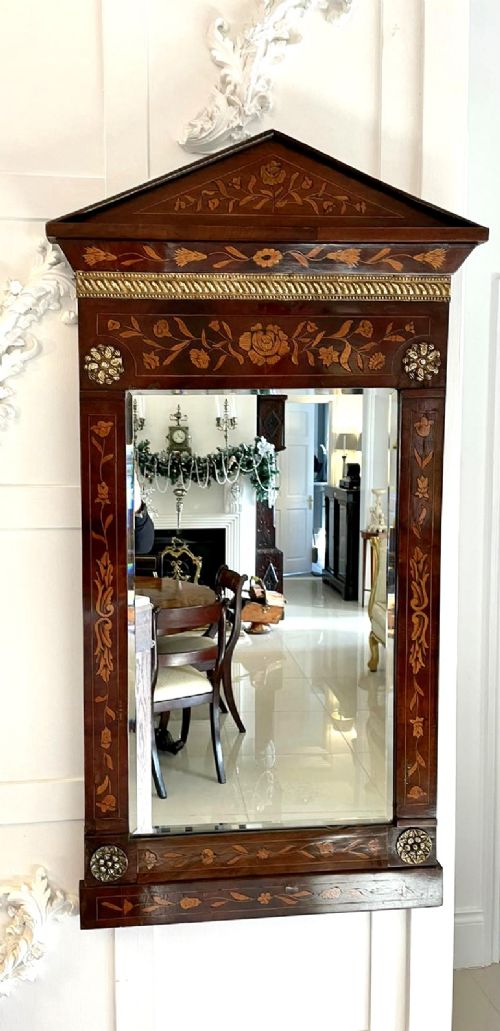
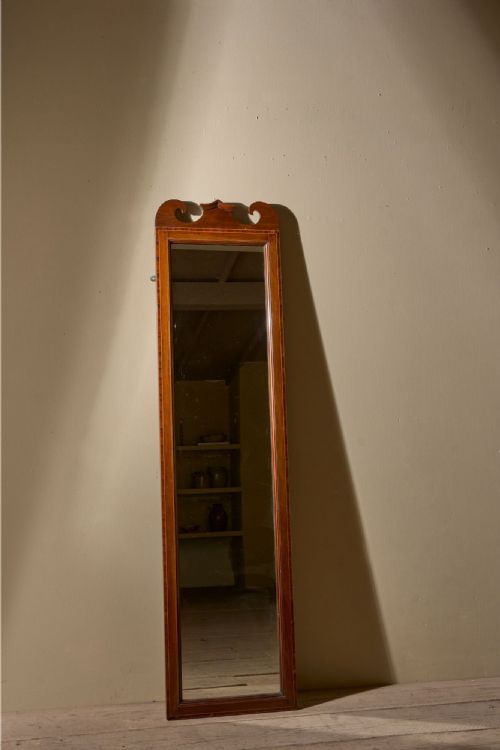
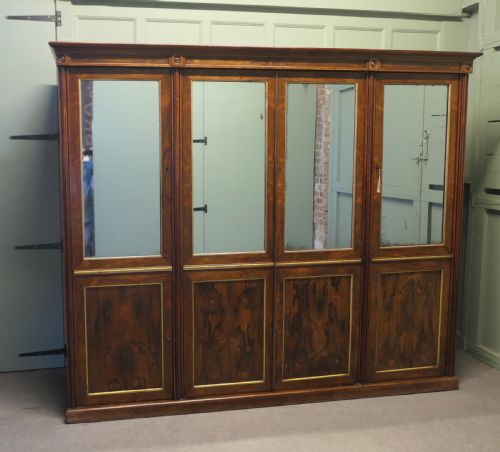
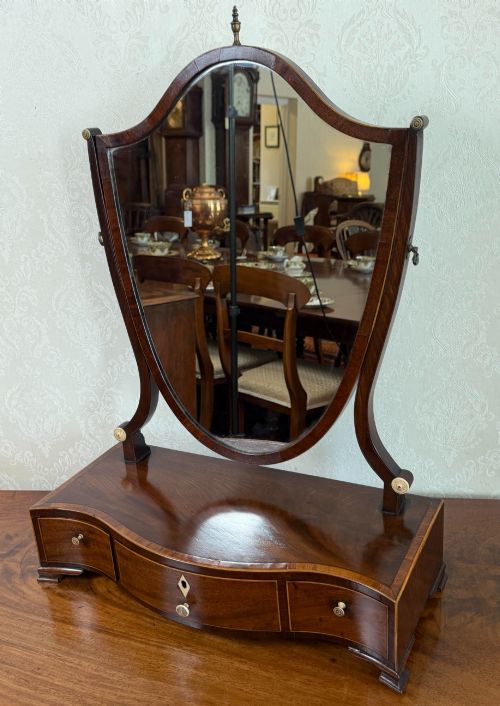
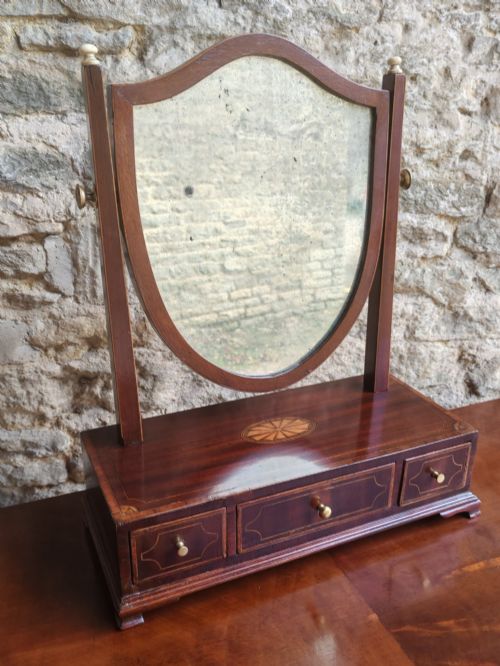
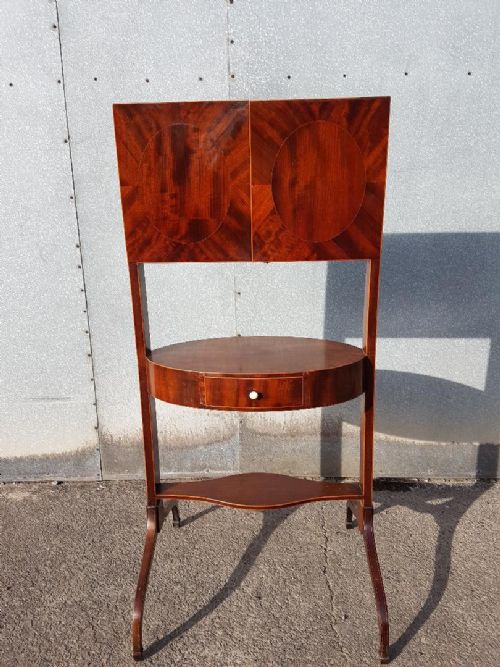
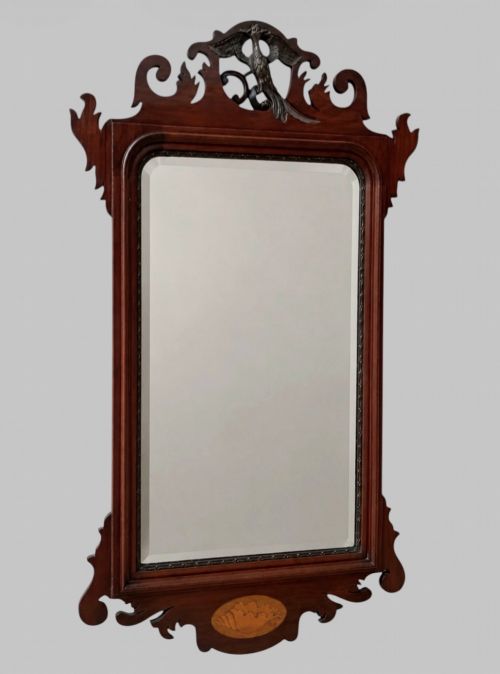
When searching for a georgian inlaid mirror, buyers encounter a variety of forms designed for both wall hanging and tabletop use. The selection spans compact toilet mirrors, shield-shaped dressing glasses, and large wall-mounted pier mirrors intended to reflect light across a room.
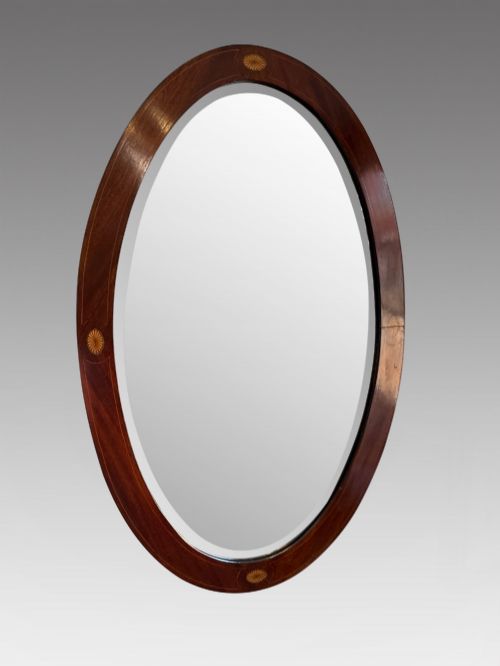
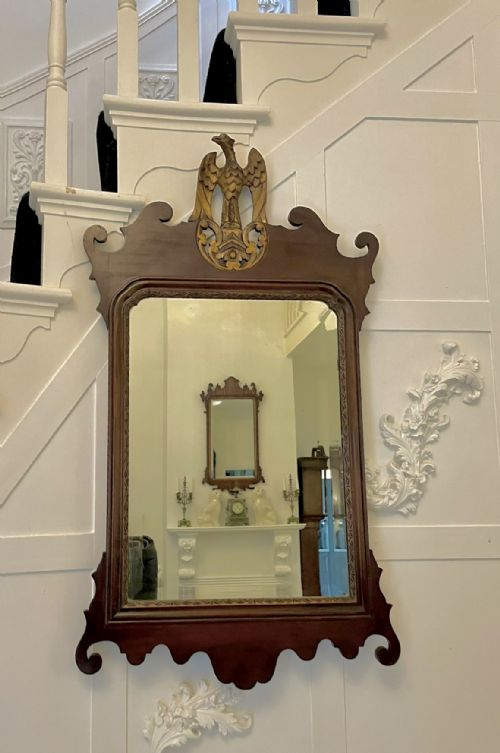
Many examples date from the Georgian period itself, while others emerge from later revivals in the nineteenth and twentieth centuries. These pieces incorporate distinct styles such as Chippendale fretwork, Dutch marquetry, and Sheraton oval designs.
Tabletop versions often sit on small boxes with drawers, serving as dressing mirrors in bedrooms. Wall-hanging variants display intricate fret-cut frames or parcel gilt highlights that anchor them as focal points above mantelpieces.
How they were made
Craftsmen built the frames primarily using mahogany, walnut, or rosewood, often applying veneers over secondary timbers. Detailed wood inlay utilises lighter materials such as satinwood, boxwood, and harewood to create geometric banding, floral motifs, or shell paterae.
Fretwork frames were meticulously sawn by hand to achieve complex pierced silhouettes, whilst glass plates were set securely within rebated wooden rabbets. Gilding and brass accents frequently complement the timber surfaces to enhance visual depth.
Some dressing mirrors hide tiny secret compartments behind their drawers for morning letters.
What varies in quality
The sophistication of the timber figure and the crispness of the hand-cut fretwork separate finer examples from standard production. Superior mirrors display tightly detailed marquetry or stringing that remains sharp and precisely fitted to the surrounding grain.
Proportion and structural harmony define the best pieces, where the scale of the mirror plate balances the weight of the frame. The integration of original brass fitments and secondary woods further distinguishes high-grade craftsmanship.
The Georgian Inlaid Mirror Glossary
- Marquetry
- Decorative patterns formed by fitting together small pieces of veneered wood into complex pictorial designs. This technique adds colourful contrast to flat surfaces.
- Toilet mirror
- A smaller mirror mounted on a miniature chest or stand, historically placed upon a dressing table. These often feature small drawers for personal items.
- Pier mirror
- A tall vertical glass designed specifically to hang on the narrow wall space between windows. They maximise interior light reflection.
- Fretwork
- Openwork ornamentation cut into thin boards using a fine scroll saw or fretsaw. It creates light, intricate borders around mirror plates.
- Cheval mirror
- A full-length swing mirror supported by a freestanding frame with four legs. The glass pivots vertically between upright posts.
Georgian Inlaid Mirror: Frequently Asked Questions
Where should I place a dressing mirror?
These pieces sit securely on dressing tables, chests of drawers, or sturdy sideboards where their adjustable plates provide practical use.
Position them to capture natural window light, which brightens dressing areas and enhances the decorative wood tones of the frame.
How do I care for antique glass?
Clean mirror plates gently using a soft cloth and mild cleaning solutions applied to the cloth rather than sprayed directly onto the glass. This prevents moisture from seeping behind the silvering.
Keep wooden frames dusted with a dry cloth and avoid placing them in areas subject to direct sunlight or rapid temperature changes.
What is a shield-shaped mirror?
Shield-shaped mirrors feature frames carved into the distinct outline of a heraldic shield, a popular design element during the late eighteenth century. They are typically mounted on small serpentine or bowfront stands.
This silhouette softens the geometry of traditional bedroom furniture.
How do I distinguish revival pieces?
Revival items produced during the Victorian or Edwardian eras often utilise machine-cut elements, heavier framing timbers, and modern mirror plate technology.
Examining the construction joints, timber shrinkage, and hand-cut details helps separate eighteenth-century originals from later interpretations.