
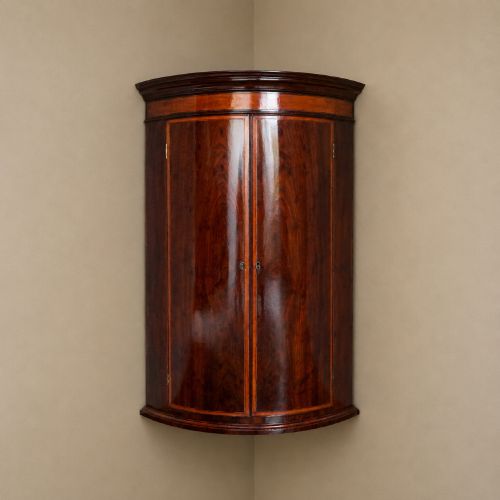
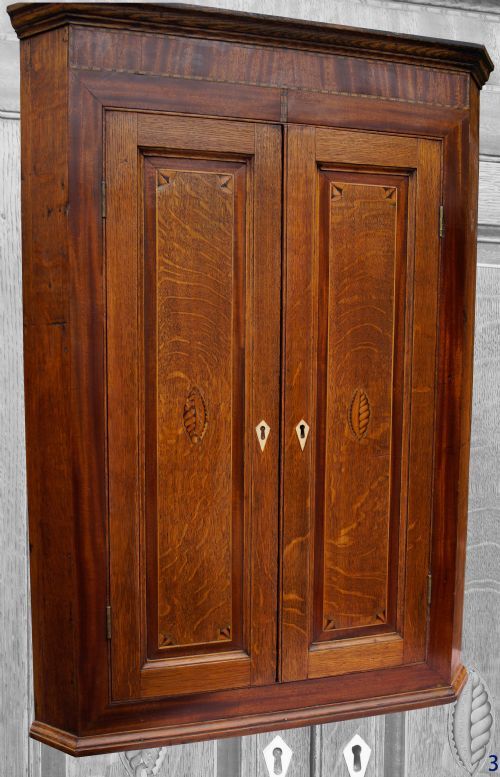
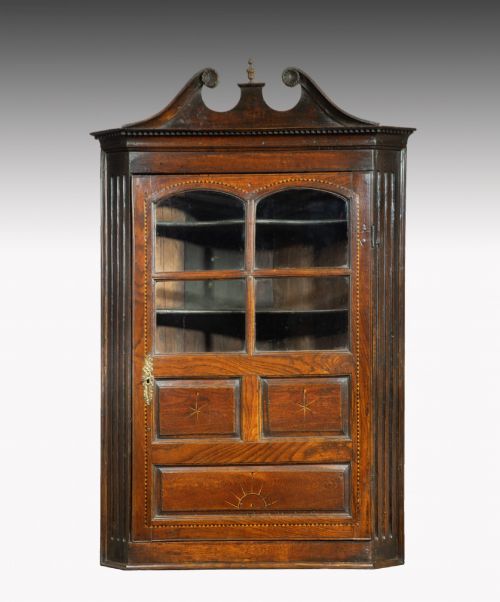
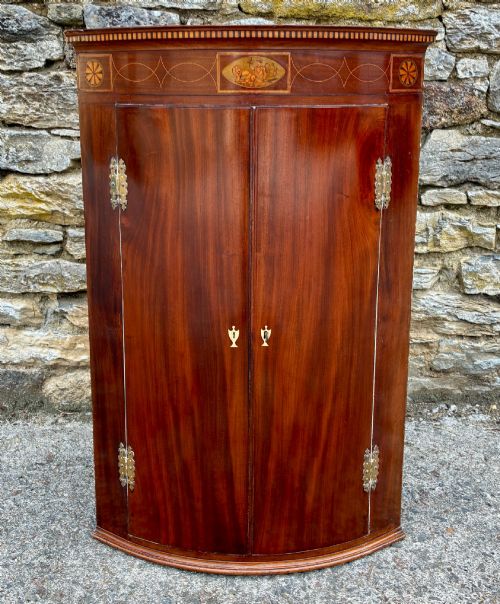


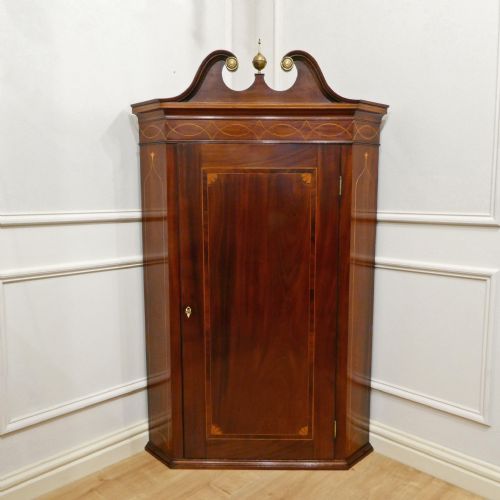
Georgian Inlaid Corner Cupboard
A georgian inlaid corner cupboard brings architectural dignity and practical storage to empty room angles using rich timbers and fine stringing.
Georgian Inlaid Corner Cupboard
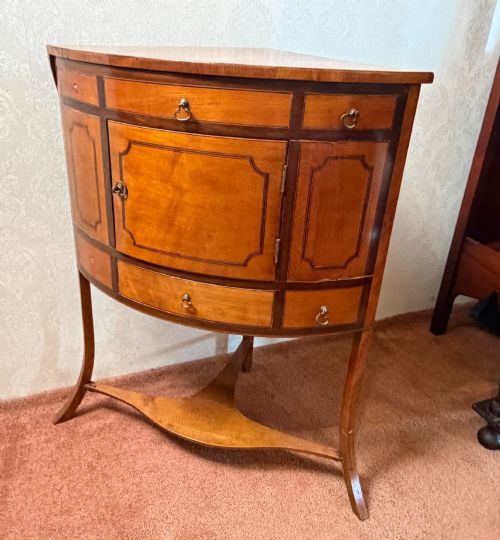
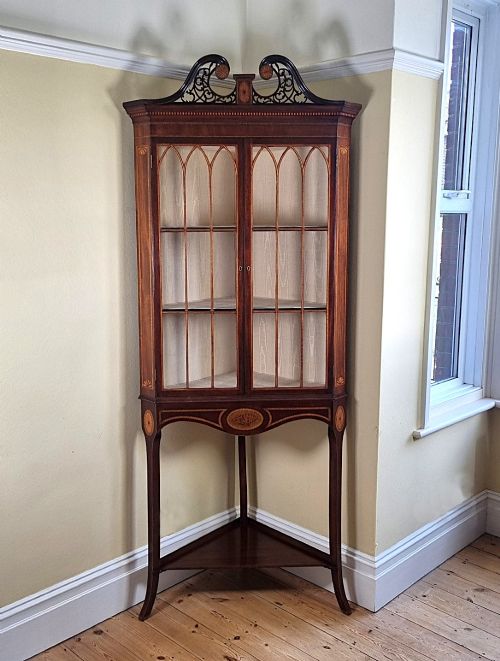
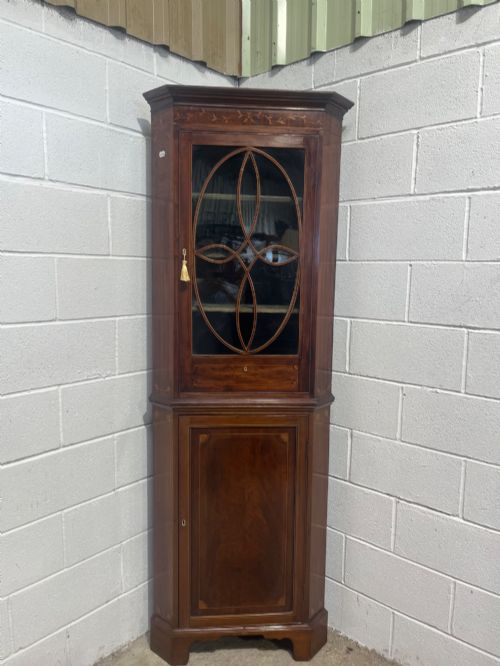
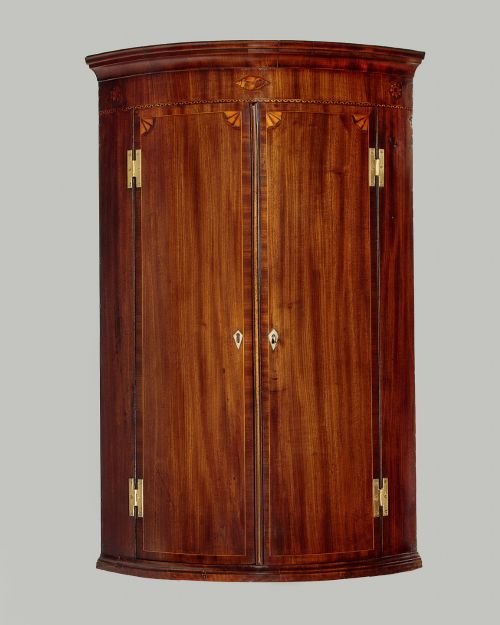
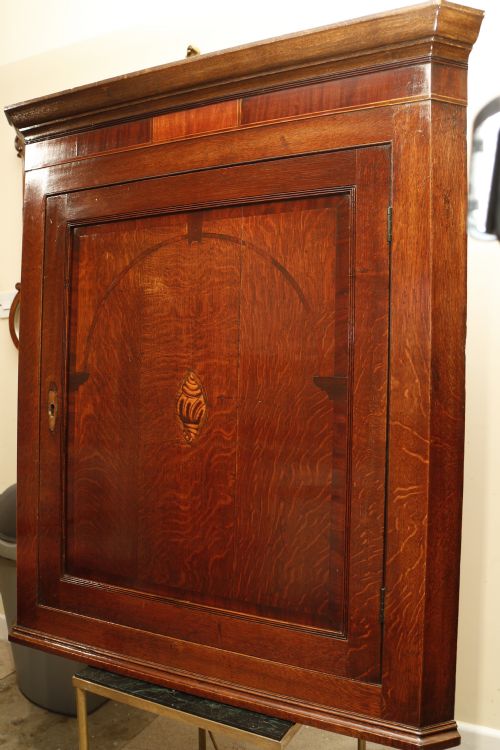
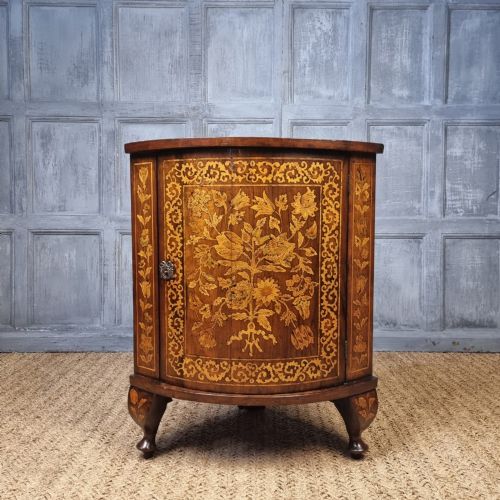
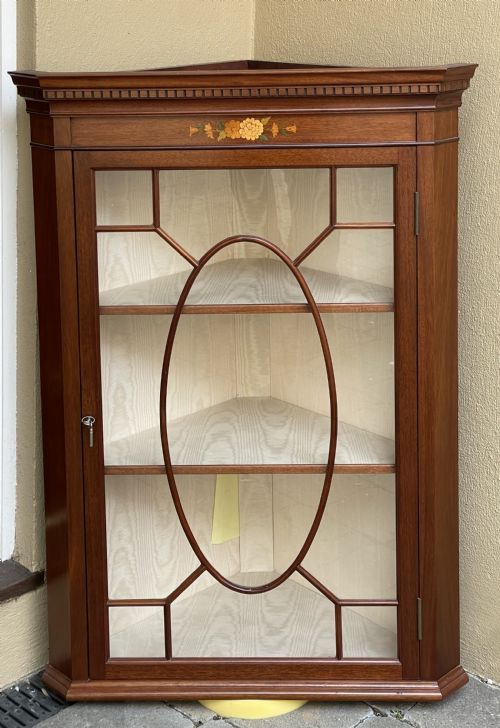
A georgian inlaid corner cupboard is a specialised case piece designed to fit neatly into the ninety-degree junction of two walls, making efficient use of awkward domestic space. These cabinets take both hanging wall-mounted forms and taller floor-standing variations, often featuring architectural cornices and glazed or panelled doors.
The pieces appearing most frequently span the Georgian and George III periods alongside later Edwardian and Sheraton Revival revivals. Makers primarily built them from mahogany, oak, and walnut, frequently applying contrasting stringing and satinwood inlay to enrich the timber surfaces.
How they were made
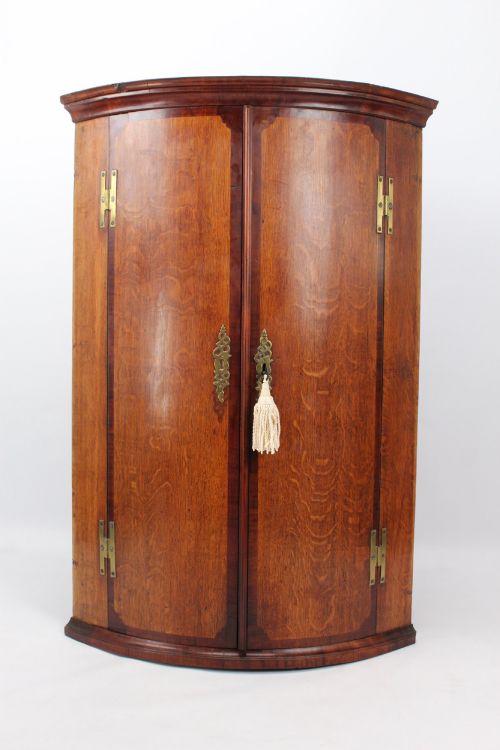
Cabinet makers constructed these cupboards using solid timbers like oak and mahogany, often employing curved bow fronts and barrel shapes that required precise joinery. Crossbanding and stringing in satinwood, boxwood, and darker hardwoods added geometric borders and decorative contrast to the primary wood.
Brass hardware, including H-hinges and escutcheons, secured the doors and provided functional ornamentation. Glazed upper sections utilised individual timber glazing bars to hold small panes of glass within the cabinet door frames.
Site listings show walnut, oak, and mahogany as the primary woods, spanning periods from seventeen-fifty through the Edwardian era.
What varies in quality
Quality rests in the choice of timber figure, such as plum pudding mahogany or burr walnut, and the precision of the contrasting inlay work. Finer examples display meticulous crossbanding and harmonious grain matching across the curved door fronts and cornices.
The internal construction, structural integrity of the corner joints, and survival of original brass fittings and glazed panels distinguish standard utilitarian cupboards from finer cabinet-maker commissions.
The Georgian Inlaid Corner Cupboard Glossary
- Bow front
- A convex curved cabinet front that projects outward, commonly seen on eighteenth-century corner cupboards. This curved form required advanced woodworking skill to shape the timber and fit the doors.
- Crossbanding
- A narrow strip of veneer applied to the borders of a furniture panel so the grain runs perpendicular to the main surface. It creates a neat framing effect around the central wood.
- Stringing
- Thin, linear inlay of a contrasting wood species used to create delicate borders and geometric patterns on furniture surfaces. It defines panels and edges on inlaid mahogany and oak pieces.
- Escutcheon
- A protective brass plate surrounding a keyhole that prevents the timber from wearing around the lock. They often feature simple engraved details or brass shaped plates.
- Cornice
- The decorative moulded projection that crowns the top of a cabinet. It finishes the architectural silhouette where the wall meets the furniture.
Georgian Inlaid Corner Cupboard: Frequently Asked Questions
Where should I hang a corner cupboard?
These cabinets suit empty room angles in dining rooms, hallways, or living spaces where standard rectangular furniture will not fit. They draw the eye upward and utilise vertical wall space efficiently.
Ensure the wall construction can support the weight of solid timber and glass doors, particularly with larger eighteenth-century hanging models.
How do I tell George III from Edwardian pieces?
George III pieces originate from the late eighteenth century, displaying dense native timbers, hand-cut dovetails, and subtle inlay work. They carry the patination of genuine age and utility.
Edwardian cabinets often date from the early twentieth-century revival periods, utilising lighter mahogany veneers and machine-cut elements while copying earlier Sheraton styles.
Can these hold heavy dinnerware?
Most hanging and floor-standing cabinets feature fixed internal wooden shelving designed for display and moderate storage. The original shelves easily accommodate books, glassware, and ceramics.
Check the internal shelf supports and wall fixings before loading older wall-mounted cupboards with heavy porcelain collections.