
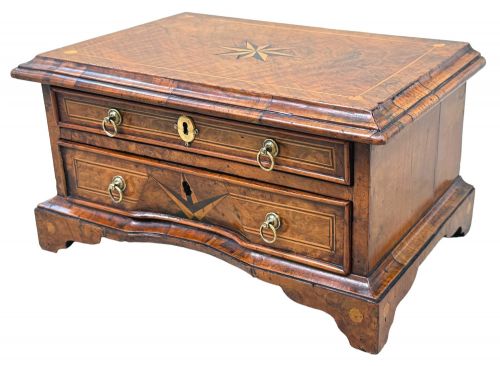

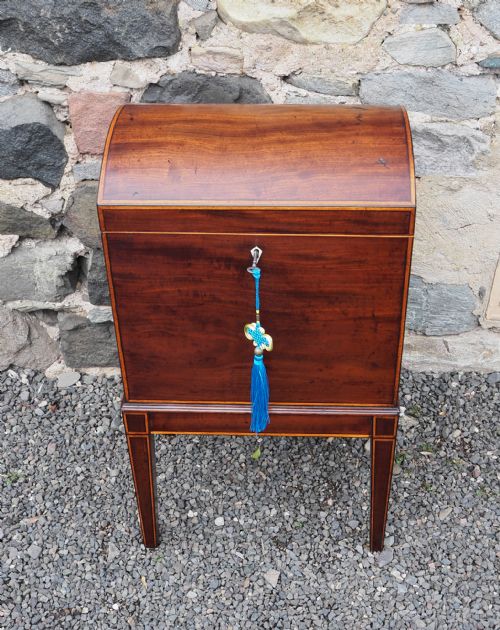


Georgian Inlaid Casket
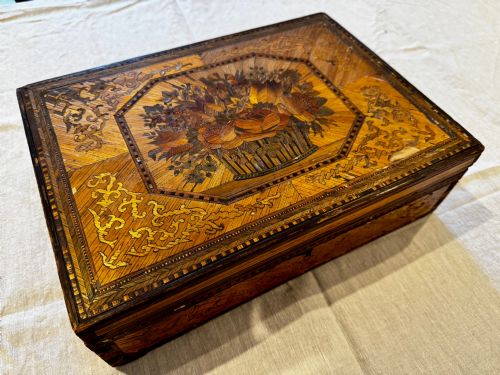
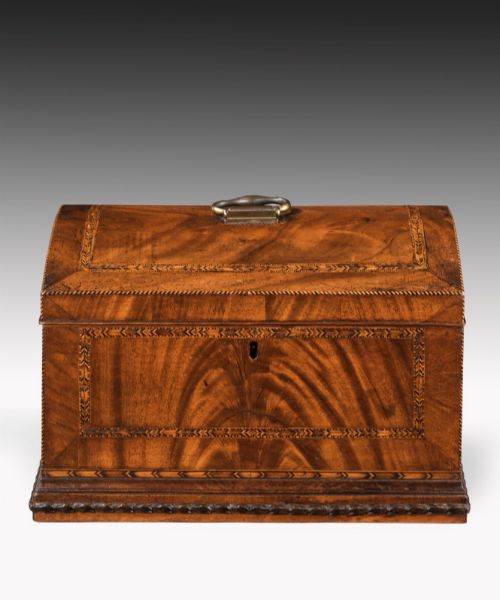
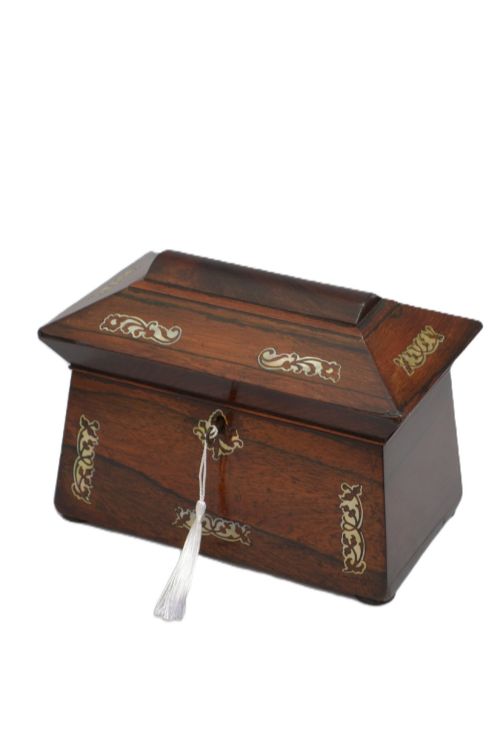
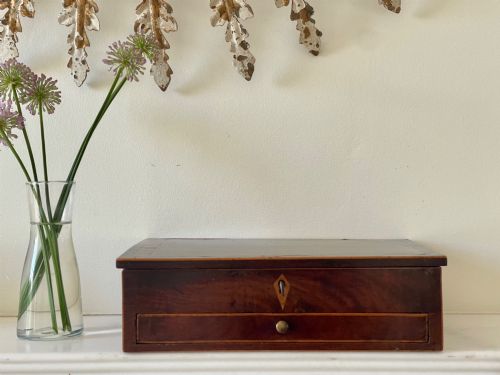
These georgian inlaid casket examples bring together fine cabinet-making woods and meticulous surface decoration for storage and display.
Georgian Inlaid Casket
A georgian inlaid casket encompasses small decorative containers produced during the Georgian, Regency, and William IV periods, spanning the eighteenth and nineteenth centuries. These pieces take forms such as tea caddies, jewellery and work boxes, document cases, games boxes, and miniature chests of drawers.
Mahogany and rosewood dominate the material record, often enhanced with satinwood, ebony, boxwood, bone, and mother-of-pearl inlay. The surviving examples reflect domestic organisation and personal luxury, ranging from simple lidded boxes to elaborate table cabinets.
Materials and Technique
Cabinet-makers constructed the carcasses from dense hardwoods like mahogany, rosewood, and walnut, frequently applying contrasting veneers such as satinwood and calamander. Surfaces were then decorated using precise boxwood, ebony, and bone stringing, alongside shaped mother-of-pearl inlays.
Brass fittings, including escutcheons, handles, and occasional bound edges, added structural reinforcement and visual contrast to the polished timber.
Materials recorded across the inventory include brass, rosewood, mahogany, boxwood, ebony, bone, satinwood, and mother-of-pearl.
Evaluating Quality
Quality rests on the selection of timber figures, such as flame mahogany or burr yew, and the precision of the parquetry and stringing work. Finer pieces display seamless veneer matching and tightly fitted internal compartments.
The sophistication of the hardware, including original brass locks and bounded edges, separates standard storage boxes from superior cabinet-maker productions.
The Georgian Inlaid Casket Glossary
- Parquetry
- Geometric wood inlay forming patterned surfaces. It creates decorative geometric designs across the lid and sides of boxes.
- Caddy
- A small container originally designed for storing tea leaves. These often feature internal lidded compartments and fine veneer work.
- Escutcheon
- A flat plate surrounding a keyhole. It protects the surrounding wood from wear and adds a decorative brass accent.
- Stringing
- Thin lines of contrasting wood inlay used for borders. This technique defines the edges and panels of cabinet pieces.
Georgian Inlaid Casket: Frequently Asked Questions
What were these boxes used for originally?
These containers served specific domestic purposes, holding valuable tea leaves, sewing equipment, letters, or personal jewellery securely.
Their internal layouts often included lift-out trays, small lidded compartments, and velvet or silk linings tailored to these contents.
How do I date a Georgian inlaid box?
Dating relies on observing the prevailing timber choices, hardware styles, and construction methods associated with specific reigns and periods.
For instance, satinwood and delicate stringing point towards the earlier Georgian era, while bolder rosewood and mother-of-pearl alignment typically suggest Regency production.
Where were these pieces made?
The recorded pieces originate primarily from English workshops, with specific regional variations including miniature Welsh examples.
Cabinet-makers in urban centres and provincial towns utilised imported exotic timbers alongside native woods.
How should I care for wood inlay?
Keep wooden boxes away from direct sunlight and fluctuating heat sources to prevent the delicate veneers and stringing from drying out.
Maintain stable indoor humidity and dust the polished surfaces gently with a dry, soft cloth.