


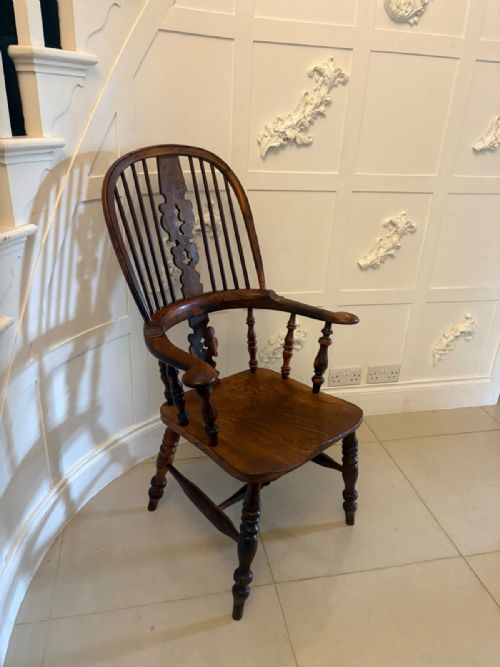
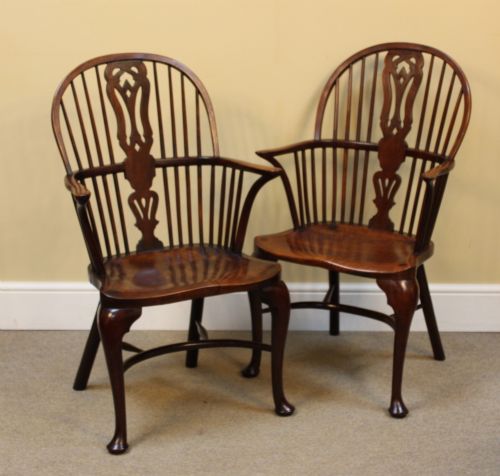
Georgian Hoop Back Chair
A Georgian hoop back chair brings centuries of English country craftsmanship and solid timber character directly into daily seating.
Georgian Hoop Back Chair
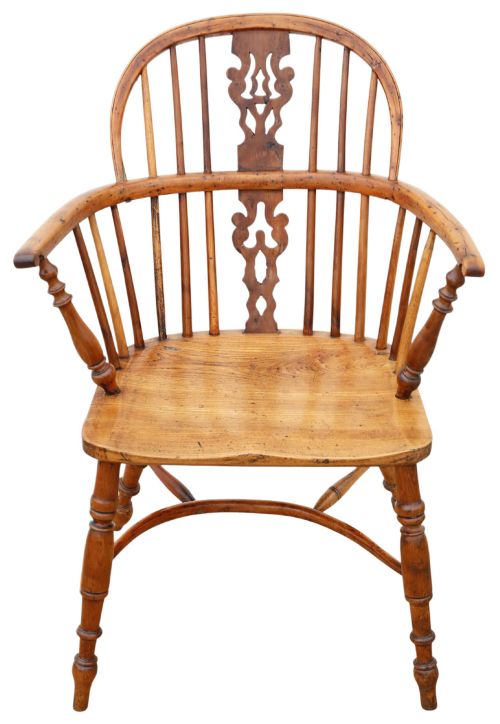
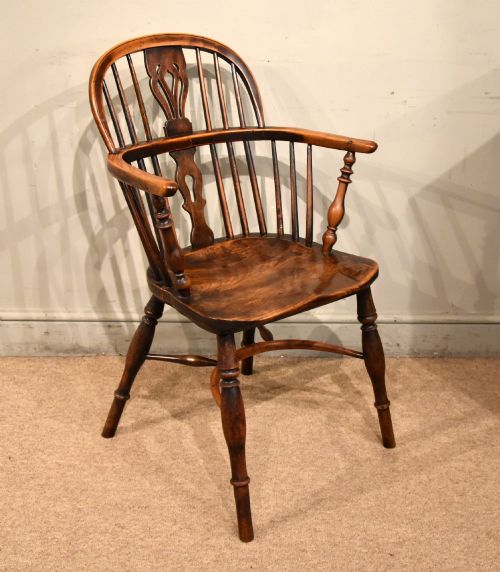
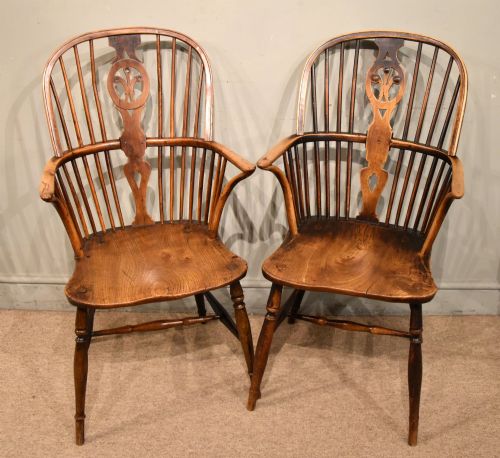
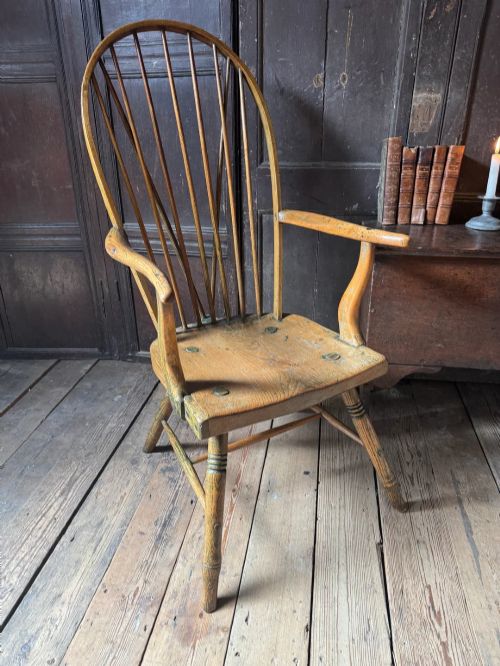
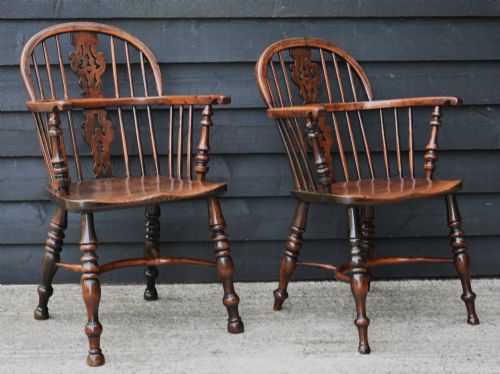
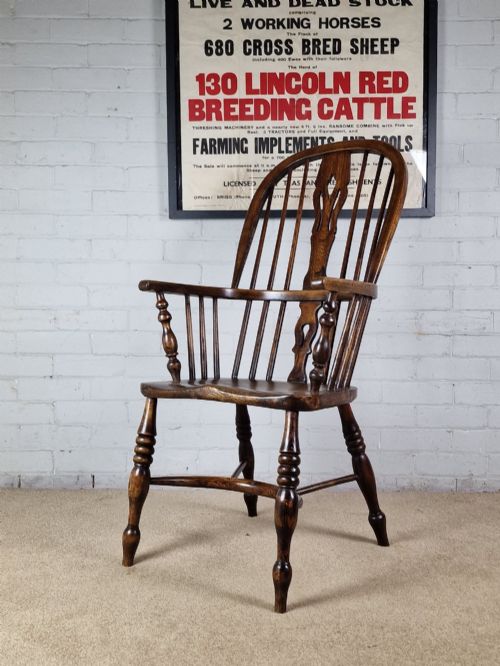
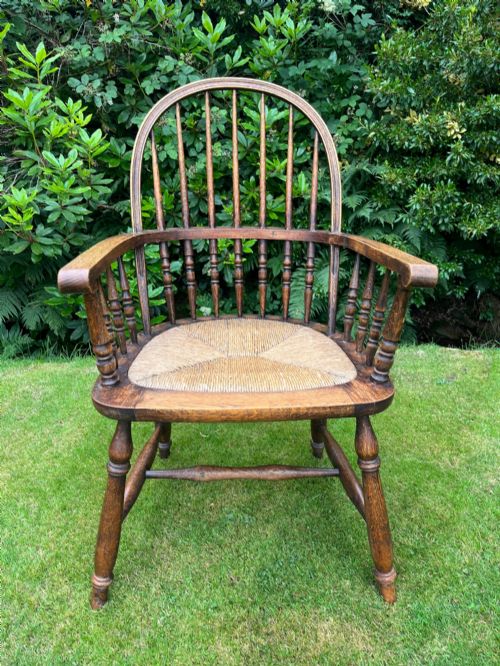
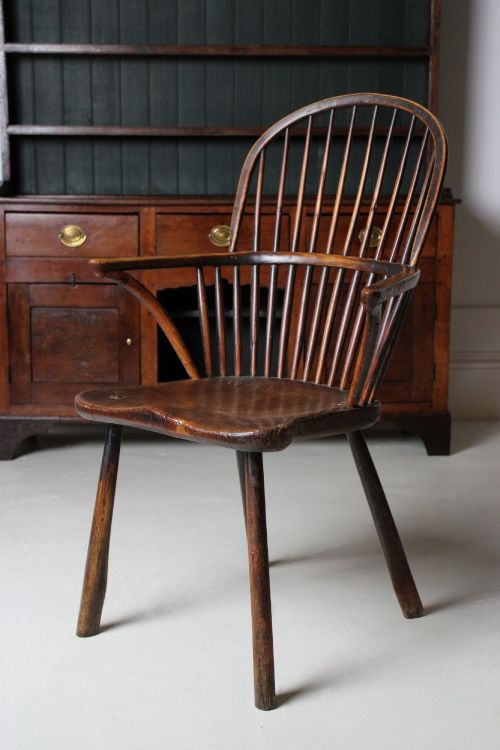
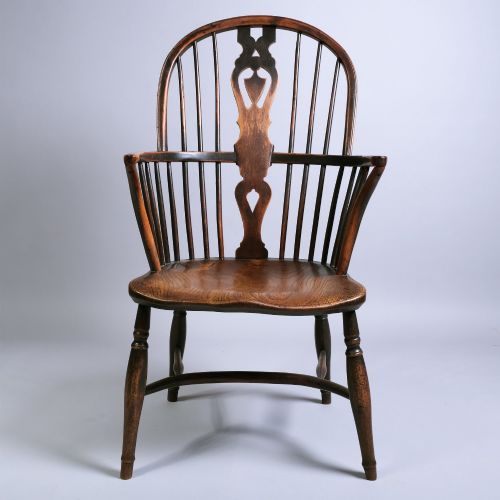
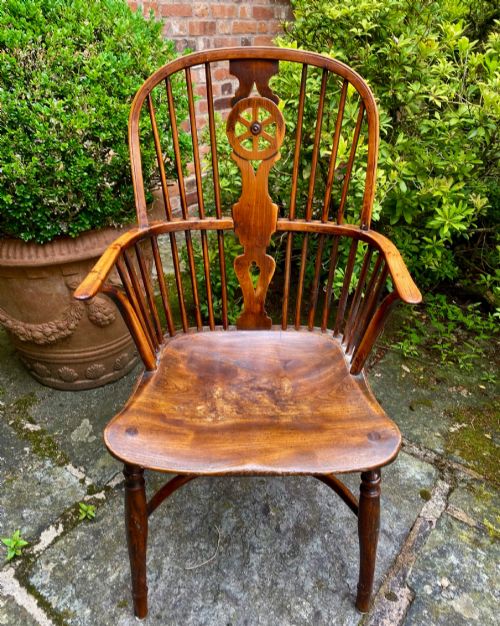
When you search for a georgian hoop back chair, you encounter robust seating shaped by vernacular woodworking traditions across English counties. The examples found here span the eighteenth and nineteenth centuries, taking the form of Windsor armchairs, carvers, and dining chairs.
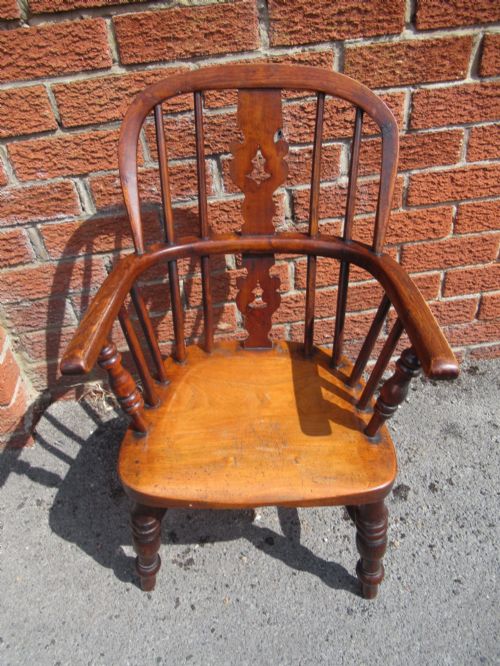
Most pieces on this page combine sturdy timber frames with characterful arched backs, often featuring central splats or spindles. They originate from regional workshops and country houses, carrying the distinctive structural habits of makers from places like the West Country and Lincolnshire.
Buyers meet both single armchairs and matched sets, ranging from high-back proportions down to child-sized versions. These seats served utility in domestic settings before becoming sought-after examples of historic English country furniture.
How they were made
Constructed using traditional green woodworking techniques, these chairs rely on a combination of timbers chosen for specific structural strengths. Makers typically paired elastic woods like yew, ash, or elm for the bent hoops and spindles with denser woods for the seats.
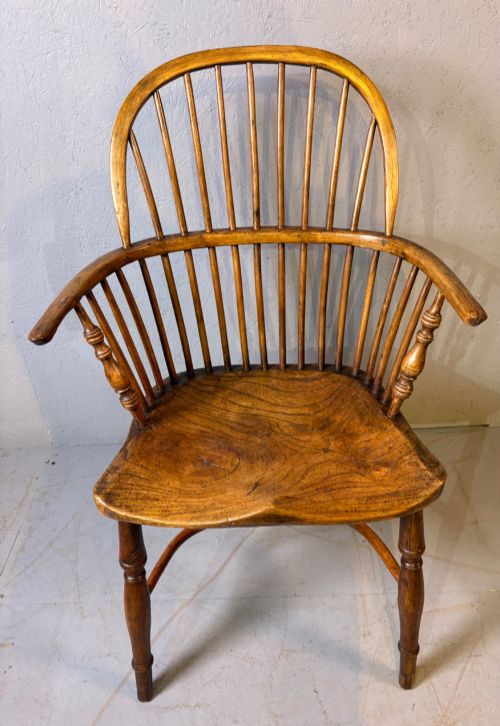
The characteristic curved back is steam-bent from a single piece of timber to form the continuous hoop. This member joins directly into a solid wooden saddle seat, often bored and wedged from beneath to secure the upright legs and back assembly.
Georgian Hoop Back Chair Retail Price Guide 2026
Typical asking prices for georgian hoop back chair among the pieces listed under this phrase on Sellingantiques today, from the lower quarter to the upper quarter. They describe what is for sale here now, not the wider market.
Listings feature regional English vernacular pieces spanning the Georgian, Regency, and Victorian periods, constructed from yew, elm, ash, and fruitwood.
What varies in quality
The distinction between ordinary and exceptional pieces rests upon the choice of timber figure and the grace of the turning work. Chairs boasting richly grained yew wood and well-proportioned elm seats command greater regard than plain ash or beech alternatives.
Structural harmony also defines the better examples, where the sweep of the hoop and the placement of stretchers achieve balanced proportions. Original surfaces, such as early brown paint or deep natural patina accumulated over centuries, elevate a piece above stripped or heavily restored counterparts.
John Brand of Sleaford
The Georgian Hoop Back Chair Glossary
- Hoop back
- A continuous bentwood bow forming the upper backrest of the chair. This curved member often links directly into the arm supports or the seat itself.
- Windsor chair
- A chair built with a solid wooden seat into which the legs and back spindles are separately inserted. They typically utilise mixed timbers for different structural components.
- Crinoline stretcher
- An arched under-framing connecting the legs of a chair to provide rigidity. This hoop-shaped stretcher is particularly associated with better quality regional Windsor seating.
- Elm
- A tough, interlocking timber frequently utilised for the solid saddle seats of country chairs. Its grain resists splitting under the strain of wedged leg tenons.
- Yew wood
- A dense, highly figured timber prized for high-status Windsor chair frames and arm bows. It yields warm tones and striking visual movement.
Georgian Hoop Back Chair: Frequently Asked Questions
What is a hoop back chair?
A hoop back chair is a form of Windsor seating featuring a continuous curved wooden bow that forms the upper backrest. This arched rail supports the user and ties into the structural arms and solid seat.
Such chairs developed through English vernacular traditions, utilising steam-bent timber to achieve their characteristic rounded profile.
How do I identify a Georgian chair?
Georgian seating displays period construction methods, such as hand-turned spindles and saddle-shaped elm seats showing appropriate age and wear. Regional variations in timber choice often point towards specific English counties and eighteenth-century workshops.
Examining the underside reveals traditional wedged tenons and tool marks consistent with period hand-working techniques.
Are these chairs comfortable for daily use?
These chairs were designed for practical domestic utility, featuring ergonomic saddle seats carved to fit the body. The rake of the back and supportive spindles provide a surprisingly upright and stable sit.
Placing them around a dining table or in a living space offers both functional seating and historic character.
What woods were used?
Makers selected native British timbers based on their specific mechanical properties, combining them within a single piece. Yew and ash frequently form the bent hoops and spindles, while elm provides a tough, split-resistant seat.
Some regional examples also incorporate fruitwood, beech, or oak depending on local timber availability.