


Georgian Hearth Screen
A georgian hearth screen blocks the intense heat of an open fire while shielding delicate complexions, combining practical utility with refined domestic ornament.
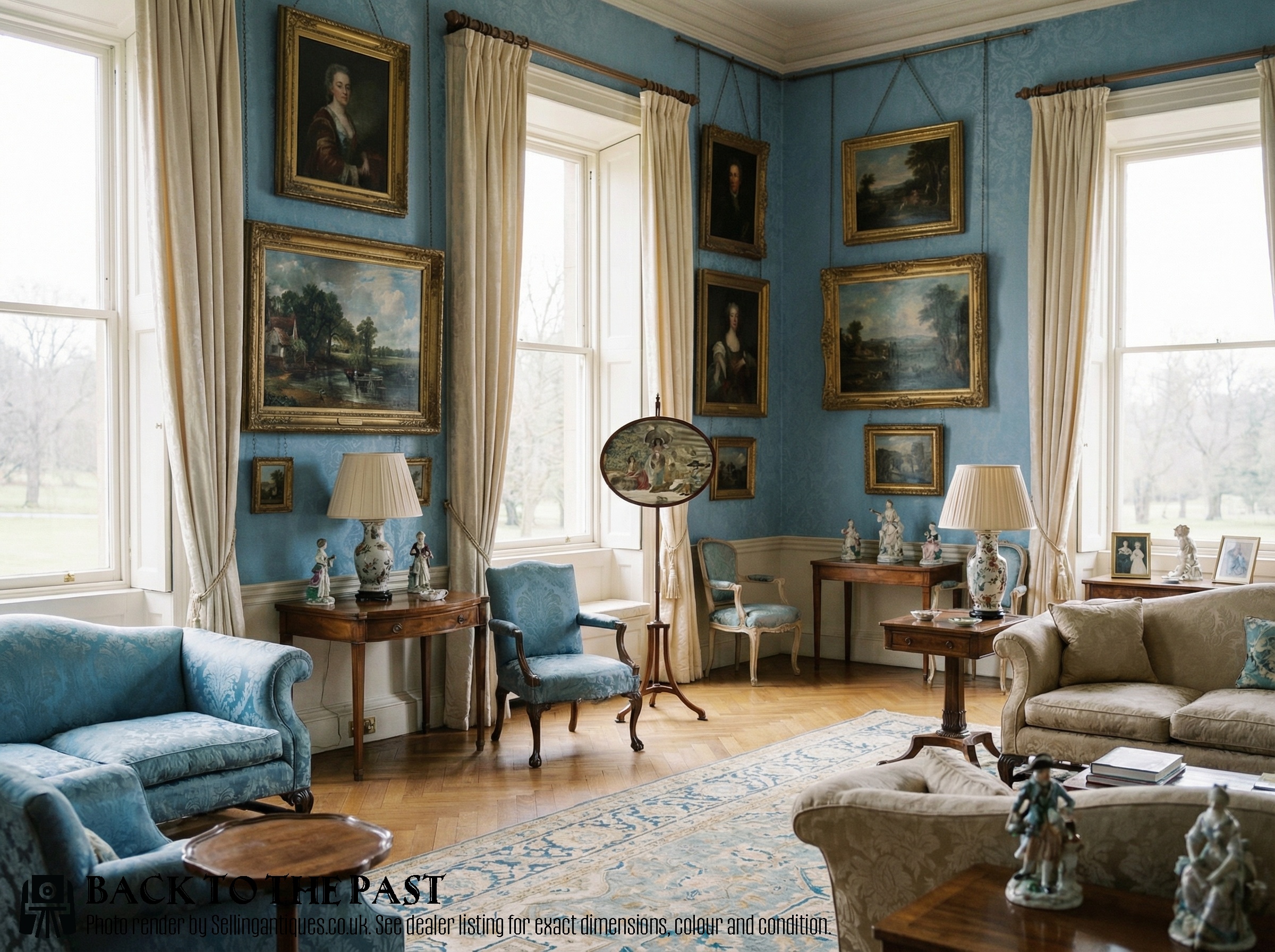
Georgian Hearth Screen
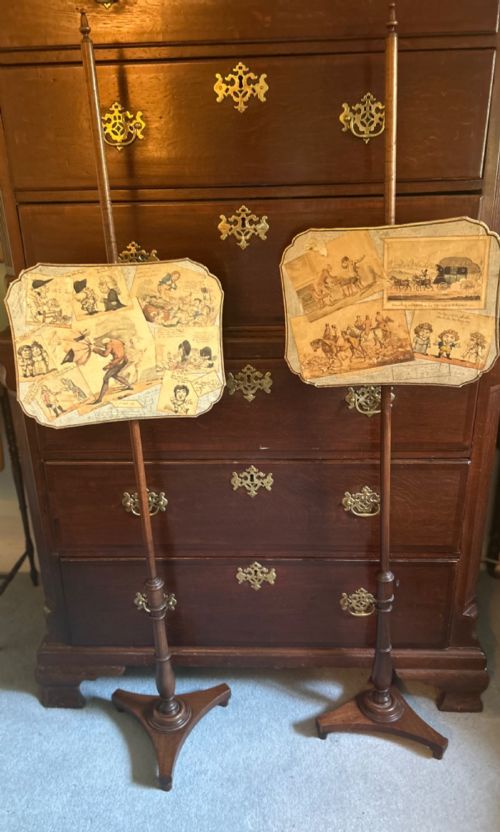
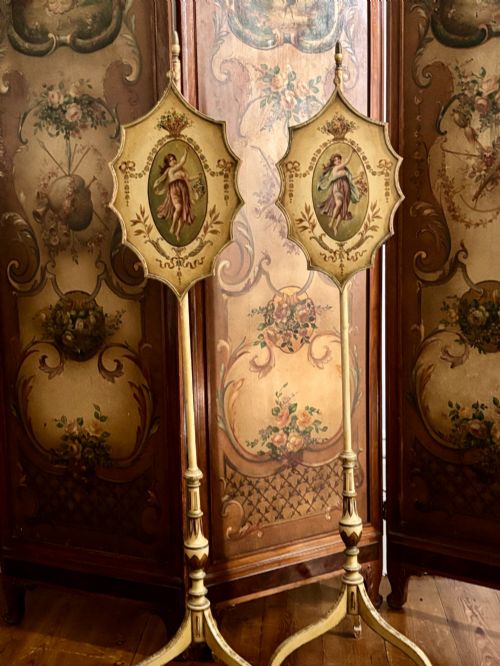
A georgian hearth screen on this page typically takes the form of a pole screen, featuring a vertical standard supported by tripod legs and carrying an adjustable sliding panel. The selection spans the Georgian, Regency, and William IV periods, alongside later nineteenth century interpretations.
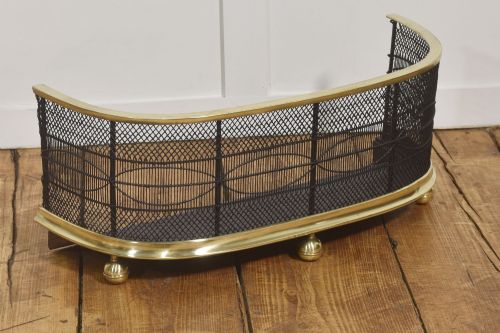
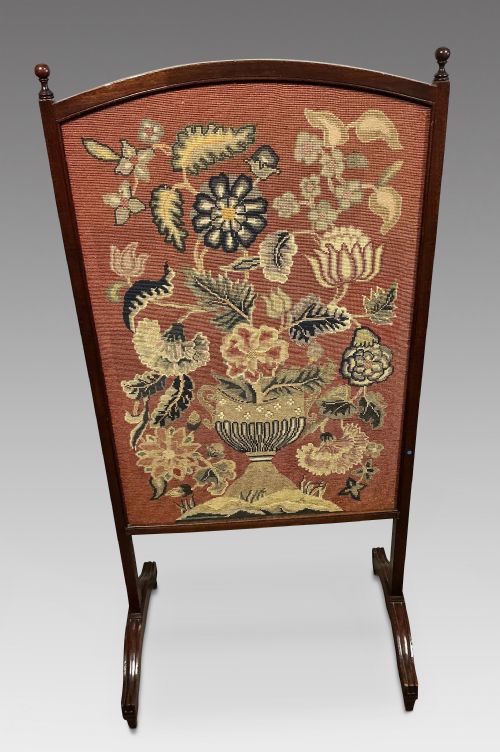
The adjustable panels range from needlework tapestry and silk embroidery to satirical prints and glass reflectors, designed to be positioned precisely where the heat is most fierce. Alongside pole screens, the listings include larger standing fire screens, brass and wirework fire guards, and wrought iron nursery fenders.
Materials and construction
Cabinetmakers utilised rich timber timbers including mahogany, rosewood, and giltwood for the stands and frames, often incorporating delicate details such as spade feet and carved bases. The screens themselves display fine textile arts through wool, silk, and needlepoint panels, occasionally mounted with glass or poker work.
Needlework tapestry and silk embroidery appear frequently as the primary mediums for adjustable screen panels.
Craftsmanship and preservation
The distinction between standard domestic pieces and superior examples lies in the crispness of the timber carving and the complexity of the turned standards. Superior specimens display well-proportioned tripod bases and sophisticated joinery.
The condition and artistry of the inset panel dictate much of the overall merit, particularly when needlework tapestries or satirical prints survive in vibrant states. Original adjustable mechanisms that retain their smooth operation further elevate the standing of an individual piece.
The Georgian Hearth Screen Glossary
- Pole screen
- A freestanding screen with an adjustable panel that slides up and down a vertical wooden shaft. This design allowed occupants to protect their faces from the radiant heat of the hearth.
- Needlepoint
- Hand-stitched canvas work utilised for decorative panels within the screen frames. These often depict floral motifs or historical scenes.
- Fender
- A low metal barrier placed on the hearth around the opening of a fireplace. They prevent burning embers from rolling onto the floorboards.
- Spade foot
- A rectangular foot shape tapering slightly towards the bottom, frequently seen on furniture supports from the late eighteenth century. This foot style terminates in a flat base resembling the blade of a garden spade.
Georgian Hearth Screen: Frequently Asked Questions
What is a pole screen?
A pole screen is a tall vertical stand with a small adjustable panel used to deflect the intense heat of an open fire away from a person's face.
They were designed to be moved around the room as needed, protecting delicate skin and wax makeup from melting in the warmth.
How do you adjust the panel?
The central panel is mounted on a collar that slides up and down the main turned wooden pole.
Many rely on a subtle friction fit or internal counterweight system to hold the screen at the desired height.
Where were they placed?
These screens sat directly in front of the fireplace or close to seating areas where individuals gathered to socialise.
Their primary function was thermal protection before central heating created uniform room temperatures.
What materials make up the panels?
Panels frequently feature hand-stitched needlepoint tapestry, embroidered silk, painted glass, or poker work on wood.
Textile panels allowed households to showcase domestic needlework skills alongside decorative artistry.
Are these screens still functional?
While modern heating renders the original thermal purpose obsolete, they remain decorative room dividers and focal points for traditional interiors.
Their adjustable mechanisms and antique needlework continue to function as intended for display.