

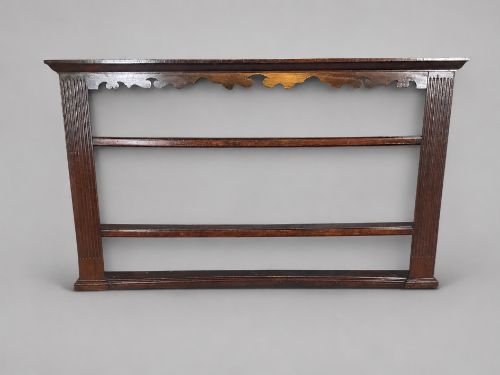
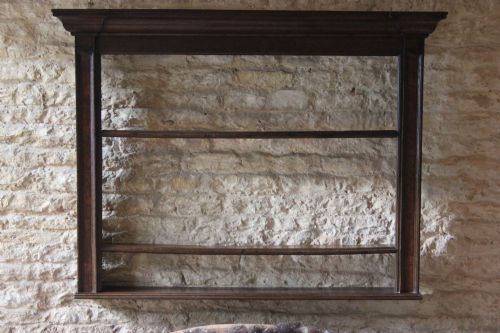
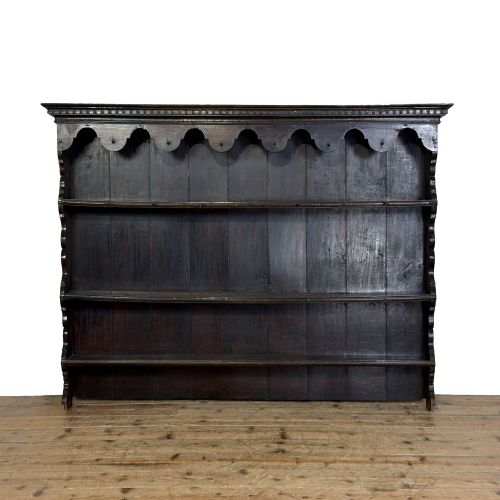
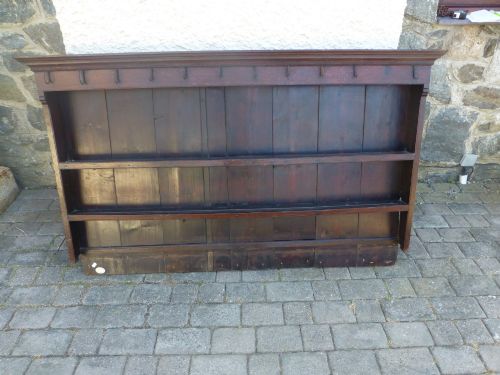
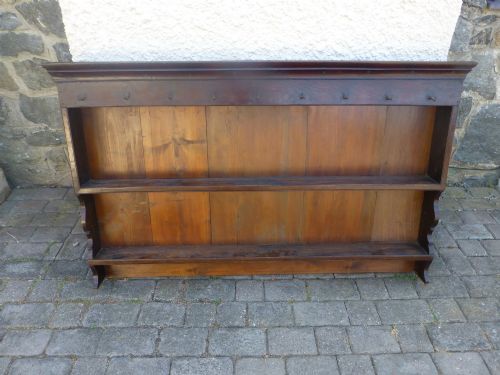
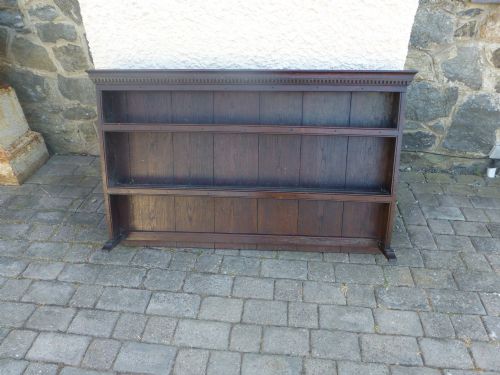
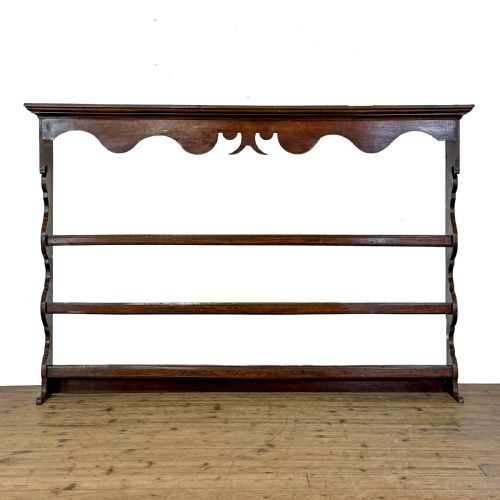


Georgian Hanging Plate Rack
A georgian hanging plate rack brings warmth and honest utility to a kitchen wall, holding crockery where you can reach it.
Georgian Hanging Plate Rack
When you search for a georgian hanging plate rack, you find wall-mounted shelving units designed to display and dry ceramics in domestic spaces. These pieces span the eighteenth and nineteenth centuries, taking the form of open wall shelves and dresser tops adapted for hanging.
The versions you meet most frequently on this page are constructed from oak, often associated with English country interiors. Alongside these, finer mahogany hanging shelves appear from the later part of the period, reflecting shifts in dining habits.
Most examples feature slotted shelves or wooden bars to keep plates upright against the wall board. They translate the storage of a larger dresser into a compact format suited for smaller rooms.
How they were made
Makers built these racks primarily using solid oak or mahogany planks, joined with traditional methods suited to wall-hung furniture. Timber selection determined how well the boards held up to daily exposure in busy kitchens.
Iron and brass fixings support the structures or provide hanging points, while shaped friezes and pegged joints reflect eighteenth-century cabinet-making techniques. Surfaces show the straightforward hand-planing typical of utility furniture from this era.
Georgian Hanging Plate Rack Retail Price Guide 2026
Typical asking prices for georgian hanging plate rack among the pieces listed under this phrase on Sellingantiques today, from the lower quarter to the upper quarter. They describe what is for sale here now, not the wider market.
Every plate rack retains the ghost marks of vanished crockery washed and stacked by hands centuries gone.
What varies in quality
The distinction between standard utility pieces and finer examples rests on timber selection and decorative restraint. Mahogany shelves from the close of the eighteenth century often display more refined mouldings than sturdy country oak racks.
Proportion and original surface patination dictate the visual weight of the piece on a wall. Elements like shaped sideboards and untouched timber surfaces separate simpler kitchen fixtures from more considered cabinet work.
The Georgian Hanging Plate Rack Glossary
- Delft rack
- A wall-mounted shelving unit specifically designed for displaying tin-glazed earthenware plates. These racks feature narrow ledges and front rails to keep shallow dishes secure.
- Hanging shelves
- Open wall furniture intended to store books, ceramics, or small objects off the floor. They use wall fixings rather than floor standing legs.
- Frieze
- The horizontal band running along the upper portion of a piece of furniture. On these racks, it often receives simple moulding or shaping.
- Pegged joint
- A method of securing mortise and tenon joints using wooden pins. This technique predates modern adhesives and provides structural strength.
Georgian Hanging Plate Rack: Frequently Asked Questions
Were these racks used in the kitchen?
Kitchens and pantries served as the primary locations for these open shelves, keeping everyday crockery within arm's reach. They allowed washed plates to air dry before being stored away.
Over time, changing fashions moved formal dining wares into enclosed cupboards. Surviving wall racks provide a direct view of how earlier households managed their tableware.
How do I tell oak from mahogany on these shelves?
Oak exhibits a distinct coarse grain with prominent medullary rays, often showing a warm brown tone developed through age. It suits the heavier, more rustic country pieces seen across the eighteenth century.
Mahogany presents a smoother, reddish-brown grain that takes a finer polish. It appears on more polite wall shelves dating towards the end of the Georgian period.
Can these racks hold modern dinner plates?
Older plate racks were built to accommodate the smaller, lighter ceramics of the eighteenth century, such as delftware. Modern heavy stoneware plates may exceed the depth or weight tolerances of historic slots.
Checking the depth of the plate channels prevents issues when displaying contemporary tableware. Lighter decorative items or smaller side plates often fit these historic dimensions best.