

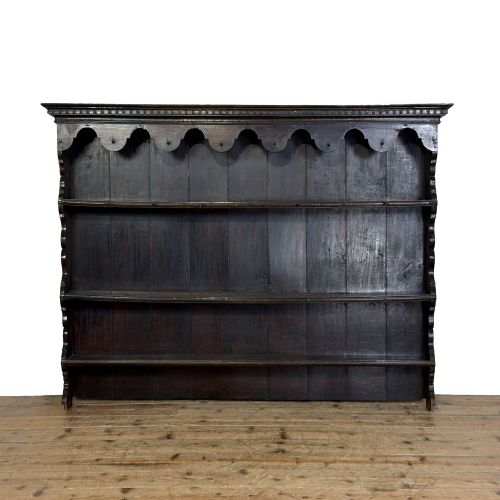
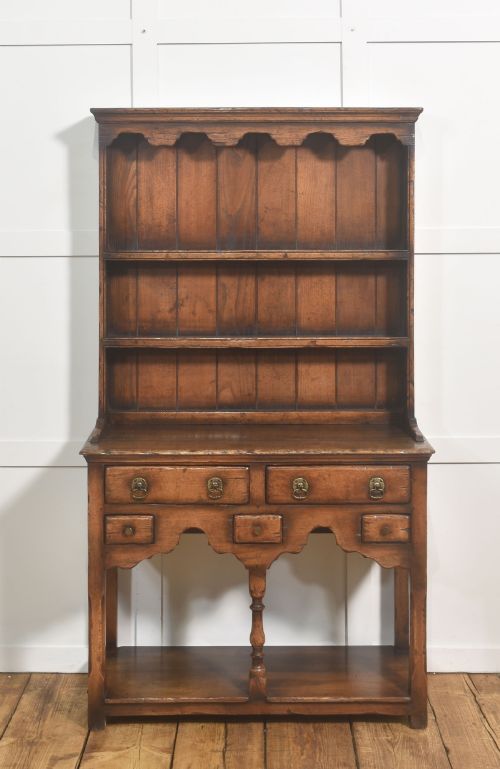
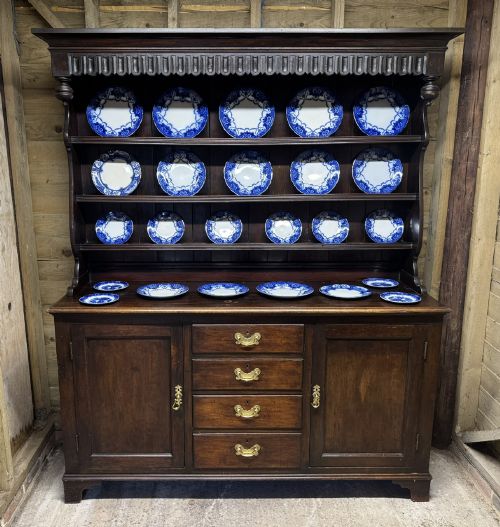
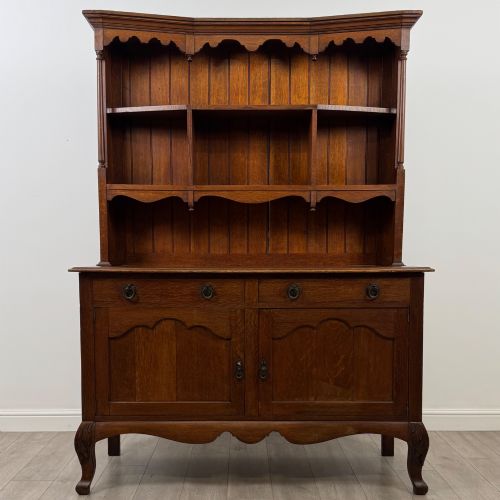
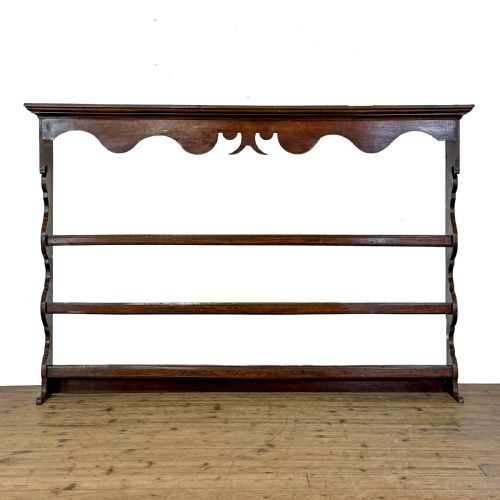


Open Oak Plate Shelf
These open oak plate shelf pieces bring honest vernacular character to a room, offering practical display space for crockery.
Open Oak Plate Shelf
When you search for an open oak plate shelf, you encounter functional wall-mounted racks and full dressers that incorporate exposed timber tiers for displaying crockery. These items derive from domestic vernacular traditions across the 18th Century, 19th Century, and early 20th Century.
The versions most commonly met on this page range from simple wall-hanging racks to substantial Welsh dressers featuring open upper shelves. They appear in regional vernacular forms including English Country, Welsh Country, and Arts and Crafts designs.
Makers constructed these storage pieces to hold plates upright against a backboard while keeping daily kitchen ware accessible. The survival of these functional boards reflects enduring domestic utility.
How they were made
Joiners built these pieces primarily from solid oak, sometimes combining brass or iron hardware and occasionally incorporating mahogany accents. Timber selection dictated the structural integrity of the plate tiers and the backboards.
Construction techniques involve traditional jointing suited to utilitarian furniture, with regional variations from Georgian periods through to the Arts and Crafts movement. Workshops utilised straightforward assembly methods designed to support heavy ceramic plates over generations of daily use.
Open Oak Plate Shelf Retail Price Guide 2026
Typical asking prices for open oak plate shelf among the pieces listed under this phrase on Sellingantiques today, from the lower quarter to the upper quarter. They describe what is for sale here now, not the wider market.
Some country dressers still retain the faint ghosts of grease marks behind the plate grooves, left by centuries of damp Sunday dinners.
What varies in quality
The standard of timber selection and depth of grain figure prominently in distinguishing one piece from another. Richly patinated oak surfaces display superior ageing compared to plain secondary timbers.
Construction robustness, particularly the stability of the shelf tiers and the original integrity of the backboards, separates utilitarian workshop output from finer vernacular furniture. Regional stylistic touches, such as carved detail or proportions, also mark out superior execution.
The Open Oak Plate Shelf Glossary
- Plate rack
- A wall-mounted or integrated frame designed with horizontal slats or grooves to display plates vertically. This component forms the primary functional element of the search phrase.
- Welsh dresser
- A large kitchen storage unit combining lower cupboards or drawers with an upper section of open shelves. These pieces frequently feature multiple tiers for displaying ceramics.
- Potboard
- An open lower shelf fitted beneath a dresser base, traditionally used for storing heavy pots and pans. This feature appears on vernacular oak examples from the 18th Century.
- Vernacular furniture
- Domestic pieces made by local joiners for everyday use rather than high-style metropolitan workshops. These items often display regional characteristics typical of country districts.
- Arts and Crafts
- A design movement valuing handcraftsmanship, simple construction, and honest materials. Pieces from this tradition often exhibit pared-down structural forms.
Open Oak Plate Shelf: Frequently Asked Questions
How do I date an oak plate shelf?
Dating relies on examining construction methods, timber patination, and stylistic cues present in the woodwork. Pieces from the 18th Century often display hand-tooled surfaces and older jointing techniques.
Later Victorian or Edwardian examples frequently show machine-sawn components and different hardware fixings. Comparing the overall design against known regional vernacular styles helps narrow down the period of manufacture.
How were these plate shelves used?
Households used these shelves in kitchens and dining rooms to store earthenware, pewter, and ceramic plates within easy reach of the hearth or table. The open design allowed damp plates to air dry after washing.
Over time, they evolved from purely utilitarian storage into prominent display furniture for prized tableware. Their open tiers made everyday crockery part of the room's interior decoration.
Where should I hang a wall rack?
Wall racks require secure fixing to substantial wall studs or masonry to support the considerable weight of wooden framework and heavy ceramic plates. Kitchens and dining rooms remain the traditional settings for their installation.
Ensuring adequate clearance above counters or furniture maintains both visual balance and practical access to the shelf tiers.