
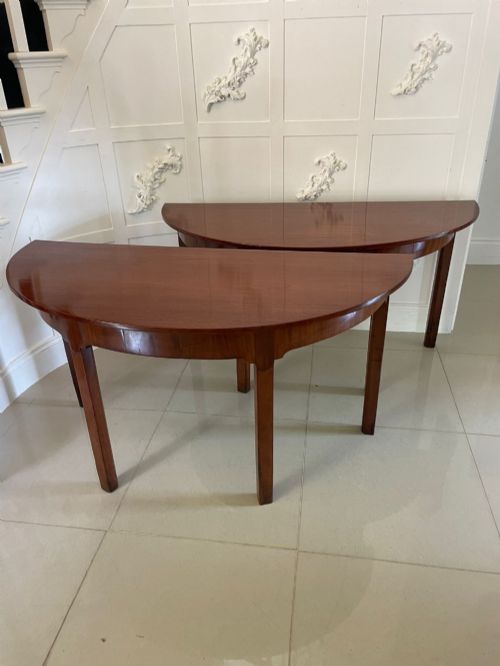
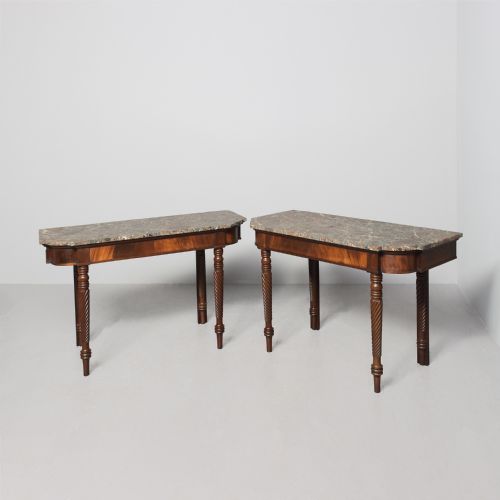
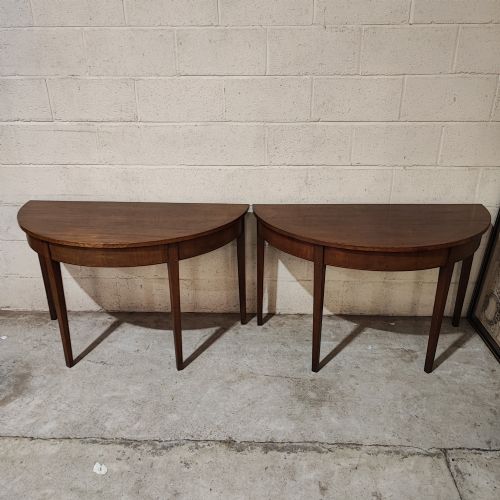
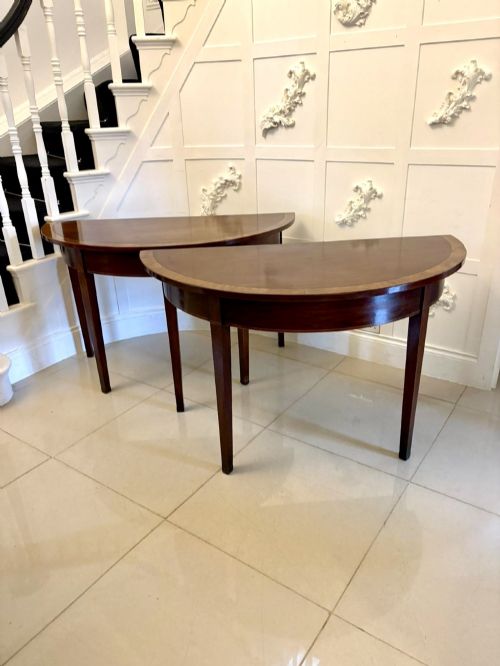
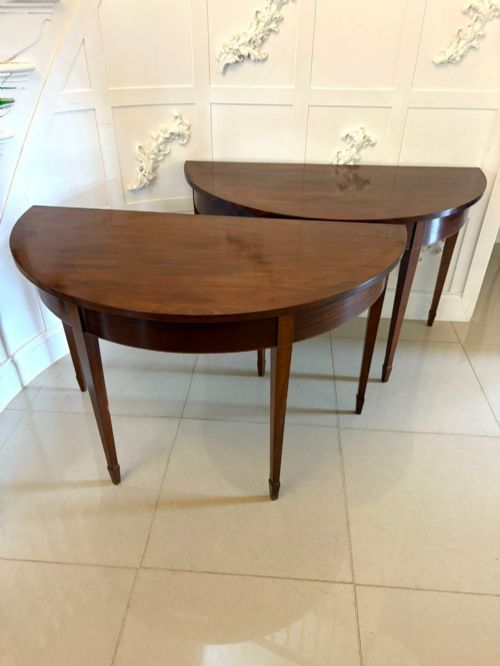
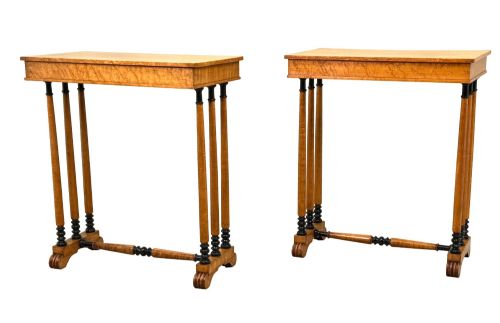
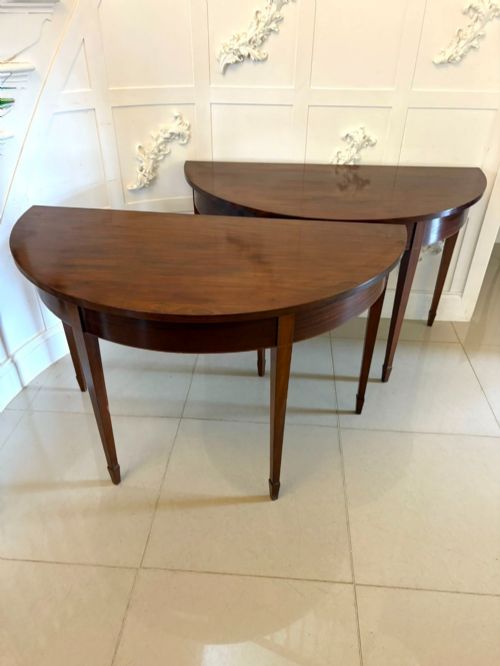
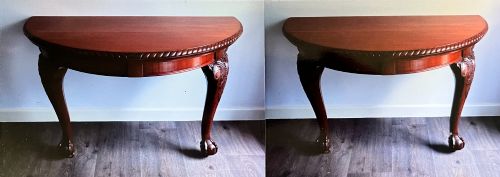


Georgian Hall Table Pair
These georgian hall table pair selections are matched sets designed to anchor an entrance, offering symmetry and period presence.
Georgian Hall Table Pair
A georgian hall table pair brings formal symmetry to an entrance hall, combining decorative presence with surface utility. The search phrase covers matching sets designed to stand against a wall, frequently taking a demi-lune, D-end, or console form.
Visitors browsing this selection will most often encounter mahogany examples from the eighteenth and nineteenth centuries. These pieces encompass George III, Regency, and George IV periods, alongside later revival interpretations in painted wood and satinwood.
Materials and Construction
Cabinetmakers utilised solid timber and figured mahogany veneers over secondary woods, often selecting quarter-sawn boards to display rich grain patterns. Brass hardware and occasional marble tops appear on later or more elaborate Regency and William IV iterations.
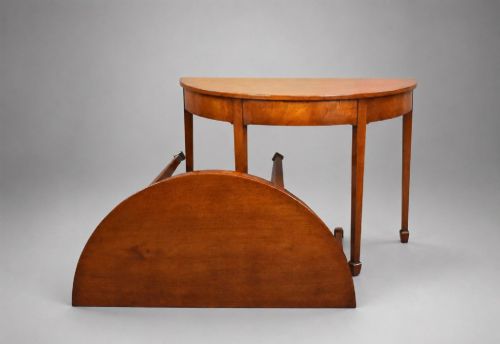
Construction techniques rely on traditional joinery, with timber shaped into half-round or D-shaped formats designed to join together or stand independently. Surface decoration involves inlay, crossbanding, and hand-applied painted finishes rather than moulded synthetic components.
Some pairs spent centuries whispering secrets in draughty corridors before finally finding a matching partner.
Evaluating the Craft
The standard of timber selection and veneer matching defines the visual authority of a pair. Finer examples display continuous grain patterns across both halves of a matched set, while lesser pieces rely on plain or heavily patched timber.
Structural integrity and the crispness of carved details set upper-tier items apart. Sharp mouldings, well-fitted joinery, and original brass fittings indicate a higher grade of workshop production compared to softened outlines and crude later alterations.
Gillows
The Georgian Hall Table Pair Glossary
- Demi-lune
- Half-moon shape. These tables stand flat against a wall and were widely utilised in narrow entrance spaces during the Georgian period.
- D-end
- Table with one curved semi-circular end and one straight edge. They often join together to form a larger dining surface or divide for side placement.
- Console
- A table supported by brackets or legs against a wall. This form prioritises display and architectural harmony over heavy utility.
- Veneer
- A thin slice of figured wood applied to a stable secondary timber. Figured mahogany and satinwood veneers create decorative surface patterns.
Georgian Hall Table Pair: Frequently Asked Questions
What is a demi-lune table?
A demi-lune table is built with a semi-circular top and a flat back designed to rest directly against a wall. This half-moon shape occupies minimal depth, making it suitable for narrow hallways.
Craftsmen frequently produced them in matching pairs to flank a doorway or mirror, creating balanced symmetry in formal reception rooms.
How do I spot a true pair?
True pairs share identical dimensions, timber selection, construction methods, and wear patterns accumulated over centuries. The grain on the top boards often mirrors from one table to the other.
Assembled matches show subtle discrepancies in height, timber colour, or leg profile upon close inspection under natural light.
Where should I place these tables?
These pieces suit entrance halls, corridors, and dining rooms where surface space is required without blocking movement. Placing them side by side creates a large console, while separating them frames a doorway.
Pairing them with a mirror or lighting above establishes a traditional focal point upon entering a home.
How do I care for mahogany surfaces?
Mahogany requires stable indoor humidity away from direct sunlight and heat sources to prevent timber shrinkage and veneer lifting. Regular dusting with a dry, soft cloth maintains the polished finish.
Application of traditional beeswax feeds the timber periodically, preserving the natural depth of the grain without building up synthetic residues.