



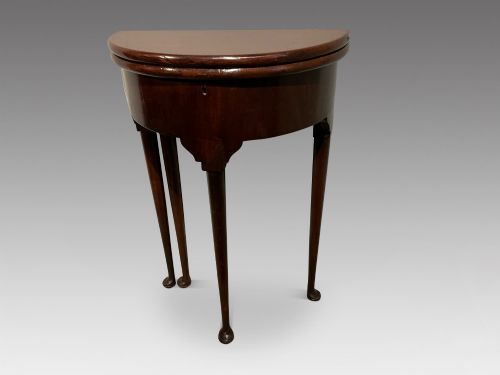
Mahogany Half Moon Table
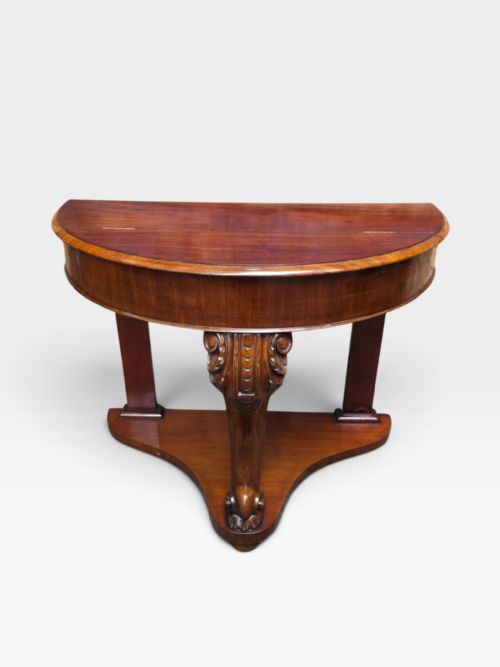
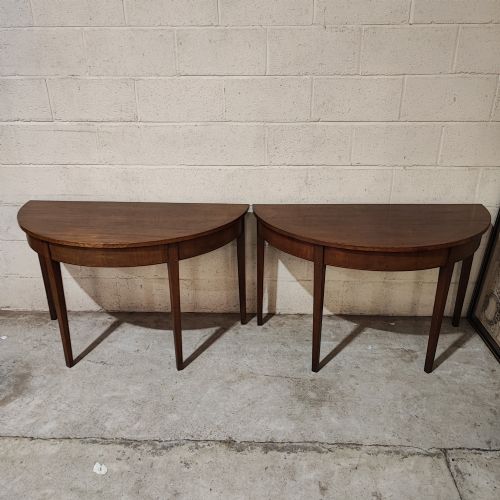
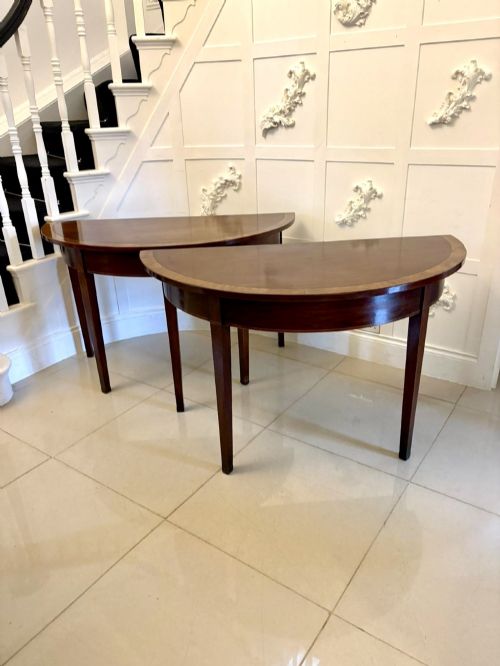
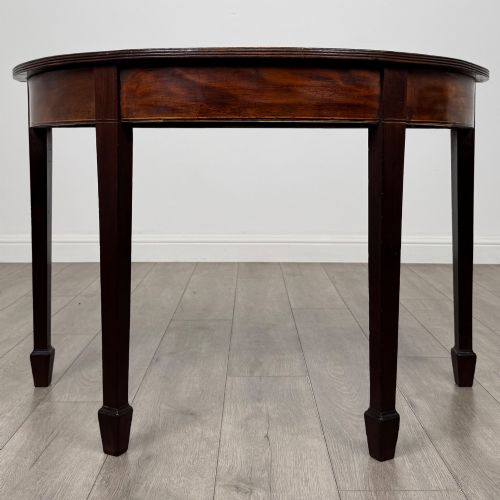
A mahogany half moon table stands flush against a wall, offering a graceful semicircular surface shaped for elegance and utility in period interiors.
Mahogany Half Moon Table
A mahogany half moon table, frequently encountered as a console or card table, is defined by its distinctive semicircular footprint. These pieces emerge predominantly from the Georgian, Regency, and Victorian periods, extending into Edwardian revivals.
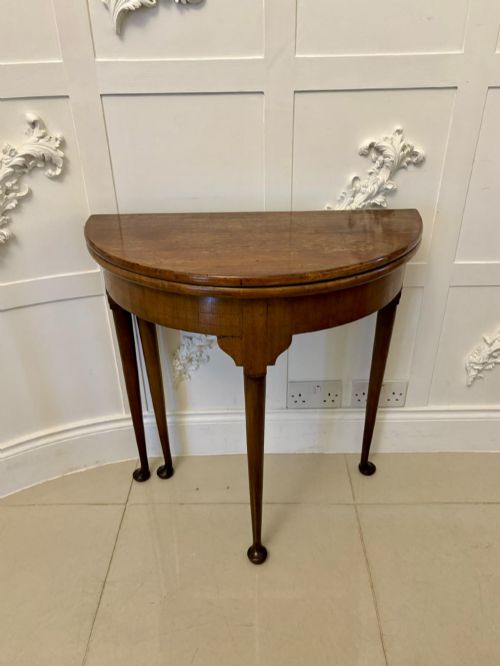
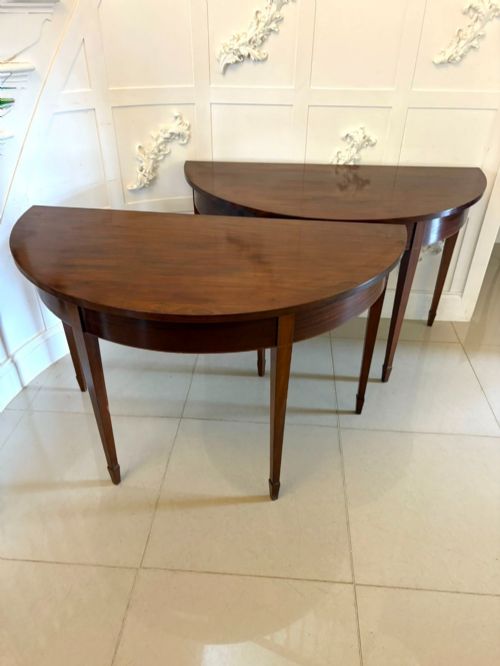
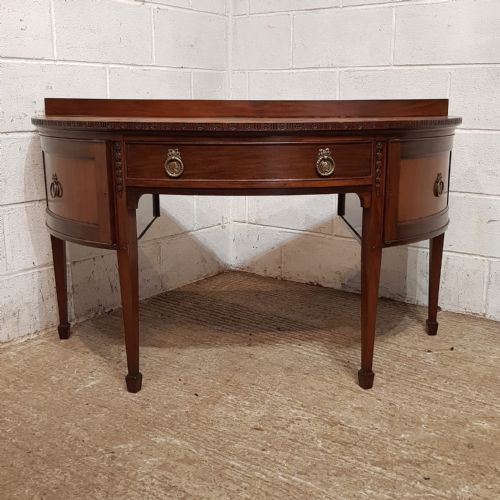
Buyers commonly meet console versions meant for display alongside fold-over card, tea, and games tables designed to adapt for evening entertainment. Pairs surface regularly, prized for balancing formal reception rooms.
Materials and Technique
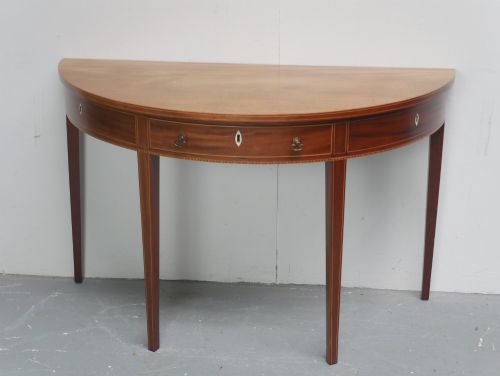
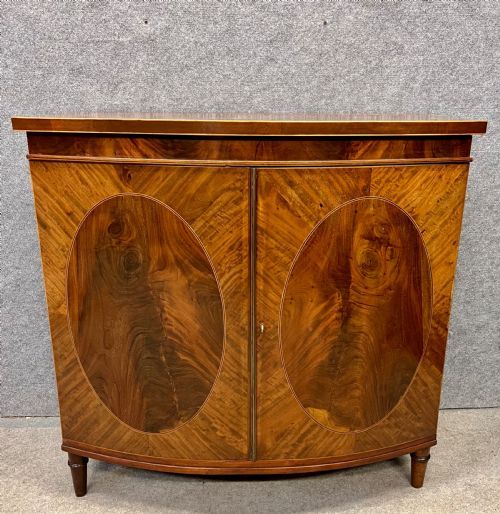
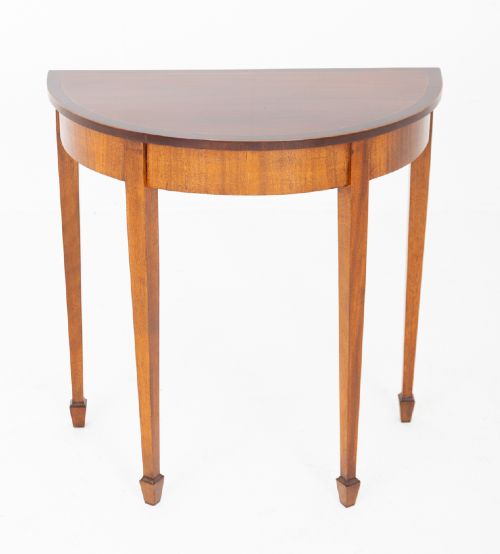
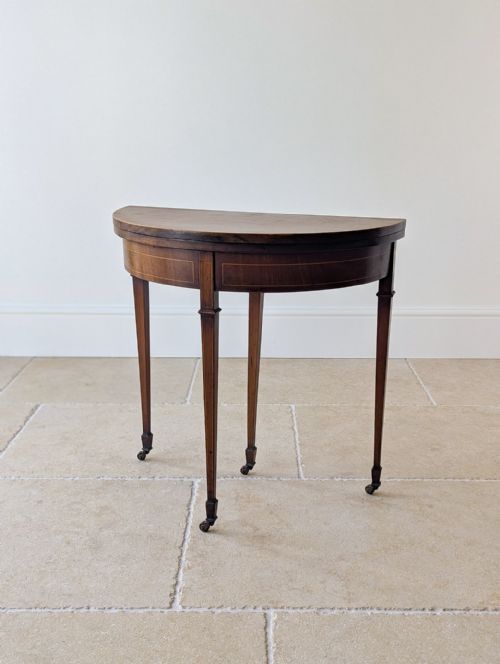
Cabinet makers utilised solid mahogany alongside finely figured wood veneer to achieve rich surface movement across the semicircular top. Boxwood and satinwood inlay often create delicate geometric stringing or neoclassical motifs along the borders and legs.
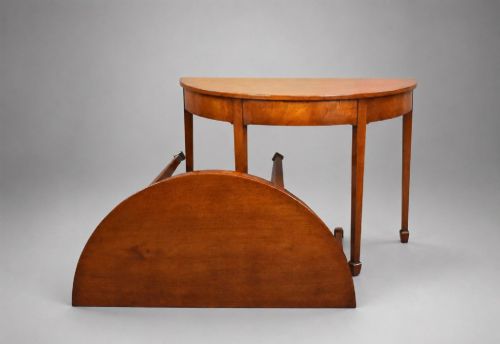
Structural integrity relies on traditional joinery supporting hinged leaves or pivoting rear legs that swing outward to support fold-over tops. Secondary timbers such as fruitwood or pine support internal framing concealed beneath the primary polished surfaces.
Listings feature mahogany alongside satinwood, boxwood inlay, and fruitwood across Georgian, Victorian, and Edwardian periods.
Craftsmanship and Proportion
The distinction between ordinary and exceptional examples rests in the selection of figured mahogany and the crispness of any inlaid boxwood or satinwood work. Superior pieces display harmonious proportions where the legs align perfectly with the curve of the frieze.
Hinged mechanisms on card and tea tables reveal the care taken in construction, operating smoothly without sagging when extended. Finer iterations exhibit thoughtful detailing like spade feet, painted accents, or carved borders that elevate the silhouette.
The Mahogany Half Moon Table Glossary
- Demi-lune
- A French term meaning half-moon, commonly used interchangeably with semicircular to describe tables built to fit flat against a wall.
- Console table
- A wall-mounted or freestanding table designed primarily for display rather than heavy dining use.
- Card table
- A folding table with a hinged top that opens to reveal a baize-lined playing surface for games.
- Inlay
- A decorative technique where contrasting woods like satinwood or boxwood are set flush into the mahogany surface.
- Frieze
- The horizontal band running directly beneath the tabletop, occasionally fitted with a concealed drawer.
Mahogany Half Moon Table: Frequently Asked Questions
Where should I place a half moon table?
These pieces suit narrow hallways, entrance foyers, or drawing rooms where floor space is limited. Their flat backs allow them to sit snugly against walls without obstructing pathways.
Fold-over versions work well in living areas where they can double as occasional display surfaces or game tables when entertaining.
How do I identify a Georgian piece?
Georgian examples display specific characteristics such as hand-cut dovetails, timber shrinkage appropriate to age, and classic proportions associated with the eighteenth century. They frequently feature tapered legs or subtle boxwood stringing rather than heavy Victorian ornamentation.
Examining the underside and secondary framing reveals the hand tool marks typical of period workshop construction.
Can I use a card table daily?
Fold-over card and tea tables function well for everyday use provided the mechanical hinges and pivoting rear legs are handled with care. The internal wooden pivot supports the extra weight when the top is opened.
Placing them on level flooring prevents undue stress on the structural joints during opening and closing.
What is satinwood inlay?
Satinwood inlay involves setting pale, lustrous yellow wood veneers into contrasting dark mahogany to create decorative borders, fans, or oval medallions. This technique gained immense popularity during the Sheraton and revival periods.
The crispness of the contrast often indicates the precision of the cabinet maker's hand.