





Georgian Graduated Chest Drawers
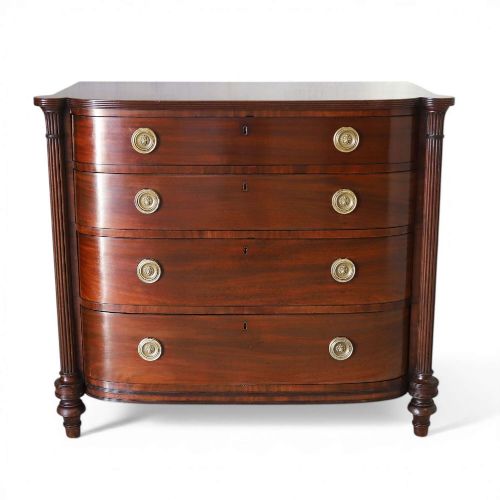
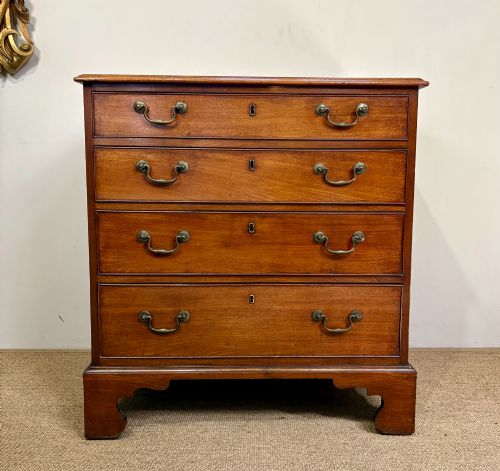
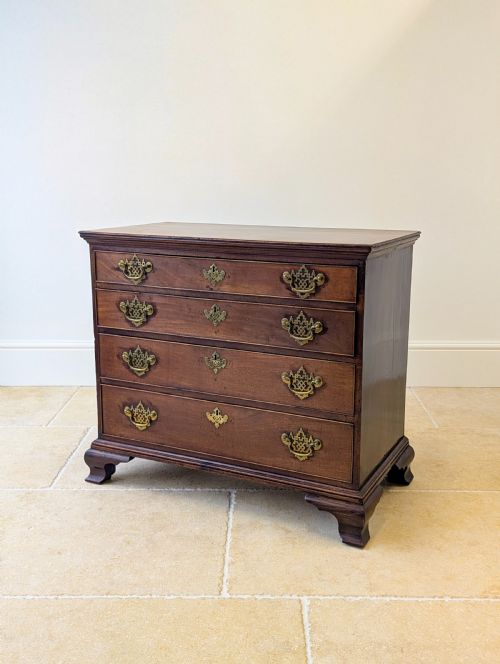
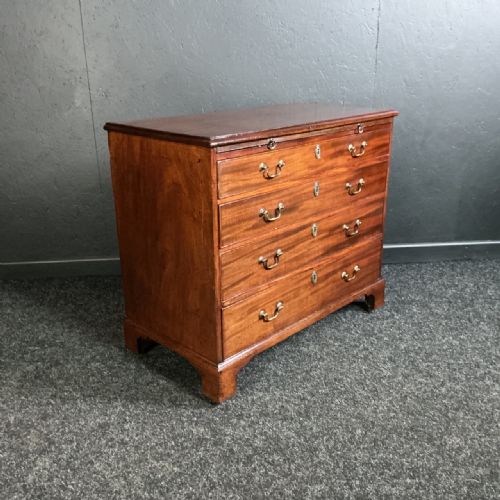
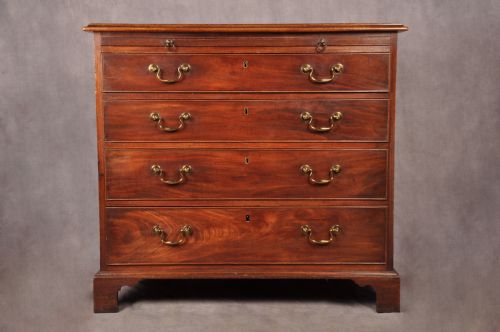
A georgian graduated chest drawers brings architectural proportion and generous storage into a room, crafted in rich timber with descending drawer depths.
Georgian Graduated Chest Drawers
When searching for a georgian graduated chest drawers, a buyer encounters substantial timber case furniture built to serve as bedroom or dressing storage. These pieces originate primarily from the eighteenth and nineteenth centuries, spanning George II, George III, and Scottish Regency periods.
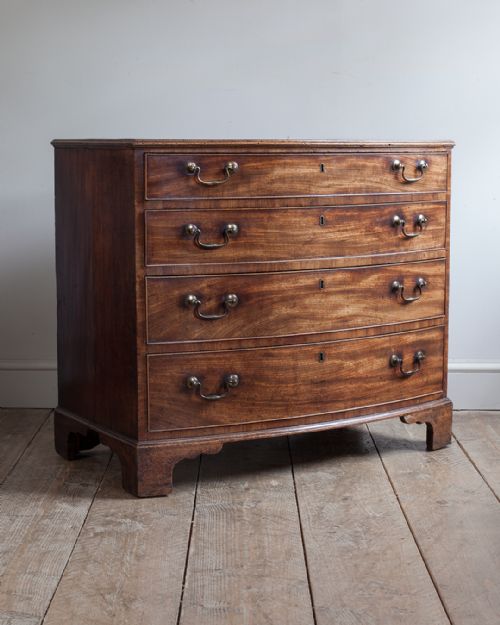
The form most frequently met on this page is the mahogany chest of drawers, often featuring bow fronts or serpentine shapes alongside straight configurations. Examples range from compact small proportions to larger chest on chest designs and dressing variants.
Origins include pieces fashioned from oak, cedar, yew wood, and rosewood, as well as figured and flame mahogany. Construction typically incorporates graduated drawers arranged in rows of four, five, or six.
Makers and craftsmen of these eras produced practical carcases that rely on the natural grain of the wood for visual impact. The defining characteristic remains the proportional reduction in drawer depth from top to bottom.
How they were made
Joiners and cabinet makers constructed these carcasses using solid timbers such as mahogany, oak, cedar, and yew wood, frequently applying flame mahogany veneers to primary drawer fronts. The structural integrity relies on traditional joinery methods that allow the timber to expand and contract with seasonal humidity.
Brass hardware, including drop handles and escutcheons, is fitted to secure the drawers and accent the dark grain of the timber. Surfaces receive hand-rubbed finishes that highlight the varied figures of rosewood, walnut, and mahogany.
Some chests hide sliding shelves behind their top drawers, ready to hold morning linen.
What varies in quality
The division between standard and superior examples rests upon the selection of timber figures and the finesse of the cabinetwork. Pieces utilising highly figured flame mahogany or dense rosewood exhibit a greater visual depth than plain oak or standard mahogany.
Proportion and execution of secondary details, such as serpentine or bow fronts, dictate the refinement of the piece. Superior items maintain clean lines and harmonious scaling across all graduated drawers.
The Georgian Graduated Chest Drawers Glossary
- Graduated drawers
- Drawers that decrease in depth progressively from the bottom to the top of the chest. This arrangement creates a balanced visual perspective on the facade.
- Bow front
- A convex curved front facade that projects outward in the centre. This style gained popularity during the Georgian and Regency periods.
- Serpentine
- A front facade formed of a concave central section flanked by two convex ends, or the reverse. The undulating line requires advanced woodworking skill.
- Chest on chest
- A tall storage unit formed of two distinct carcases stacked vertically, with a smaller chest sitting atop a wider base. This form maximises storage capacity while maintaining floor space.
- Flame mahogany
- A veneer cut from the branch junction of a mahogany tree that creates a distinctive flickering flame pattern. Cabinet makers used this timber on prominent surfaces.
Georgian Graduated Chest Drawers: Frequently Asked Questions
What is a graduated chest of drawers?
A graduated chest of drawers is a storage unit where each descending drawer is deeper than the one above it. This design creates a balanced appearance and accommodates larger items at the bottom.
Such pieces date predominantly from the eighteenth and nineteenth centuries, constructed in mahogany, oak, or cedar by period joiners.
How do I identify a George III chest?
George III chests typically display refined mahogany construction, often featuring brass drop handles and bracket feet. The proportions are balanced, and many examples incorporate bow fronts or sliding shelves.
Examining the secondary timbers inside the drawers helps confirm the period of manufacture alongside the exterior style.
What woods were used for Georgian chests?
Cabinet makers of the Georgian era predominantly utilised mahogany, oak, and cedar for these chests. Figure variations like flame mahogany appear on high-status examples.
Alternative timbers such as yew wood, rosewood, and walnut also feature across different regional workshops and stylistic periods.
Where were these chests placed originally?
These pieces served as primary bedchamber furniture for storing garments and linens. Dressing chests also incorporated surface space for personal grooming.
Today, they function equally well in hallways, living rooms, and bedrooms to provide substantial concealed storage.