
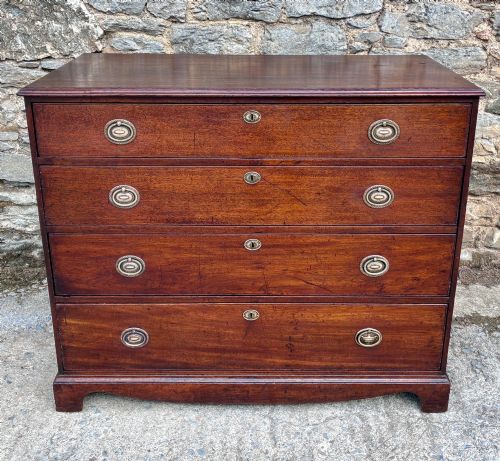
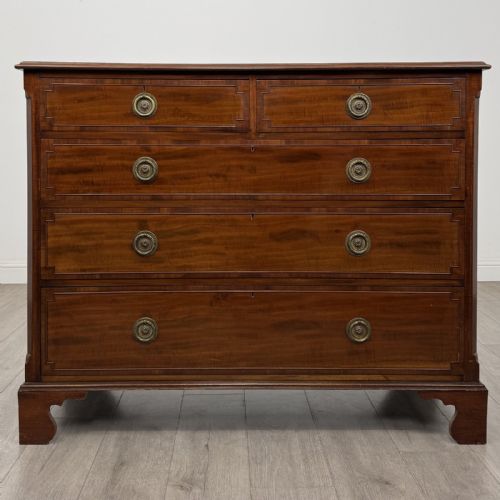
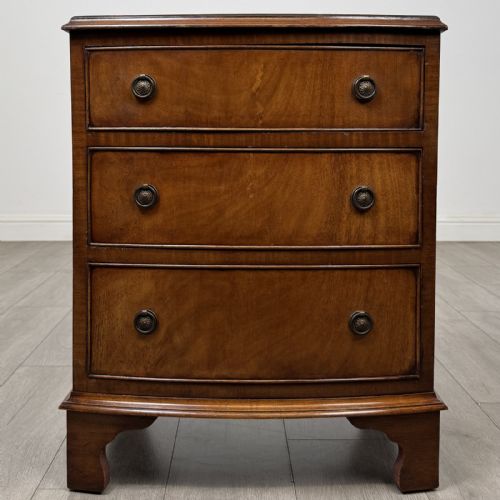
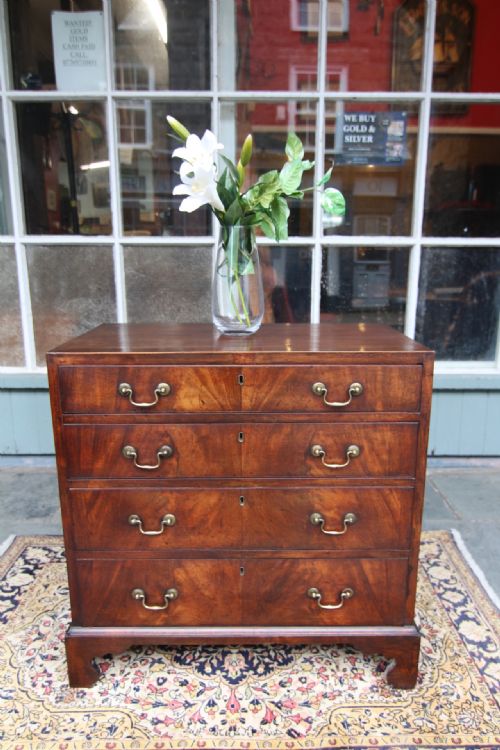
Mahogany Furniture Storage
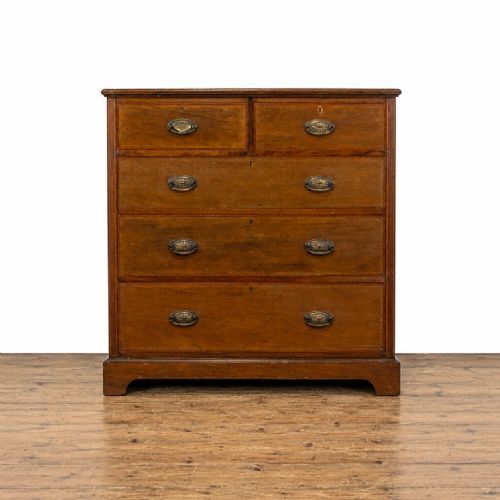
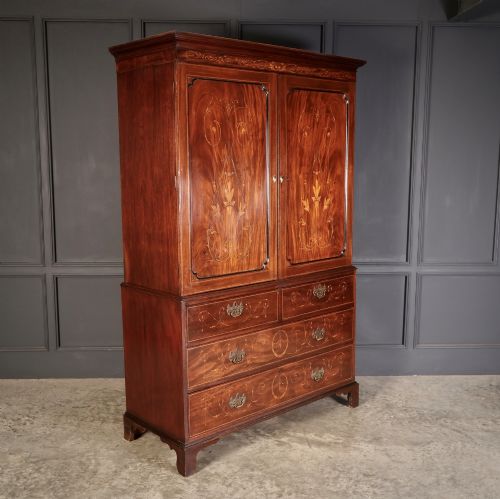
Mahogany furniture storage takes many forms here, spanning chests of drawers, bookcases and linen presses designed to hold household goods with enduring strength.
Mahogany Furniture Storage
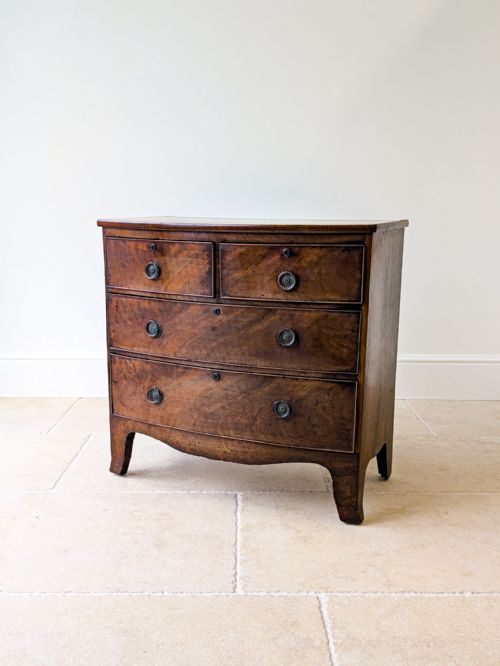
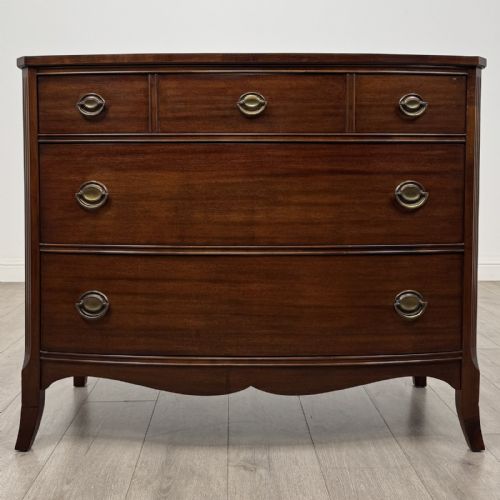
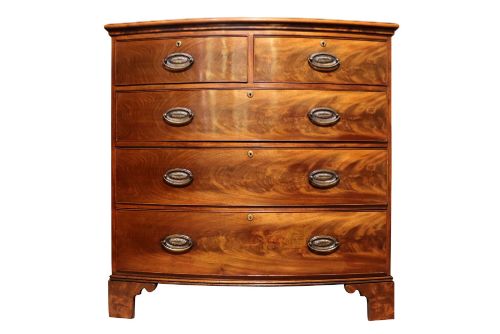
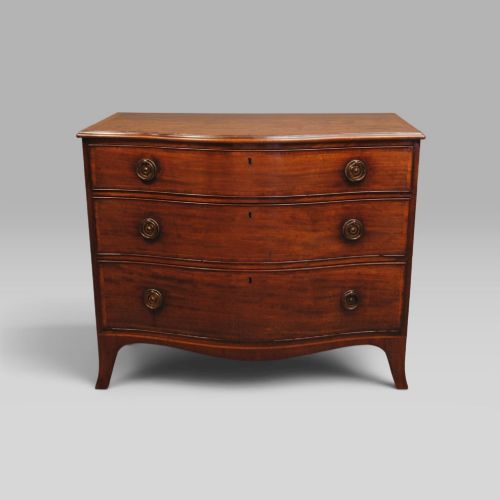
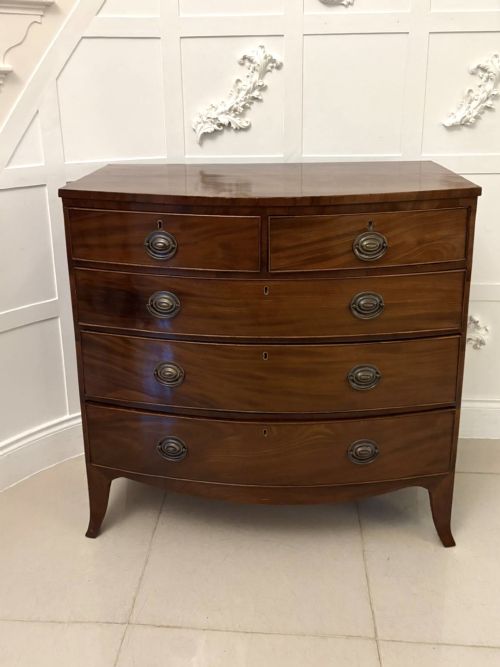
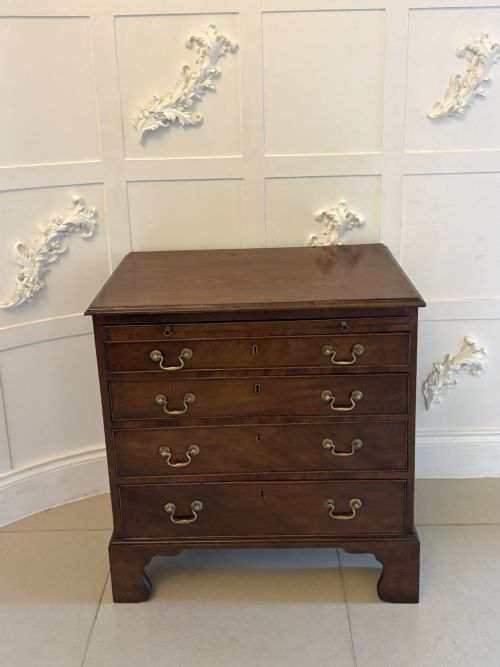
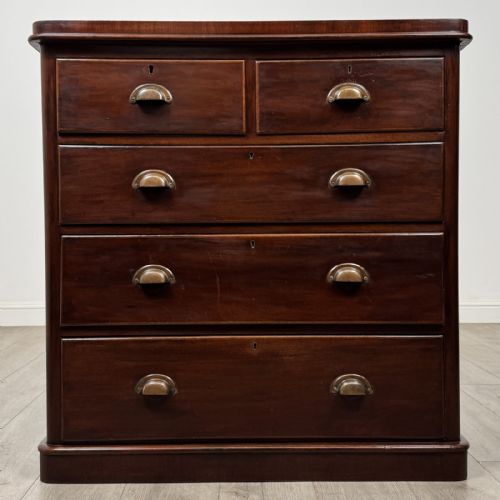
Mahogany furniture storage encompasses practical receptacles built across the Georgian, Regency, Victorian, and Edwardian eras. Chests of drawers dominate the selection, appearing in bow front, serpentine, and tallboy configurations.
Buyers also encounter linen presses, music cabinets, bookcases, and specialised pieces such as military campaign chests and filing drawers. These items originate from workshops and periods ranging from the eighteenth century through to the early twentieth century.
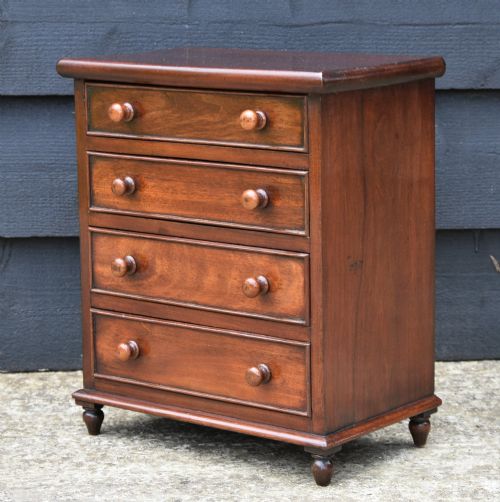
The assortment balances large storage capacity with compact forms, including miniature furniture and narrow cabinets suited to diverse interior spaces.
How they were made
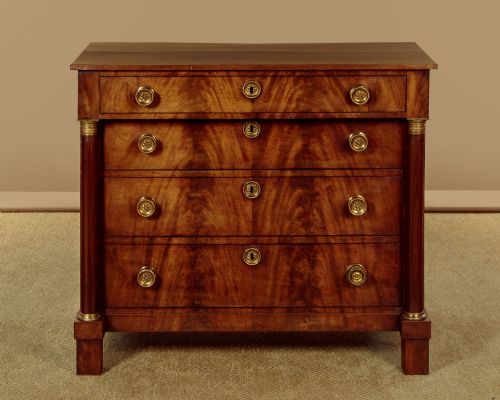
Cabinet makers utilised solid mahogany alongside flame mahogany veneer to achieve rich surface grain and depth. Secondary timbers such as oak frequently form drawer linings and internal carcases.
Decorative detailing incorporates brass handles, satinwood inlay, and crossbanded tops. Glass panels appear on bookcases, while leather tops distinguish specific campaign storage forms.
Listings feature periods spanning from the Georgian era through to 1920, utilising mahogany, flame mahogany veneer, oak, glass, and satinwood.
What varies in quality
The refinement of the timber selection dictates visual merit, separating plain surfaces from highly figured flame mahogany veneers. Precision in cabinet construction, such as tightly dovetailed drawer joints and balanced proportions, marks superior production.
Original hardware, including brass handles and escutcheons, preserves historical integrity. Finer examples maintain crisp inlay work and uncompromised structural stability across carcases and legs.
Whytock and Reid·T and G Seddon·GM Elwood for JS Henry·Denby and Spinks
The Mahogany Furniture Storage Glossary
- Flame mahogany veneer
- A thin slice of wood cut from timber fork growth, displaying a distinctive flamy or mottled pattern. Cabinet makers applied this to drawer fronts for decorative impact.
- Bow front
- A convex curved cabinet or chest front that swells outward at the centre. This shape gained popularity during the Georgian and Regency periods.
- Tallboy
- A tall chest of drawers built in two sections, typically stacking a shorter set of drawers upon a larger base. It maximises vertical storage capacity.
- Linen press
- A large tall cupboard enclosing sliding trays or shelves originally used for storing household linen. Lower sections frequently incorporate functional drawers.
- Crossbanding
- A narrow strip of veneer applied across the grain direction around the perimeter of a tabletop or drawer front. It creates a contrasting border effect.
Mahogany Furniture Storage: Frequently Asked Questions
What is a Wellington chest?
A Wellington chest is a tall, narrow set of drawers secured by a hinged vertical locking strip on one side. This locking bar fastens with a key to secure all drawers simultaneously.
Originating in the nineteenth century, these pieces provided secure storage for documents or personal items in compact floor spaces.
How do I identify a military campaign chest?
Military campaign chests feature recessed brass handles and corner brackets designed to prevent snagging during transport. They are typically built in two separate sections for ease of movement.
Many examples incorporate a writing surface or leather top within the upper drawer configuration.
What is a brushing slide?
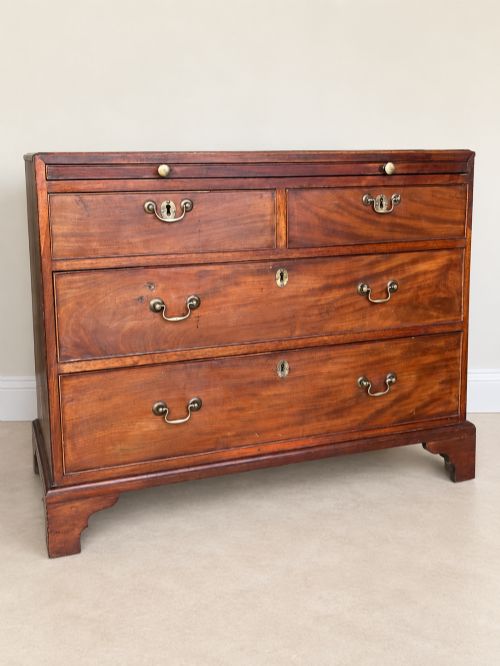
A brushing slide is a pull-out wooden shelf integrated above the top drawers of a chest or chest on chest. It provided a clean surface for folding clothes or brushing garments.
This feature appears frequently on Georgian mahogany pieces designed for domestic dressing rooms.
How do I tell a Georgian chest from a Victorian one?
Georgian chests generally display cleaner architectural lines, finer bracket feet or ogee feet, and subtle cockbeading around drawer edges. Woods selected often show rich figuring without excessive heavy ornamentation.
Victorian chests tend to exhibit heavier proportions, bolder feet or plinth bases, and sometimes darker finishes or more pronounced applied mouldings.