
Dark Wood Bedroom Dresser
These dark wood bedroom dresser examples are robust storage pieces spanning multiple centuries, offering deep drawers and rich timber grains for practical interiors.
Dark Wood Bedroom Dresser
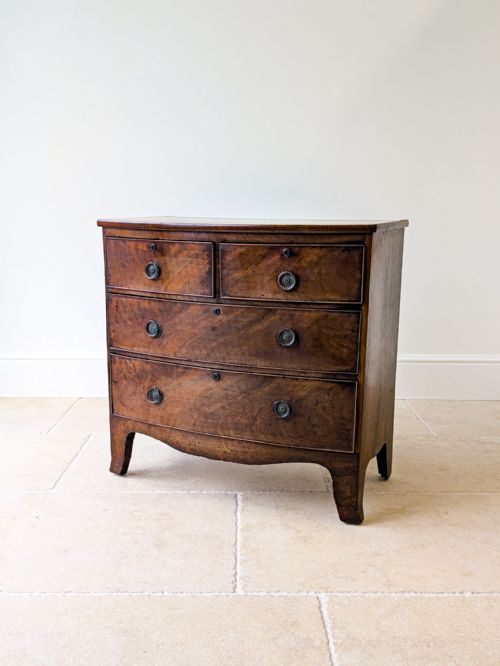
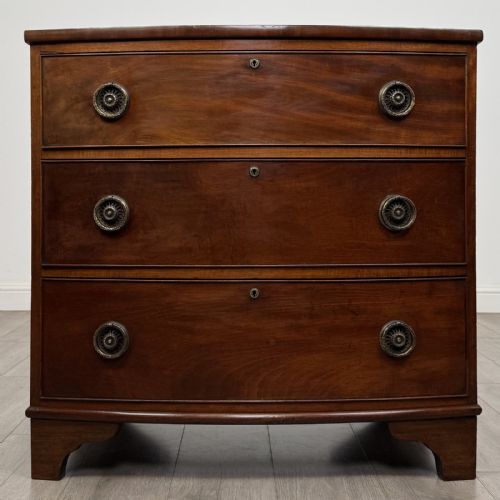
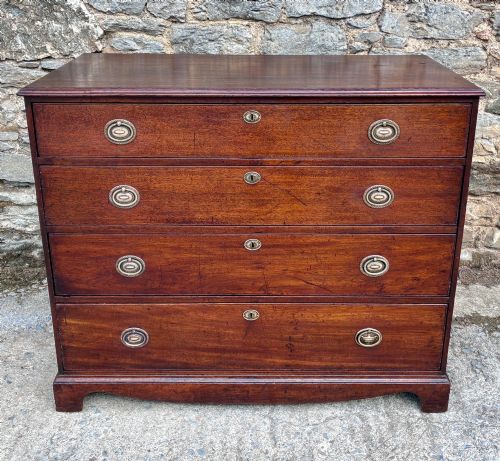
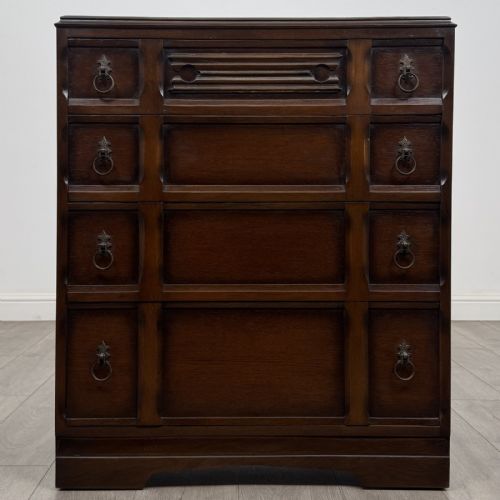
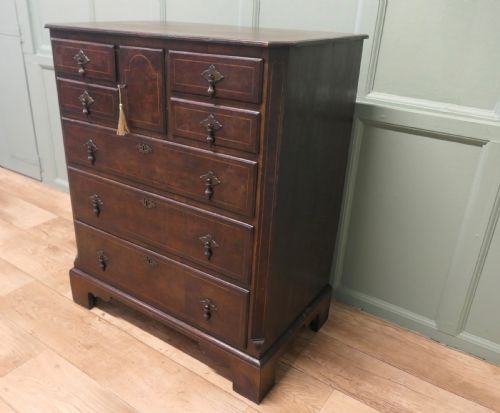
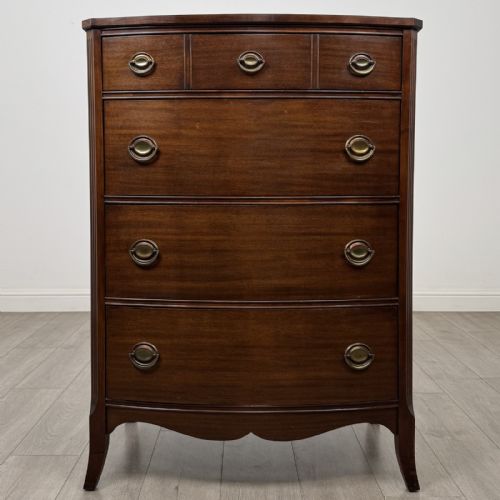
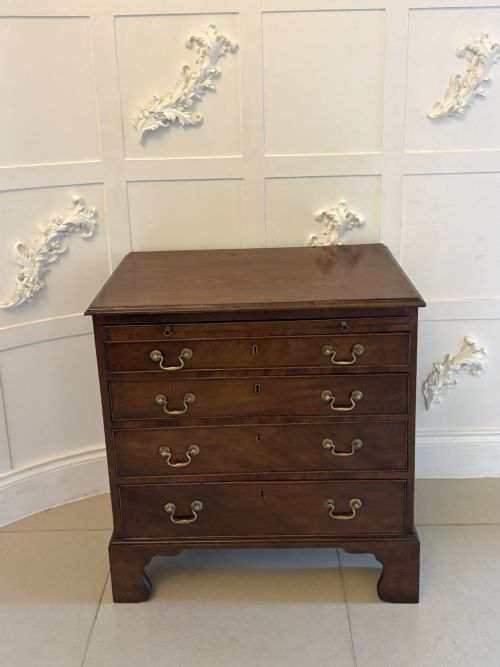
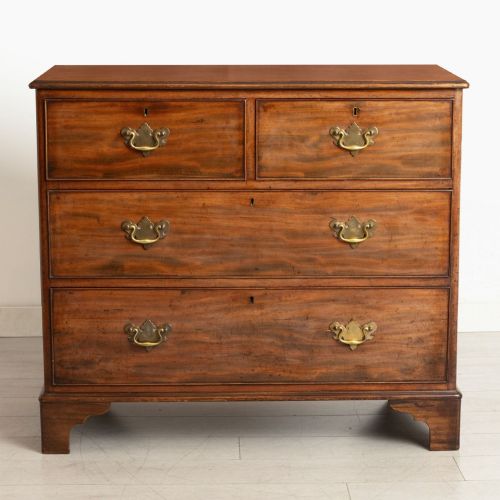
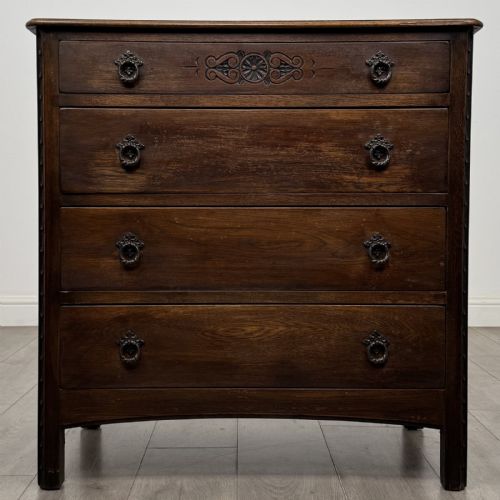
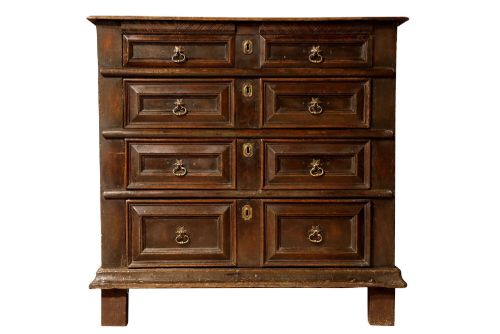
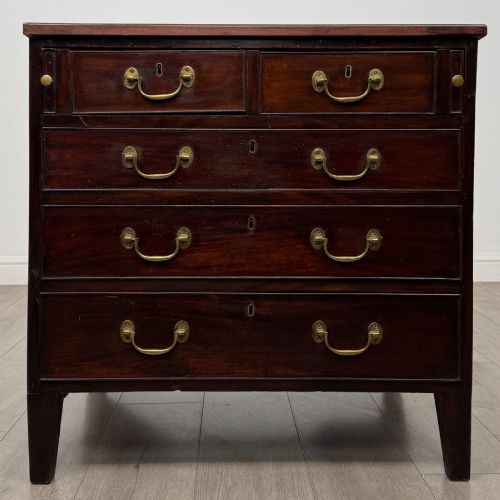
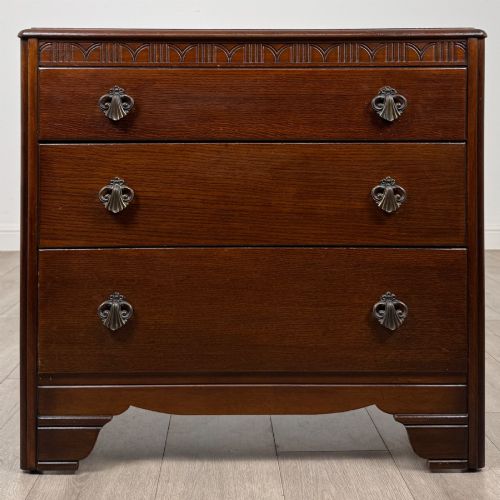
A dark wood bedroom dresser typically takes the form of a chest of drawers, built in various sizes from compact small units to tall proportions. These storage items serve bedrooms by providing deep drawer capacity paired with decorative timber surfaces.
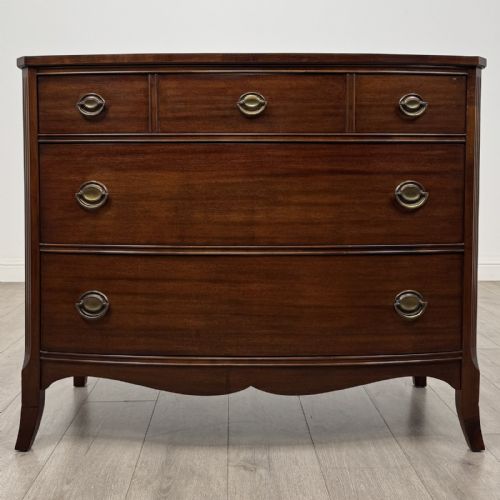
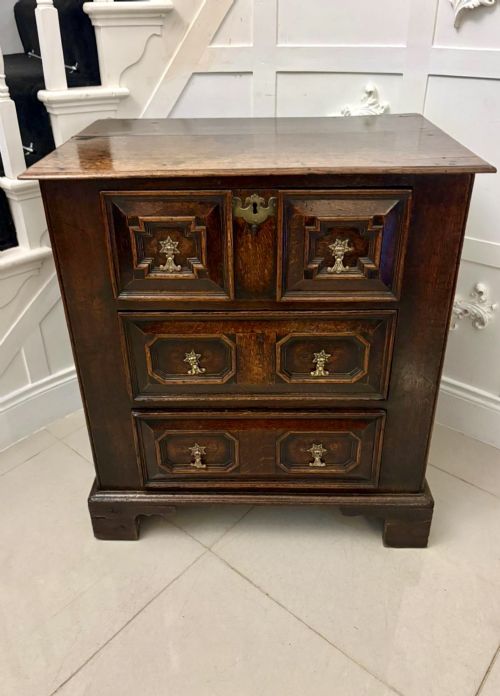
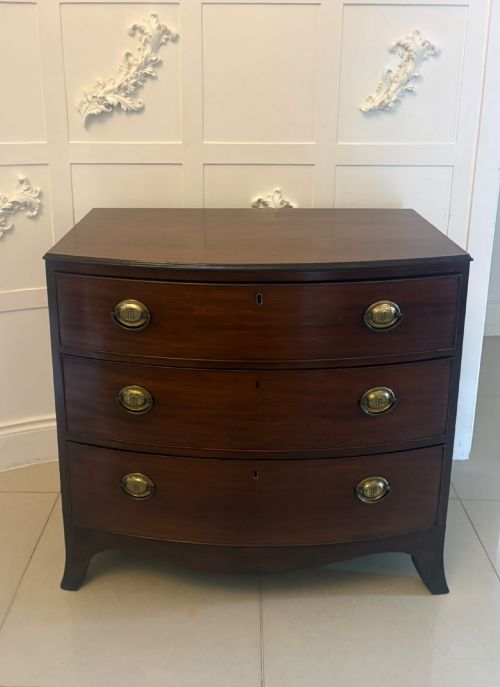
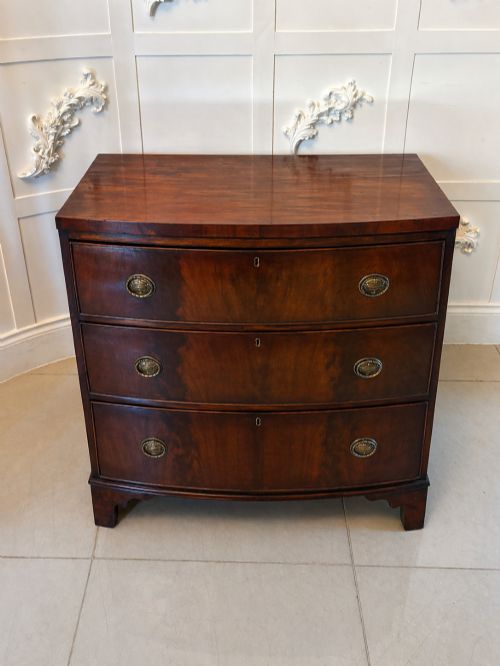
The pieces on this page span several centuries, with particular emphasis on 18th century Georgian designs and later 19th century Victorian interpretations. Buyers encounter forms ranging from simple rectangular boxes to bow front and serpentine profiles.
How they were made
Cabinet makers constructed these pieces primarily using solid timbers like mahogany, oak, and pine, frequently applying flame mahogany veneer for decorative fronts. Structural elements often incorporate brass handles and occasional marble tops.
Construction techniques relied on traditional joinery methods suited to each period, from early Charles II oak framing to the refined curves of George III serpentine designs. Timber selection dictated whether a piece received a flat finish or detailed floral inlay.
The listings span multiple centuries, ranging from seventeenth century Charles II oak pieces to twentieth century Edwardian examples.
What varies in quality
Quality rests heavily on the choice of timber and the execution of cabinet work, distinguishing standard production from superior craftsmanship. Dense Cuban mahogany and figured flame veneers indicate high-status commissions.
The sophistication of the drawer fronts, such as sweeping bow fronts or complex serpentine shapes, demonstrates the skill required by the maker. Subtle details like integrated writing brushes and slides further elevate the standing of a piece.
Whytock and Reid·T and G Seddon
The Dark Wood Bedroom Dresser Glossary
- Bow front
- A convex curved cabinet front that projects outward in the centre, common in Georgian designs.
- Serpentine
- A front profile featuring a concave central section flanked by two convex curves, demanding high cabinet-making skill.
- Flame mahogany
- A timber veneer displaying a flamelike figure, prized for its dramatic pattern on drawer fronts.
- Writing slide
- A pull-out board integrated into the upper section of a chest, used originally for correspondence.
Dark Wood Bedroom Dresser: Frequently Asked Questions
What is a dark wood bedroom dresser?
A dark wood bedroom dresser refers to a traditional chest of drawers constructed from timbers such as mahogany, oak, or walnut. These pieces provide substantial storage capacity through stacked drawers housed within a sturdy wooden cabinet.
Originating across multiple centuries, they combine functional bedroom utility with decorative cabinet work, featuring styles from plain early oak boxes to elaborate serpentine Georgian fronts.
How do I date a wooden chest?
Dating a chest involves examining the timber species, construction methods, and overall architectural style. Pieces from the seventeenth century often utilise solid oak with pegged joints, whereas eighteenth-century examples frequently employ mahogany and delicate veneers.
Hardware styles, drawer linings, and secondary woods like pine also help determine the period of manufacture. Regional variations, such as Channel Islands or Scottish furniture, offer further clues to origin.
Where should I place a dresser?
These chests suit bedroom environments where deep drawer storage is required for clothing and linens. Their flat top surfaces also accommodate lamps, mirrors, or decorative display objects.
Placement should avoid direct heat sources and strong sunlight to protect historic timber finishes and prevent veneer lifting. Adequate clearance is necessary for drawers that feature pull-out writing slides.
How do I care for antique timber?
Maintaining antique wood involves keeping pieces away from sudden temperature fluctuations and moisture. Regular dusting with a soft, dry cloth preserves the finish without building up chemical residues.
Occasional application of appropriate wax nourishes the timber and protects the surface. Avoid placing damp items directly onto the wood to prevent staining.