



Georgian Gothic Cabinet
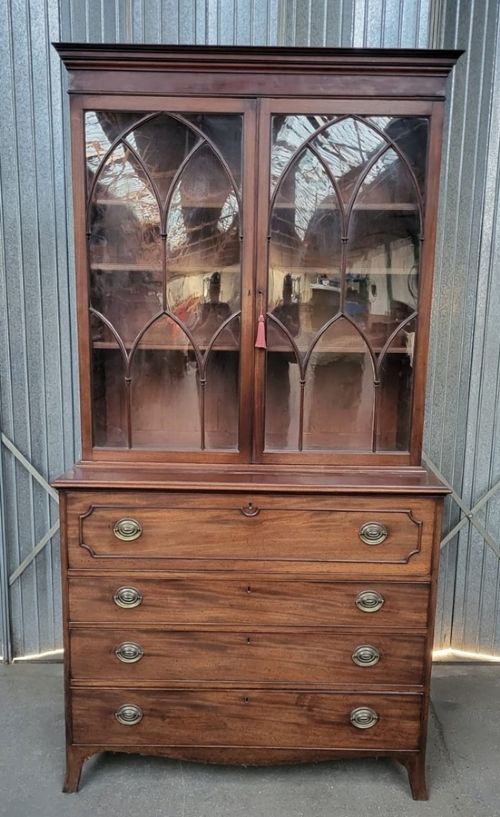
A georgian gothic cabinet brings together architectural pointed arches and fine cabinet-making to store books and treasures with distinct authority.
Georgian Gothic Cabinet
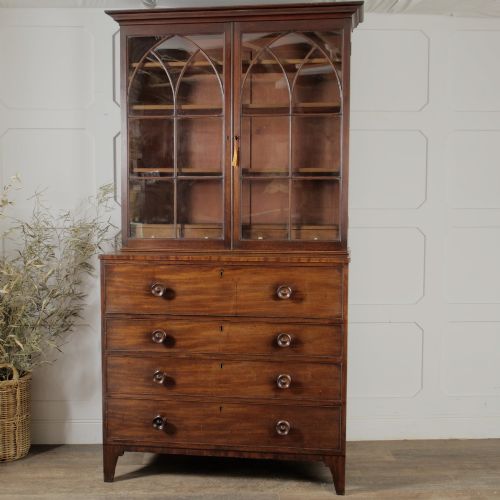
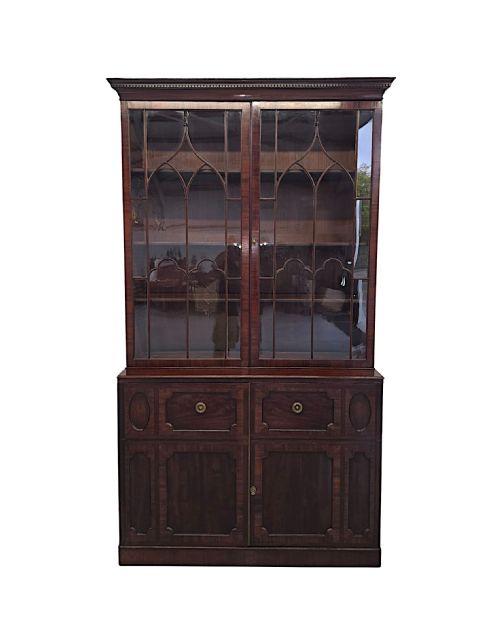
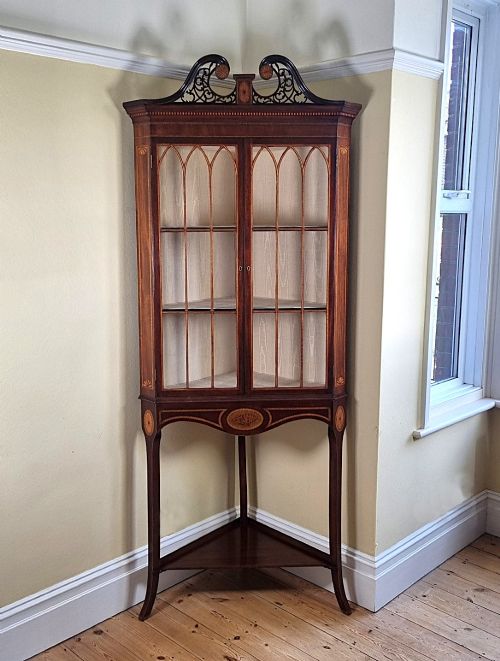
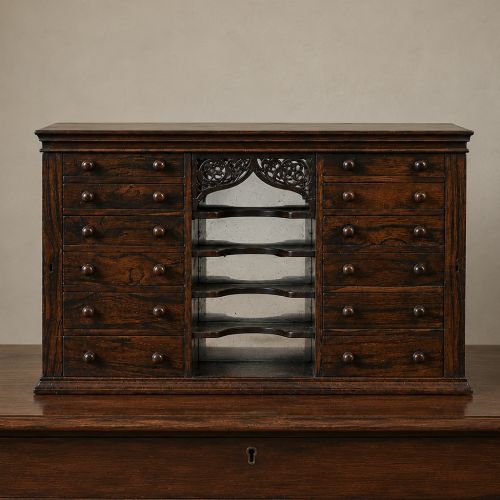
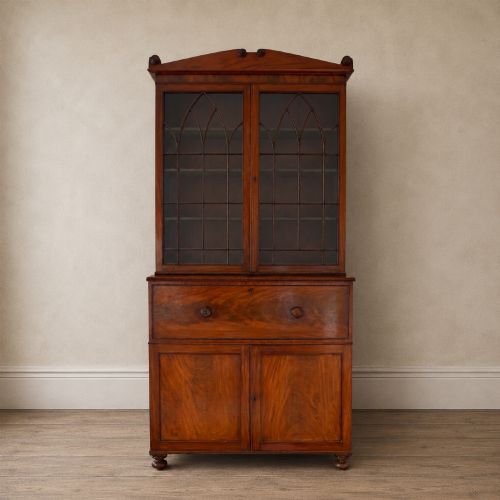
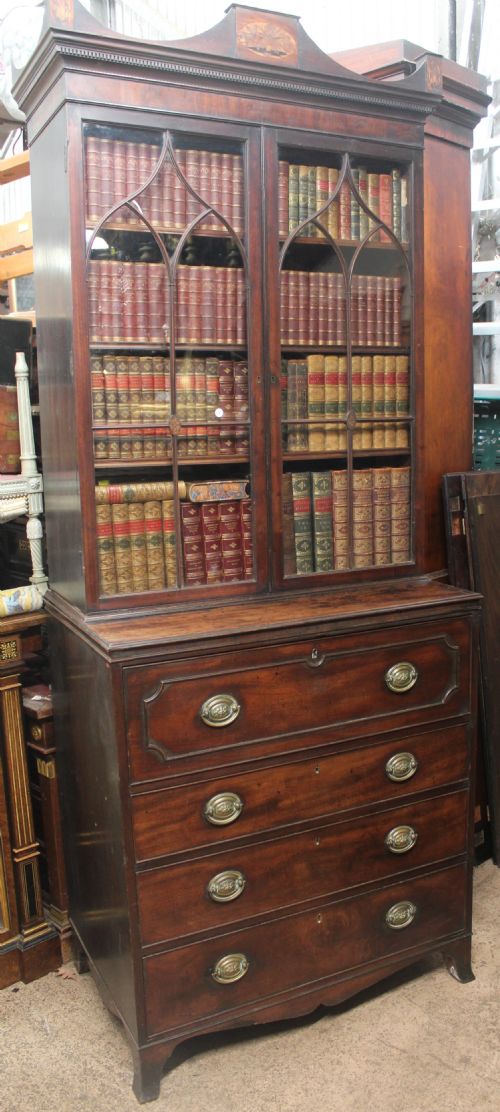
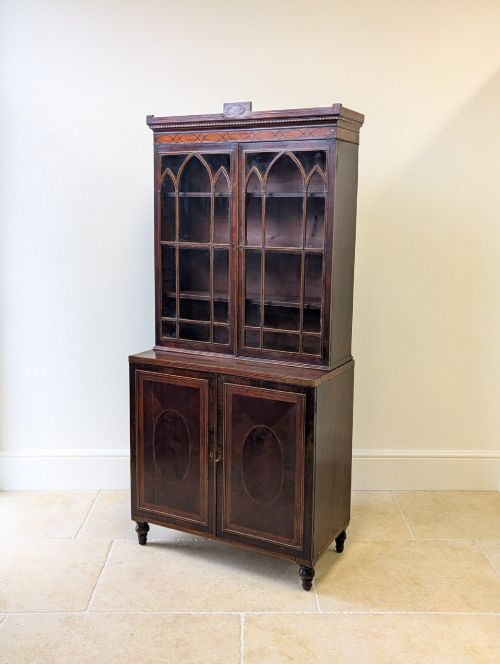
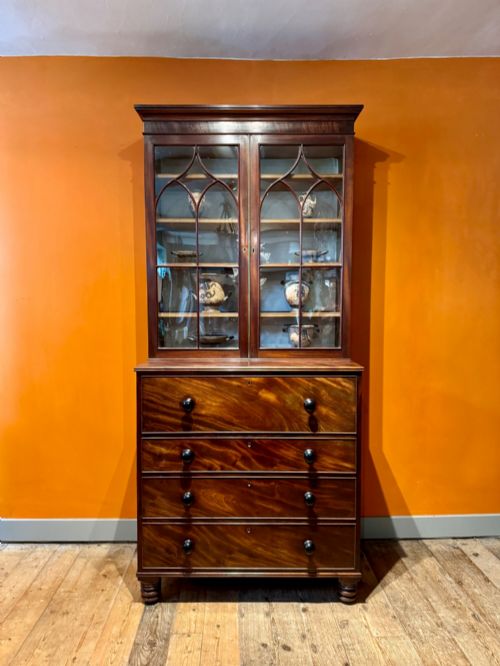
When you search for a georgian gothic cabinet, you encounter tall bookcases, secretaire bookcases, and glazed corner cabinets shaped by the Gothic Revival and Georgian periods. These pieces combine practical storage with pointed arches, tracery, and architectural elements derived from medieval buildings.
The versions most common on this page span the late eighteenth and early nineteenth centuries, often showing George III, Regency, or George IV influences. Many examples utilise breakfront designs or incorporate fitted writing drawers alongside upper display shelving.
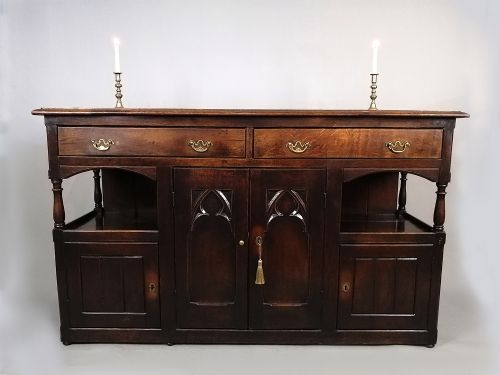
Makers and cabinet-makers of the time also produced corner cabinets and display pieces in mahogany, oak, and yew wood. Each piece reflects how eighteenth-century and nineteenth-century designers reinterpreted medieval church architecture for domestic libraries and parlours.
Materials and Construction
Makers relied heavily on solid mahogany, flame mahogany veneer, and oak, often enhancing the surface with brass hardware and glass panels for the upper doors. Timber selection dictated both the visual weight and the structural stability of tall bookcases and corner units.
Advanced woodworking techniques allowed craftsmen to build breakfront carcasses, fitted secretaire drawers with pigeonholes, and intricate glazed tracery. Secondary timbers such as pine frequently formed the internal shelving and drawer linings.
Cabinet-makers constructed doors with delicate astragals to hold individual panes of glass, mirroring the pointed window designs characteristic of Gothic Revival architecture.
Among the stately bookcases and refined display cabinets, an unexpected eighteenth-century carving reminds us that Gothic taste could occasionally turn quite dark.
Evaluating Quality and Detail
Quality rests upon the precision of the architectural woodwork, particularly in the execution of Gothic tracery and carved details on the doors and cornice. Superior pieces maintain crisp lines and well-proportioned breakfront layouts that balance grand scale with refined ornament.
The choice of timber creates a clear distinction across the range, with figured flame mahogany veneer and carefully selected solid oak representing the higher tiers of production. Secondary wood choices and the complexity of internal fittings, such as secret compartments within a secretaire drawer, further elevate a piece.
Original glass panes, intact brass fittings, and well-preserved structural joins separate standard utility furniture from exceptional library and display cabinets.
George III·Chippendale
The Georgian Gothic Cabinet Glossary
- Secretaire bookcase
- A tall cabinet featuring a pull-down writing drawer that conceals a fitted interior of small drawers and pigeonholes below upper shelving. This form gained popularity during the Georgian period for domestic study.
- Breakfront
- A piece of furniture where the central section projects forward from the flanking outer sections. It creates a bold architectural facade on large bookcases.
- Tracery
- Openwork intersecting pattern in the upper glass doors of a cabinet, imitating the stone window designs of Gothic architecture. It defines the aesthetic of the style.
- Flame mahogany veneer
- A thin slice of mahogany timber cut from the fork of the tree where the branches meet, displaying a fiery, undulating grain pattern. Cabinet-makers applied it to primary surfaces to create dramatic visual movement.
Georgian Gothic Cabinet: Frequently Asked Questions
How do I date a gothic cabinet?
Dating relies on combining the secondary wood, structural joins, and stylistic markers such as the presence of George III or Regency period characteristics. Cabinet-makers of the eighteenth and nineteenth centuries used specific dovetailing and drawer lining methods that shift over time.
Examining the glass quality, brass hardware, and the exact nature of the Gothic tracery helps narrow the decade of manufacture between the late 1700s and mid-1800s.
Where were these cabinets used?
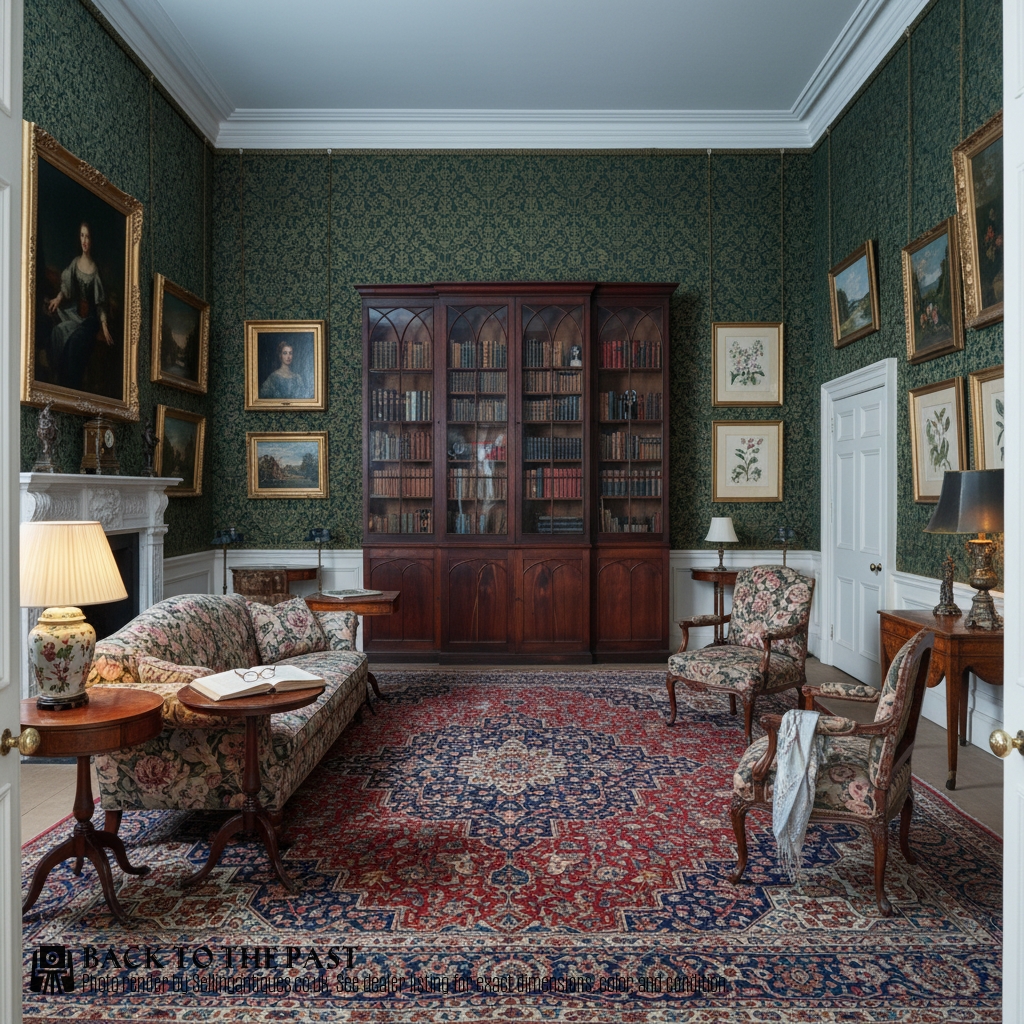
These pieces originated in grand country houses, libraries, and parlours where owners needed secure storage for valuable books and collections. Their imposing architectural presence suited formal reception rooms.
Today, they function well in similarly proportioned domestic spaces as display units for books, ceramics, or glass.
What is a secretaire drawer?
A secretaire drawer pulls out from the main body of the cabinet and drops down on hinges to reveal a writing surface. Inside, small drawers, pigeonholes, and sometimes secret compartments provide organised storage for stationery.
This clever dual-purpose design allowed a bookcase to double as a writing desk without requiring extra floor space.
How do I care for mahogany veneer?
Protect flame mahogany veneer by keeping the cabinet away from direct sunlight and sudden changes in room humidity. Consistent environmental conditions prevent the timber from drying out and the veneer from lifting.
Apply a traditional wax polish sparingly and buff with a soft cloth to maintain the natural lustre of the wood.