
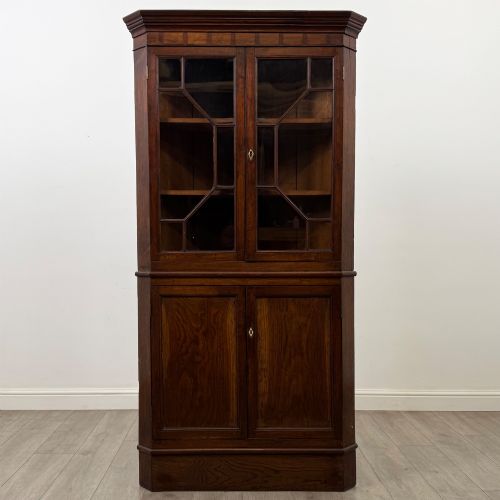
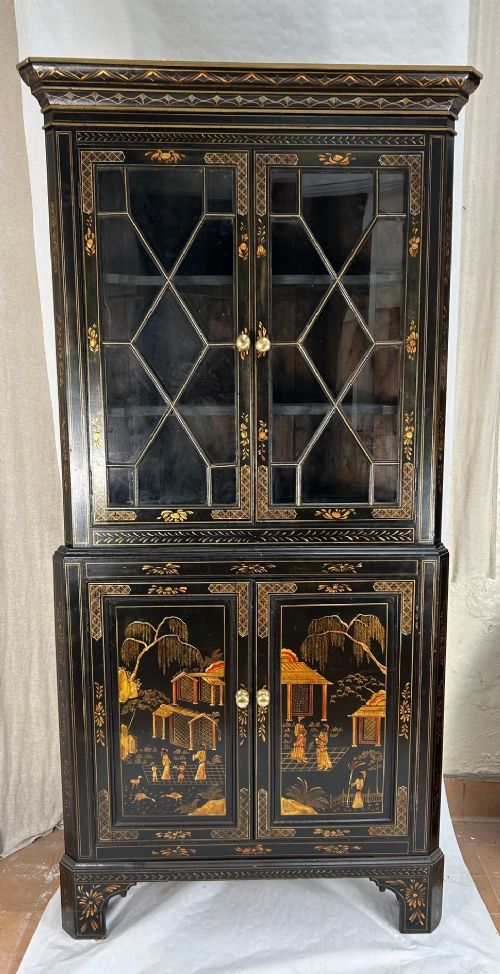
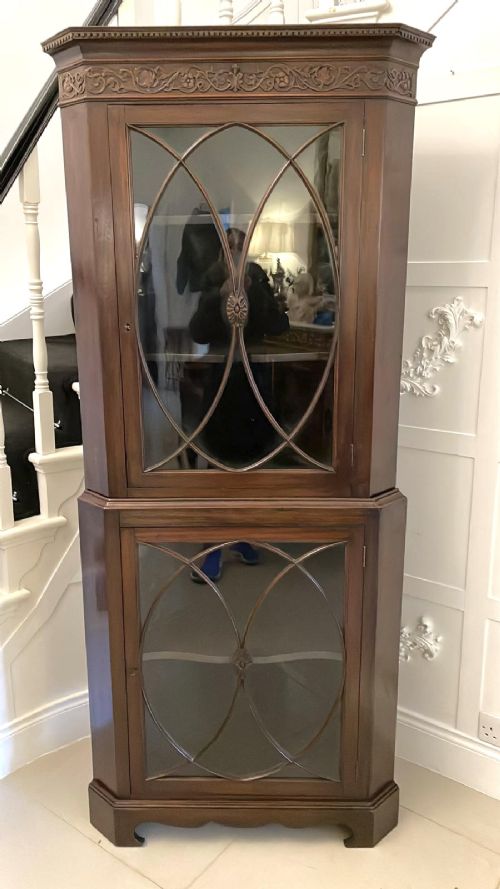
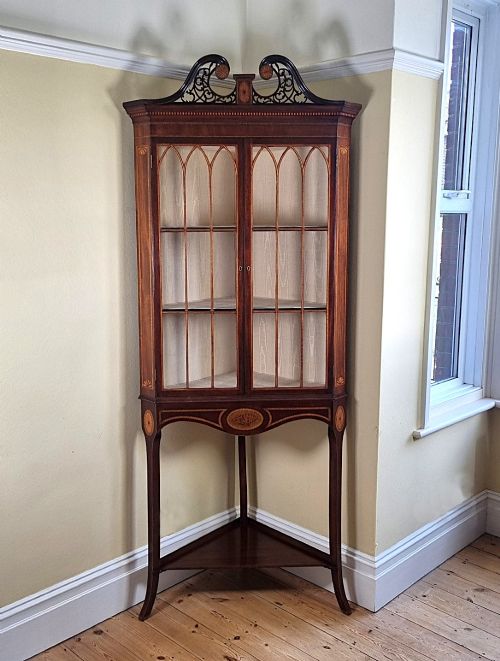




Georgian Glazed Corner Cabinet
A georgian glazed corner cabinet puts dead space to work while framing your glassware behind timber framing.
Georgian Glazed Corner Cabinet
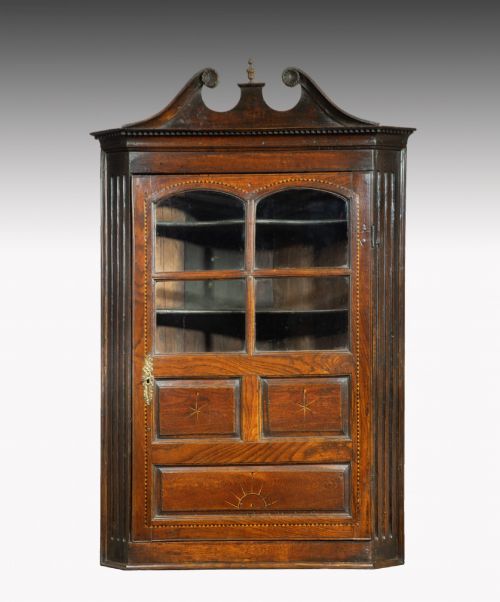
A georgian glazed corner cabinet is a triangular storage piece designed to fit neatly into a room junction. These items serve to display china and glassware while occupying otherwise wasted wall corners.
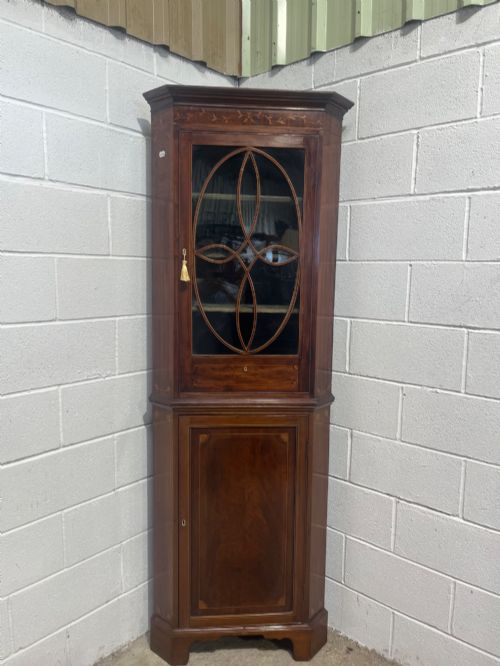
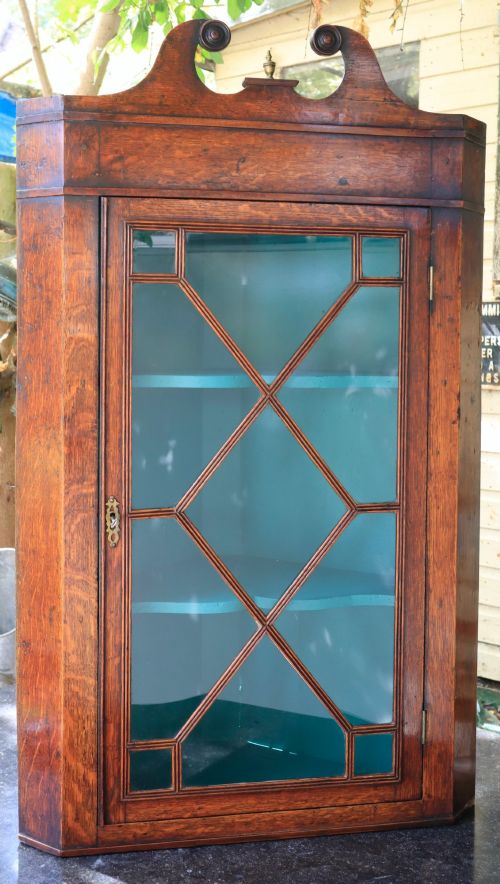
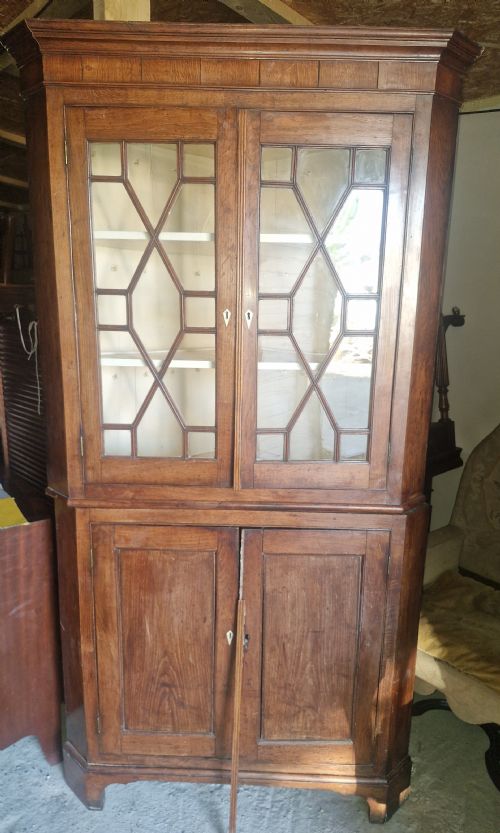
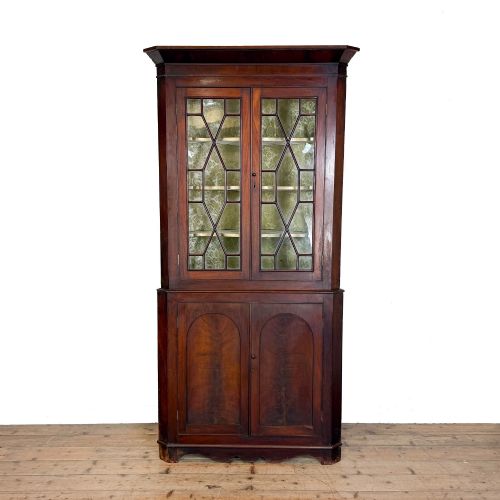
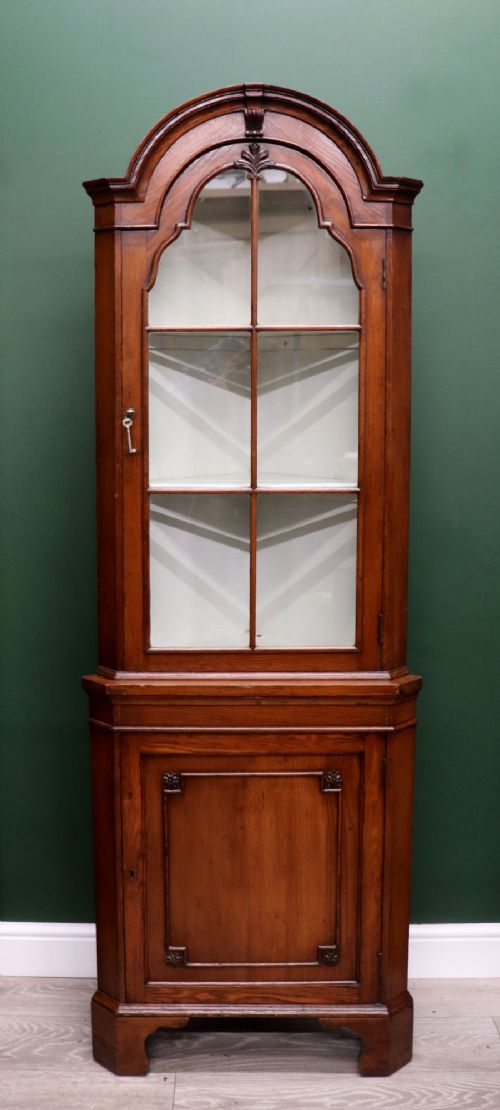
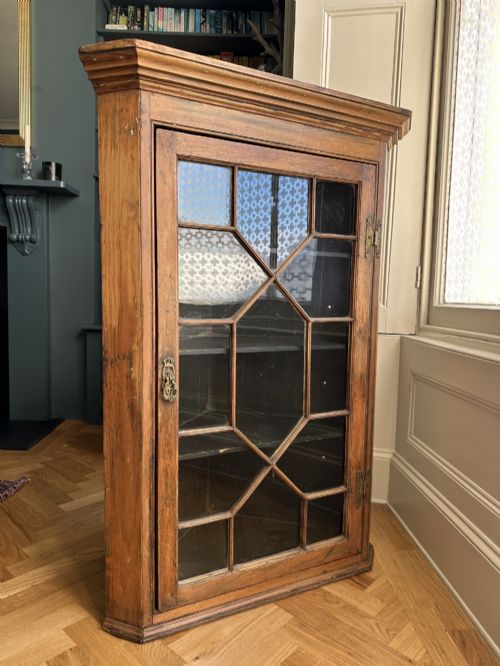
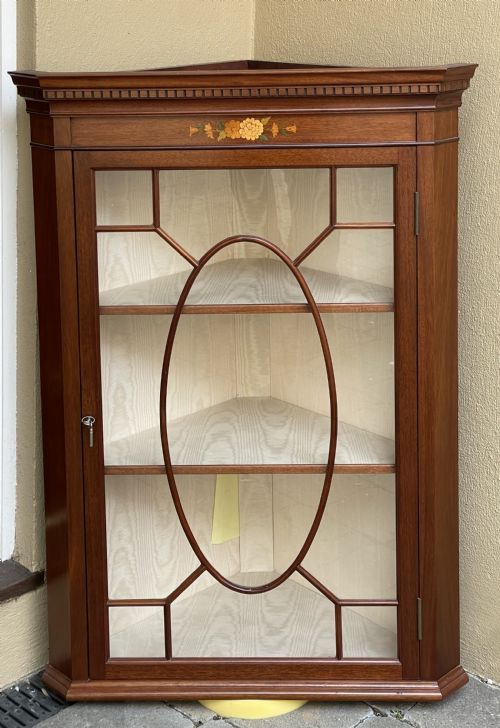
The selections here span wall-hanging variations and two-part floor-standing cupboards. Mahogany and oak dominate the timber choices, often fitted with glass doors divided by wooden astragal bars.
How they were made
Cabinet makers built these pieces using solid timbers like mahogany, oak and walnut, frequently applying satinwood inlay or cross-banded veneers for surface detail. Glass panes are held within individual wooden frames, secured by traditional joinery methods.
Interior fittings include shaped wooden shelves and occasionally painted backboards, whilst brass hinges and locking mechanisms complete the hardware.
The listings span multiple centuries, ranging from early pieces in oak and walnut through to mahogany designs of the georgian era and later Edwardian revivals.
What varies in quality
The standard of timber selection and complexity of the glazing bars dictate the relative grade of a piece. Finer examples display delicate astragal patterns and well-figured mahogany or walnut grain.
Structural division also separates simpler hanging cupboards from taller, two-part floor-standing cabinets featuring multiple doors and bracket feet.
The Georgian Glazed Corner Cabinet Glossary
- Astragal
- Wooden glazing bars that divide a glass window into smaller panes. These mouldings lend geometric structure to the cabinet doors.
- Bracket foot
- A simple supporting foot shaped like a bracket, commonly found on floor-standing cupboards. This form lifts the main body off the floor.
- Cross-banding
- A strip of veneer applied across the grain of the primary timber to form a decorative border. This technique highlights the edge of cabinet tops.
- Two-part
- A cabinet constructed in separate upper and lower sections stacked together. This format provides taller storage capacity in room corners.
- Wall-hanging
- A cabinet designed to be mounted directly onto wall fixings rather than standing on the floor. These pieces save floor space in smaller rooms.
Georgian Glazed Corner Cabinet: Frequently Asked Questions
Where should I place a corner cabinet?
These units fit directly into any right-angled room junction to utilise unutilised space. They work well in dining rooms or drawing rooms where you need extra display capacity.
Wall-hanging versions suit placement above sideboards, whilst floor-standing pieces occupy an entire vertical corner.
How do I secure my cabinet?
Wall-mounted examples require sturdy fixings screwed directly into masonry or wall studs to support the weight of the timber and glass. Floor-standing variants often include bracket feet that distribute the load evenly across the floor.
Many pieces feature original locking mechanisms with keys to secure the contents.
What timber types are most common?
Mahogany and oak appear most frequently across these listings, alongside walnut and pine. Cabinet makers selected these woods for their structural strength and rich grain patterns.
Some iterations incorporate satinwood inlay for decorative contrast.
Are these cabinets one piece or two?
Smaller variations are built as a single hanging unit or a compact floor-standing cupboard. Taller versions are typically constructed as two-part stacking units for easier transport.
Two-part pieces feature a separate upper glazed display section sitting atop a lower cupboard base.