

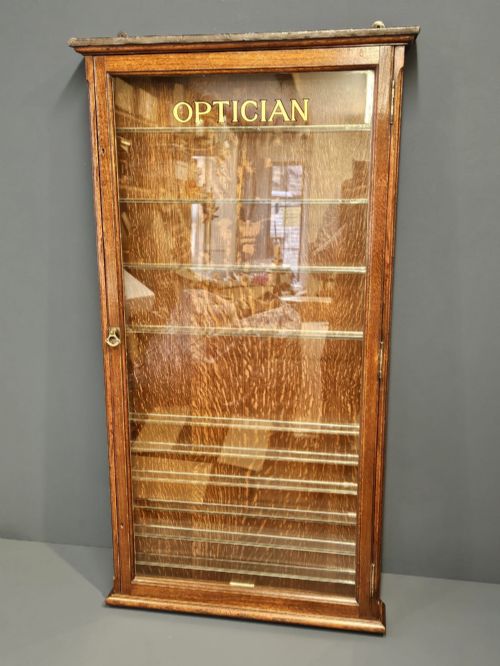
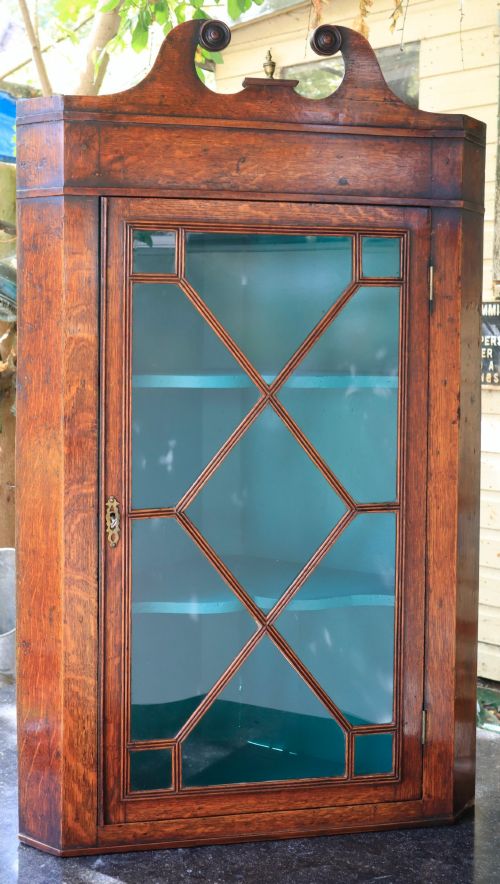


Oak Hanging Display Case
An oak hanging display case offers a practical way to mount collections on the wall, and the examples gathered here combine sturdy timber with glazed doors.
Oak Hanging Display Case
When buyers search for an oak hanging display case, they encounter wall-mounted storage forms designed to protect and exhibit small items. The examples documented in our records include corner cabinets, corner cupboards, and glazed display cupboards.
The pieces span multiple periods from the eighteenth century through the Edwardian era and into the nineteen-thirties, reflecting diverse regional workshops. Most items rely on architectural corner configurations that utilise wall space efficiently.
Georgian and early eighteenth-century examples feature framed glass fronts intended to keep dust from delicate contents. Later pieces from the Edwardian period and the nineteen-thirties continue this tradition of wall-mounted display using solid oak and beech elements.
Materials and construction methods
Makers constructed these wall cabinets predominantly using solid oak, occasionally incorporating secondary timbers such as beech within internal framing or shelving. The primary wood provides a durable structure capable of supporting the weight of glass panels and stored objects.
Glazing forms a central component, with single or multiple glass panes secured in timber doors to reveal the interior. Brass hinges, latches, and occasional fabric linings complete the construction of these wall-mounted cupboards.
Oak Hanging Display Case Retail Price Guide 2026
Typical asking prices for oak hanging display case among the pieces listed under this phrase on Sellingantiques today, from the lower quarter to the upper quarter. They describe what is for sale here now, not the wider market.
Recorded materials span oak, glass, brass, fabric, beech, and wood alongside unusual decorative elements.
Distinguishing quality in construction
Quality in these wall cabinets rests on the precision of the timber joinery and the integrity of the original glass framing. Earlier pieces demonstrate meticulous hand-cut joints, whereas later examples may show shifts in workshop production methods.
The selection of the oak itself, along with the subtlety of decorative mouldings or brass hardware, separates standard utility pieces from finer cabinet work. Proportion and the preservation of original glazed surfaces dictate the standing of individual pieces.
The Oak Hanging Display Case Glossary
- Glazed
- Fitted with glass panes to enclose the cabinet interior while permitting visibility. This term is essential for identifying display furniture versus closed storage.
- Corner cupboard
- A triangular cabinet designed to fit directly into the corner of a room. These forms maximise floor or wall space.
- Edwardian
- Pertaining to the period from nineteen hundred to nineteen ten. Pieces from this era often exhibit lighter proportions than their Victorian predecessors.
Oak Hanging Display Case: Frequently Asked Questions
How do I hang a heavy oak display case safely?
Wall-mounted oak cabinets require secure fixings into structural wall studs or masonry rather than plaster alone. Due to the combined weight of the solid timber and glass doors, proper load-bearing brackets are essential.
Ensure the hanging brackets or internal fixing points are firmly anchored before placing any collections inside. Seeking professional installation advice prevents damage to both the wall and the antique.
What periods do these oak wall cabinets come from?
The recorded pieces span from the early eighteenth century through the Georgian and Victorian eras into the Edwardian period and nineteen-thirties. Each era brings distinct moulding profiles and construction details to the timber.
Early examples often display simpler fielded panels, while later pieces incorporate diverse revival styles. Examining the hinges and internal timber helps ascertain the likely period of manufacture.
Are all these cabinets designed for corners?
Many of the recorded pieces take the form of corner cabinets or corner cupboards built to utilise room angles. However, flat-fronted wall display options also appear in the historical record.
Checking the rear profile of the listing clarifies whether a piece is intended for a corner or a flat wall surface. Measure your wall space carefully before selecting a format.
How do I clean the glass and oak safely?
Dust the oak surfaces regularly with a dry, soft cloth to maintain the timber finish without applying heavy moisture. Avoid silicone-based polishes that can build up on old wood over time.
Clean the glass panes with a mild glass cleaner applied to a cloth rather than sprayed directly, preventing liquid from seeping into the timber frame. Gentle maintenance preserves the original patina of the materials.