


Early Georgian Corner Cupboard
An early georgian corner cupboard is a timber cabinet built to fit a room junction, bringing period character and compact storage.
Early Georgian Corner Cupboard
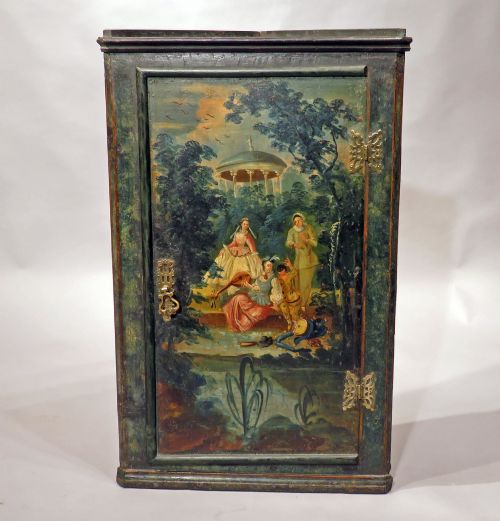
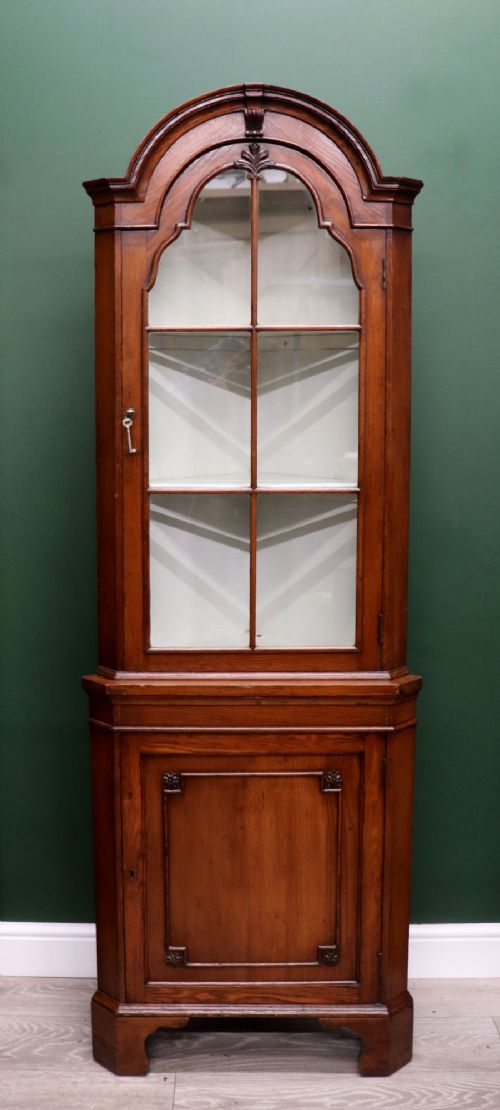
When you search for an early georgian corner cupboard, you encounter timber cabinets designed to utilise unutilised wall junctions in eighteenth-century rooms. These pieces appear as hanging wall cupboards or substantial two-piece standing furniture.
The examples on this page span the eighteenth century and subsequent revival periods, executed in woods such as oak and walnut. Their primary function is to secure objects behind panelled or glazed doors while framing the room corner.
How they were made
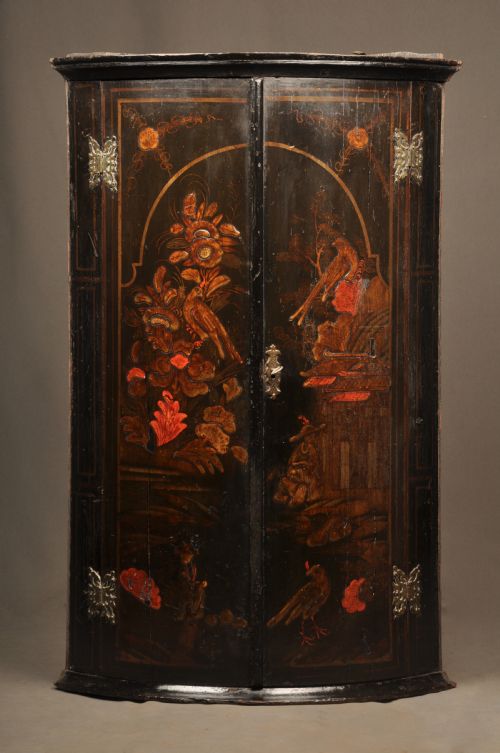
Cabinet makers constructed these cupboards using solid timbers like oak, walnut, and pine, often applying panelled door techniques or joinery suitable for wall hanging and floor standing formats. Surfaces received treatments ranging from plain polished grain to painted finishes, japanning, and lacquer.
Internal elements often feature shelving and shaped interiors, while exterior mountings utilise brass hinges and key escutcheons to secure the doors.
The listings on this page include walnut, oak, pine, and painted wood, spanning the eighteenth, nineteenth, and early twentieth centuries.
What varies in quality
The distinction between standard examples and superior pieces rests on the choice of timber figure, such as burr yew or figured walnut, and the sophistication of surface decoration like chinoiserie lacquer. Structural integrity in the original corner joins and the retention of period brass hardware also define the better specimens.
The Early Georgian Corner Cupboard Glossary
- Astral glazed
- A glass door divided into smaller panes by wooden glazing bars. This treatment allows visibility of the interior display shelves.
- Japanning
- A European imitation of East Asian lacquerwork. It involves layered varnish and raised metallic decoration on a dark painted ground.
- Barrel back
- A curved interior back to the cupboard cabinet. This shape echoes the architectural niche of period rooms.
- Panelled
- Construction method using fitted timber boards within a stronger outer frame. This technique accommodates wood movement over time.
Early Georgian Corner Cupboard: Frequently Asked Questions
Where do you place a corner cupboard?
These cabinets fit directly into the ninety-degree junction of two walls. This positioning makes use of dead space in smaller rooms.
Wall hanging versions mount directly to plaster or wood panelling, while floor standing models rest securely on the floorboards.
How do I identify an eighteenth century piece?
Examine the timber construction methods visible inside the carcass and drawer linings. Hand-cut joints and period brass hardware offer clues to the manufacturing era.
Compare the surface patina and timber shrinkage against known examples from the same period.
What is a two part cabinet?
A two part cabinet consists of an upper display section resting upon a lower cupboard base. This construction aided transport and placement in domestic interiors.
The sections separate for moving and lock together during daily use.
Can I store heavy items inside?
The internal shelves suit ceramics, glassware, and books rather than heavy loads. Wall hanging versions depend heavily on the strength of the fixings and the wall.
Standing models distribute weight down to the floor through the plinth or feet.