
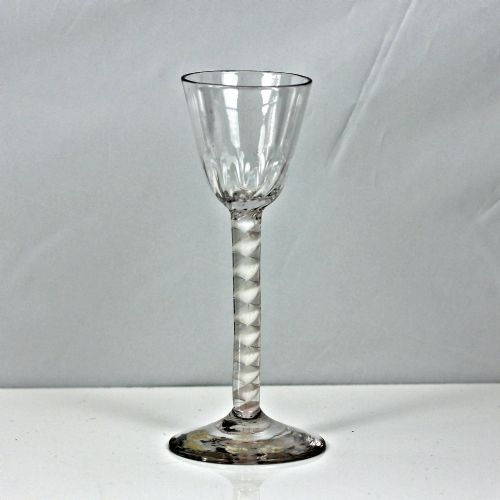

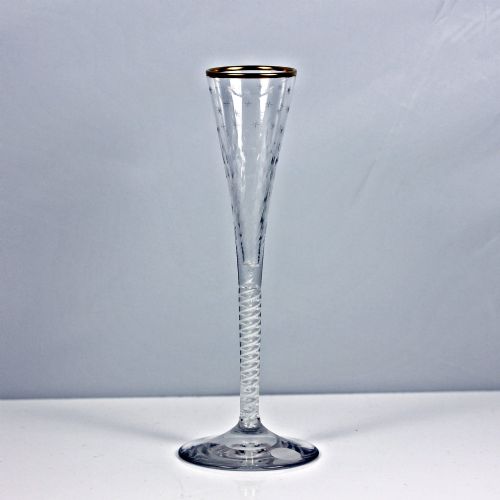
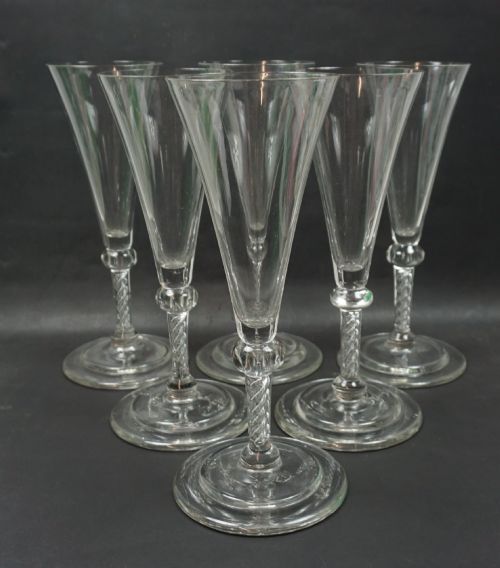
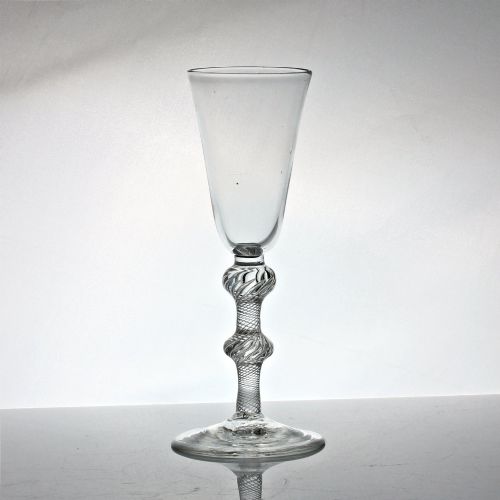

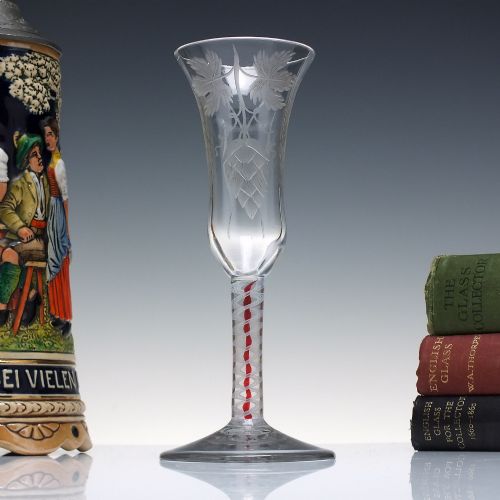
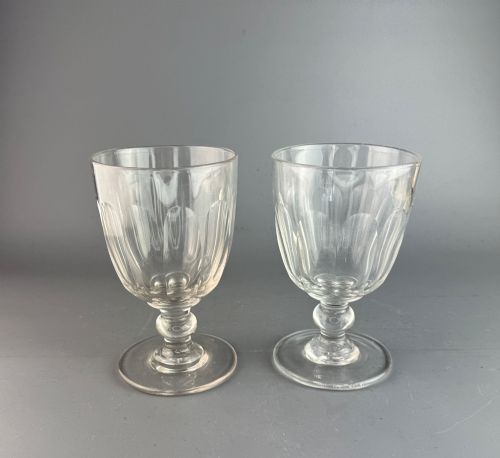


Georgian Glass Wine Flute
These georgian glass wine flute examples span lead crystal and coloured metal, offering the collector true eighteenth-century forms.
Georgian Glass Wine Flute
When you search for a georgian glass wine flute, you are looking at tall drinking vessels designed for toasts and sparkling vintages. These pieces range from slender eighteenth-century examples to later revival work.
You are most likely to meet lead glass stems featuring air twists or opaque twists, alongside ogee bowls and faceted rummers. The selection includes both clear metal and vibrant coloured glass.
The objects stem predominantly from the Georgian, Regency, and Victorian periods, with occasional twentieth-century revivals. They encompass various forms including ale glasses, ratafia glasses, and decanters.
How They Were Made
These items were hand-blown using lead glass or flint glass, creating the clear and heavy metal characteristic of the period. Skilled blowers shaped the bowls and applied molten metal to form the feet.
Stems were formed using intricate twist techniques, trapping air bubbles or white opaque threads within the glass rod. Cutting and engraving were later applied to the surface to create facets and decorative patterns.
Some nineteenth-century drinkers used rummers so heavy they doubled as acceptable self-defence tools.
What Varies in Quality
Quality rests in the crispness of the cutting, the complexity of the internal twists, and the clarity of the metal. Superior pieces display fine proportions and precise detailing without excessive cloudiness.
The handling of the pontil mark and the weight of the metal distinguish finer specimens from standard output. Richness of colour in tinted examples also dictates the desirability of the piece.
The Georgian Glass Wine Flute Glossary
- Air twist
- A decorative stem technique containing elongated or spiral air bubbles within the glass. It is created by drawing out air-filled cavities during the pulling of the stem.
- Opaque twist
- A stem formation featuring white or coloured enamel glass threads twisted inside a clear column. This technique gained popularity in the mid-eighteenth century.
- Ogee bowl
- A bell-shaped drinking vessel with an 'S' shaped profile curving outward at the rim. This form appears frequently on eighteenth-century wine and ale glasses.
- Rummer
- A large, sturdy drinking glass originating in the Georgian period, often featuring a bucket bowl and a short stem. They were used for punch, wine, and beer.
- Ratafia glass
- A tall, very slender flute designed for sweet cordial or fruit-infused liqueurs. Their narrow bowls preserved the aromatics of the drink.
- Pontil mark
- The rough scar left on the base of a hand-blown vessel where the iron rod was detached. Its presence confirms traditional manufacturing methods.
Georgian Glass Wine Flute: Frequently Asked Questions
Are these glasses safe to use?
Most of these vessels can handle wine or water for special occasions, provided you treat them with the care due to fragile antiques. Hand-washing is mandatory after every use to protect the surface.
Lead crystal can leach trace amounts of contents if left standing for long periods, so avoid storing liquids in them permanently.
How can I tell the age?
Examine the base for a polished or rough pontil mark, and check the weight and colour of the metal for period characteristics. Tool marks and tiny bubbles in the glass often point to manual production.
Compare the stem construction, whether air twist or opaque twist, against established period typologies to narrow down the decade of manufacture.
What is the difference between lead glass and flint glass?
Lead glass incorporates lead oxide into the batch, which increases weight, brilliance, and softness for cutting. Flint glass historically referred to high-clarity glass, though the terms often overlapped in the period.
Both materials produce the clear, resonant ring associated with quality drinking vessels from the eighteenth and nineteenth centuries.