
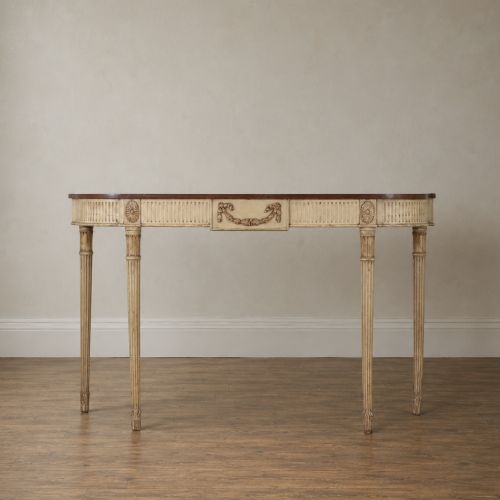
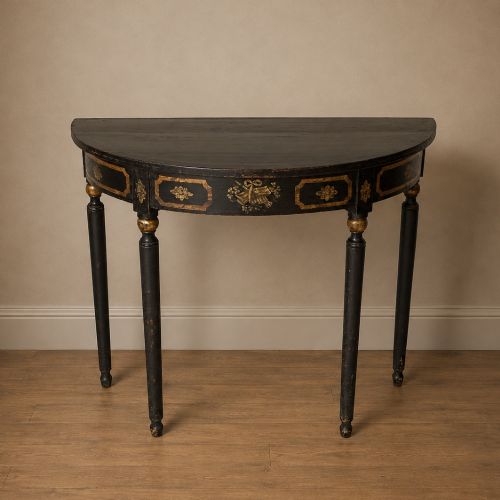
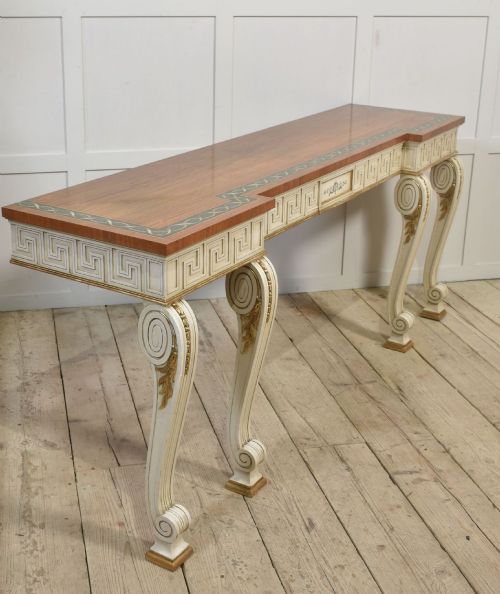


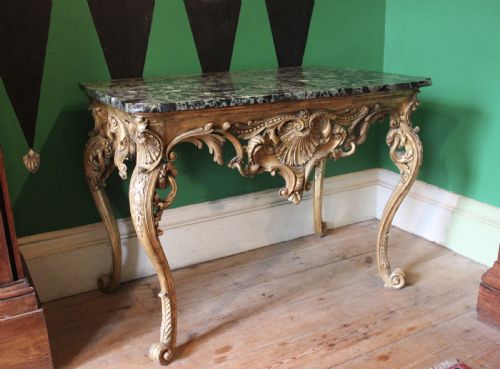
Georgian Gilt Console Table
A georgian gilt console table brings architectural presence and gleaming surfaces to a hallway, drawing the eye with carved detail.
Georgian Gilt Console Table
A georgian gilt console table is a wall-fixed or freestanding display piece designed to anchor a formal interior scheme. The selection encompasses authentic eighteenth-century examples alongside later nineteenth-century interpretations and twentieth-century revival pieces.
Most pieces on display take semicircular or demi-lune formats, frequently paired with marble slabs or richly painted wooden surfaces. The design vocabulary draws heavily on neoclassical, rococo, and Regency traditions.
Makers fashioned these tables to stand beneath pier mirrors or against drawing-room walls, serving as ornamental stages for decorative objects. Collectors encounter varied scales, from compact card tables to substantial giltwood side tables.
How they were made
Craftsmen built structural carcasses from dense timbers like wood and rosewood, preparing surfaces for decorative finishes through the application of gesso. This fine plaster layer provided a smooth ground for subsequent gilding.
Workers applied gold leaf or metallic paint over the prepared base, often combining burnished metal with black paint or parcel gilt accents. Heavy marble tops sat directly upon the wooden frames to provide both weight and a cool, smooth counterpoint to the gilded structure.
Some nineteenth-century makers cleverly combined card tables with pier consoles, letting a single piece transform from a wall display into an evening gaming surface.
What varies in quality
The crispness of the carved ornamentation dictates the visual authority of a piece, distinguishing sharply cut acanthus leaves and fluted legs from softer, moulded substitutes. Finer workshops invested heavily in skilled carvers who shaped the wooden substrate before applying gesso.
The integrity of the surface finish governs longevity, separating tables retaining original gold leaf and rich patination from those with heavy modern interventions. The choice of top also alters the character, with solid rouge or white marble slabs representing greater material ambition than plain painted wood.
The Georgian Gilt Console Table Glossary
- Giltwood
- Timber coated with gold leaf over a prepared gesso ground. This technique creates a luminous, reflective surface characteristic of formal eighteenth- and nineteenth-century furniture.
- Demi-Lune
- A half-moon shape used for table tops and frames. This format allowed large tables to sit flush against a wall while projecting into the room.
- Gesso
- A mixture of plaster of Paris and glue binder applied to wood. It forms the smooth, absorbent foundation required for successful gilding and fine relief carving.
- Pier Table
- A table designed specifically to stand against the wall between two windows, frequently positioned directly beneath a matching mirror. They remain slender to avoid blocking pathways.
- Parcel Gilt
- Partial gilding applied selectively to highlight specific architectural details, carved motifs, or mouldings against a contrasting painted or dark wood background.
Georgian Gilt Console Table: Frequently Asked Questions
Where should I place a console table?
These tables find a natural home in entrance halls, living rooms, and dining spaces where floor space is relatively shallow. Their flat backs allow them to stand securely against walls without projecting too far into the room.
Pairing a table with a wall-mounted mirror creates a balanced focal point that reflects light and adds vertical scale to narrower interiors.
How do I care for giltwood?
Giltwood surfaces require gentle maintenance using a soft, dry ostrich feather duster or a clean microfibre cloth. Avoid all commercial polishes, liquids, and abrasive cleaners, which can strip the delicate gold leaf.
Keep the tables away from direct sunlight and fluctuating radiator heat to prevent the underlying gesso and wood from drying and cracking.
Are marble tops original?
Many eighteenth- and nineteenth-century tables were designed specifically to support heavy stone surfaces, though replacements do occur over centuries of domestic use. Examining the fit against the wooden frame and checking for matching edge profiles helps determine period integrity.
Rouge and white marble slabs were favoured for their durability and luxurious contrast against gilded and painted frames.
What is the difference between Georgian and Regency?
Georgian design spans the eighteenth century, encompassing robust baroque carving, ornate rococo curves, and refined neoclassical symmetry associated with Adam and Sheraton styles. Regency work emerges later, leaning towards bolder architectural lines and classical antiquity.
Regency pieces often incorporate rosewood, black paint, and parcel gilt alongside distinctively heavier proportions inspired by ancient Roman and Greek archaeology.