






Georgian Fretwork Back Chair
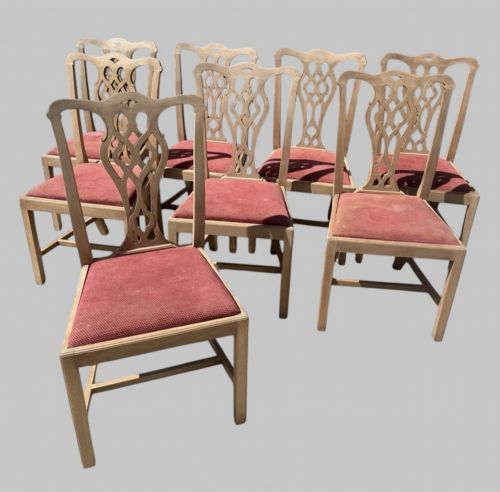
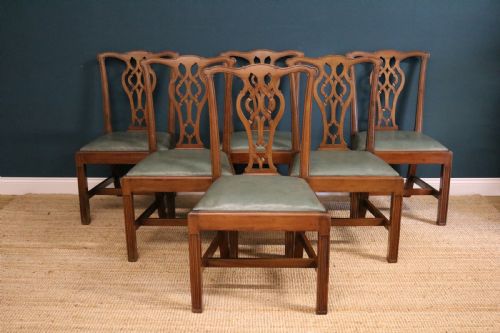
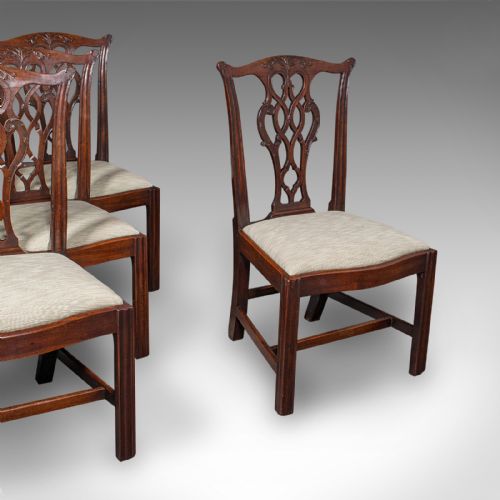
These georgian fretwork back chair examples combine open lattice frames with sturdy timber, offering both structural grace and historical interest.
Georgian Fretwork Back Chair
When searching for a georgian fretwork back chair, buyers encounter dining chairs, side chairs, and open armchairs spanning multiple eras. The listings here present pieces originating from the eighteenth century onwards, with revivals appearing in later decades.
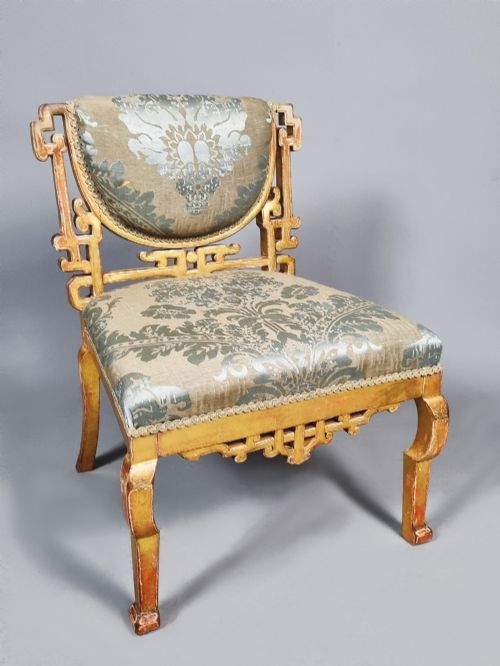
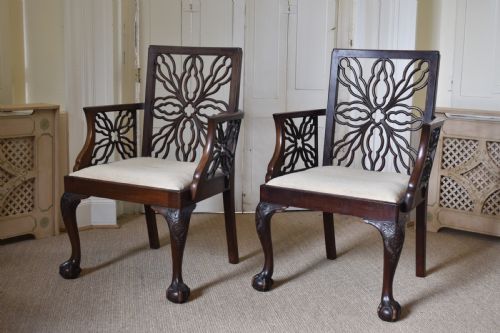
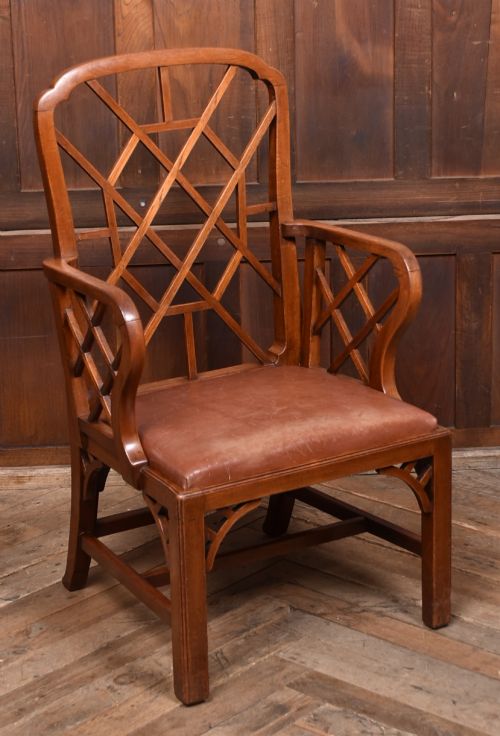
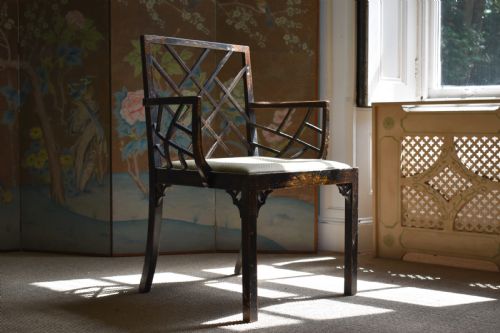
Most examples rely on mahogany construction, sometimes finished in giltwood or bleached tones, while seats appear upholstered in leather, fabric, silk damask, or velvet. Certain pieces adopt Chinese Chippendale or Chinoiserie aesthetics, including cockpen designs and pagoda motifs.
Armchairs such as Gainsborough or wingback variants sit alongside sets of dining chairs and individual side chairs. The historical span covers original Georgian production alongside Edwardian and nineteenth-century revivals.
Assessing quality in fretwork seating
Depth of hand carving and the intricacy of the pierced fretwork define the upper tier of these chairs. Sharply rendered details in the timber separate master craftsmanship from simpler production.
The choice of primary wood and the execution of historical revival styles dictate the character of each piece. Original period items hold distinct historical weight compared to later interpretations.
Even masonic chairs occasionally adopted elaborate fretwork back designs for temple seating.
Thomas Chippendale·Waugh and Son
The Georgian Fretwork Back Chair Glossary
- Fretwork
- Openwork carving resembling lattice or tracery, frequently applied to chair backs and legs in Chinese Chippendale designs.
- Cockpen
- A specific lattice chair back pattern formed from intersecting wooden bars, associated with Chinese-inspired eighteenth-century seating.
- Bergere
- An enclosed upholstered armchair with a wooden frame, often featuring woven cane panels on the back or sides.
- Klismos
- An ancient Greek chair design characterised by curved sabre legs and a concave upright backrest.
- Gainsborough
- A wide-seated upholstered armchair with open padded arms, popular during the eighteenth century.
Georgian Fretwork Back Chair: Frequently Asked Questions
How do I spot a revival piece?
Revival chairs often date from the nineteenth or early twentieth centuries, imitating earlier Georgian or Chippendale aesthetics. Examining the timber maturity and construction joints helps determine the actual age.
Maker attribution or revival labels also clarify whether an item stems from the original period of production or later manufacturing waves.
Where should I place these chairs?
Dining chairs and side chairs suit formal dining tables or serve as decorative corner seating in living spaces. Open armchairs work effectively as desk chairs or standalone reading seats.
Their intricate carved backs look best when positioned where light can pass through the fretwork lattice.
What woods were used?
Mahogany serves as the dominant timber across these listings, providing the strength required for pierced fretwork backs. Variations include bleached mahogany and gilded wood finishes.
Upholstery materials such as silk damask, leather, and velvet are paired with the wooden frames to complete the seating.