




Georgian Floor Standing Cabinet
A georgian floor standing cabinet offers practical architectural storage, making the most of neglected angles with timber presence.
Georgian Floor Standing Cabinet
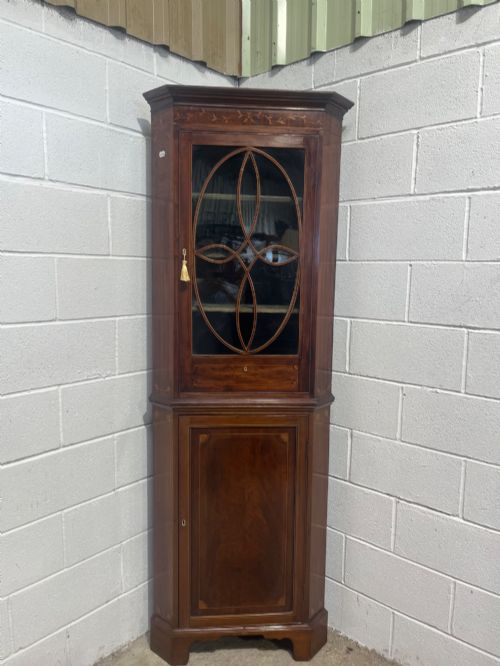
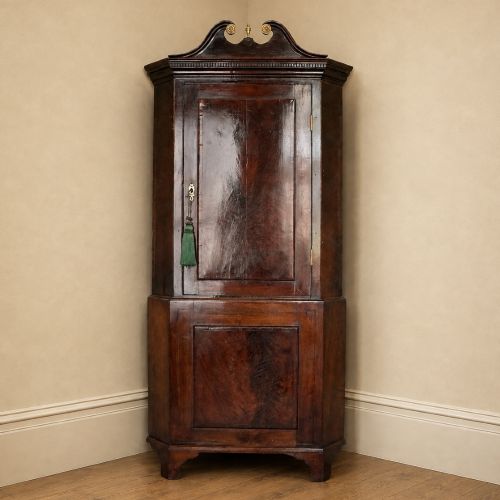
A georgian floor standing cabinet encompasses tall corner cupboards and folio storage built to anchor a room from the floor up. These pieces originate predominantly from the Georgian period alongside 18th-century and 19th-century interpretations.
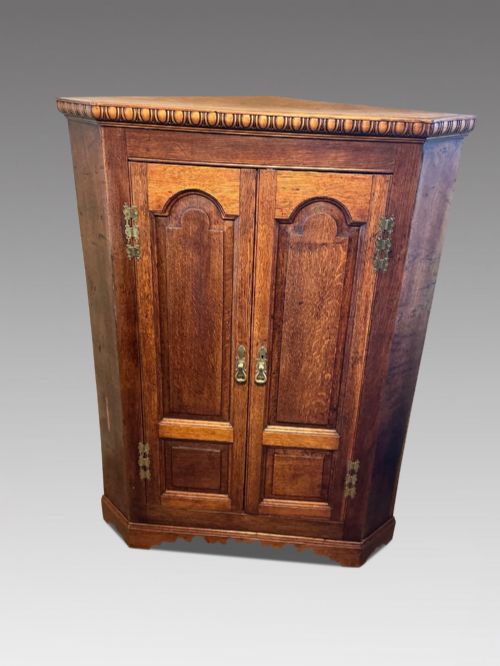
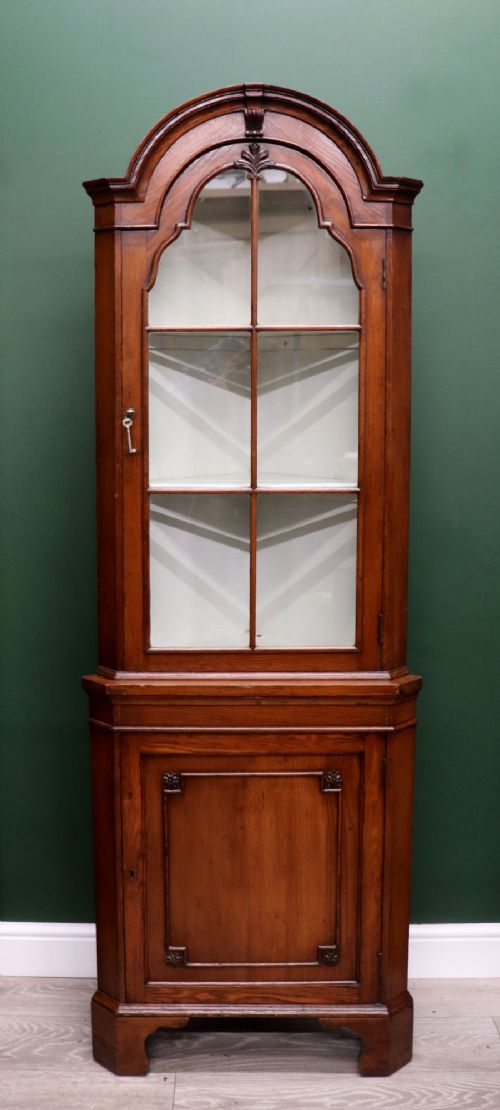
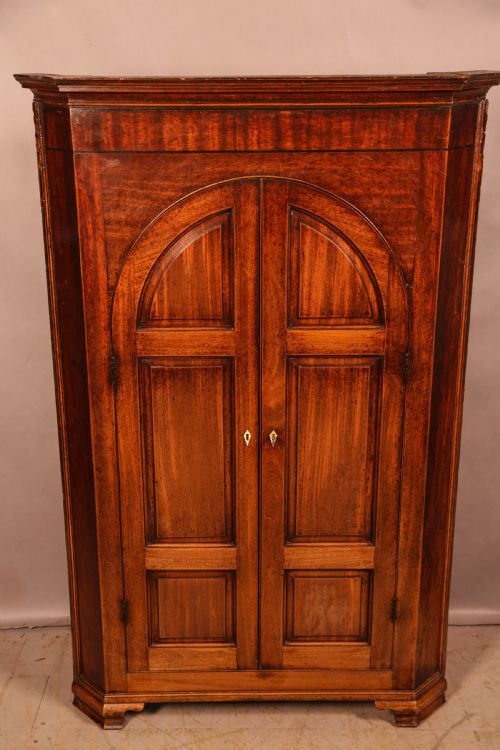
The most common form on this page is the corner cupboard, constructed to fit squarely into room angles in either single pieces or two-part sections. Timber choices span mahogany and oak alongside occasional yew and fruitwood.
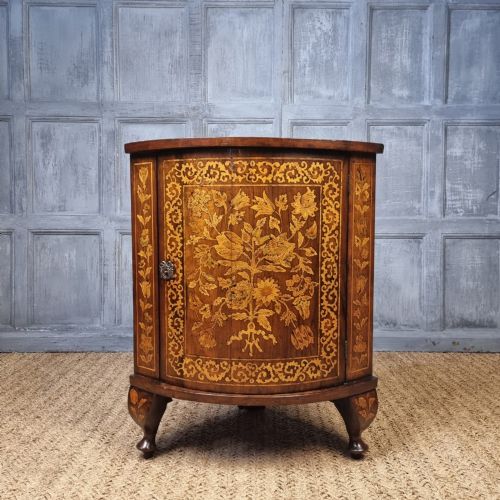
Makers designed these standing units to display china or conceal household stores while introducing vertical grain and panel work to domestic interiors. Styles range from plain English country vernacular to detailed George III marquetry.
How They Were Made
Cabinet makers utilised solid mahogany and oak for structural carcasses, frequently employing boxwood inlay and satinwood details for decorative contrast. Timber selection dictated whether doors received straightforward fielded panels or complex marquetry arrangements.
Construction relied on heavy brass hinges and locks to secure tall timber doors, often divided into upper and lower sections for easier transport and placement in domestic spaces.
Periods represented span from mid-18th-century pieces through Georgian revivals and early 20th-century craftsmanship.
What Varies in Quality
Quality separates simple utility cupboards from ambitious architectural commissions through timber selection and surface articulation. Dense mahogany grains and intricate boxwood stringing indicate higher workshop standards than basic country oak builds.
The refinement of brass hardware, the execution of internal shelving contours, and whether a piece stands in a single tall section or two distinct parts define the upper tier of surviving examples.
The Georgian Floor Standing Cabinet Glossary
- Corner cupboard
- A storage unit built with a triangular footprint designed specifically to fit into the internal angle of a room. These tall items utilise dead space effectively.
- Marquetry
- The art of applying decorative veneer pieces in various woods to a structural surface to create pictorial or geometric patterns. This technique elevates plain cabinet fronts.
- Bow front
- A convex curved cabinet facade that softens the rigid angles of a room. This shape requires advanced timber bending or specialist cutting skills.
- Two part
- A large cabinet constructed as separate upper and lower sections stacked vertically. This method assists with the movement and installation of heavy standing furniture.
- Folio cabinet
- A tall standing piece designed to store large flat papers, prints or documents. These units are less common than standard corner cupboards.
Georgian Floor Standing Cabinet: Frequently Asked Questions
Where did these cabinets go in a house?
These tall cabinets were designed to occupy empty corners in parlours, dining rooms and halls where flat furniture would waste space. Their triangular footprint allowed them to anchor room angles securely.
In period interiors, they served to display valuable ceramics behind glass or to keep household provisions tucked away behind sturdy wooden doors.
Are they made in two parts?
Many of the taller standing examples are built in two separate sections, consisting of an upper cupboard resting upon a lower base. This construction made heavy timber furniture easier to transport.
Single-piece tall cupboards also appear frequently, rising from the floor in one solid frame without a horizontal dividing split.
How do oak and mahogany versions differ?
Oak versions usually reflect a sturdier country house aesthetic with heavy panelled doors and straightforward timber grains. They suit rustic or traditional interiors.
Mahogany examples often incorporate finer details such as brass hardware, satinwood stringing, or marquetry work, pointing towards more formal urban workshops.
What is a folio cabinet?
A folio cabinet is a specialised standing storage piece built to hold large flat sheets, maps or prints rather than general household goods. These tall units are less common than standard corner cupboards.
They provide deep internal shelving tailored for paper archives rather than triangular corner shelving.