
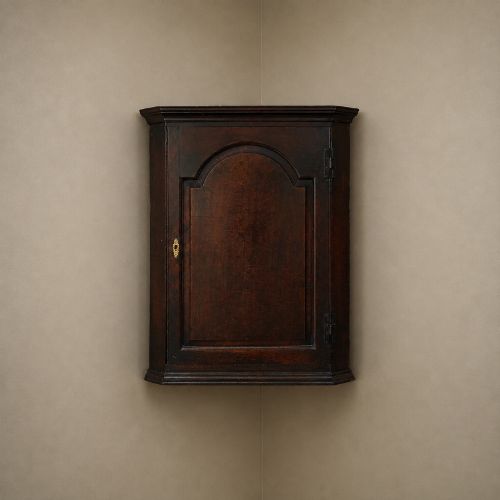


Period Oak Corner Unit
A period oak corner unit is a fitted or freestanding corner cupboard that makes use of empty wall junctions.
Period Oak Corner Unit
A period oak corner unit brings warmth and architectural shape to unused room angles, turning awkward junctions into practical storage space. These pieces serve to house tableware, books, or glassware while adding genuine historical presence to a domestic interior.
The versions most commonly met on this page span the eighteenth century and the Regency era, taking the form of wall-hanging cupboards, floor-standing cabinets, and occasional etageres. Most examples rely on the sturdy domestic character of oak, though occasional mahogany or brass details appear in the mix.
Materials and construction
Cabinet makers constructed these units predominantly from solid oak, utilising timber selected for its durability and strong grain patterns. Panel construction allowed the wood to expand and contract naturally with changes in room temperature without splitting.
Makers shaped the doors using flat or raised panels, often mounting them on iron or brass hinges while fitting brass catches or escutcheons to secure the front. Bow-fronted and octagonal variations required precise carpentry to curve the framework or join multiple faceted sides together cleanly.
Judging quality and craftsmanship
Quality reveals itself in the choice of timber and the proportion of the moulding rather than mere surface ornament. Better examples display carefully matched grain on the front panels and harmonious proportions that suit the height of a traditional room.
The refinement of the interior shelving, the tightness of the corner mitres, and the original integrity of the hinges and brasswork separate standard utility pieces from finer cabinet work. Patina accumulated through generations of use also governs the visual appeal of each surface.
The Period Oak Corner Unit Glossary
- Corner cupboard
- A cabinet specifically built with a triangular footprint to fit snugly into the ninety-degree angle of a room.
- Bow front
- A convex, curved front section that projects outward, softening the rigid angles typically associated with corner furniture.
- Etagere
- An open shelving unit designed for displaying small objects or books, sometimes constructed in a multi-tiered octagonal shape.
- Panelled
- A method of construction where a central timber board sits within a grooved wooden frame to prevent warping.
- Georgian
- The design period spanning the reigns of the first four Georges, characterised by classical proportions and understated elegance.
Period Oak Corner Unit: Frequently Asked Questions
How do I choose between a hanging and standing corner unit?
Hanging models mount directly to the wall and save valuable floor space, making them ideal for smaller dining rooms or kitchens where furniture clearance matters. Standing versions rest firmly on the floor and provide greater overall height and larger storage capacity for heavier items.
Consider the weight of the piece and the structural strength of your walls before choosing a wall-mounted cabinet. Standing units simply require a clear corner and offer easy repositioning if you rearrange your room layout.
Were these cabinets used in specific rooms?
Georgian households placed these units in parlours, dining rooms, and hallways to store imported ceramics, silver, and everyday provisions. Their triangular shape maximised storage in spaces where rectangular furniture would block doorways or windows.
Today, they adapt equally well to modern living rooms, studies, and kitchens for displaying collections or concealing clutter. Their traditional utility translates seamlessly into contemporary homes seeking character and clever spatial solutions.
How do I distinguish eighteenth-century oak from later reproductions?
Examine the timber surfaces and construction methods closely for signs of age, such as hand-cut dovetails, tool marks on secondary woods, and natural oxidation. Eighteenth-century oak develops a deep, mellow patina and dry surface texture that modern finishes struggle to replicate accurately.
Check the backboards and interior linings, which should also consist of period timbers rather than modern plywood or chipboard. Consistent wear patterns around handles and hinges provide further clues to genuine age.
What is the difference between a cabinet and a cupboard?
Historically, cupboards often featured simple enclosed shelving behind single or double doors for utilitarian storage of food or household goods. Cabinets frequently incorporated finer detailing, glass panes for display, or curved bow fronts designed to showcase valued possessions.
Both terms describe corner units on this page, but the distinction usually points to the intended visibility of the contents. Review the door style and interior layout to understand whether the maker intended the piece for display or hidden storage.