



Wooden Corner Display Cabinet
A wooden corner display cabinet solves the spatial problem of empty corners by putting awkward angles to work with shelving and glazed doors.
Wooden Corner Display Cabinet
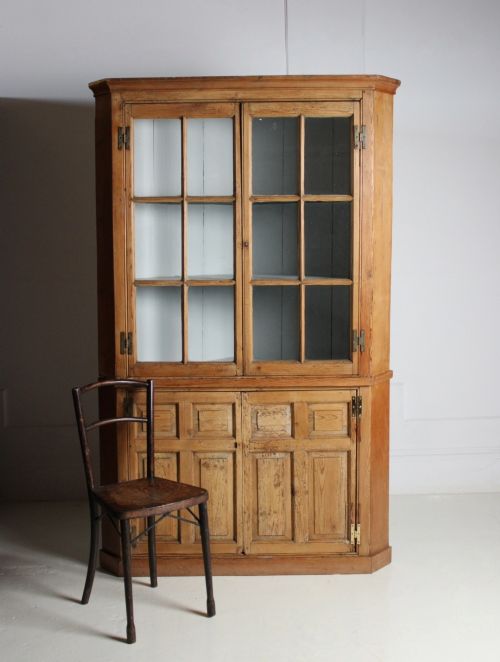
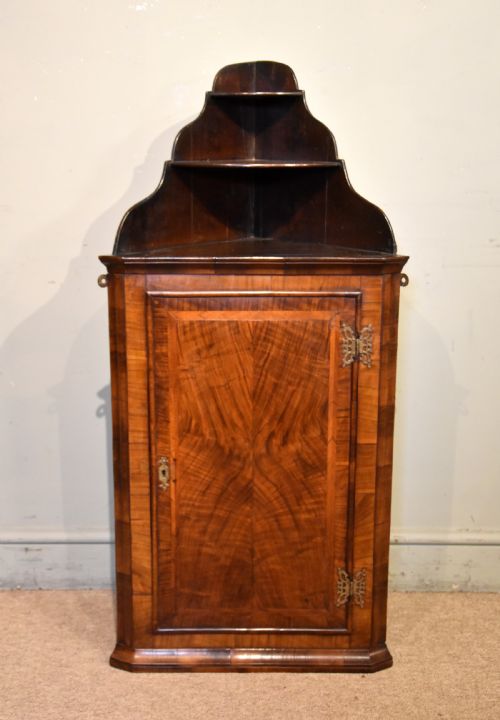
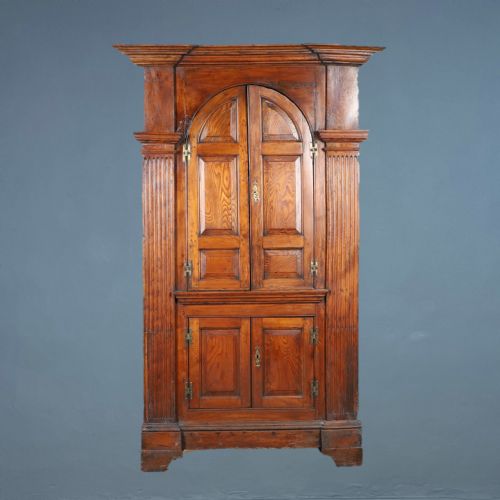
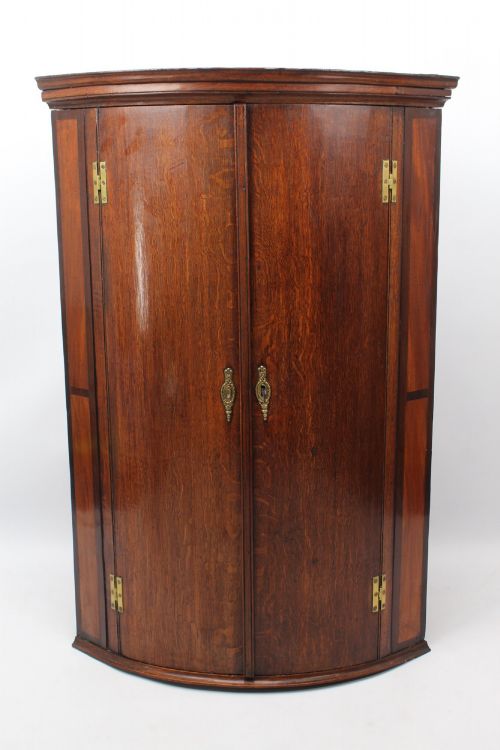
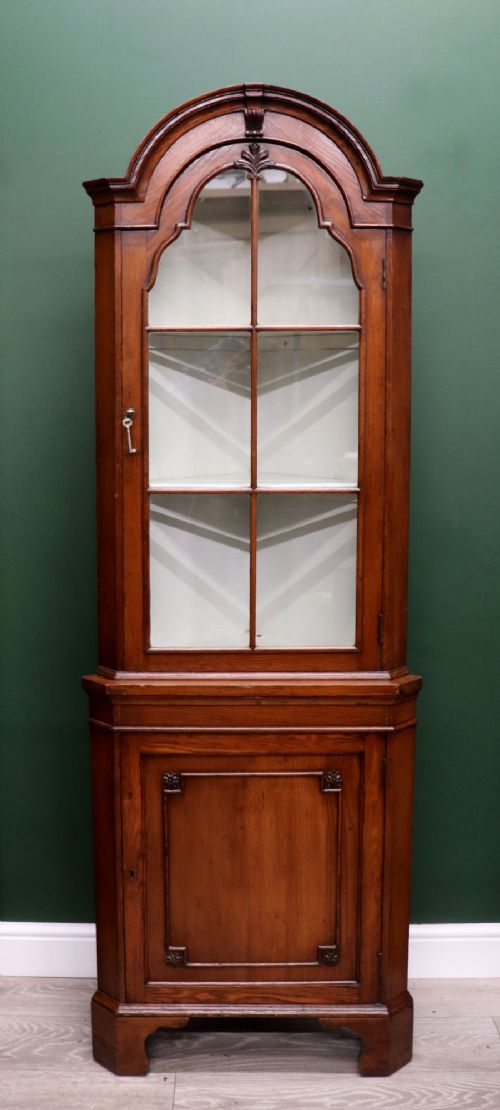
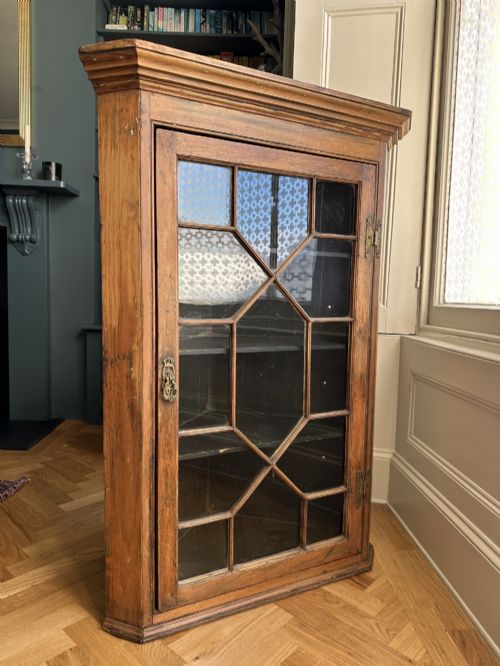
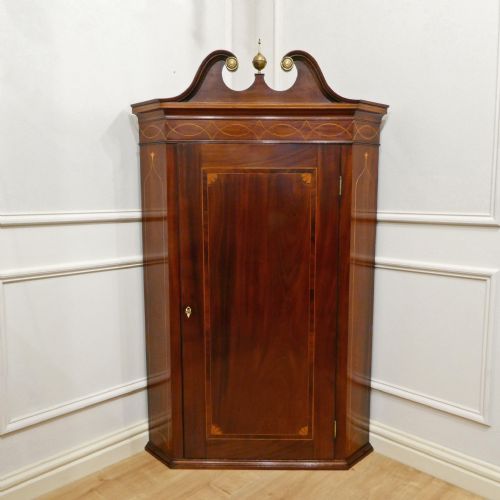
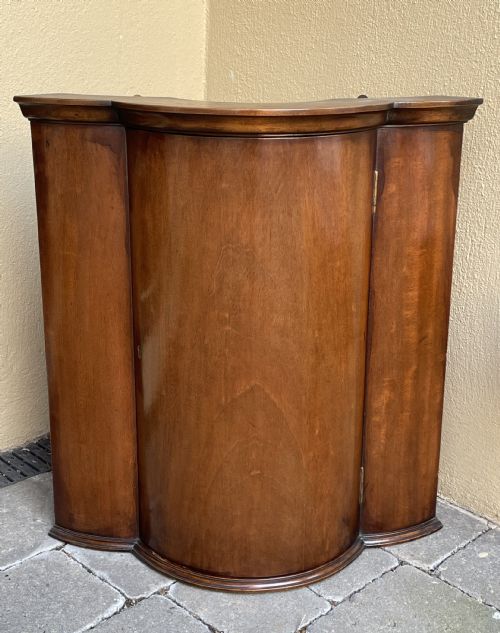
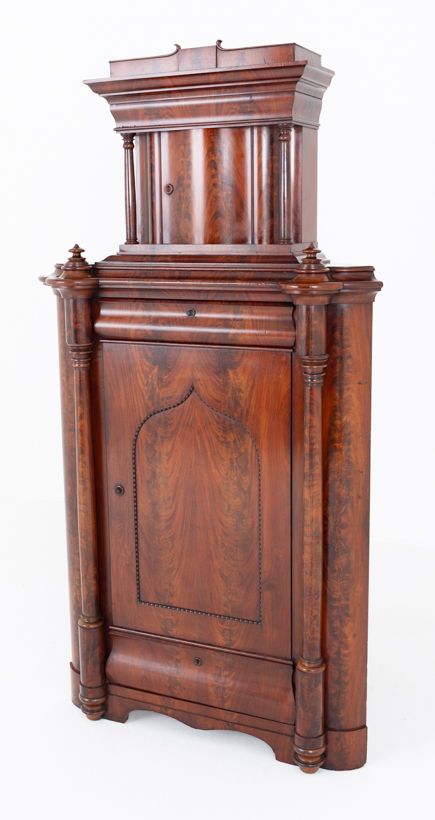
A wooden corner display cabinet makes use of unused angles in a room, taking the form of hanging wall units or substantial floor-standing pieces. The selection here spans Georgian, 19th Century, and Edwardian periods, alongside Biedermeier and Arts & Crafts designs.
Materials and construction
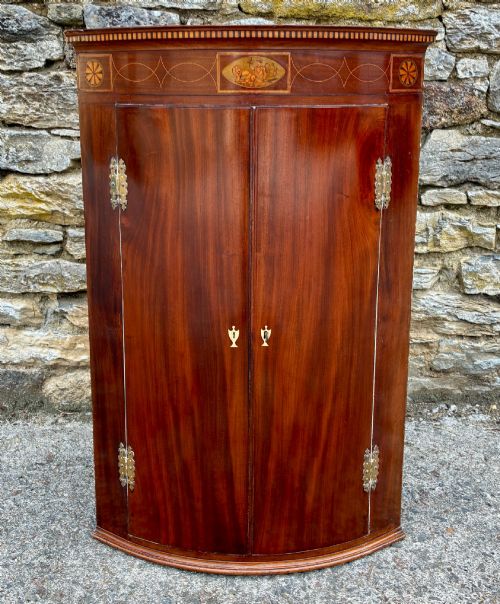
Cabinet makers relied primarily on mahogany and oak for structural integrity, frequently incorporating boxwood stringing, brass hardware, and walnut veneers for decorative contrast. Pine and elm appear in country house and regional pieces, whilst kingwood and ormolu serve high-status examples.
Joinery techniques adapted to the triangular footprint, requiring precise angles for wall attachment or floor standing stability. Glazing bars segmented the door glass, and pediments ranged from simple cornices to broken arch designs.
Listings feature mahogany, oak, walnut, pine, elm, satinwood, and kingwood across Georgian, Victorian, Edwardian, and Arts & Crafts styles.
Assessing quality
Quality rests upon timber selection and the crispness of decorative detailing, such as carved mouldings, inlay work, or figuration in the grain like plum pudding mahogany. Finer pieces demonstrate superior control over proportions and symmetry, particularly across bow front doors.
Interior fittings, original painted surfaces, and intact glass panels distinguish higher-grade examples from utility items. The integration of architectural elements like broken arch pediments elevates the standing of eighteenth-century items.
Liberty & Co.
The Wooden Corner Display Cabinet Glossary
- Bow front
- A convex curved cabinet front that projects outward. This form became popular during the Georgian period.
- Pediment
- The decorative structure crowning the top of a cabinet. Examples include broken arch designs and dome tops.
- Whatnot
- An open-shelved piece of furniture used for display. These appear in corner formats alongside enclosed cupboards.
- Stringing
- Thin lines of contrasting wood inlay used for decoration. Boxwood was frequently utilised for this purpose on mahogany surfaces.
Wooden Corner Display Cabinet: Frequently Asked Questions
How do I choose between wall hanging and floor standing?
Wall hanging versions mount directly to the wall to preserve floor space beneath them. They suit smaller rooms and lighter display loads.
Floor standing versions sit directly on the ground and offer greater internal capacity. They work best in larger spaces with higher ceilings.
What is the difference between Georgian and Victorian styles?
Georgian pieces emphasise classical symmetry, proportion, and understated mahogany or oak construction. Details often include stringing and architectural pediments.
Victorian cabinets embrace heavier carving, mirrored backings, and eclectic revival styles. They reflect broader industrial production techniques and diverse historical influences.
How do I care for wooden surfaces?
Keep wooden cabinets away from direct sunlight and radiators to prevent timber splitting or veneer lifting. Maintain stable room humidity.
Dust regularly with a soft, dry cloth and apply occasional specialist wax to nourish the grain. Avoid chemical sprays.
Can these hold heavy items?
Internal fixed shelving supports standard display items like ceramics, glassware, and books. Wall hanging units depend entirely on proper wall fixings.
Floor standing cabinets bear more weight through their base construction. Distribute heavier objects on lower shelves for stability.