
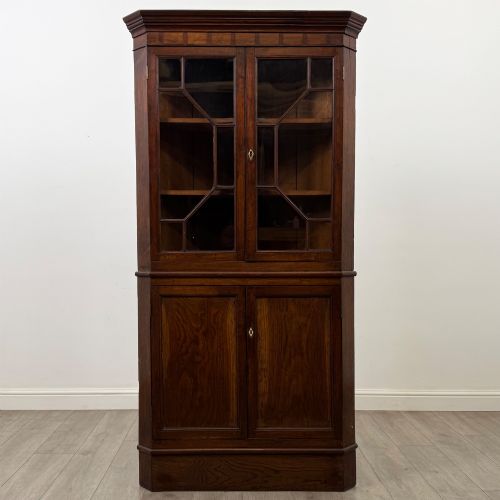
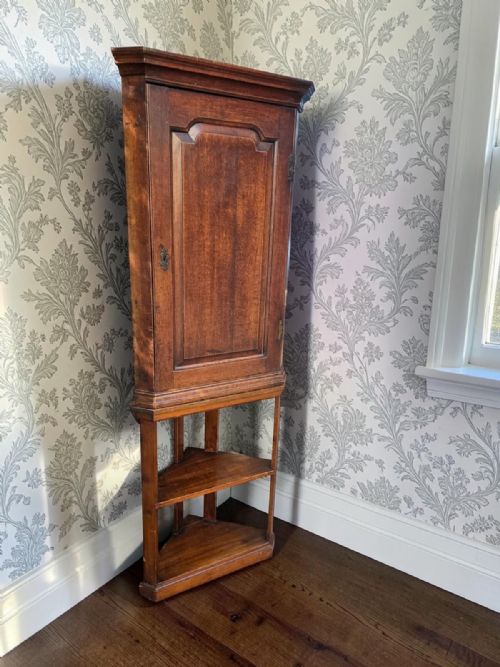
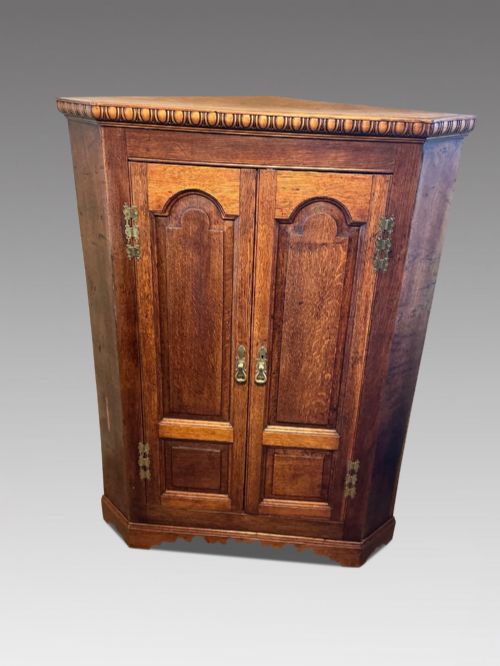

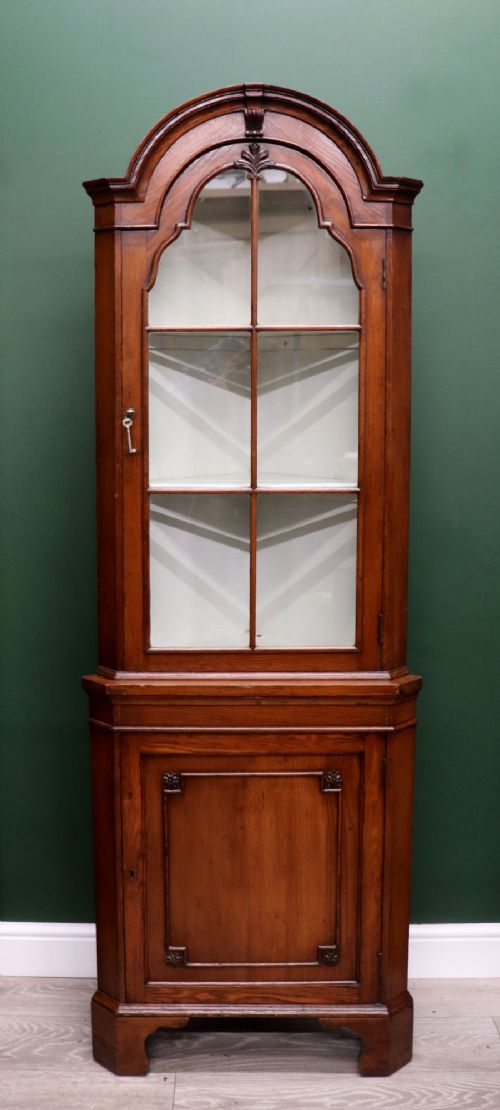

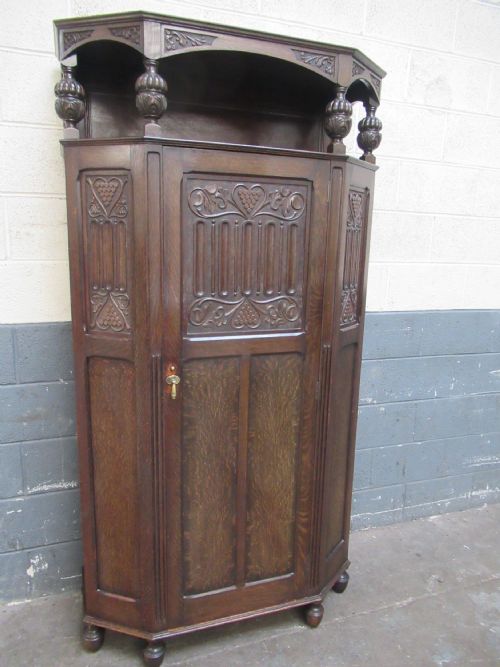


Standing Oak Corner Cupboard
A standing oak corner cupboard makes clever use of awkward domestic angles while providing substantial display and storage space.
Standing Oak Corner Cupboard
A standing oak corner cupboard utilises wasted room angles, presenting a tall profile that fits neatly into domestic junctions. Buyers find pieces ranging from compact single-door formats to substantial double-height versions.
The inventory leans heavily towards Georgian and Victorian periods, featuring regional English and Welsh country workshops. These tall floor-standing designs often divide into two separate sections for easier transport and positioning.
Assessing Quality and Proportion
Superior examples display balanced proportions, particularly in the relationship between the upper display section and the lower cupboard base. The crispness of panel carving and timber grain figure heavily in the overall merit of a piece.
Construction depth matters, with superior regional pieces showing tight mitres and heavy oak timbers rather than thin veneers. Original brassware and intact interior shelving elevate the standing of individual cabinets.
Listings feature oak paired with mahogany, fruitwood inlay, glass, and brass hardware across multiple centuries.
Heals
The Standing Oak Corner Cupboard Glossary
- Standing corner cupboard
- A tall cabinet designed specifically to fit into the internal corner of a room, resting directly on the floor rather than hanging on a wall.
- Two-part
- A cabinet constructed in separate upper and lower sections that stack together for stability and movement.
- Bow front
- A convex curved front profile that projects outward, often found on later Georgian and Victorian examples.
- Panelled
- Construction method utilising wooden frames fitted with floating central panels to accommodate natural timber movement.
- Escutcheon
- A protective metal plate surrounding a keyhole, usually fashioned from brass.
Standing Oak Corner Cupboard: Frequently Asked Questions
How do I fit a standing oak corner cupboard into a modern room?
Measure the wall depth from the exact corner outwards to ensure the door swing has adequate clearance. Many older pieces feature removable cornices or split into two sections to help with positioning.
Position the cabinet away from direct heat sources to prevent the solid timber from drying out and splitting over time.
What is the difference between Georgian and Victorian oak corner cupboards?
Georgian versions tend to exhibit cleaner architectural lines, brass H-hinges, and fielded panels. They focus on simple proportions and timber grain.
Victorian pieces frequently introduce heavier mouldings, darker finishes, and deeper relief carving reflecting revival styles.
Can I store heavy items inside these cabinets?
Solid oak construction provides robust internal shelving capable of holding heavy porcelain, books, or glassware. The fixed corner bracing naturally adds structural rigidity to the entire carcass.
Check the stability of the interior support cleats before loading older shelves with dense collections.
How do I care for the oak surface?
Dust the timber regularly with a soft, dry cloth and apply a quality beeswax periodically to nourish the grain. Avoid silicone-based polishes that build up sticky residues over the surface.
Keep the cabinet out of direct sunlight to maintain the natural colour of the wood.