


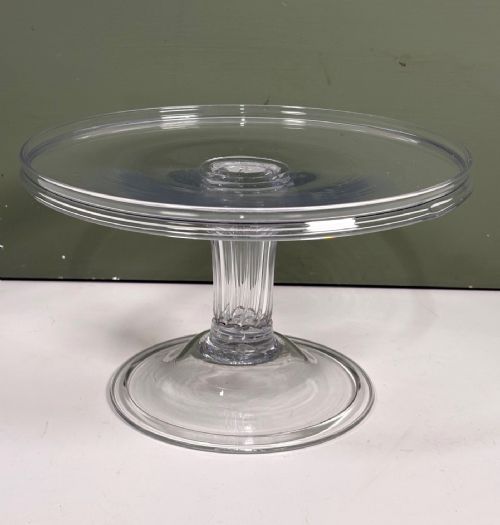


Georgian Flint Glass Dish
A georgian flint glass dish brings the heavy weight and clear brilliance of eighteenth-century table service directly into your home.
Georgian Flint Glass Dish
A georgian flint glass dish encompasses small patch stands, deep fruit bowls, raised tazza plates and sweetmeat dishes produced across the eighteenth century and into the early nineteenth century. Buyers searching this phrase look for authentic domestic tablewares intended for serving sweetmeats, fruit or small patches of cosmetic fabric.
The versions most commonly met on this page include raised tazza plates and miniature patch stands dating from the early Georgian period around the seventeen-forties. These tablewares display heavy lead content, which gives the metal its distinctive clarity and substantial feel in the hand.
How they were made
These items rely on lead glass and flint glass formulations melted in wood-fired furnaces, shaped by blowing into moulds or free-blowing on the pontil iron. Makers utilised lead crystal to achieve high refractive index and heavy walls.
Finishing techniques include wheel-cutting honeycomb patterns and polishing the pontil scar on the underside of the base. Clear glass surfaces receive hand-cutting to form crisp facets that catch candle or daylight.
Tiny patch stands were designed to hold the silk beauty spots that eighteenth-century ladies wore to hide smallpox scars.
What varies in quality
Quality rests upon the crispness of the wheel-cut facets and the optical purity of the lead glass metal. Superior examples exhibit sharp honeycomb moulding and minimal natural inclusions within the heavy handle.
Proportion and form dictate the upper tier of the range, where baluster stems or raised tazza feet maintain balance without heavy distortion. Lesser examples show uneven wall thickness and softer surface wear.
The Georgian Flint Glass Dish Glossary
- Flint glass
- Heavy, high-refractive glass made with lead oxide. This material distinguishes eighteenth-century English tableware from lighter soda glass.
- Tazza
- A raised saucer or shallow bowl set upon a central foot. These serving plates sat centrally on dining tables for fruit or sweetmeats.
- Patch stand
- A tiny pedestal plate used to hold cosmetic beauty patches. Eighteenth-century ladies applied these silk patches to their faces.
- Sweetmeat glass
- A small stemmed dish designed for confectionery or preserved fruit. They often feature moulded ribs or folded rims.
- Pontil mark
- The rough scar left where the pontil rod attached to the base during blowing. Skilled makers ground and polished this area smooth.
Georgian Flint Glass Dish: Frequently Asked Questions
What is a Georgian flint glass dish used for?
These dishes served sweetmeats, small fruits and cosmetic patches during eighteenth-century dining and dressing rituals.
Today they function as display objects or small desk trays for modern collectors.
How do I date a Georgian glass dish?
Dating relies on stylistic markers such as baluster stems, folded rims and the specific depth of the lead metal.
Early Georgian pieces from the seventeen-forties often display thick metal and heavy tool marks.
What makes flint glass different from normal glass?
Flint glass contains significant lead oxide, which increases the weight and refractive brilliance of the material.
This composition allows deep wheel-cutting without fracturing the vessel wall.
How do I care for antique glass dishes?
Wash these items strictly by hand in lukewarm water using mild soap, avoiding modern dishwashers entirely.
Dry them immediately with a soft linen cloth to preserve the clarity of the lead crystal.