

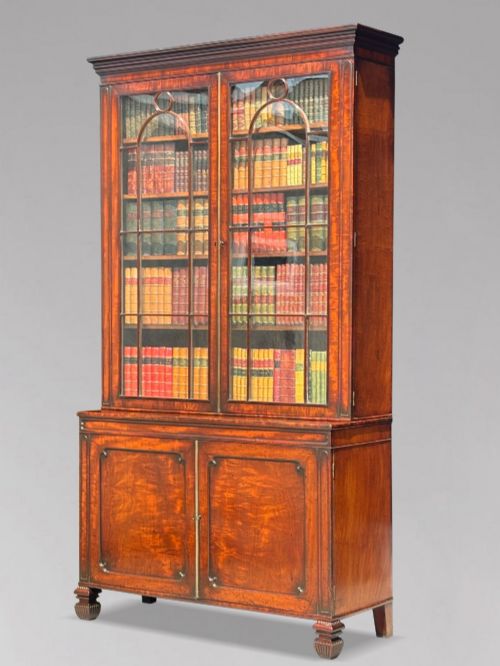
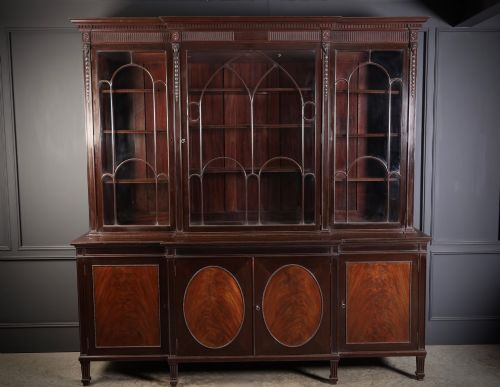
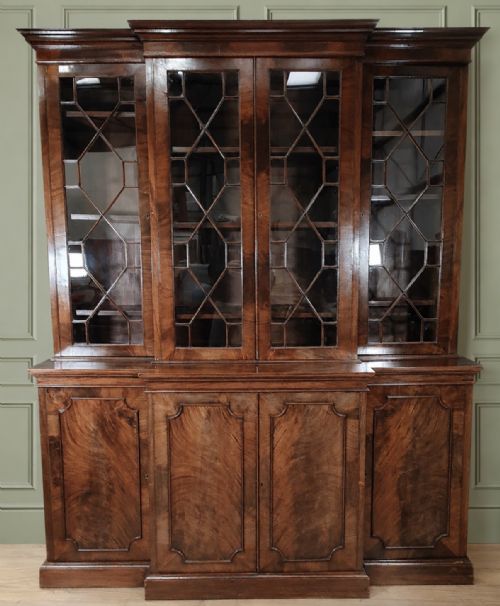
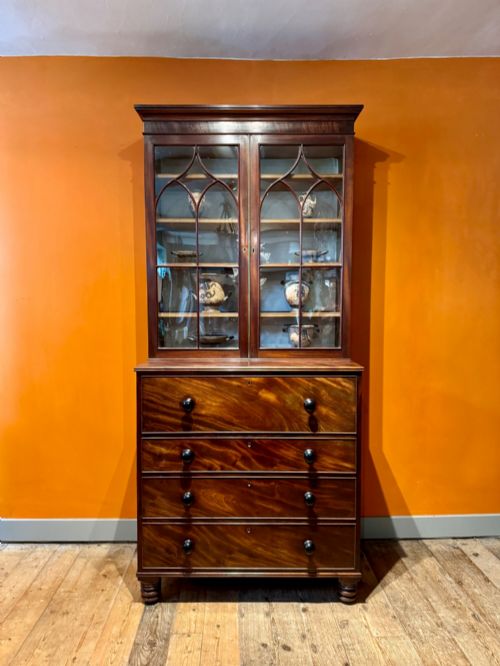
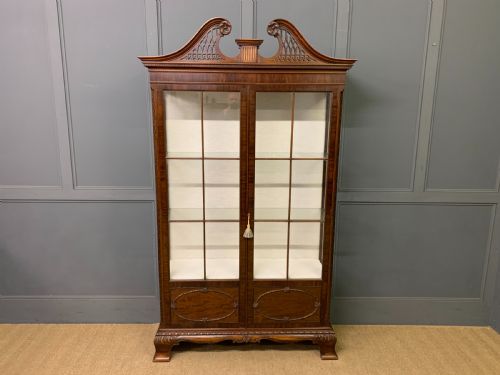
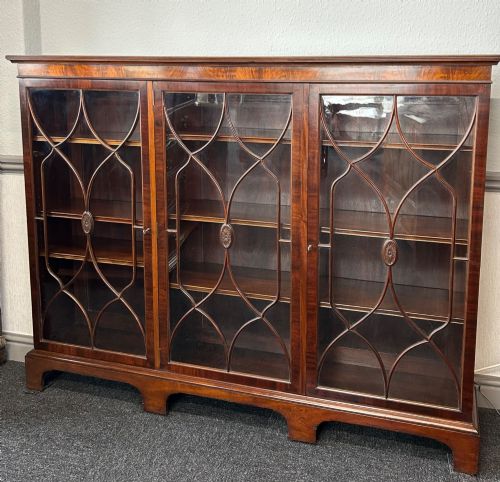
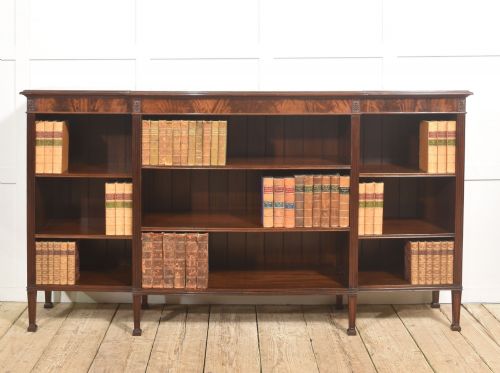

Georgian Flame Mahogany Bookcase
A georgian flame mahogany bookcase brings rich grain and grand proportion to a room, offering display alongside concealed writing surfaces.
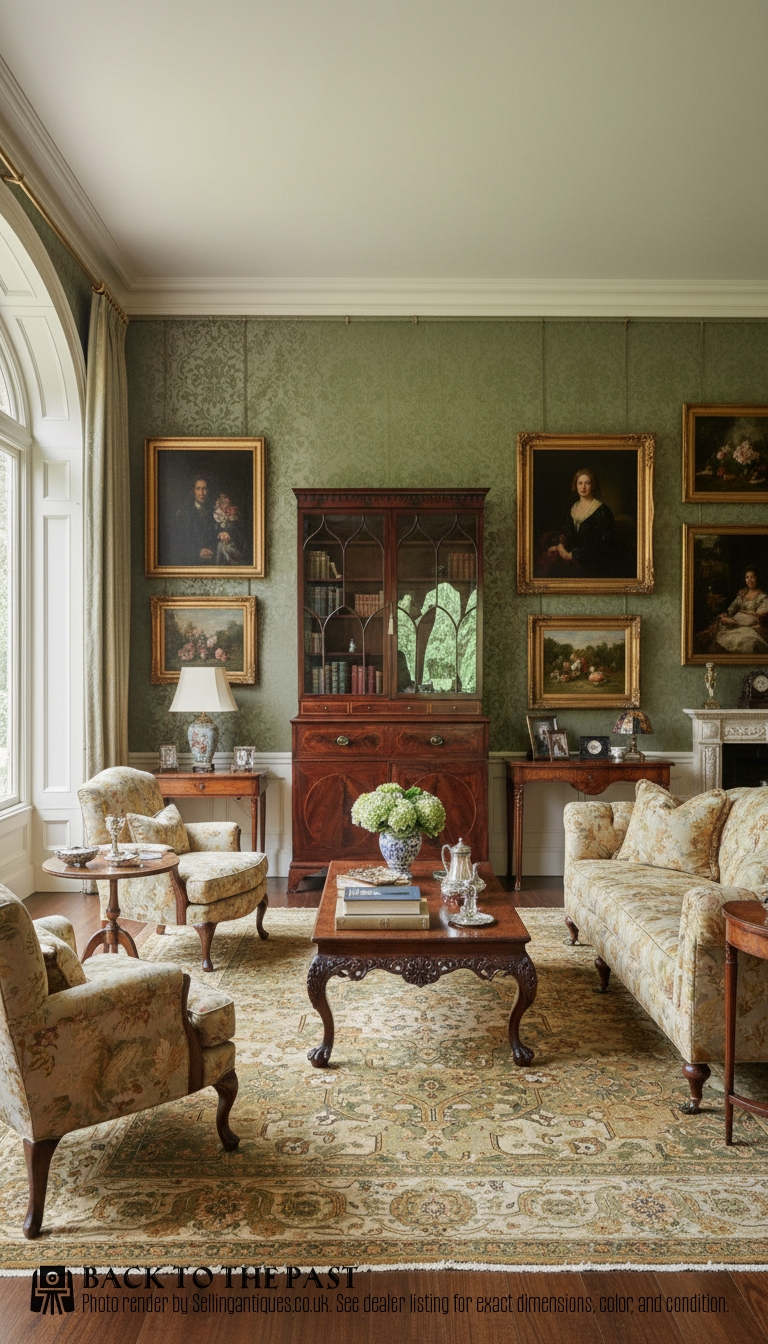
Georgian Flame Mahogany Bookcase
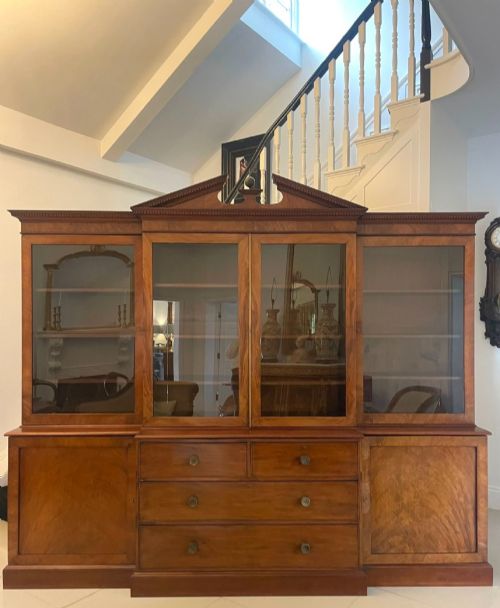
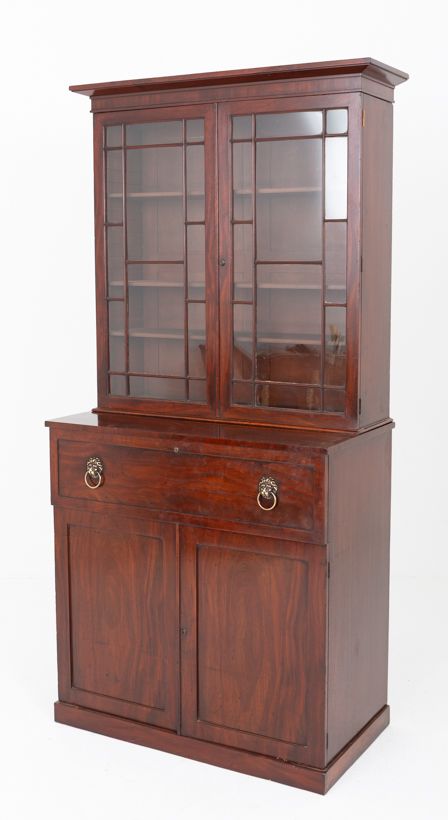
A georgian flame mahogany bookcase is a substantial piece of furniture designed for libraries and principal rooms, combining glazed upper shelving with lower cupboards or drawers. The versions you encounter most often span the Georgian, Regency, and William IV periods, alongside later revival pieces.
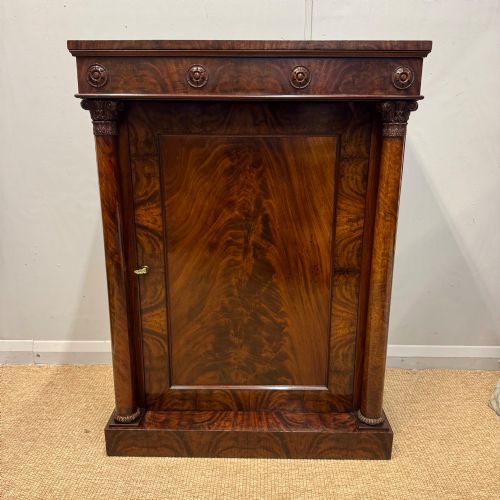
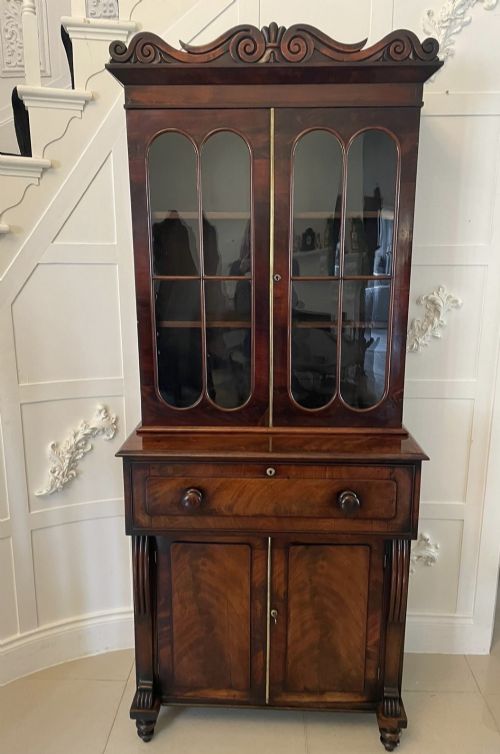
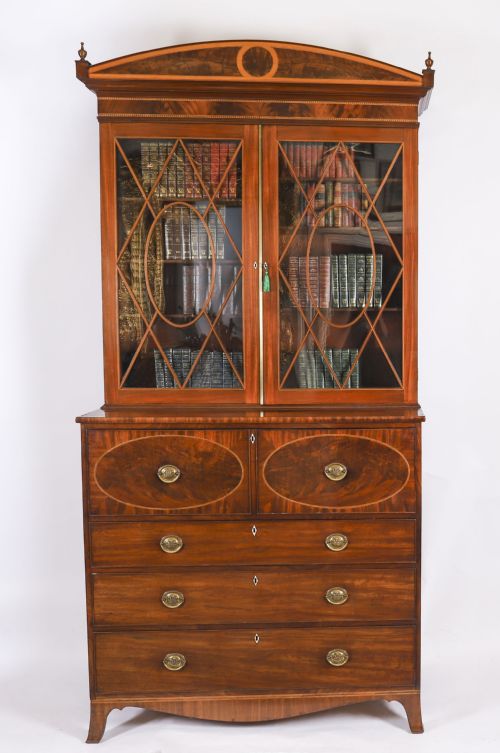
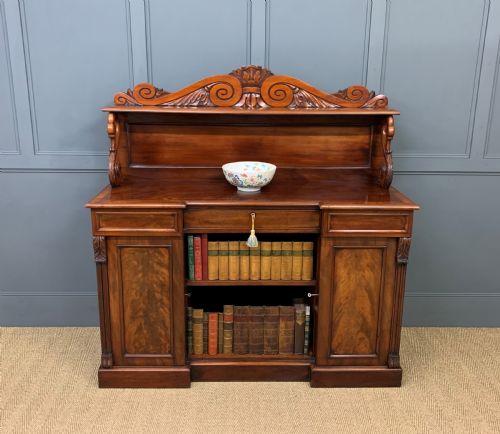
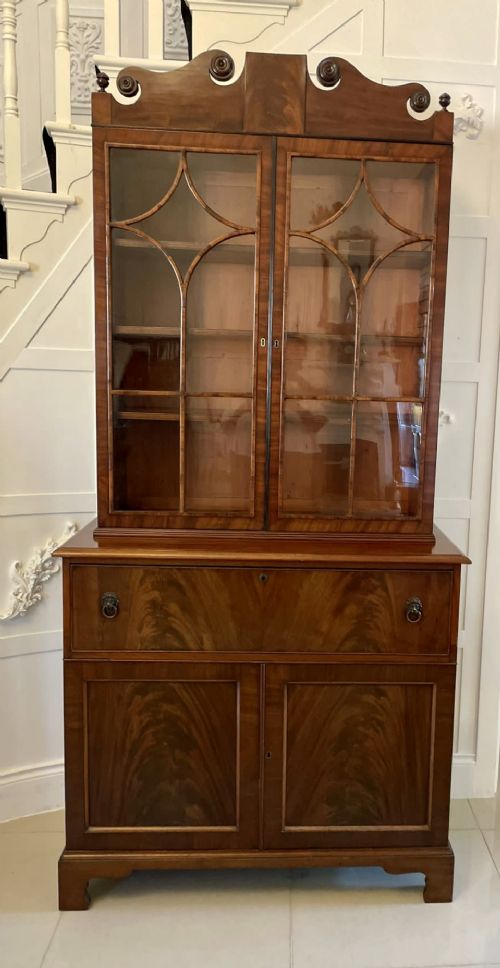
Makers utilised figured timber to create striking visual patterns on the principal doors and fall fronts. Common formats include breakfront library cases, tall bureau bookcases, and secretaire variations featuring fitted internal writing drawers.
The construction typically pairs solid mahogany carcasses with dramatic flame veneer panels on the exterior surfaces. Glass doors are frequently arranged with astragal bars in geometric or Gothic patterns.
What varies in quality
The standard of a georgian flame mahogany bookcase rests primarily on the symmetry and depth of the timber figure matched across the facade. Superior examples exhibit carefully planned veneer grain that flows logically from drawer to drawer and door to door.
Proportion and architectural detail also distinguish finer pieces, from the crispness of hand-carved cornice mouldings to the precise joinery of internal pigeonholes and small drawers within secretaire sections.
Georgian Flame Mahogany Bookcase Retail Price Guide 2026
Typical asking prices for georgian flame mahogany bookcase among the pieces listed under this phrase on Sellingantiques today, from the lower quarter to the upper quarter. They describe what is for sale here now, not the wider market.
Listings feature periods spanning from the 18th century through the Georgian and Regency eras into the Victorian period and Georgian Revival.
Wylie and Lochhead·S and H Jewell of London
The Georgian Flame Mahogany Bookcase Glossary
- Flame mahogany
- A decorative wood veneer harvested from the fork of the mahogany tree, prized for its swirling, feather-like flame pattern. It is applied to primary display surfaces for strong visual impact.
- Secretaire
- A cabinet incorporating a pull-out or drop-down drawer that serves as a writing desk, fitted with small drawers and pigeonholes inside. This keeps correspondence materials hidden when closed.
- Breakfront
- A cabinet design where the central section projects forward from the flanking wings, creating a more architectural and imposing silhouette. This layout is common in large library bookcases.
- Astragal
- The slender wooden moulding strip that holds individual panes of glass within a glazed cabinet door. These bars form the geometric grid pattern characteristic of period bookcases.
- Cresting
- The decorative carved wooden element topping the cornice of a tall bookcase. It adds height and formal presence to the piece.
Georgian Flame Mahogany Bookcase: Frequently Asked Questions
What is a secretaire bookcase?
A secretaire bookcase combines a traditional library bookcase with a pull-down writing drawer at the waist height. This lets the user write letters without needing a separate desk.
Inside, you find a collection of small pigeonholes and miniature drawers for stationery, all hidden behind a dummy drawer front when closed.
How do I spot flame mahogany?
Flame mahogany shows a distinctive, highly figured grain pattern that resembles flickering fire or feathers. Timber merchants cut this veneer from the junction where branches meet the main trunk.
Cabinet makers used these dramatic sheets on prominent doors and drawer fronts to catch the light.
Are these bookcases modular?
Period bookcases are heavy, permanent fixtures rather than modular furniture. They generally separate into an upper glazed section and a lower base unit to make transport possible.
This two-part construction allowed historically for easier movement up staircases and into large townhouses.
How do I care for the veneer?
Protect flame mahogany veneer by keeping the piece away from direct sunlight and steady heat sources, which cause the wood to dry and warp. Maintain a stable room temperature to prevent the animal glue beneath the veneer from failing.
Apply traditional beeswax occasionally to nourish the timber and preserve the polished surface.