


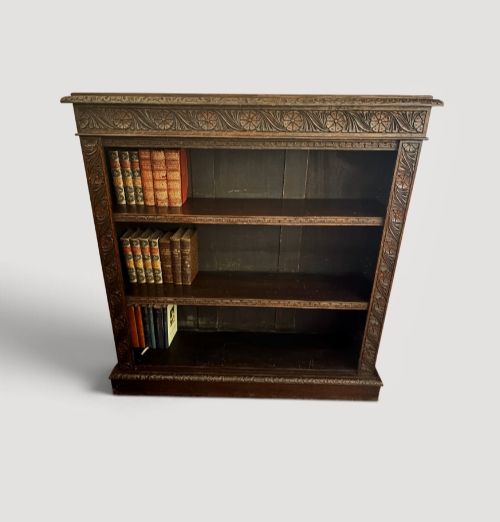
Standing Display Cabinet
A standing display cabinet brings together glass and timber to hold collections where light can reach every shelf.
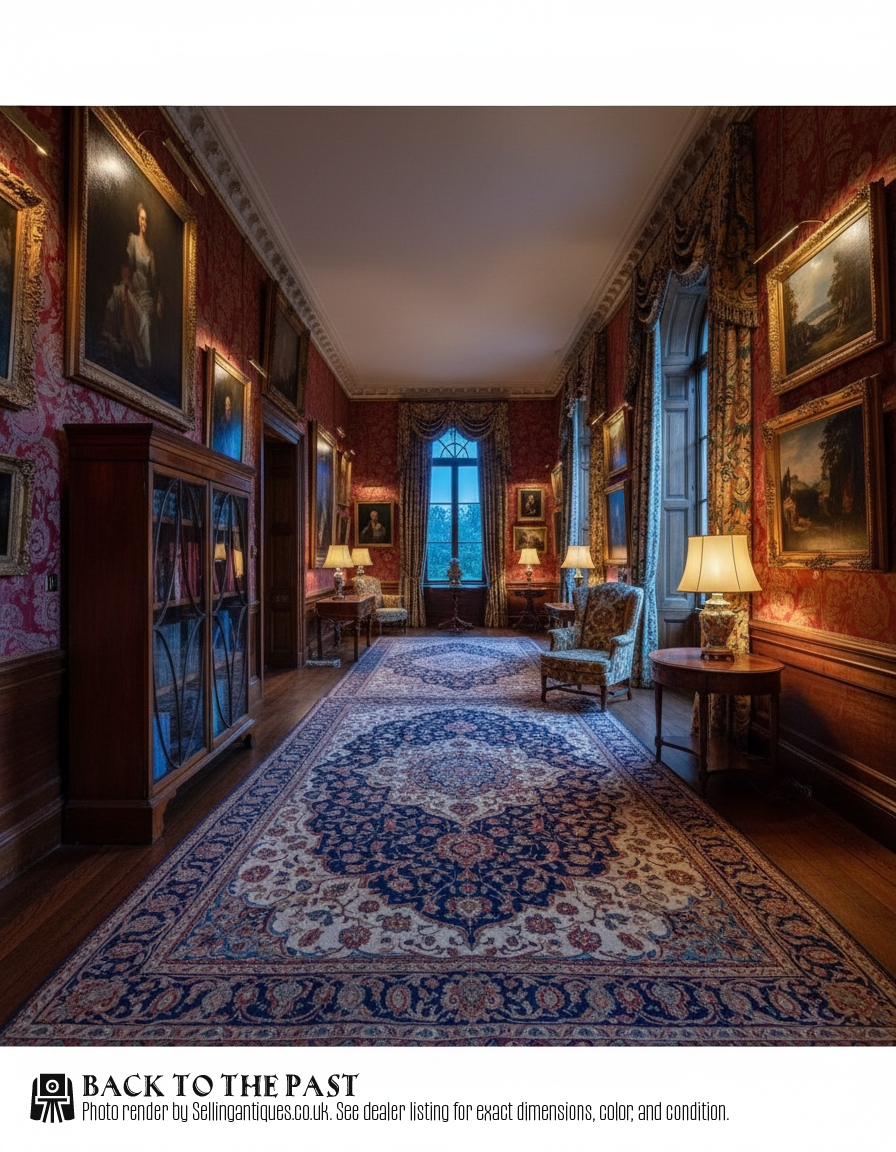
Standing Display Cabinet
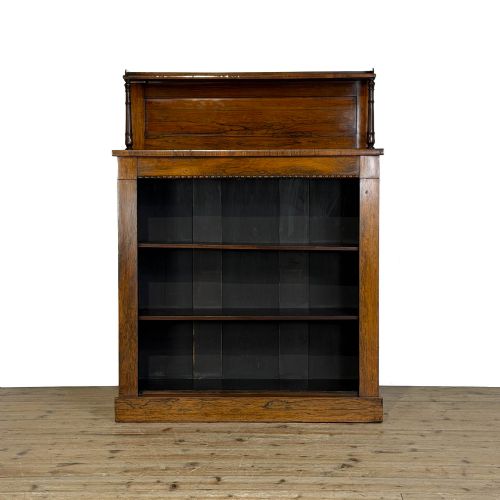
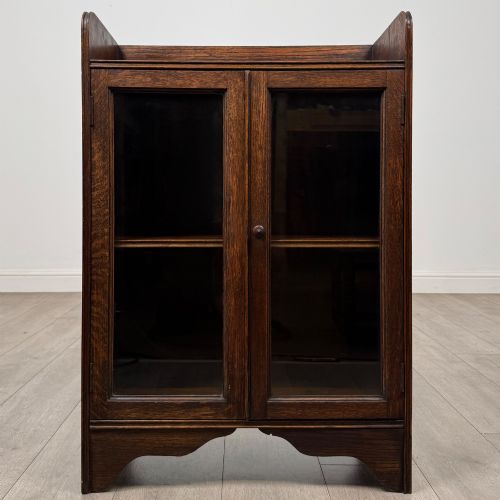
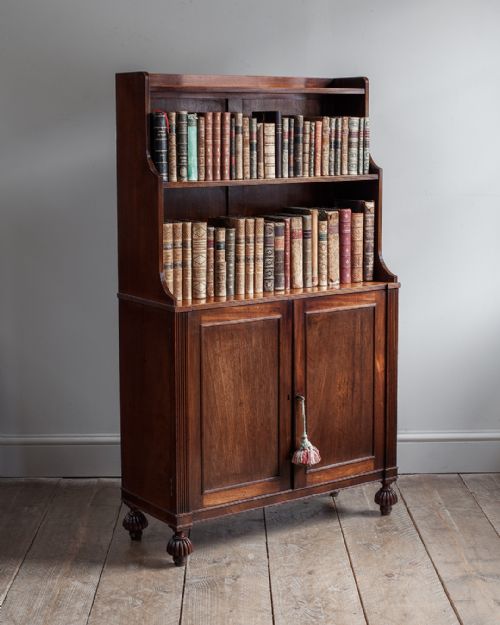
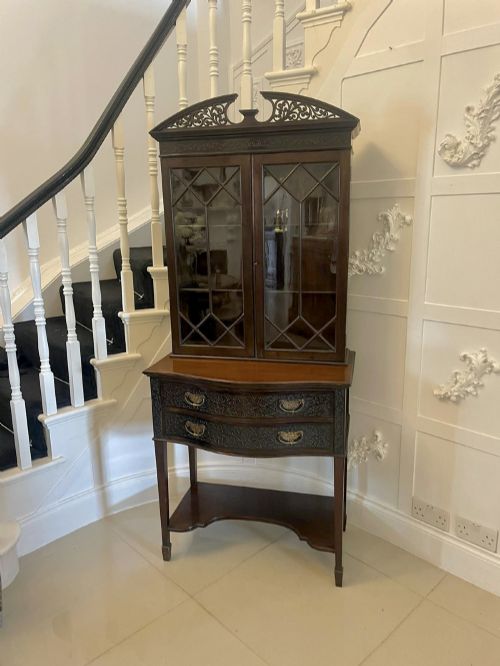
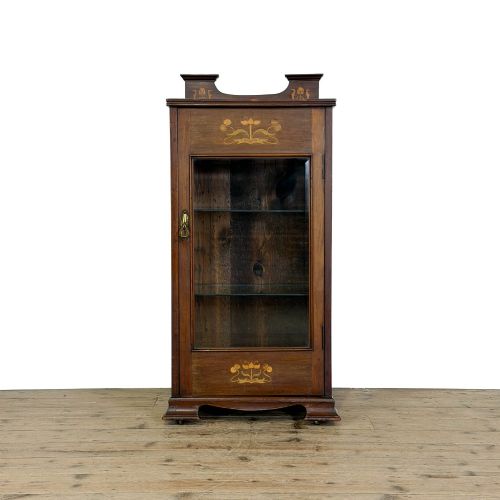
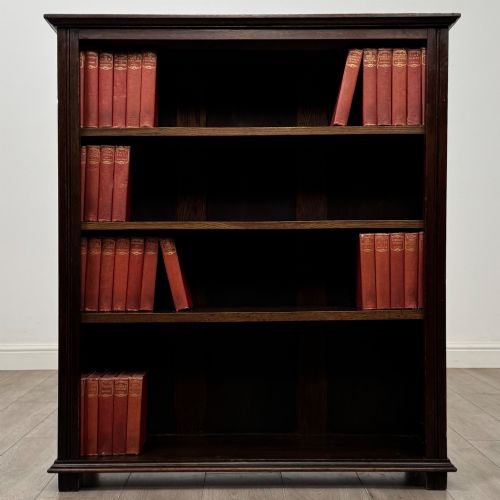
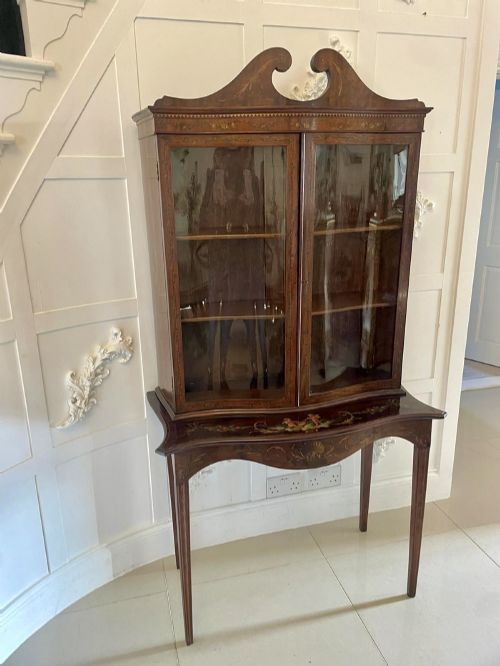
A standing display cabinet encompasses floor-standing furniture designed to exhibit objects behind glass doors or panels. These pieces range from upright corner cupboards and tall bookcases to dedicated vitrines and cabinets on stands.
Edwardian and Victorian examples in mahogany, oak, and walnut appear most frequently in this selection. They serve to protect curios and books while keeping them visible within a room.
Materials and Construction
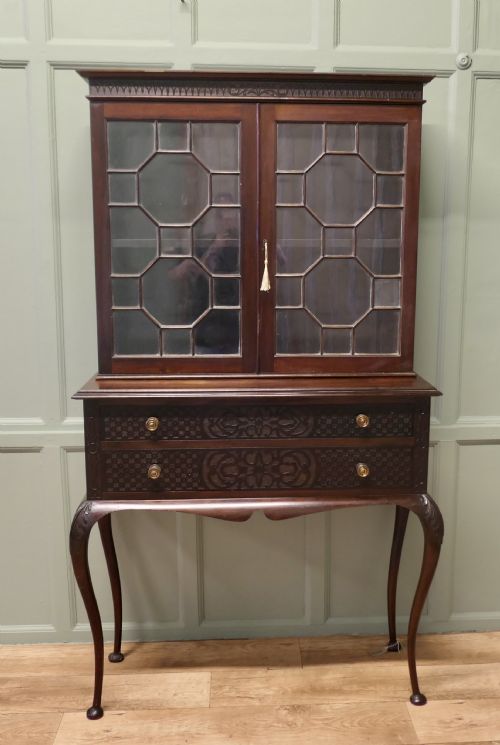
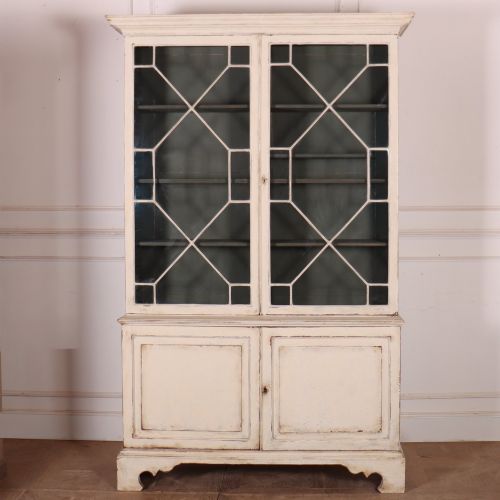
Cabinet makers utilised dense hardwoods such as mahogany, walnut, oak, and rosewood, often enhanced with satinwood, harewood, or mother of pearl inlay. Glass panels, frequently held by astragal glazing bars, allow light into the shelved interior.
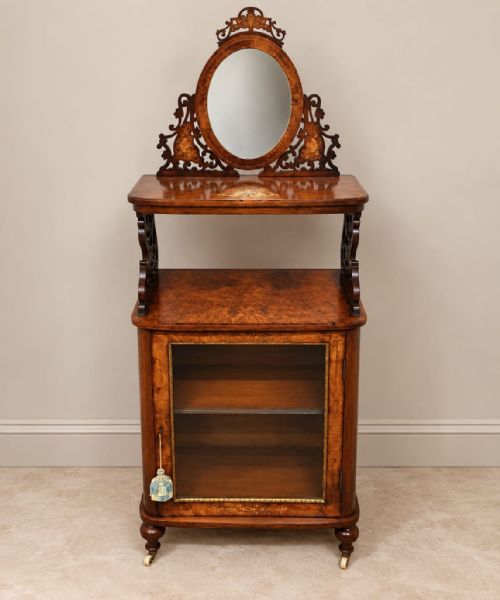
Structural details include brass castors, ormolu mounts, and mirror backs to reflect light through the stored items. Carved decoration and painted highlights complete the exterior finish across various periods.
Listings span the eighteenth, nineteenth, and twentieth centuries, incorporating Georgian, Victorian, and Edwardian periods.
Distinctions in Standard
Quality rests upon the selection of timber veneers, such as burr walnut or flame mahogany, and the precision of the marquetry or inlay work. Finer examples display meticulous joinery in the glazing bars and fitted interiors.
The integration of secondary elements, including original brass hardware, internal fabric linings, and carved mouldings, separates standard production pieces from workshop creations attributed to notable makers.
Gabriel Viardot·Collinson & Lock·Gill & Reigate·Edwards and Roberts
The Standing Display Cabinet Glossary
- Astragal glazed
- Glass panes divided by narrow wooden mouldings into smaller geometric sections. This technique creates a secure grid across cabinet doors.
- Vitrine
- A glass-sided display case designed to showcase porcelain and small objects from all angles. These freestanding cabinets sit raised on legs or plinths.
- Marquetry
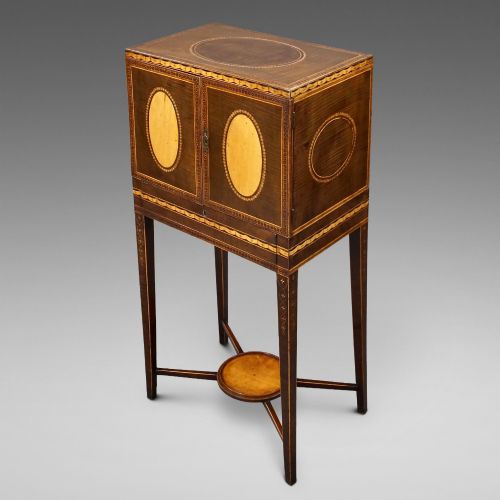
- Decorative patterns formed by fitting together thin veneers of various coloured woods. Craftsmen apply these designs to the exterior surfaces of doors and friezes.
- Corner cabinet
- A standing cupboard shaped to fit neatly into the corner of a room. Versions range from single-door units to double-height stacked designs.
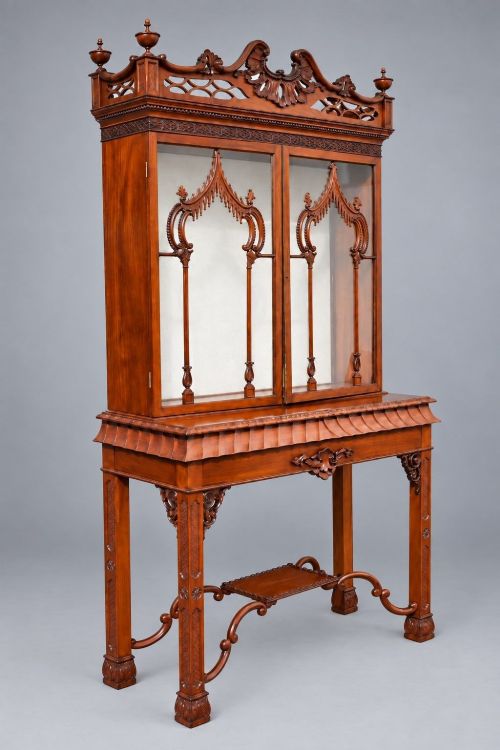
- Cabinet on stand
- A storage compartment supported by an open underframe with legs. This form lifts the main body higher off the floor.
Standing Display Cabinet: Frequently Asked Questions
What fits inside a display cabinet?
These cabinets suit porcelain collections, glassware, books, and small curiosities. The internal shelves hold decorative objects where glass doors protect them from dust.
The depth and height of each shelf determine the scale of items you can arrange inside. Many versions include mirrored backs to enhance visibility.
Where should I place a corner cabinet?
Corner cabinets occupy unused room angles while providing storage space. They function effectively in dining rooms or drawing rooms to utilise perimeter space.
Their triangular footprint allows tall furniture to stand securely without dominating the central floor area of the room.
How do I identify an Edwardian cabinet?
Edwardian pieces often feature lighter mahogany or oak construction with delicate satinwood inlay. They frequently date from the period around nineteen hundred and reflect refined revival styles.
Construction methods from this era combine machine-cut precision with hand-finished details such as astragal glazing bars and brass hardware.
What is a bijouterie cabinet?
A bijouterie cabinet incorporates a glazed top compartment designed for jewellery and small precious items. The internal lining often consists of velvet or fabric to cushion the contents.
These pieces stand at a height that allows objects to be viewed easily from above through the horizontal glass panel.