

Two Piece Cabinet
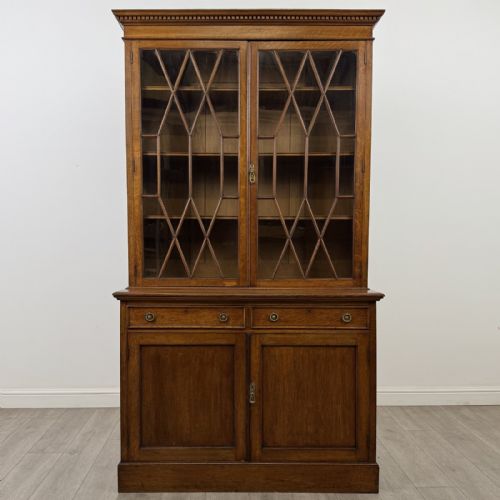
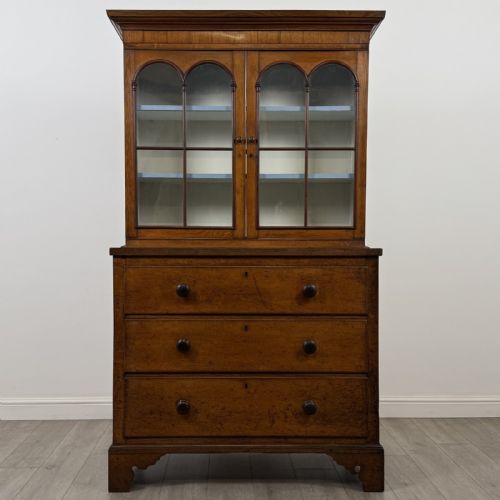
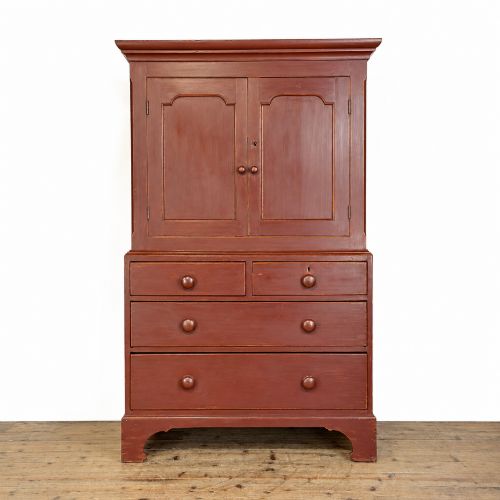
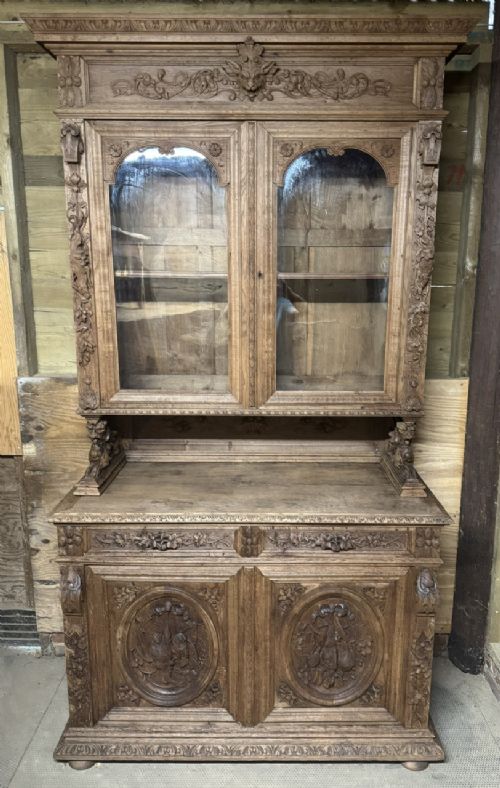
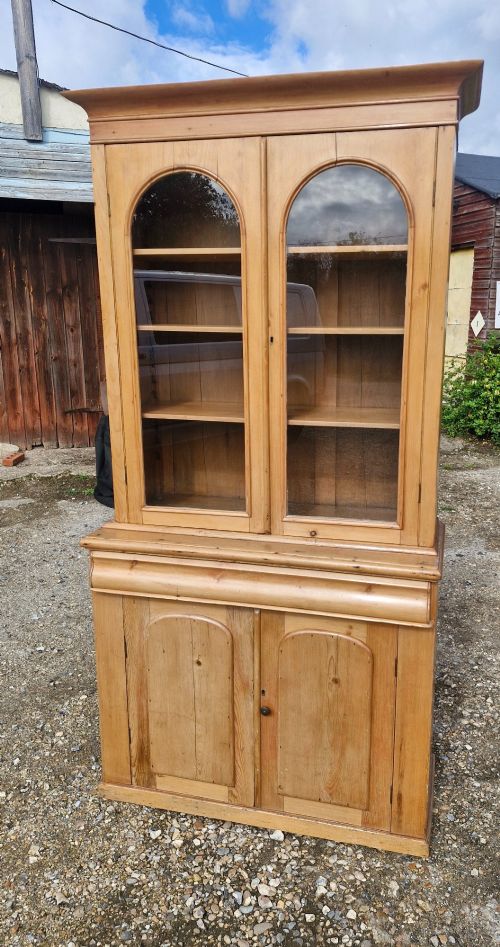
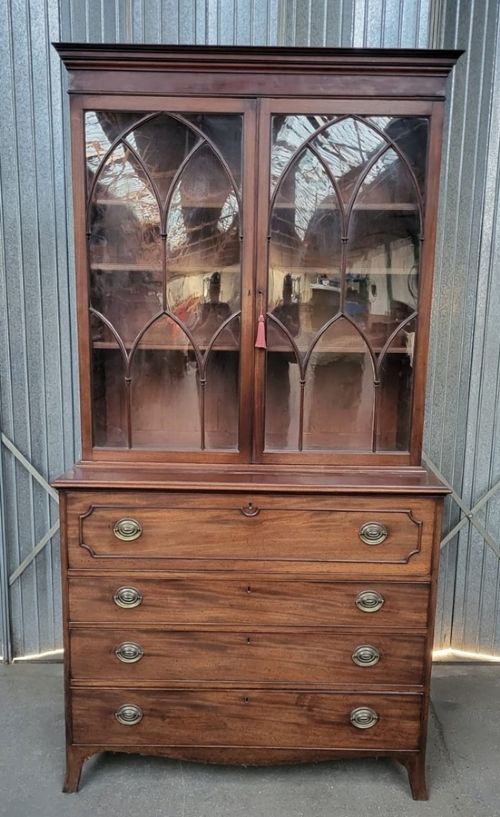
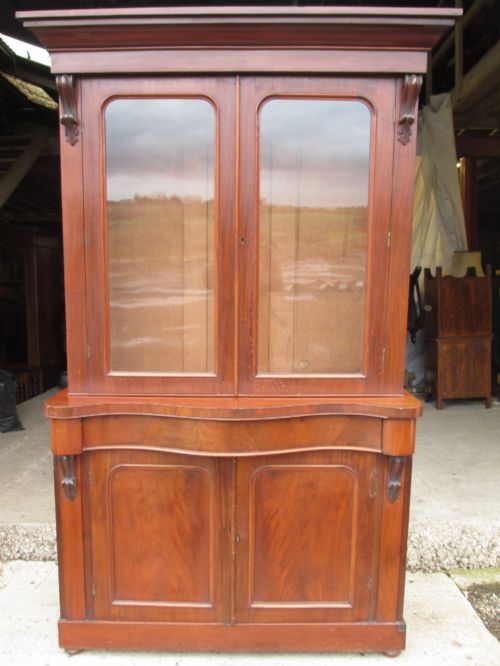
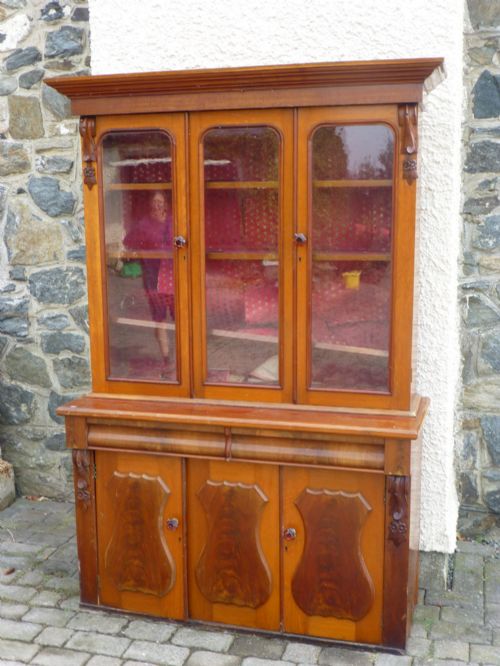
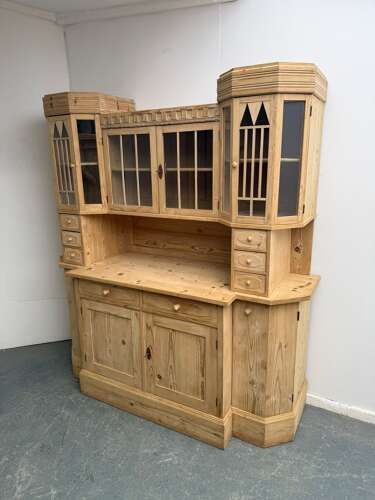
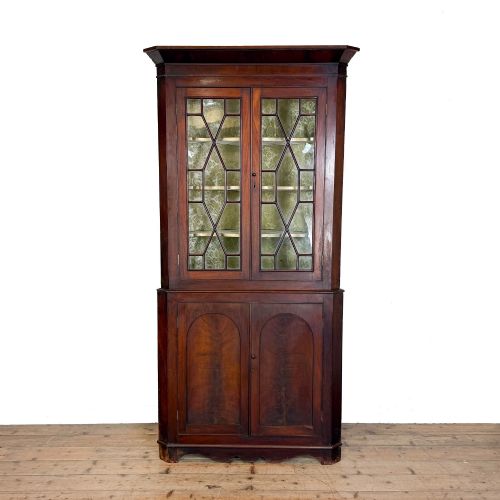
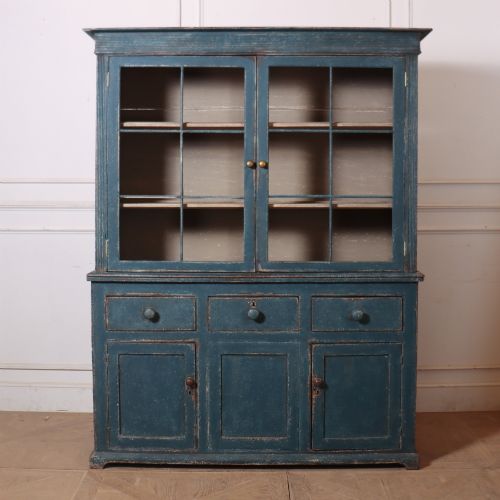
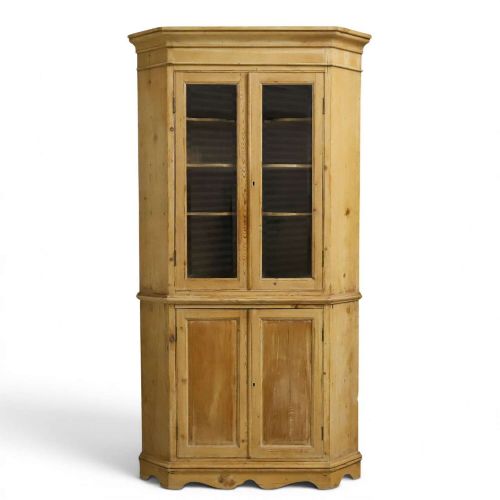
A two piece cabinet splits for movement, offering substantial display and storage space across distinct upper and lower sections.
Two Piece Cabinet
A two piece cabinet divides horizontally into a separate base and upper section, making transport manageable for large storage furniture. The pieces on this page span the Georgian, Victorian, and Edwardian periods, stretching back to the eighteenth century.
Forms include kitchen dressers, bookcase cabinets, corner cupboards, and commodes with vitrines. These split structures allow tall library bookcases and deep kitchen dressers to navigate doorways and stairs.
Originating domestically and regionally, these items appear in pine, oak, mahogany, and walnut. The two-part construction provides utility and presence while remaining modular for placement in period homes.
How they were made
Construction relies heavily on timber selection, utilising solid pine, oak, and mahogany alongside veneers of satinwood or flame mahogany. Carcasses join through traditional cabinet-making methods, supporting heavy glazed doors and panelled drawers.
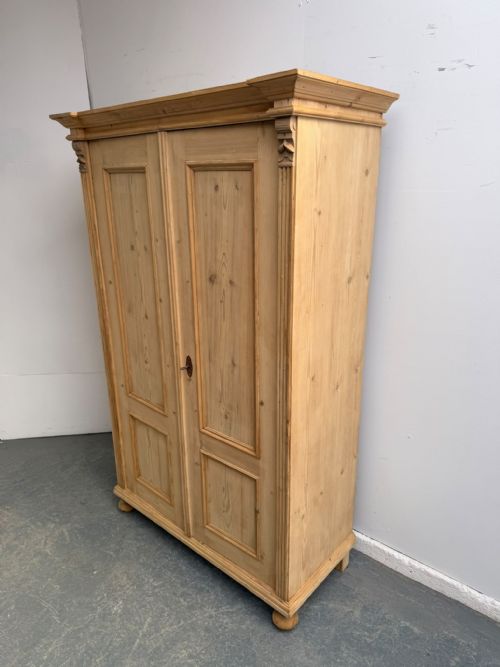
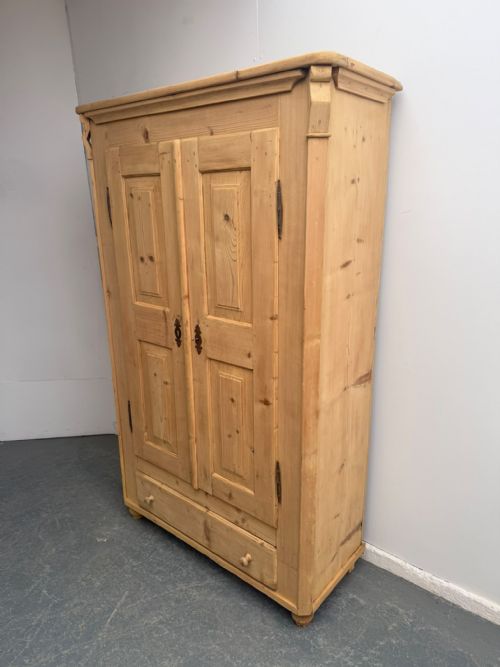
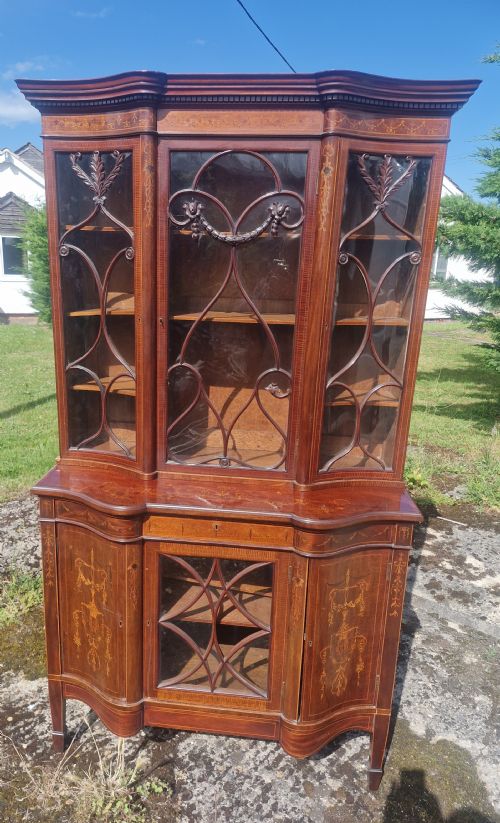
Surface treatments vary from stripped pine and waxed finishes to painted cream and teal surfaces, marquetry inlays, and brass hardware. Glass elements feature in display sections, often with astragal bars dividing the panes.
What varies in quality
Quality shows in the grain alignment of mahogany or walnut veneers, the crispness of marquetry inlay, and the retention of original brass fittings and glazed panels. Superior examples exhibit balanced proportions and fine faded patinas on the timber.
The precision of the horizontal split joint and the stability of the upper section resting upon the base separate standard utility furniture from exceptional cabinet-work. Original painted finishes or carefully stripped timber retain higher historical integrity than later alterations.
The Two Piece Cabinet Glossary
- Astral glazed
- Glass held in place by wooden bars dividing the door into smaller panes. This technique is common on eighteenth and nineteenth-century bookcase doors.
- Marquetry
- Decorative veneer patterns formed by fitting together small pieces of wood, shell, or ivory. It appears frequently on Edwardian display cabinets.
- Linen press
- A tall cupboard featuring sliding trays or shelves behind doors, historically used for storing folded textiles. Many include a chest of drawers in the lower section.
- Buffet de corps
- A traditional French two-body sideboard or cupboard featuring a lower storage base beneath an upper cabinet. They are typically constructed from solid oak.
- Secretaire bookcase
- A tall cabinet incorporating a drop-front writing drawer combined with upper shelving. This form provides a compact desk space within a library unit.
Two Piece Cabinet: Frequently Asked Questions
How do I move a two piece cabinet?
A two piece cabinet separates into an upper section and a lower base, making transport through doorways significantly easier than moving a single tall structure.
Lift the top section straight up off the base after removing any loose internal shelves and securing the doors.
Are all two piece cabinets modular?
Most examples split horizontally into two distinct parts specifically designed to be stacked together. This construction method originated to ease the movement of heavy furniture through stairwells and narrow halls.
Check the dividing line across the waist of the cabinet to confirm the two-part construction before attempting to separate them.
How do I care for waxed pine furniture?
Waxed pine surfaces require occasional nourishment with a traditional beeswax polish to maintain the sheen and protect the timber from drying out. Avoid placing these pieces in direct sunlight or near heat sources to prevent the wood from warping.
Buff the surface gently with a soft cloth after applying wax to preserve the aged patina.