


Georgian Fireplace Screen
A georgian fireplace screen stands as a masterclass in domestic utility, shielding faces from the fierce hearth while displaying extraordinary needlework.
Georgian Fireplace Screen
A georgian fireplace screen brings architectural presence to a room, typically taking the form of a pole screen with an adjustable panel or a freestanding frame. The selection here ranges across the Georgian, Regency, and nineteenth-century periods, with mahogany and rosewood forming the primary timber structures.
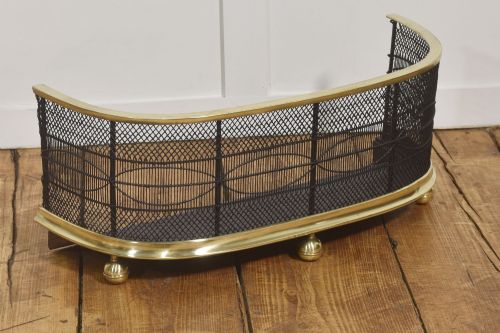
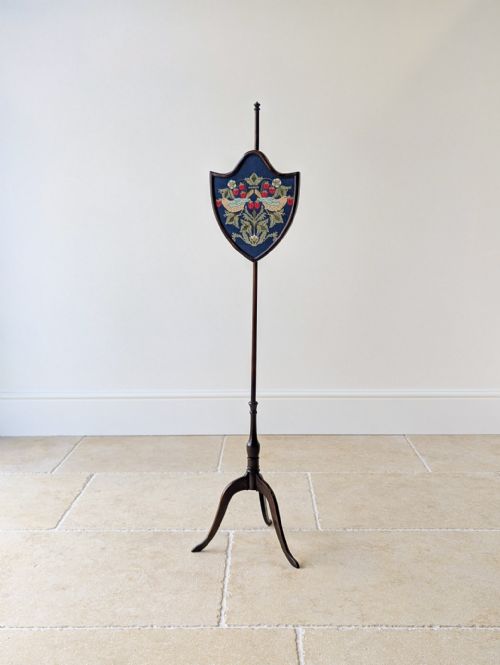
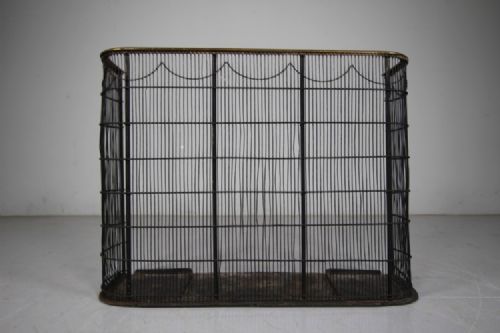
The varieties encountered include tripod pole screens with needlework panels, brass wirework nursery guards, and giltwood frames. Many examples incorporate textiles, wool, and embroidery directly within the sliding panel to deflect the heat of the fire.
Forms span from Chippendale mahogany designs to Regency Chinoiserie and Goncalo Alves constructions. Buyers frequently encounter adjustable mechanisms that allow the screen panel to slide up and down its central turned pole.
Materials and construction
Makers utilised dense hardwoods such as mahogany, rosewood, and Goncalo Alves for the turned poles and tripod bases, ensuring stability beside the hearth. Giltwood and brass also appear in frames and protective nursery guards.
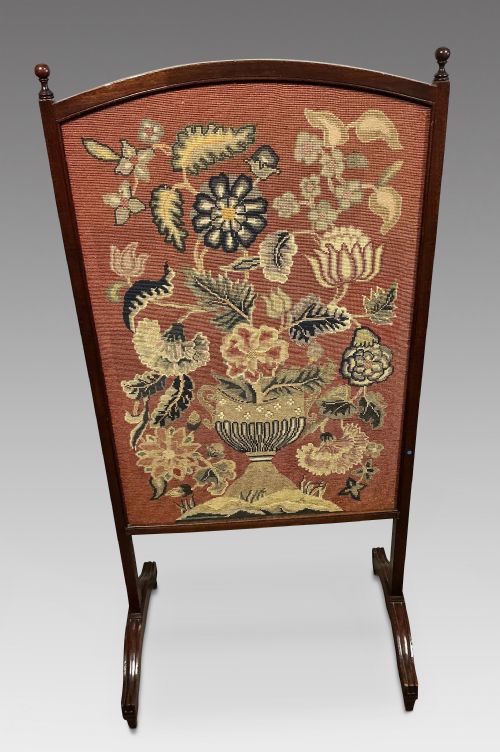
Panels often incorporate hand-worked textiles, wool needlepoint, tapestry, and poker work fixed within wooden or metal surrounds. Brass wirework provides an alternative medium for protective guards designed to contain stray embers.
Some screens feature poker work panels, proving that historical domestic comfort occasionally relied on a hot iron and a steady hand.
Assessing quality and execution
Quality reveals itself in the crispness of the timber carving on the tripod base and the stability of the adjustable sliding mechanism on pole screens. Superior pieces exhibit well-balanced proportions and finely detailed needlework or tapestry within the panel.
The integrity of the frame construction and the original condition of the brass fittings or wirework distinguish finer examples from simpler utilitarian guards.
The Georgian Fireplace Screen Glossary
- Pole screen
- A freestanding wooden screen featuring a vertical shaft and an adjustable panel designed to block radiant heat from the fireplace. The panel typically slides up and down on a collar.
- Needlework panel
- A piece of hand-stitched canvas work or embroidery mounted within the frame of the screen. These often depict floral motifs or pictorial scenes.
- Tripod base
- A three-legged support structure commonly found beneath the central shaft of pole screens, frequently terminating in pad or claw feet.
- Poker work
- A technique of decorating wood by burning designs into the surface with a heated tool. This method appears on selected adjustable panels.
- Nursery guard
- A protective metal or wirework barrier placed around the hearth to keep children and stray sparks at a safe distance from the fire.
Georgian Fireplace Screen: Frequently Asked Questions
How do pole screens work?
A pole screen operates via a sliding collar that grips the central wooden shaft, allowing the user to raise or lower the textile panel to the desired height.
This adjustment mechanism enables people sitting near the hearth to protect their faces from the intense heat of an open fire.
Where were fireplace screens placed?
These screens stood directly between the seated company and the burning hearth, positioned wherever the radiant heat felt most uncomfortable.
In period rooms, they were easily moved about the floor as the seating arrangement changed throughout the day.
How do I care for antique needlework panels?
Textile panels benefit from being kept out of direct sunlight to prevent the wool and embroidery threads from fading over time. Gentle dusting with a soft brush helps maintain the fabric without disturbing the historic fibres.