



Carved Rosewood Pole Screen
These carved rosewood pole screens are adjustable fireside shields that protect faces from open flames while adding height and texture to a room.
Carved Rosewood Pole Screen
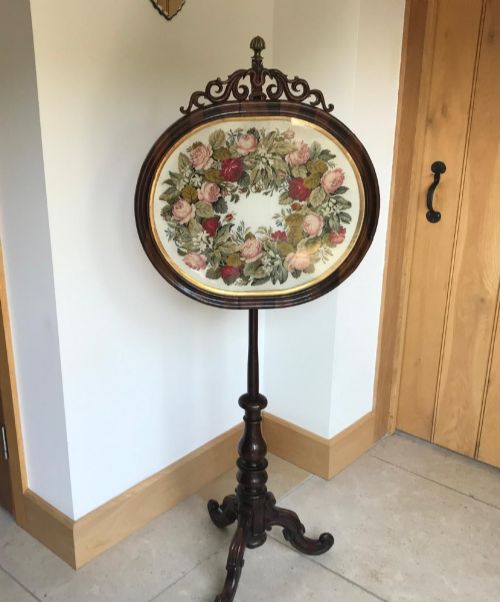
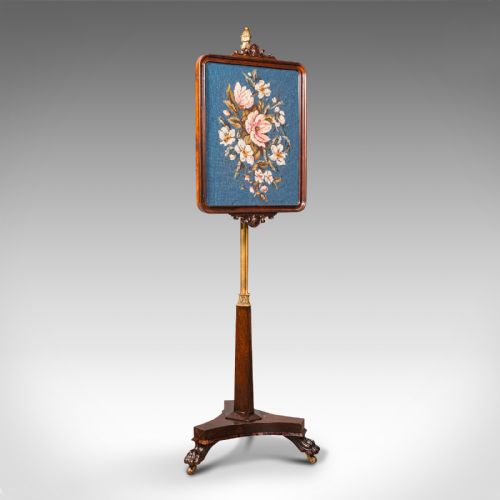
A carved rosewood pole screen stands vertically on a tripod base, holding a movable panel designed to block the fierce heat of an open hearth. The versions on this page predominantly date from the Victorian and William IV periods, alongside Regency examples.
Most pieces feature a needlepoint, tapestry, or embroidered panel mounted on a slender turned or carved column. These adjustable panels slide up and down to suit the user, reflecting the domestic habits of nineteenth century drawing rooms.
The forms range from standard nineteenth century tripod designs to grander proportions, often incorporating floral motifs or detailed woodwork on the base and standard. They serve today as decorative accent pieces rather than functional hearth shields.
How they were made
Cabinet makers utilised dense rosewood for the structural poles, tripod legs, and frames, turning and carving the timber to achieve slender stability. Brass components often secure the adjustable panel to the central shaft, allowing smooth vertical movement.
The panels themselves consist of wool, silk, or canvas worked in needlepoint and tapestry techniques. Skilled hands stitched intricate floral or pictorial scenes, which were then stretched and mounted into wooden frames.
The listings here span the eighteenth century, Regency, William IV, and Victorian periods, constructed predominantly from rosewood with brass and textile elements.
What varies in quality
The sophistication of the timber carving on the tripod base and standard separates simpler domestic items from finer examples. Crisp, deeply carved details indicate superior workshop production during the nineteenth century.
The intricacy and condition of the textile panel also drive distinction across the range. Finely worked needlepoint with tight, complex stitching and minimal thread loss represents the higher tier of these fireside furnishings.
The Carved Rosewood Pole Screen Glossary
- Pole screen
- A freestanding fireside screen with an adjustable panel mounted on a vertical pole and supported by a base. This device protected sitters from the direct heat of an open fire.
- Needlepoint
- A type of canvas work embroidery executed with a yarn, often wool or silk, stitched over a mesh grid. It forms the primary decorative imagery seen on the panels of these screens.
- Tripod base
- A three-legged support structure commonly utilised to give stability to vertical poles and standards. These legs frequently feature scrolling or carved animal forms.
- William IV
- A British design period spanning the early nineteenth century, characterised by robust classical revival forms and dark timbers. Pieces from this era often display bold architectural turning.
- Tapestry
- A form of textile art woven on a loom or worked by hand with various coloured threads to depict scenes or floral patterns. In these listings, it describes the pictorial face of the screen.
Carved Rosewood Pole Screen: Frequently Asked Questions
What is a pole screen used for?
These screens were placed near fireplaces to shield a person's face and complexion from the intense radiant heat of an open coal or wood fire. The adjustable panel could be raised or angled as needed.
Today, they function primarily as decorative vertical elements in traditional interiors, drawing the eye upward and adding textile warmth to a corner or empty wall space.
How do I adjust the panel height?
The central panel is attached to a collar or thumb screw mechanism that grips the vertical wooden pole. Loosening this collar allows the panel to slide up and down.
Care should be taken when adjusting older brass fittings to avoid straining the wood or tearing the surrounding fabric frame.
How can I tell a Victorian screen from a Regency one?
Regency and William IV pieces often display sharper classical influences, cleaner lines, and bolder proportions dating from the early decades of the nineteenth century. Victorian examples frequently embrace heavier floral carving and more elaborate, ornate woodwork.
Construction details and the specific style of the needlepoint work also help distinguish the decades across the nineteenth century.
Where should I place a pole screen in a room?
They suit corners, empty wall spaces, or beside seating arrangements where their vertical height can break up horizontal furniture lines. Because the back of the panel is often finished simply, placing them near a wall works best.
Keep them away from direct, strong sunlight to protect the wool and tapestry threads from fading over time.