


Regency Needlepoint Screen
A regency needlepoint screen stands as a brilliant focal point in any room, combining decorative textiles with ingenious domestic function.
Regency Needlepoint Screen
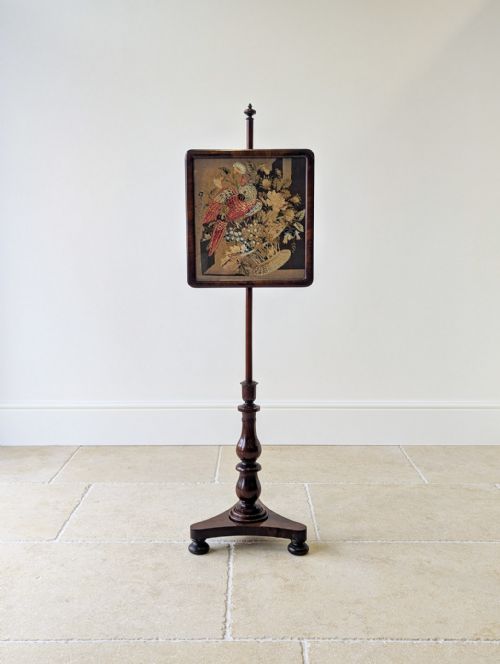
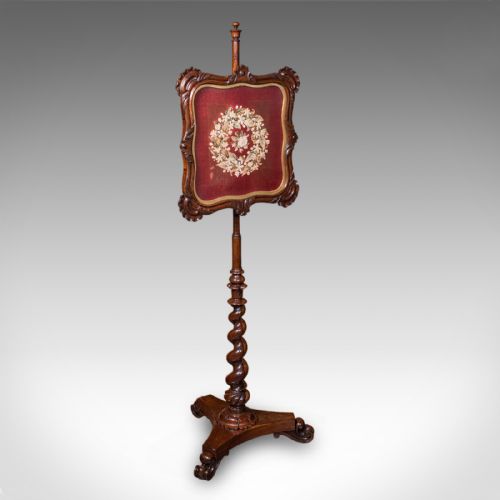
A regency needlepoint screen is most commonly encountered on this page as a pole screen designed to deflect hearth heat or as a multi-panel room divider. The pole screens typically feature a framed panel mounted on an adjustable vertical shaft supported by a tripod base.
The materials and periods span the Regency, William IV, and Georgian eras, encompassing both compact fireside accessories and large four-panel privacy screens. Textile panels dominate the evidence, featuring wool, needlepoint, and tapestry work mounted within timber frames.
Materials and construction
Timber frames are fashioned from mahogany, rosewood, walnut, goncalo alves, palisander, and giltwood, reflecting the cabinetmaker's choice of dense hardwoods. Brass hardware frequently secures the adjustable pole mechanisms and decorative fittings.
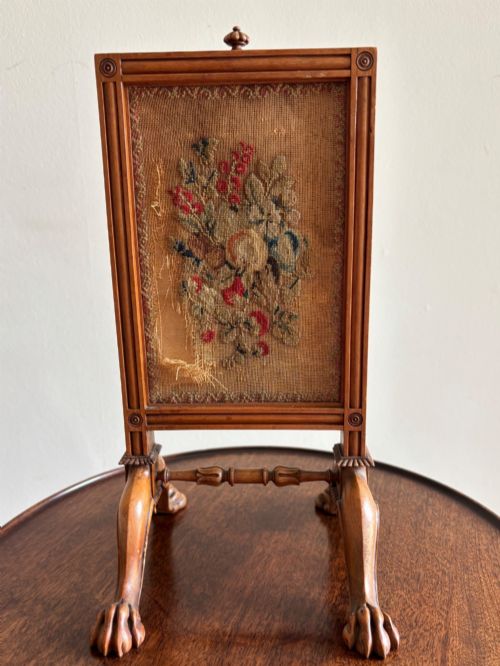
The textile panels utilise wool and needlepoint or tapestry techniques to create detailed pictorial and geometric designs. Glass occasionally appears alongside these textiles as a protective or reflective element within the frame.
Needlework samplers repurposed as firescreens preserve the quiet domestic hours spent stitching by nineteenth-century firesides.
Distinguishing the pieces
The refinement of the timber turning on the pole standards and the stability of the tripod bases differentiate the construction. Dense, highly figured grains in rosewood, mahogany, or goncalo alves elevate the physical presence of the stand.
The complexity and execution of the needlepoint or tapestry work determine the visual merit of the panel. Finely worked wools depicting intricate scenes require substantial labour and skill compared to simpler geometric patterns.
The Regency Needlepoint Screen Glossary
- Pole screen
- A fireside furnishing comprising an adjustable vertical stand that supports a framed textile panel. It was positioned to shield a person's face from the intense heat of an open coal fire.
- Needlepoint
- A type of counted thread embroidery stitched onto a stiff open-weave canvas foundation. It forms the dense pictorial panels seen on these screens.
- Tapestry
- A form of textile art woven on a loom, often imitated by or referred to alongside needlework panels in period furnishings.
- Goncalo Alves
- A dense exotic hardwood with striking contrasting grain patterns utilised in high-status Regency cabinetmaking.
- Palisander
- A rich, dark timber belonging to the rosewood family, frequently selected for fine decorative pieces during the nineteenth century.
Regency Needlepoint Screen: Frequently Asked Questions
What is a pole screen used for?
These adjustable stands were placed near the hearth to protect a seated person's face from the fierce heat of an open fire. The sliding mechanism allowed the textile panel to be raised or lowered as required.
They also served a decorative purpose in the principal reception rooms of the period, displaying fine needlework created by the household.
How do I date a Regency screen?
Dating relies upon observing the timber species, turning style on the vertical shaft, and base construction. Regency and William IV pieces often display turned rosewood or mahogany standards with specific tripod foot configurations.
The style of the needlepoint embroidery also provides clues, though panels were sometimes updated or replaced during the nineteenth century.
Are room dividers and pole screens the same?
Both fall under the category of screens, but their form and function differ significantly. Pole screens consist of a single adjustable panel on a pedestal stand intended for the fireside.
Room dividers feature multiple folding panels designed to partition large spaces or provide privacy within a chamber.
How do I care for antique needlepoint?
Protect the wool and textile panels from direct sunlight to prevent the fading of natural dyes. Keep the items away from excessive moisture and fluctuating temperatures to preserve the wooden frames.
Gentle dusting with a soft brush is sufficient for maintenance, avoiding liquid cleaners on the historic fabric.