



Georgian Fire Screen
A georgian fire screen protects the room from the fierce heat of an open hearth while framing delicate needlework or polished wood.
What these pieces are
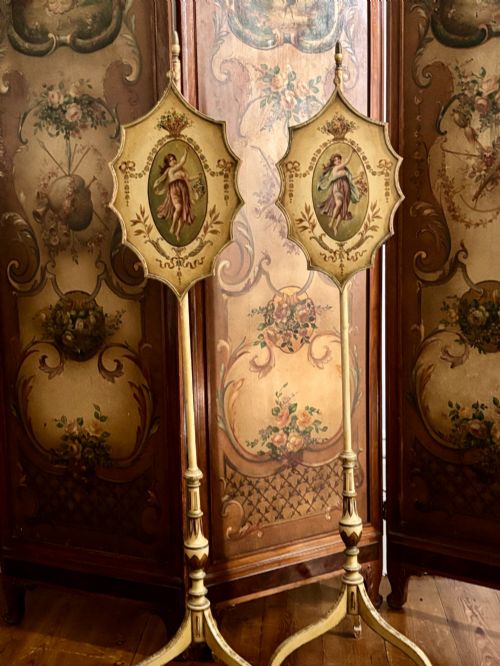
A georgian fire screen takes the form of a vertical panel designed to sit before an open fireplace, shielding those seated nearby from direct radiant heat. The examples gathered here span the Georgian, Regency, and Victorian eras, encompassing the refined forms of the eighteenth century through to later nineteenth-century adaptations.
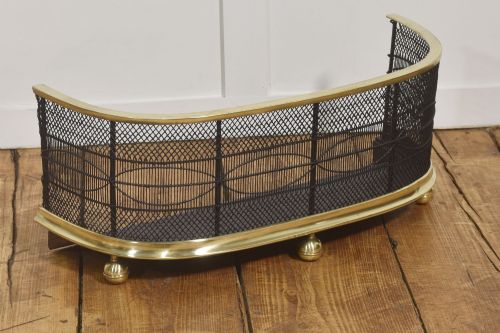
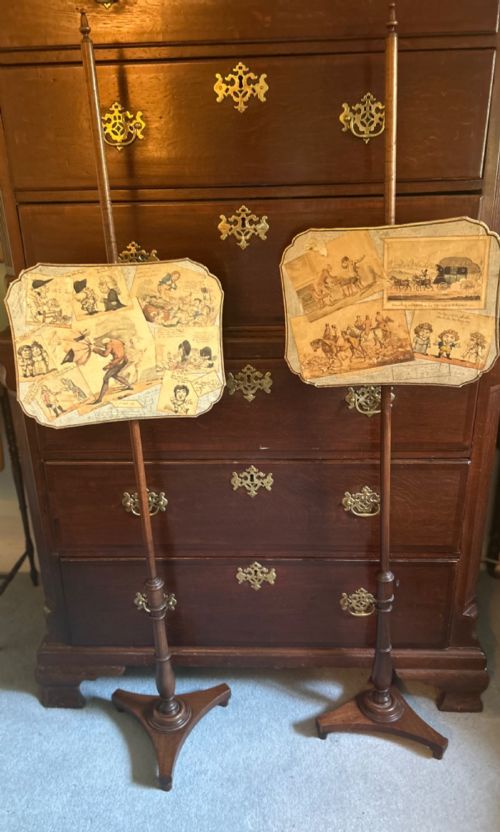
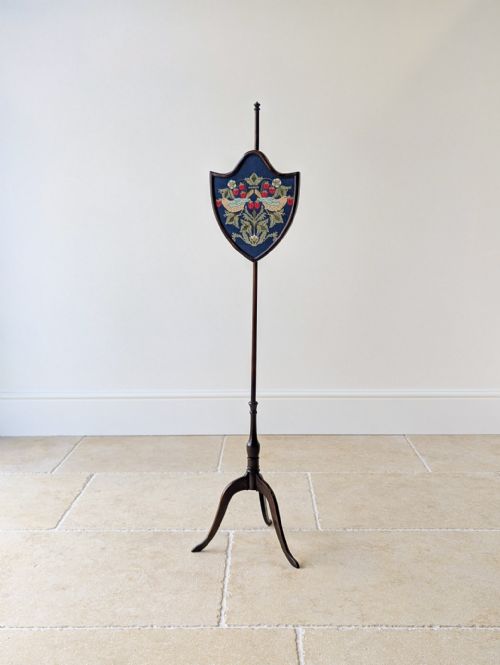
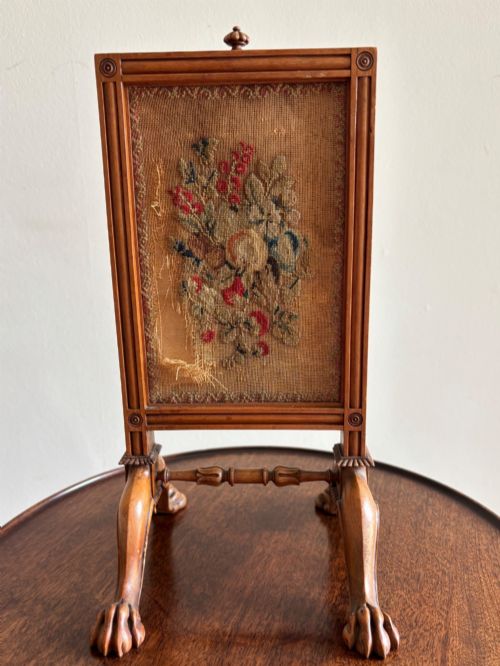
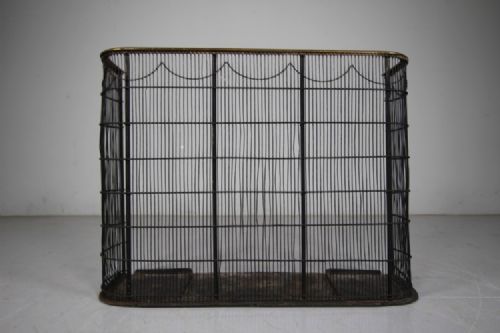
The prevailing format among these items is the pole screen, where an adjustable panel slides vertically upon a central wooden shaft supported by a tripod or platform base. Other iterations present as larger fixed or adjustable screens, sometimes formed of fine wire mesh or substantial timber frames.
Origins represented across the inventory include pieces originating directly from the Georgian and Regency periods, alongside later Victorian interpretations such as an adjustable screen dated to eighteen fifty. Materials range from traditional hardwoods to delicate textiles and metals, reflecting the changing tastes of domestic interiors across successive generations.
How they were made
Cabinetmakers utilised dense timbers such as mahogany, rosewood, goncalo alves, and bamboo to construct the upright supports, frames, and tripod bases of these screens. These woods were often turned, polished, or carved to reflect prevailing classical motifs of the Georgian and Regency periods.
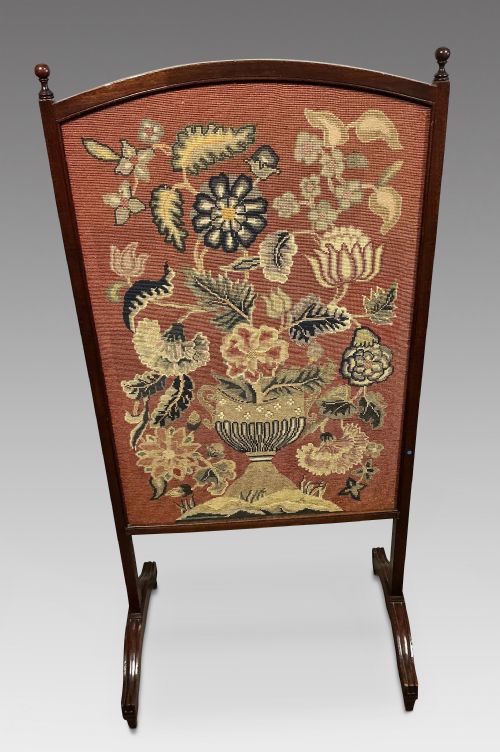
The protective or decorative screens themselves incorporated a variety of materials inserted into the wooden framework. Needlework panels, tapestry, wool, silk, glass, brass, iron, and wire mesh appear across the listings, held securely within the timber surrounds or mounted to adjustable brass rods.
Retail Price Guide 2026
Typical UK retail prices for georgian fire screen, calculated from the Sellingantiques database of over a million retail prices indexed since 2003. This retail price guide relies exclusively on Sellingantiques data; no external sources or auction records are used, so the figures do not describe the wider market.
A Victorian screen from eighteen fifty reminds us that regulating parlour heat required surprisingly delicate engineering.
What varies in quality
The distinction between standard examples and the finest work lies in the selection of timber and the sophistication of the joinery and turning. Dense, figured hardwoods and finely executed tripod bases indicate superior workshop production during the Georgian and Regency eras.
The execution of the inserted panel further separates pieces, particularly where hand-worked tapestry, needlework, or silk demonstrates meticulous needlecraft. Additionally, the mechanical integrity of the adjustable sliding mechanism on pole screens reveals the precision applied by the original maker.
The Georgian Fire Screen Glossary
- Pole screen
- A freestanding fire screen featuring a vertical wooden shaft where a panel adjusts up and down on a brass or friction collar. This design allowed occupants to position the shield precisely between their face and the hearth.
- Needlework panel
- A decorative textile worked in wool or silk threads, often mounted inside the frame of a screen. These panels frequently display floral or pastoral motifs typical of eighteenth- and nineteenth-century domestic embroidery.
- Tripod base
- A support structure comprising three legs radiating from a central turned column. This configuration ensured stability on uneven floorboards.
- Wirework
- A protective barrier constructed from intertwined metal wire, commonly utilised in fire guards to contain stray embers. It offered visibility of the fire while maintaining safety.
- Goncalo alves
- An exotic dense hardwood known for its striking contrasting grain patterns, utilised by cabinetmakers for select Regency furnishings.
Frequently Asked Questions
What is a pole screen?
A pole screen is a specific type of standing fire screen featuring a vertical turned shaft and a sliding panel. The panel could be raised or lowered to block the heat of the fire from the face.
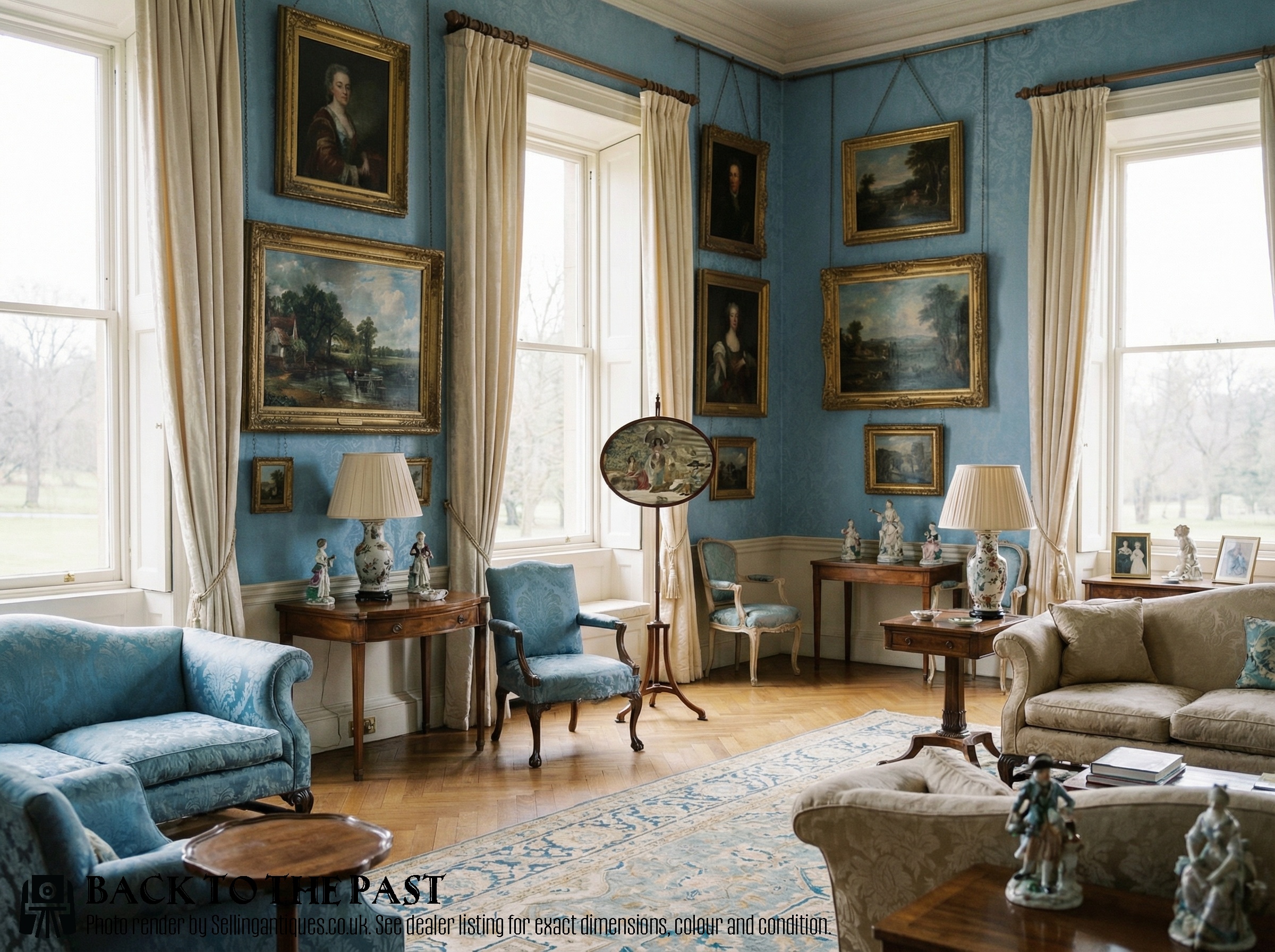
These pieces were typically placed near seating areas in the parlour or drawing room. They combined practical utility with a display surface for elaborate needlework.
How were fire screens used?
Fire screens were positioned between the hearth and the inhabitants of a room to deflect the intense heat of an open coal or wood fire. They protected delicate complexions and prevented wax candles on nearby tables from melting.
As heating methods evolved, their protective function diminished, yet they remained valued decorative furnishings. They often showcased the needlework skills of the household.
What materials are used in these screens?
The primary structural material is timber, with mahogany, rosewood, goncalo alves, and bamboo appearing across the surviving examples. Turned wooden shafts and carved tripod bases form the support for the main body.
Panels incorporate textiles such as wool, silk, and tapestry, alongside functional elements like brass, iron, glass, and wire mesh. Each material reflects the decorative priorities of its period of manufacture.
How do I tell Georgian from Regency screens?
Georgian screens, particularly those from the George III period, often exhibit classical proportions and restrained mahogany carving. Sheraton influences bring refined lines and balanced geometry to the woodwork.
Regency pieces tend toward bolder forms, sometimes utilising exotic timbers like goncalo alves or more elaborate brass fittings. The shift in style mirrors the broader transition in British interior design toward heavier classical grandeur.