
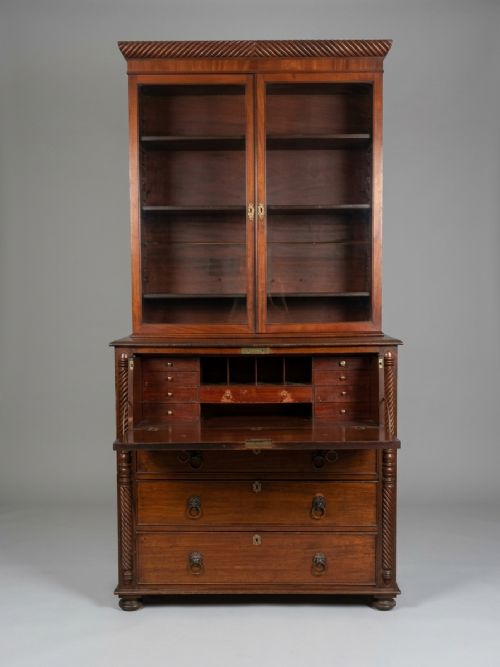
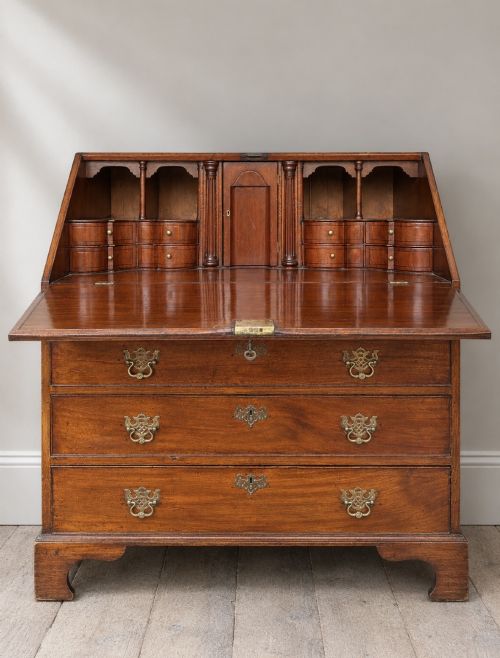
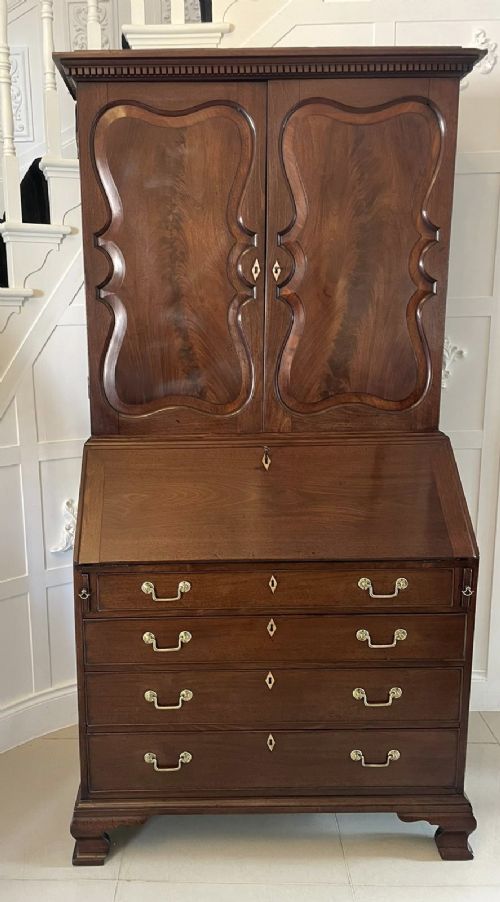
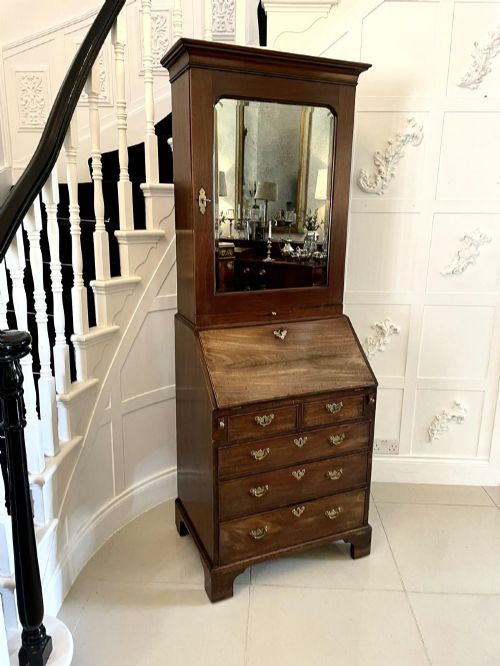


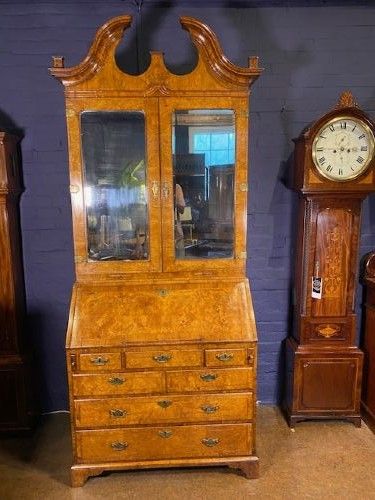
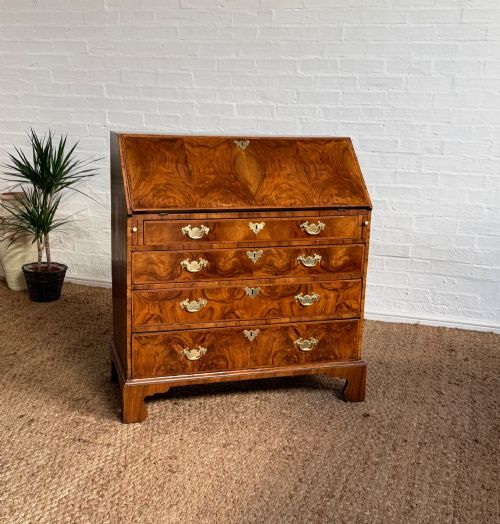
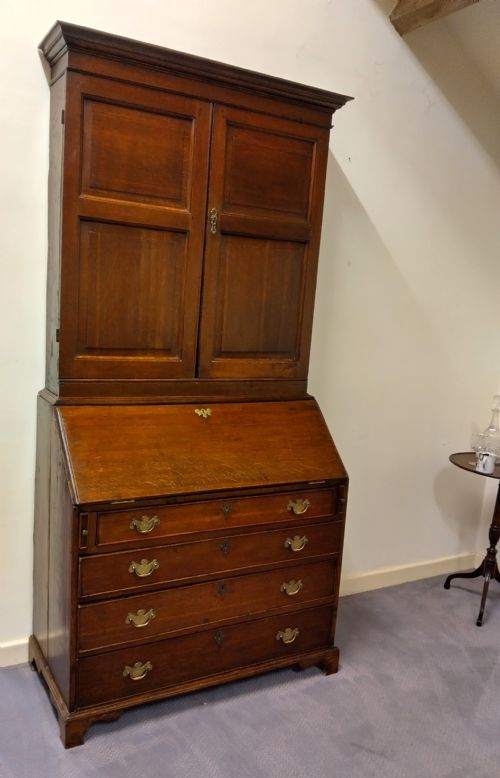
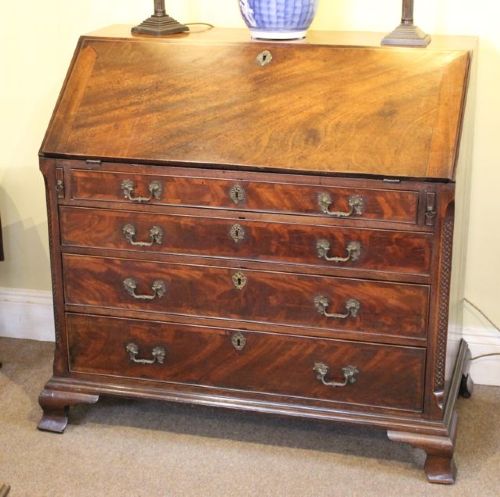
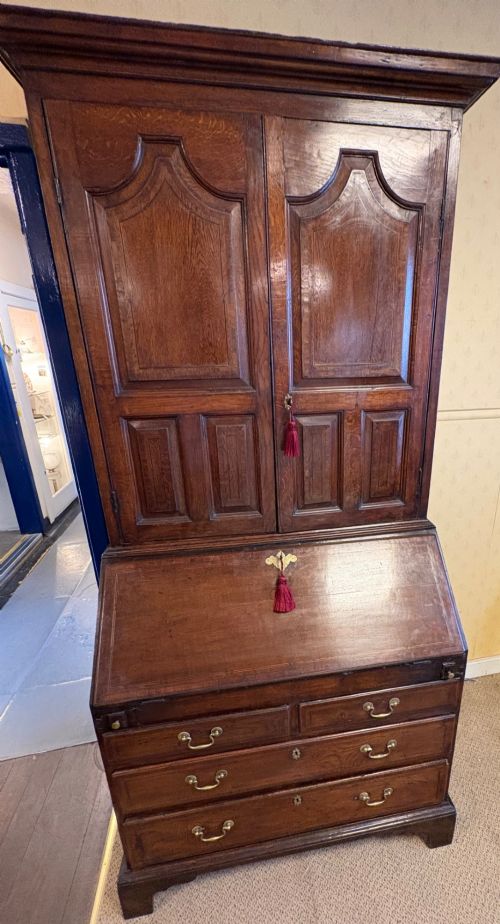
Georgian Fall Front Secretary
A georgian fall front secretary combines a fitted writing cabinet with concealed drawers behind a hinged flap, built for storing correspondence and documents.
Georgian Fall Front Secretary
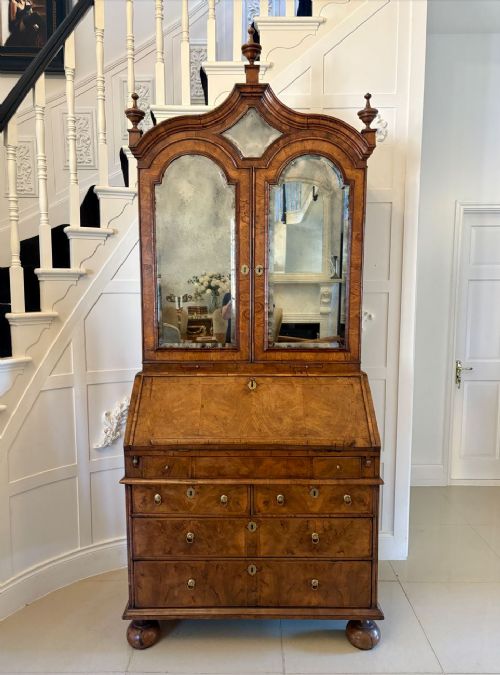
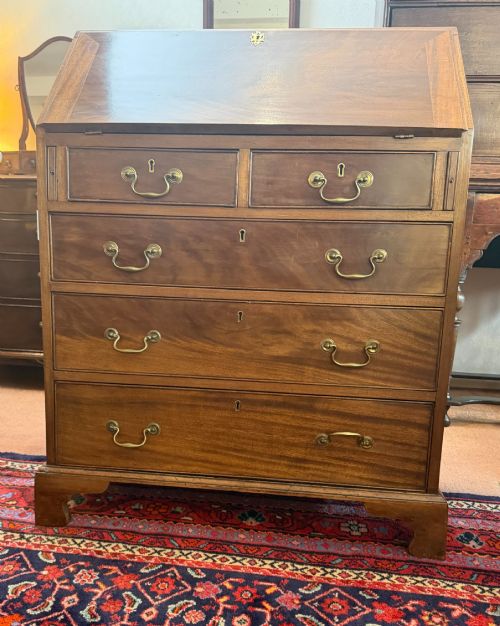
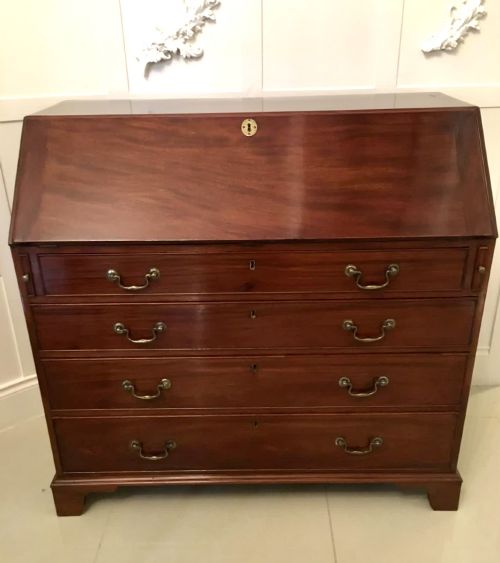
When you search for a georgian fall front secretary, you encounter pieces functioning as writing desks and storage cabinets. These items span the eighteenth and nineteenth centuries, incorporating forms such as bureau bookcases, writing desks, and bureaus on stands.
The objects frequently appear in mahogany, walnut, and oak, reflecting the dominant cabinet woods of the periods listed. Pieces range from small domestic writing desks to tall bureau bookcases featuring glazed upper sections and candle slides.
How They Were Made
Cabinet makers constructed these secretary desks using dense timbers including mahogany, walnut, and oak, often applying burr veneers and featherbanding for decorative surface patterns. Structural integrity relied on bracket feet, dovetailed drawer construction, and panelled falls.
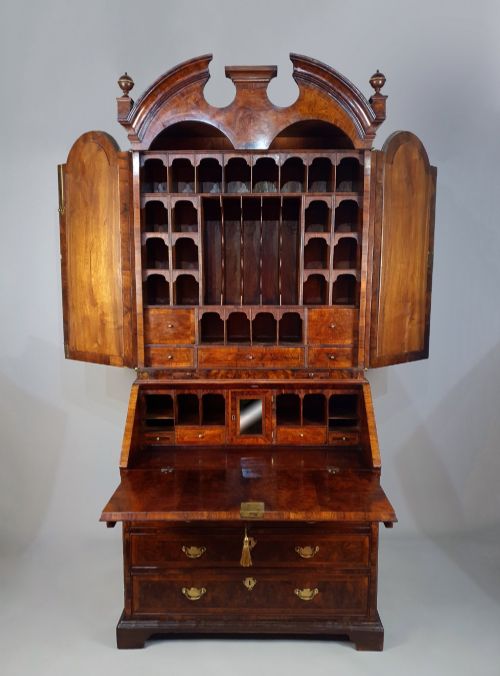
Interiors contained stepped compartments, pigeon holes, and secret drawers concealed behind sliding sections or small doors. Upper bookcases utilised glass panelling set into wooden lattice frames to display books or collections.
Listings feature mahogany, walnut, burr walnut, oak, and fruitwood alongside brass hardware and mirror glass.
What Varies in Quality
The depth of figuring in the timber grain and the complexity of the internal arrangement dictate the standing of a piece. Finer examples display carefully selected burr walnut or figured mahogany matched across the fall front and drawer fronts.
The execution of interior joinery, such as carved pigeon holes, well-fitted prospect doors, and original brass hardware, separates standard domestic furniture from superior cabinet work.
The Georgian Fall Front Secretary Glossary
- Fall front
- A hinged writing flap that drops forward to create a horizontal desk surface. It conceals the fitted interior compartments when closed.
- Bureau bookcase
- A dual-purpose piece combining a lower writing desk with an upper glazed or panelled bookcase section. They frequently divide into distinct upper and lower modules.
- Escritoire
- An alternative term for a writing cabinet or desk. These tall forms often feature a drop-down writing surface enclosing multiple small drawers.
- Featherbanding
- A decorative banding technique using veneer slices laid diagonally to form a herringbone pattern around drawer perimeters or borders.
- Bracket foot
- A simple structural foot supporting the corners of case furniture. They take shaped or ogee profiles on eighteenth-century examples.
Georgian Fall Front Secretary: Frequently Asked Questions
What is a fall front secretary?
A fall front secretary is a piece of furniture featuring a hinged writing flap that opens to reveal a fitted interior of small drawers and pigeon holes.
Lower sections typically contain drawer stacks for general storage, while some variants include upper bookcase cabinets.
How do I identify a Georgian secretary?
Georgian secretaries display stylistic traits from the reigns of George I, George II, and George III, spanning the eighteenth century.
Look for characteristic timber choices like figured mahogany and walnut, alongside bracket feet and traditional internal layouts.
Are these desks used for writing?
The drop-down flap provides a solid timber writing surface at standard desk height. Internal compartments hold paper, ink, and letters.
Modern owners continue to use the folding surfaces for correspondence and laptop placement.
What woods were used?
Makers utilised dense hardwoods including mahogany, walnut, burr walnut, and oak. Secondary woods like cedar and fruitwood appear in internal drawer linings.
veneers provided decorative patterned surfaces on the exterior panels.